The Mother of Spiders, Horseshoe Crabs, and Things That Go Snap
An exceptional fossil from Utah's west desert reveals pinching claws key to a major invertebrate family.
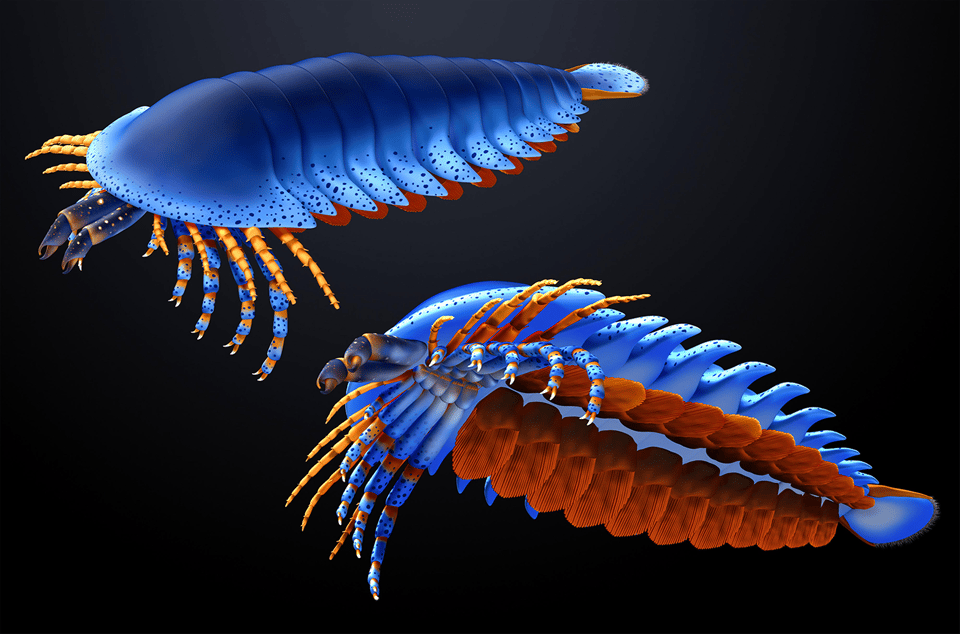
You’d think that the great Cambrian predecessor of spiders wouldn’t be that hard to find.
Chelicerates are everywhere today. Biologists have cataloged more than 120,000 species of them, from the jumping spider crawling on the kitchen wall to the horseshoe crabs that drag themselves to the tide line to spawn every spring to the tiny, tiny mites that live on us. And despite the fact that most chelicerates have always been small, the invertebrates - allied by the claws at the front of their mouths called chelicerae - have a pretty good fossil record spanning hundreds of millions of years.
Up until now, the oldest known chelicerates were found in rocks about 420 million years old. The fossil arthropods looked like horseshoe crabs, and some were found among animals that were thought to have gone extinct at the end of the Cambrian. Perhaps chelicerates split off from other arthropods during the Cambrian, too, a likely scenario given how many modern invertebrate lineages have been drawn back to the wonderfully weird era of the Burgess Shale. The fossils necessary to test the hypothesis, however, proved elusive. Maybe Cambrian chelicerate fossils just hadn’t been found yet. Or maybe evolution played out in a different way than experts thought.
