Friday Fragments #8
What in the world is Tankya? And other morsels from this week.
25 days until the paperback release of When the Earth Was Green
200 days until the release of Tyrant Lizard Queen
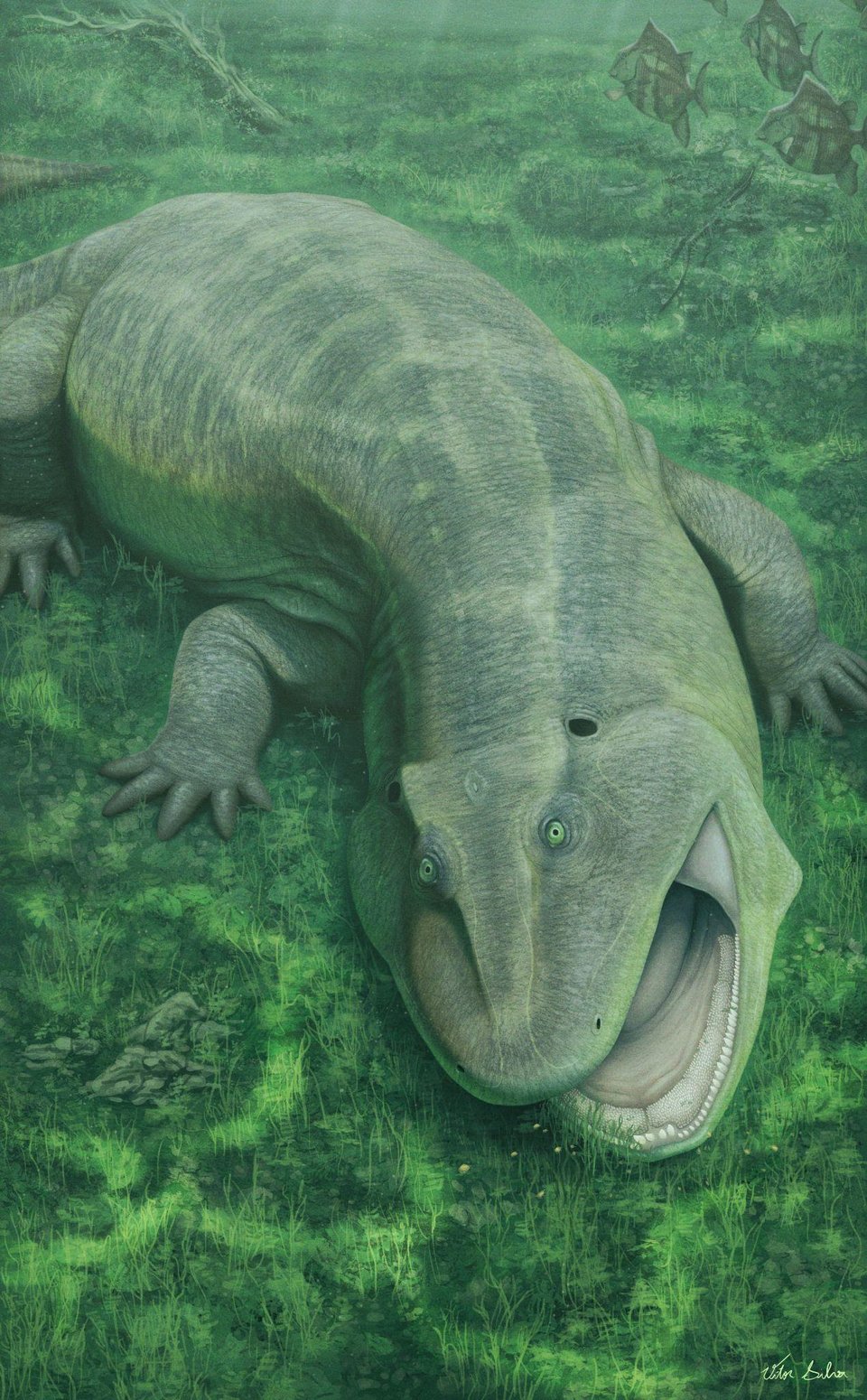
No one knows what Tankya was. Not really. The ancient creature was some sort of tetrapod, the group of four-legged vertebrates that includes everything from us back to fishy Tiktaalik and friends, but, beyond that, the nature of the creature is a big fat question mark in the Carboniferous.
Described earlier this year by Field Museum paleontologist Jason Pardo and colleagues, Tankya is represented by a collection of jaw pieces. They. Are. Strange. The eight jaw fossils, found in 275 million-year-old rocks, are strangely twisted. Some of the teeth seem to point outwards, not a result of distortion or compression but a true anatomical signature. And behind the prominent row of outer teeth? A pavement of tiny teeth that Pardo and colleagues call “cheese grater-like.”
From such limited fossil material, Pardo and colleagues propose Tankya was a stem tetrapod - part of the varied, archaic group from which the common ancestor of all today’s tetrapods evolved. Tankya was not our direct ancestor, in other words, but an early cousin among the pool of creatures that blurred the line between what we might think of as fish or amphibian. Then again, incomplete fossils are often placed in relatively archaic categories just because there isn’t as much to compare. Perhaps, if someone finds more Tankya fossils, we’ll find it is not as archaic as it first seems, or might even represent an anatomical revival of what initially seemed primitive.
I love mysteries like this. Paleontology is so often communicated with certainty. We want the Facts on File version. Age, location, length, weight, diet, not to mention coloration and sound and behavior. Yet even when we can deliver precise figures, they represent averages, adult sizes or extreme individuals, flattening the ontogeny and variation of species into something easy to convey (“Tyrannosaurus was 40 feet long and weighed 9 tons”). The incomplete nature of Tankya makes us grapple with these uncertainties, not only how much we can know but how much remains unknown, confounding, and inscrutable.
How wonderful is that?
Scribblings
In this week’s edition of I Want My DinoTV, I rip into Netflix’s The Dinosaurs episode 3 - a documentary so obsessed with power, dominance, and global control that it’s an upsettingly tone-perfect show for the Trump era.
We often call mosasaurs “marine reptiles,” but a growing body of evidence indicates that they often inhabited rivers. A huge tooth found in North Dakota indicates that 30-foot-long lizards were swimming in the rivers where T. rex went to drink.
Last week’s article, about the impressive fossil invertebrate Megachelicerax, is up on my blog. If you want articles like this first, and to support my original work, consider upgrading to premium.
Ear Perks
We’ve got a new bad shark movie! I’m not sure Thrash - which looks like a ripoff of the alligator-filled Crawl - is going to match the weird fun of Under Paris, but I’ll still give it a try.
I got a little burnt out on the “T. rex trying” memes of the 2010s, but beetlemoses got me to laugh at the trope again.
Paleontologist Mira Thompson has made an important call to revive an online option for Society of Vertebrate Paleontology meetings and talks. It’s not safe for many experts to travel, especially to the United States, and increased accessibility will only be a benefit to the community. Read her letter here, and expect more on the effort in a coming newsletter.
