Friday Fragments #5
46 days until the paperback release of When the Earth Was Green
221 days until the release of Tyrant Lizard Queen
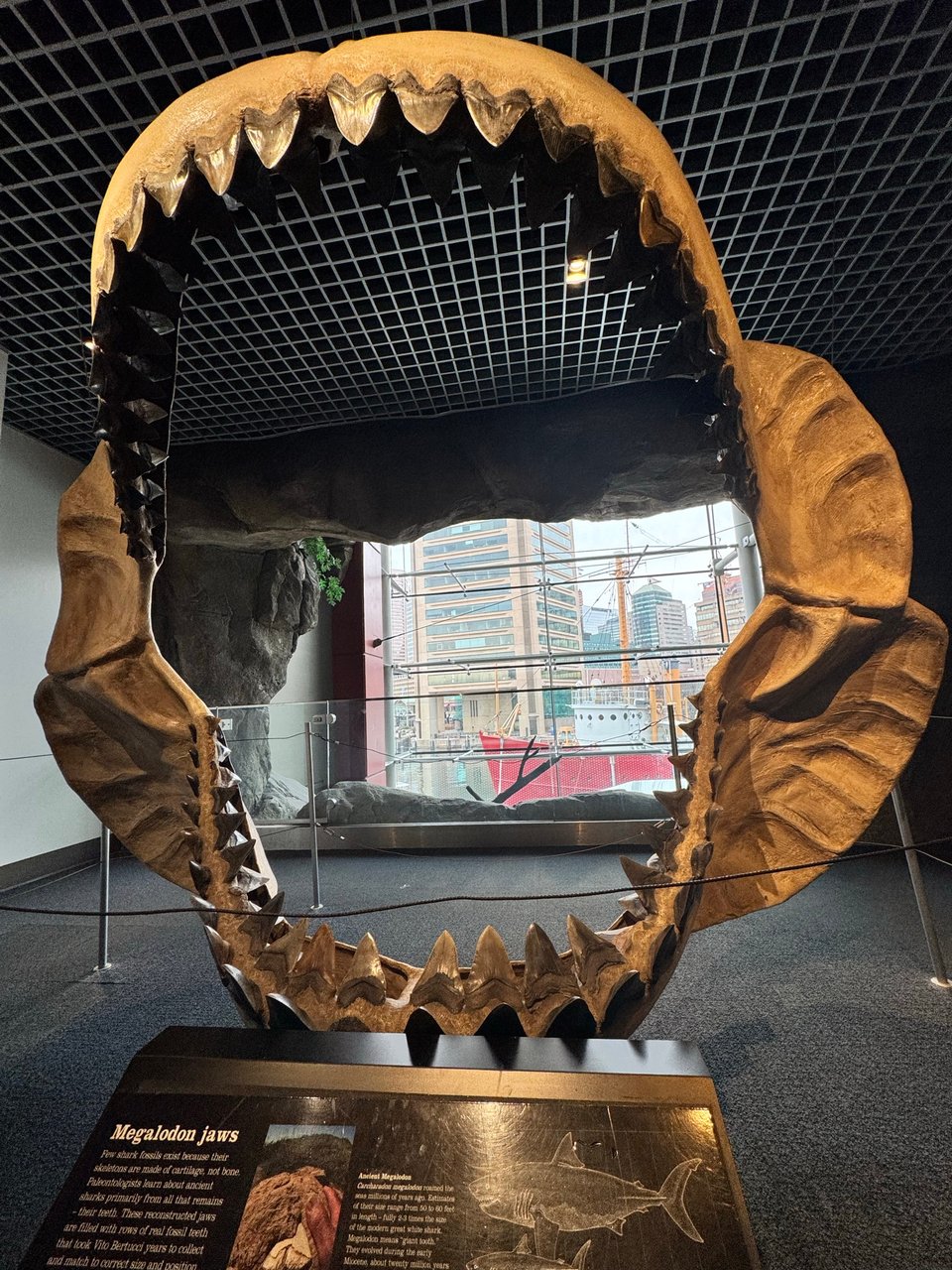
More than a century ago, fossil fish experts at the American Museum of Natural History set about reconstructing the largest carnivorous fish of all time.
The researchers didn’t have much to work with. Almost everything we know about Otodus megalodon, the megatooth shark, comes from its triangular teeth - supplemented by fossil vertebrae. Gauging the dimensions of such a shark relied upon comparisons to modern species such as the great white, scaling the hypothetical jaws to teeth that can be more than seven inches tall.
The 1909 attempt from the AMNH scientists was far too big. A shark with such jaws would have been more than a hundred feet long. But to see someone perched in those massive jaws with plenty of room to spare? It sparked a trend among museums, aquariums, and other institutions to make their own, more accurate megalodon jaws. Some are lighter-than-life facsimilies, like the set yawning over the entrance to the Birch Aquarium in San Diego, but others, like the set at the entrance of the National Aquarium, are set with real teeth.
The massive jaws filled with dark, gleaming teeth are composite reconstructions. To date, no complete set of grinning megalodon choppers has been found (even though experts have found such fossils of other sharks). I can’t help but wonder how many lives the jaws represent. Are any of the teeth from the same individual? Or did they come from sharks that swam in different seas, at different times, of varied sexes and sizes and habits? It’s an individual made of many, measurements and calculations bringing us a hazy view of an almost unbelievably-large fish. It’s not real, nor is it fake. It’s the shark as we imagine it, a call across time to a fish that swam this planet’s oceans but can now only be touched through ancient enamel and ossified cartilage.
Subscribe now
Scribblings
The galley copies of Tyrant Lizard Queen are here! Have a look over on my YouTube channel.
I spoke to CBC reporter Sheena Goodyear about paleontology’s persistent problems with misogyny. It’s time to make some big changes to the field’s culture.
Long-necked dinosaurs weren’t drab. Microscopic details of fossil skin indicate they were probably quite colorful. Read all about it in this week’s premium article.
Last week’s article, about an unexpectedly snouty toothed bird, is up on my blog.
Ear Perks
Pigeons make milk. No you do not want it in your coffee. Another amazing cartoon from Rosemary Mosco.
When people visit fossil exhibits, how are they really engaging with them? Ben Miller has some key insights - and a reminder that T. rex looms large over all.
If you haven’t seen it yet, NHMLA’s Augustynolophus puppet is absolutely adorable. I love the thought put into making the dinosaur seem both real and touchable.
