Friday Fragments #29
Environmental disturbance led some ancient trees to start shedding their leaves.
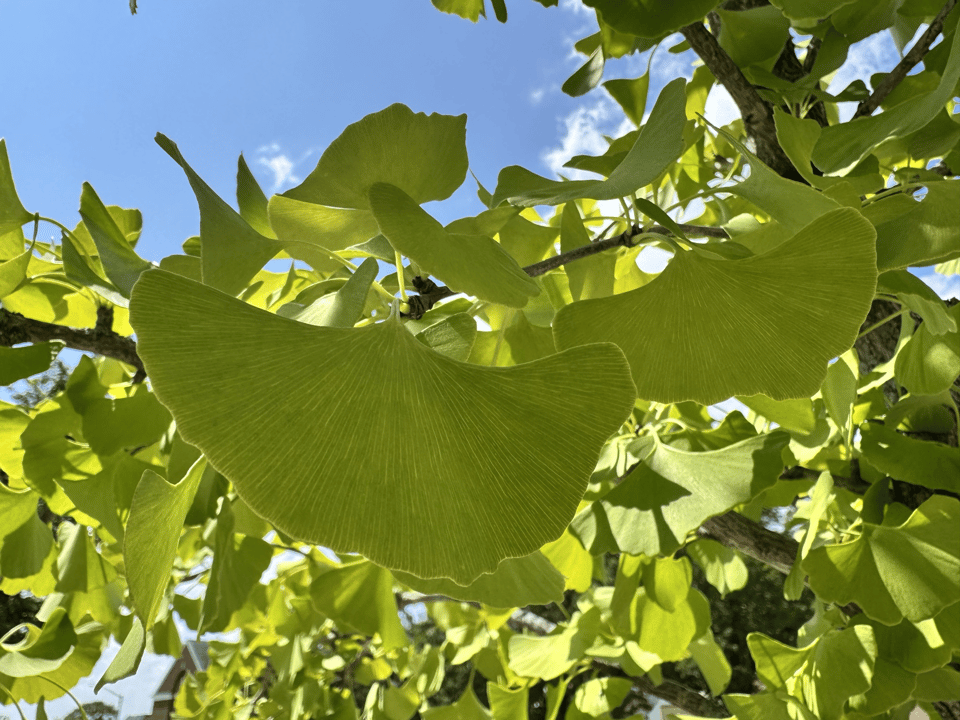
The ginkgoes are starting to go yellow around here. I’m always a little sad to see the vibrant green get pulled back as the photoperiod shortens, summer not over but starting to yawn. Fall will arrive late, fashionably so. But some trees are already done, Ginkgo among them.
As I was working on When the Earth Was Green, I struggled to find paleobotanical examples of deciduous changes in the fossil record. I chose to focus on autumn leaves from ancient Germany, but I knew they had to be older examples of plants changing with the seasons. I just hadn’t come across them. But today paleobotanist Anne-Laure Decombeix shared a short thread on this very topic, which introduced me to one of her studies that I wish I’d known about.
The leaves I imagined in When the Earth Was Green were Pliocene, from only a few million years ago. But plants have been coping with strong seasonal changes for far longer. More than 260 million years ago, in what’s now Antarctica, lobe-leaved trees called Glossopteris were core parts of primordial forests that withstood several months of darkness each year. And different individual Glossopteris handled the environmental pressures in different ways.
By studying the oval, lance-like leaves of Glossopteris, Decombeix and colleagues found that the tree could be either evergreen or deciduous. It wasn’t even the photoperiod that made the difference. It was environmental disturbance. Many evergreen trees grew in areas of more competition, striving for light and space to grow in a habitat that was relatively stable. That is, there weren’t regular fires, floods, or other local disasters where the evergreen Glossopteris grew. The Glossopteris that dropped their leaves, however, lived in habitats where life was riskier. In habitats affected by fire, greater erosion, and other environmental disturbances, deciduous Glossopteris grew - trees that were suited to sometimes needing little, standing a better chance at withstanding a harsher landscape.
It may not have been light and cold that opened the possibility of autumn, after all. The ability of trees to sometimes drop their leaves, go into a maintenance phase, permitted them to grow in places where the ground was not always welcoming. The ability evolved over and over again, becoming useful for high- latitude and altitude trees that undergo greater environmental shifts during eras that have dipped cooler than the Paleozoic. It wasn’t the relationship between sun and temperature that allowed deciduous Glossopteris to evolve, but the tie between the plants and the closer details of their home habitat.
I wonder if Mesozoic dinosaurs ever saw fall colors.
Want more of The Boneyard?Upgrade your subscription
Scribblings
My new book Tyrant Lizard Queen is coming out in less than two-months! And if you’ve pre-ordered, you can get a signed book plate plus some extra digital goodies. Fill out this form to sign up for the giveaway - and yes ebook and audiobook pre-orders count, too!
Tyrant Lizard Queen received a stellar review in Science.
Tyrant Lizard Queen is a wonderfully fascinating and gripping interpretation of the fossil record that animates one of Earth’s most iconic dinosaurs. It will entertain and educate readers of nearly all ages and offers a refreshing celebration of the great circle, and great science, of life.
Booklist reviewed Tyrant Lizard Queen, as well, writing:
[Riley] infuses these creatures with personalities of a sort, including instincts and rivalries, yet without abandoning research that supports those choices. Illustrator Bing's artwork
rounds out the sensory information nicely. For readers who enjoyed Black's earlier books, Tyrant Lizard Queen promises the same blend of rigor and empathy in a paleontological biography that makes deep time feel personal.
We’re all familiar with dinosaur films that start with the origin of the universe and zoom to the heyday of the terrible lizards. The silent film Fifty Million Years Ago shows how long we’ve been preoccupied with visions of prehistoric monsters and progress towards the present.
Much like the Glossopteris I wrote about today, early snakes were ecologically flexible. That probably has a great deal to do with their origins and attaining the classic snake shape.
Don’t make your nest where other dinosaurs walk. A new short story, all about some titanosaur scratches in ancient stone.
Stomping to a City Near You
We have a T. rex! tour. When Tyrant Lizard Queen reaches you on October 27th, I’ll kick off an East Coast book tour to talk about Snaggletooth and her story. Here’s where I’ll be stopping:
Launch day! October 27th I’ll be at the central Enoch Pratt Library in Baltimore.
October 28th at Scrawl Books in Reston, VA. This is a trivia night event, so make sure you’re ready for dino questions!
November 4th I’ll be in Lewes, DE at the public library for a joint event with Browseabout books.
November 5th I’ll be at Hive Mind Books, NYC!
November 6th I’ll be at the Harvard Bookstore in Cambridge, MA.
December 2nd I’ll be at the Natural History Society of Maryland in Baltimore.
If you’d like me to do an in-person or virtual event closer to you, encourage your local museum or library to get in touch.

Ear Perks
The Academy of Natural Sciences Museum in Philadelphia recently announced that they’ll be closing their doors to the public this month. Local scientists are rallying to try to save the museum’s public exhibits, which include a dinosaur gallery that’s stood in the museum’s halls for decades. If you’re local, you can find details about Tuesday’s rally here.
The Wrong Girls is delightful. Kristen Stewart and Alia Shawkat star in an adventure that’s Cheech and Chong by way of One of Them Days, Keanu, and Drive Away Dykes.
A couple of weeks ago I played a few hours of Big Walk with friends, and it’s the closest thing I’ve found to hiking in the desert with my favorite creatures. It’s so much fun, and was perfect for having an adventure with friends I don’t get to see often in real life. I love it.
