Friday Fragments #28
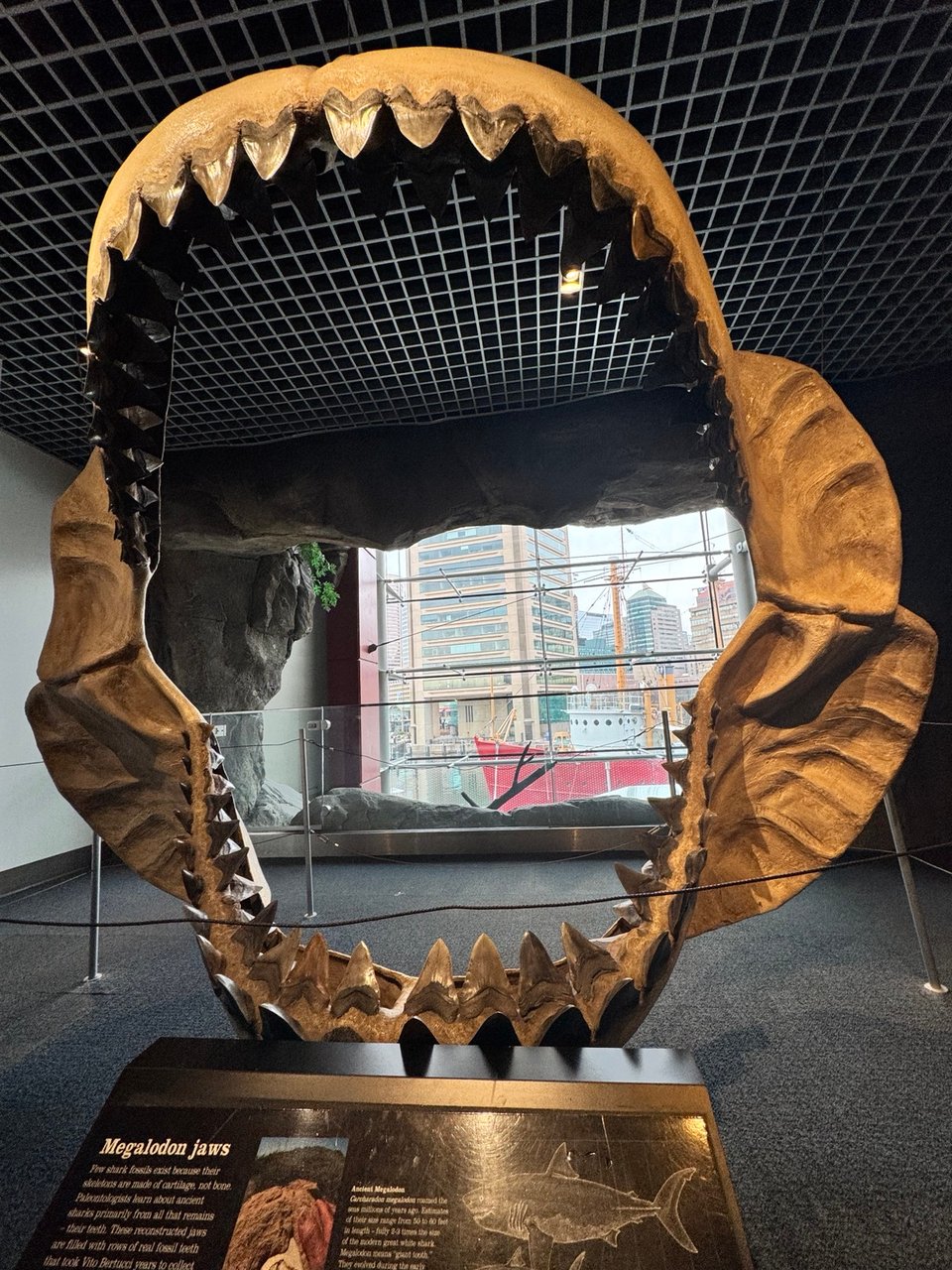
Lost for decades, the bones of a giant shark have been found.
The bones were given up as lost.
Hefty discs from the backbone of an immense shark, the set was uncovered in Gram, Denmark in 1978. The largest were nine inches in diameter. Only one shark found in the same rocks was large enough to have had such a thick spine. Of course, it was Otodus megalodon.
The fossils were held at the Geological Museum of Copenhagen for years. But about a decade after the fossils were found, the fossils were being moved to a new storage facility when they were severely damaged. Somehow the whole set disappeared around this time, lost in the shuffle, and went missing. They’d been scientifically described, they left an impression on the literature, but the bones themselves vanished.
It happens. The history of paleontology is littered with fossils that crumbled to nothing after their discovery, were lost while being moved from one place to another, and have been stolen, sometimes right from museum collections, to vanish to who knows where. I’ll never forget a fossil crocodile I was learning to prepare at a museum, coming back to collections one day to find that something heavy had been dropped on top of the jacket - crushing a great deal of the friable fossil. (The kids of the director goofing around in the back, I heard later.) It’s always heartbreaking. But sometimes lost really does mean lost. In the case of the megalodon vertebrae, a few have been found.
Paleontologist Kenshu Shimada and colleagues tell the story in a new paper. A portion of the original group of large vertebrae were found within the Natural History Museum of Denmark, the new name for the previous institution. The rediscovery came at a critical time, because Shimada and colleagues recently used the published data on these vertebrae to argue that the megalodon those bones came from was about 80 feet long. Published results are ok, but remeasuring fossils is always better.
Reproducibility. It’s what makes science science.
Only two partial centra survived the 1989 accident. But along with fragments from other vertebrae belonging to the same set, Shimada and colleagues were able to investigate the individual age of the shark and check the previous estimate.
The shark hadn’t finished growing yet. Shimada and coauthors estimate that the shark could have lived as long as 96 years and stretched to 91 feet long (depending on body shape). If not the largest individual megalodon known, it certainly was among the biggest. And it may have recently fed. Scales and bone fragments from a basking shark had been found among the megalodon bones when they were discovered, mixed into the lost sample, and might have been a “residue,” as the paleontologists put it, of the predatory shark’s last meal.
I’d still love this story even if it concerned a smaller shark. Paleontology is not only a science of natural history, but human history. Fossils have been lost, destroyed, traded, rediscovered, and otherwise strewn through various institutions through decade after decade. When we know the history of the field - not in broad strokes but who found what at an institution, the fossils that have vanished and those that have been sitting untouched on a shelf - we can be aware when we find something unexpected. Like the missing bones of a giant shark.
Scribblings
I’ve been having fun learning how to record let’s plays! This week, for premium subscribers, I tried out Theropods, a quirky point-and-click adventure with dinosaurs running around the forest.
Bitten bones reveal a time and place when immense crocodiles were top predators. Check it out on my blog!
Did water or soil play a more important role in early snake evolution? A new study suggests that noodly flexibility was central to the origin of serpents. My latest article for premium subscribers.
Tomorrow I’ll be talking about The Last Days of the Dinosaurs on GTown Radio’s Neglected Stories program. It’ll be local around Philly and online once it airs!
Stomping to a City Near You
We have a T. rex! tour. When Tyrant Lizard Queen reaches you on October 27th, I’ll kick off an East Coast book tour to talk about Snaggletooth and her story. Here’s where I’ll be stopping:
Launch day! October 27th I’ll be at the central Enoch Pratt Library in Baltimore.
October 28th at Scrawl Books in Reston, VA. This is a trivia night event, so make sure you’re ready for dino questions!
November 4th I’ll be in Lewes, DE at the public library for a joint event with Browseabout books.
November 5th I’ll be at Hive Mind Books, NYC!
November 6th I’ll be at the Harvard Bookstore in Cambridge, MA.
December 2nd I’ll be at the Natural History Society of Maryland in Baltimore.
If you’d like me to do an in-person or virtual event closer to you, encourage your local museum or library to get in touch.

Ear Perks
Teenage Sex and Death at Camp Miasma is out now, and it’s absolutely stunning. I could gush about this movie all day. I feel personally targeted in the best way.
Bug! Chosha praecursor was an ancient invertebrate that changes our understanding of what the earliest insects were like.
Did you know there are carnivorous caterpillars? Now you do.
