Friday Fragments #11
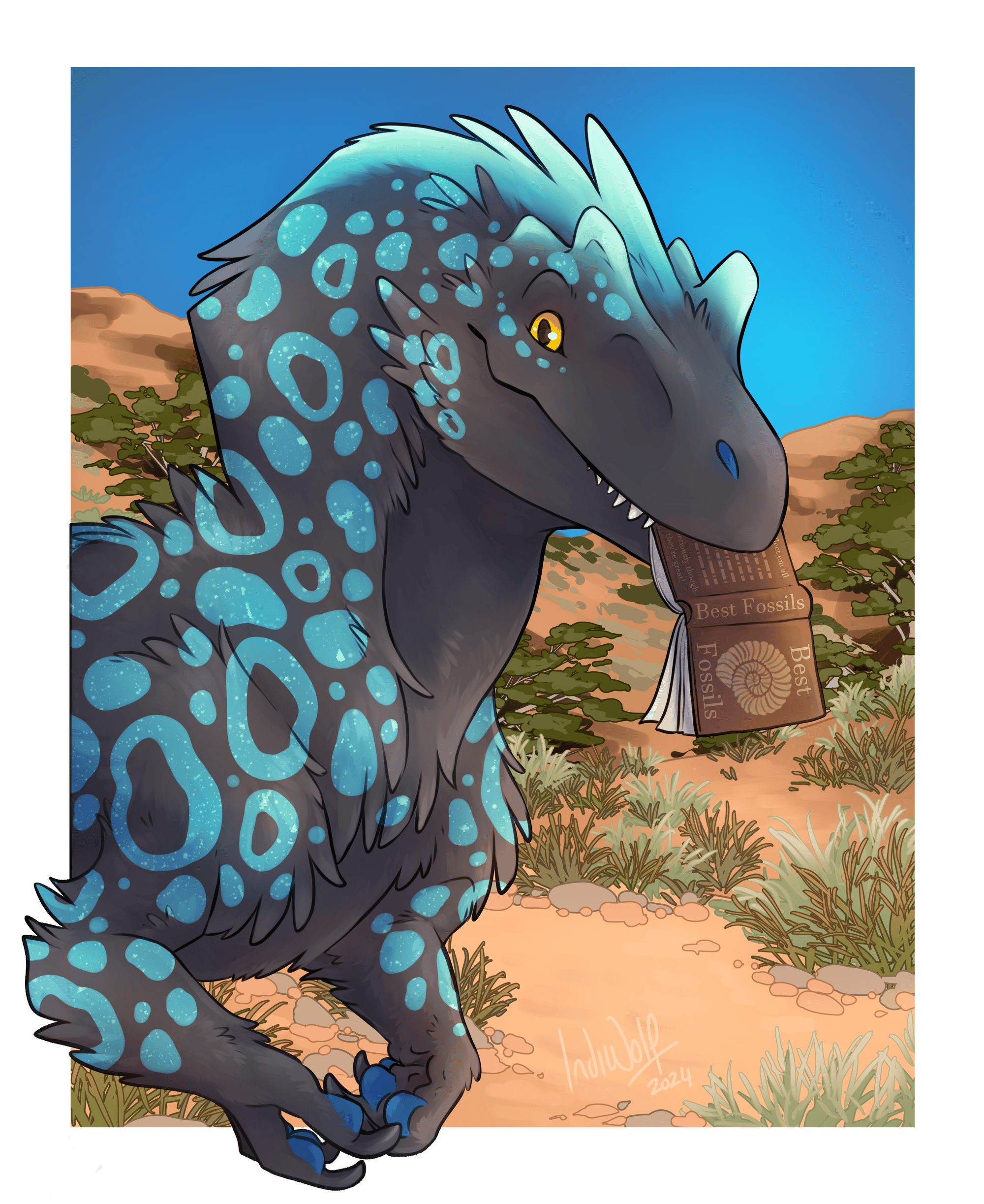
Irritator is getting ready to go back to Brazil, but much work remains to be done.
4 days until the paperback release of When the Earth Was Green
179 days until the release of Tyrant Lizard Queen
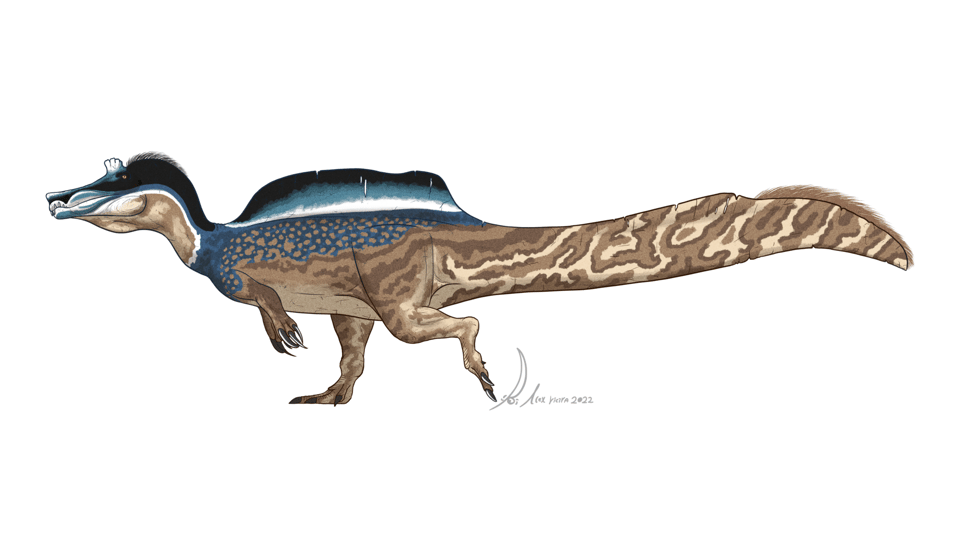
Irritator may be going home.
It took years of campaigning and pressure, a push for repatriation that overcame resistance from inside the vertebrate paleontology community. As Brazilian paleontologist Aline Ghilardi noted, the majority of dinosaur scientists did not do anything to get Irritator back to Brazil. “The ones who really took action were the crowd on the internet passionate about paleontology—the folks who truly love science.”
If you haven’t heard how a dinosaur skull became representative of a larger fight against colonialism in paleontogy, here’s the story in brief. The holotype of Irritator, a skull of a subadult spinosaur, was found among the Cretaceous rocks in northeastern Brazil sometime in the late 20th century. In 1991, a private fossil dealer sold the skull to the State Museum of Natural History Stuttgart, Germany, despite the fact that Brazil had prohibited the sale and export of such fossils since 1942. No one batted an eye. Vertebrate paleontology has long been an extractive science, and the image of fossil hunters traveling the world in search of new specimens has been heavily romanticized for over a century now. As Lilian Brown, wife of Barnum, titled one of her memoirs, the goal was to Bring ‘Em Back Petrified - especially from areas of the world that were viewed as scientifically inferior to the US and western Europe where the science of paleontology coalesced.
But through the 21st century, calls for an end to parachute science and fossil pillaging of the Global South have become louder and louder. Another dinosaur illegally removed from Brazil and held in a German museum, awaiting description but called “Ubirajara” from its original announcement that neglected to include any Brazilian experts, was repatriated in 2023. Not that it’s alone. A 2022 review found that about half the holotypes of fossil species found in Brazil are housed far outside the country, and, proving the claims of colonialism, those fossils taken from the country generally have not been described or researched by Brazilian experts.
The fact that Irritator is a charismatic dinosaur has made it easier to rally around. And the effort is working. Earlier this week, Brazil and Germany released a joint statement announcing the “willingness” of the Stuttgart museum to move towards the repatriation of the dinosaur. It’s definitely good news, and I hope Irritator makes it home safely.
But the effort its taken thus far, from Brazilian paleontologists, historians of science, and the public, underscores how much paleontology needs to change.
It shouldn’t have taken years of campaigning for the State Museum of Natural History Stuttgart to do the right thing. It shouldn’t have taken an open letter from 268 experts, nor a petition of more than 34,000 signatures to sway the German museum to return a fossil that was illegally exported decades earlier. (I suggest you look at the 2023 open letter and notice how the names of many famous dinosaur scientists are entirely absent from the document.) Ghilardi hits the nail on the head. The push for paleontology to do better, to end colonialism and scientific theft, is fueled more by the broader community of dinosaur and science fans than by professors and curators who should know better by now.
Paleontology is a funny science. It’s formal and not. It actively courts participation from the public but also spurns it. Toxic traditions, from claim jumping to misogyny to alcohol-soaked issues with fieldwork, still remain in place. It sometimes feels like we’re not far from the Bone Wars era of Cope and Marsh, when white cis men take up the most academic space, hold the most power, and are always looking for a Big Find to please their institutions and keep getting documentary appearances. I’m sorry to say that it often feels like vertebrate paleontology - and dinosaur paleontology, especially - is still stuck in a specifically masculine form of denialism, that it’s ok to hoard stolen fossils if you can claim you didn’t know better, that it’s ok to publish with friends of Epstein if they’re providing funding, that the safety concerns of trans people can be swept under the rug.
The impending return of Irritator, and the proper naming of the other recently-returned dinosaur, are reason for celebration. We can and should say Saúde to that. But we can’t lose momentum now. It’s not unreasonable to imagine a more supportive, collaborative, responsible form of science that understands fossils don’t exist just as a means to get tenure or fill out a CV. These animals come from a place, are relevant to culture past and present, and deserve to rest near the people who hold those connections.
Send them back petrified.
Scribblings
The Great Trek through the Serengeti is one of Earth’s most spectacular migrations. Recent studies have shown how zebra, wildebeest, and Thompson’s gazelle make up a three-part procession where the big herbivores set the path for the smaller ones. I’ll tell you more at National Geographic.
My stop-motion experiments continue! I played around with a warrior xenomorph, focused on that hiss.
Spinosaurus has been the it girl for a while now, so what does WWD ‘25 do that’s different? I’ll tell you in this week’s I Want My DinoTV.
Carnivores have a habit of dragging hominins into places where those early humans could enter the fossil record. Perhaps Crocodylus lucivenator did just that in ancient Hadar.
Last week’s original article, on a strong contender for cutest fossil of the year, is up at my website. I’m still stunned by the Lystrosaurus embryos.
When the Earth Was Green comes out in paperback on Tuesday! If you haven’t read it yet, now’s a great time to grab it. I don’t know about you, but I often find paperbacks perfectly suited to hikes, road trips, and some loving wear and tear as I carry them around.
Speaking of, I’ll be doing a book club event about the fossil plant book at Baltimore’s Snug Books on July 28th! It’s ticketed, so grab yours soon if you want to attend.
Ear Perks
This would have been perfect for a When the Earth Was Green chapter. A new study finds that CAM photosynthesis plants may have fared better during the Permian-Triassic extinction.
I picked up Queercore from PM Press at a show last weekend and it’s a searing, wonderful, chaotic history of how a scene went from rumor to movement. It led me to some great bands, too, like Pansy Division, The Leather Nun, and Le Tigre.
Getting into stop-motion keeps reminding me of some of my favorites. The ViewMaster I had as a kid had a set based around the dinosaur segments of The Animal World, which is still ridiculous and thrilling. (When I get to I Want My DinoTV classic, I may come back to it.)
