|
Renewable Energy News
Battery storage reaches 52 GW as renewable projects advance in the U.S. and abroad
|
|
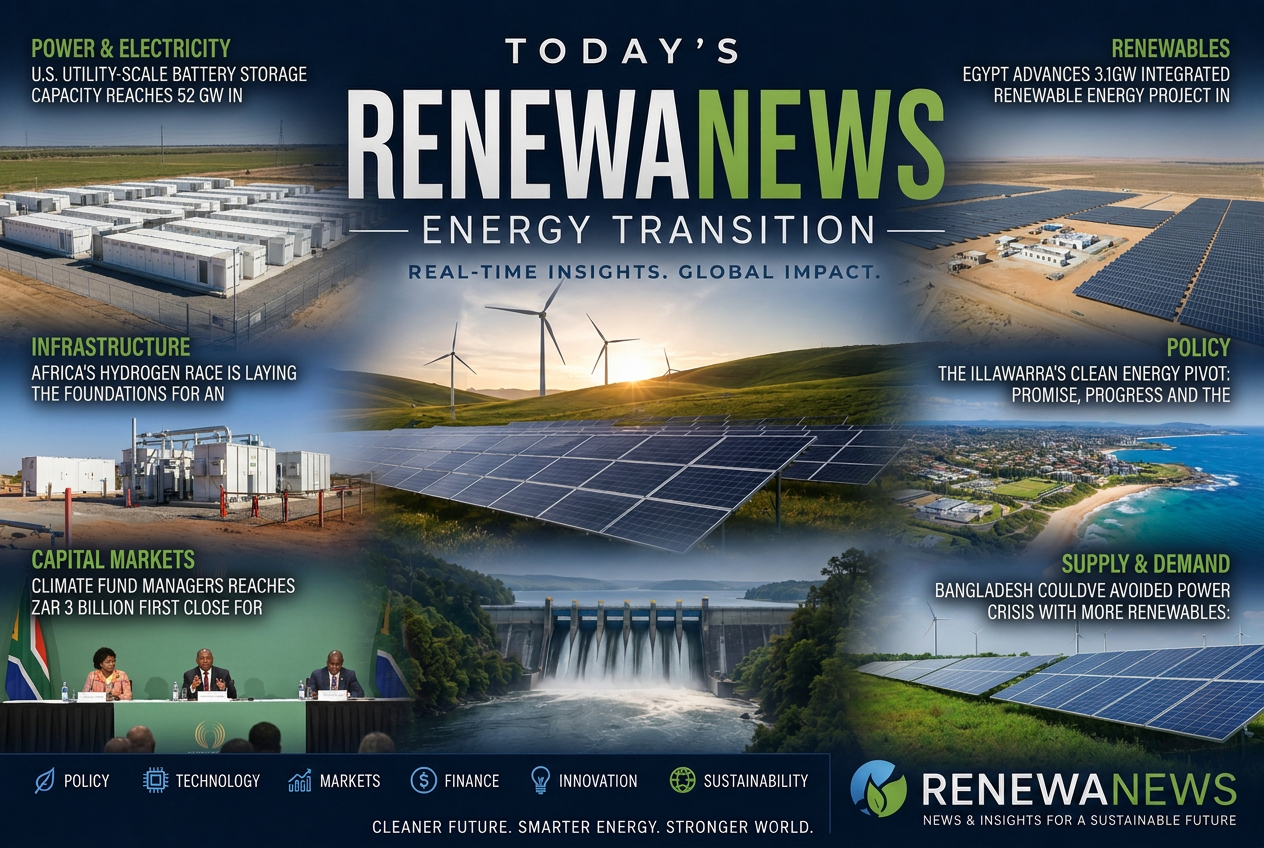
U.S. utility-scale battery storage capacity reached 52 GW in mid-2026, averaging 70% annual growth over three years. Elsewhere, headlines point to continued renewable and hydrogen project development in Egypt, Oman, Scotland, and Saudi Arabia, alongside policy and grid challenges in Louisiana, Bangladesh, and New Zealand.
|
|
Oman plans to increase share of renewable energy to 90–100% by 2050 - TV BRICS
This signals that Oman is treating power-system decarbonization as a long-term policy priority, which can redirect capital toward renewables, grid buildout, and related infrastructure. For oil and gas executives, it points to a market where domestic demand growth may shift away from hydrocarbons, affecting future downstream and power-sector opportunities.
Google Search
|
|
Sponsored
[Sponsor message goes here]
|
|
E-Cluster launched in Pakistan to build local manufacturing bases for clean energy - Energy Update
Local manufacturing support for clean energy in Pakistan signals a push to capture more of the value chain at home, which can change sourcing decisions for equipment suppliers and create a more durable market for project developers. For executives, it is a cue to watch policy support and competitive positioning in a region where industrial policy can steer capital toward domestic capacity.
Google Search
|
|
Northland’s clean energy boom stalling amid weak power grid links - NZ Herald
Weak grid interconnection is a constraint on renewable buildout, which can slow capital deployment and limit how fast new supply reaches market. For an executive, it signals that infrastructure bottlenecks can be as important as resource availability in determining where clean-energy investment lands and how quickly projects convert to revenue.
Google Search
|
|
30% solar use can cut RMG factories’ energy costs by 15.7%: CPD - tbsnews.net
Lower electricity costs for garment manufacturers point to a stronger case for on-site solar and other self-generation investments where power is a major operating expense. For industrial executives, that signals pressure to rework energy procurement and a potential shift in capital allocation toward distributed renewables to protect margins.
Google Search
|
|
Africa’s hydrogen race is laying the foundations for an industrial future - Financial Fortune Media
Africa’s push into hydrogen signals where capital is being directed next: toward export-oriented energy infrastructure and industrial capacity rather than only traditional upstream oil and gas. For executives, the key implication is that first-mover projects could reshape regional power, fertilizer, and fuels markets while creating new competition for project finance and offtake agreements.
Google Search
|
|
Bangladesh couldve avoided power crisis with more renewables: Experts - Daily Excelsior
The piece signals that power systems with too little firm generation and delayed renewable buildout can face higher fuel import exposure and more volatile electricity costs. For an energy executive, it underscores how capital allocation toward renewables and grid flexibility can affect supply security and competitive power pricing.
Google Search
|
|
From MoUs To Megawatts: Maharashtra's Energy Execution Challenge - NDTV Profit
This matters because execution risk, not just project announcements, determines whether new power capacity translates into usable supply and returns on capital. For an energy executive, it signals how state-level policy and grid delivery constraints can shape the pace of investment and the competitive position of developers in India.
Google Search
|
|
Türkiye, Saudi Arabia to expand renewable energy projects - Anadolu Ajansı
This signals continued capital will flow into utility-scale power projects in a region where governments are trying to diversify energy systems and attract foreign investment. For oil and gas executives, it can affect domestic power demand, the pace of regional gas burn, and the competitive pull of renewables on future upstream and LNG-linked investment decisions.
Google Search
|
|