Such Great Heights: A review of The Art of Jusant
A journey of a thousand miles begins with a single foothold.
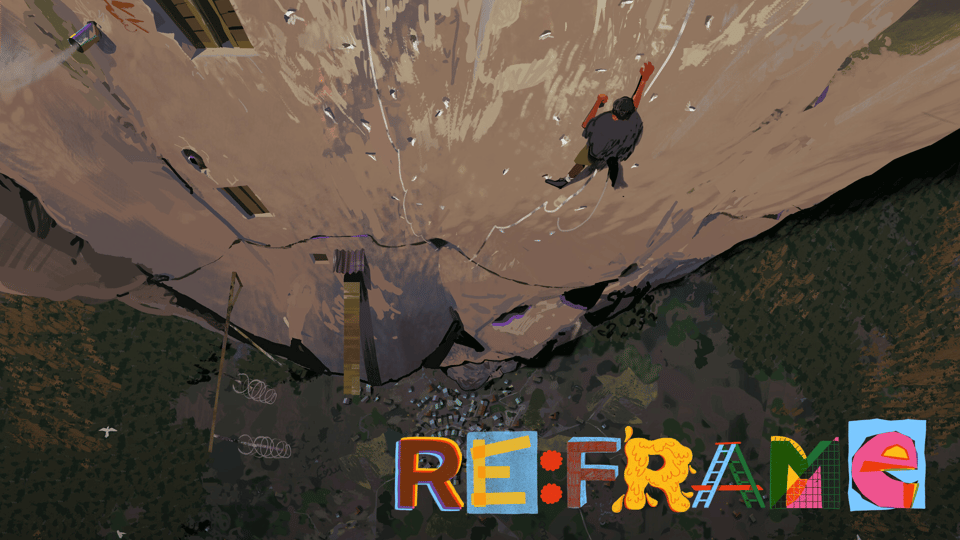
by Toussaint Egan
I don’t know if you’ve noticed, but there’s been an awful lot of games about hiking and climbing recently. Aside from the obvious mention of Death Stranding 2: On The Beach, there’s been breakthrough independent titles like Aggro Crab’s Peak, The Game Bakers’ Cairn, Bennett Foddy and co.’s Baby Steps, and even new upcoming titles like House House’s Big Walk. There’s more than one way to crest a mountain, as each of these games have proven; tackling the same subject matter from wildly divergent approaches in tone, narrative, and aesthetic. This realization got me thinking about one of my favorite games as of late, 2023’s Jusant, and compelled me to finally pick my copy of the game’s art book off my shelf to flip through.
Developed by Don’t Nod, the French video game studio and publisher best known for its 2015 2015 breakout hit Life Is Strange, the story of Jusant’s development dates as far back as 2019. After releasing the final episode of Life is Strange 2, Don’t Nod opened a new branch in Montreal while the remaining team in Paris began work ideating on their next project. While there were dozens of ideas thrown around at the time, it was Jean-Luc Cano, the head writer of the original Life is Strange, who came up with the initial concept of what would eventually become Jusant:
“We were discussing worldbuilding and gameplay,” Jusant co-director Mathieu Beaudelin recounts, “when Jean-Luc Cano piped up and said: ‘How about a tower? We could make a cooperative multiplayer game where players have to work in teams of six. Imagine if all the water was trapped in the tower. The group would have to brave the elements, climb to the summit and pull an enormous lever to re-green the environment.’”
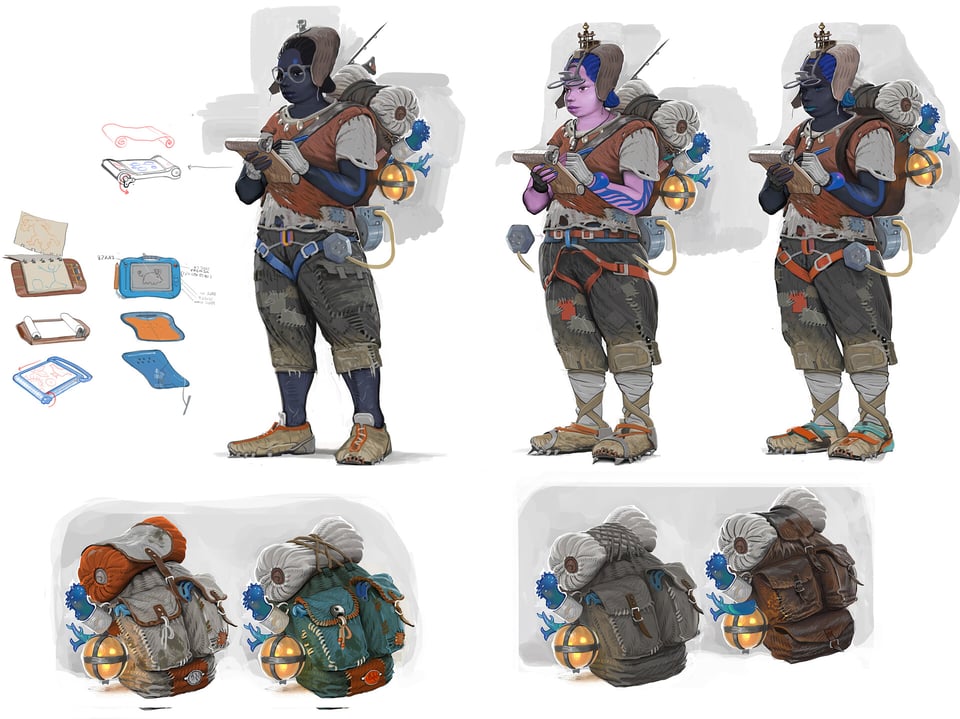
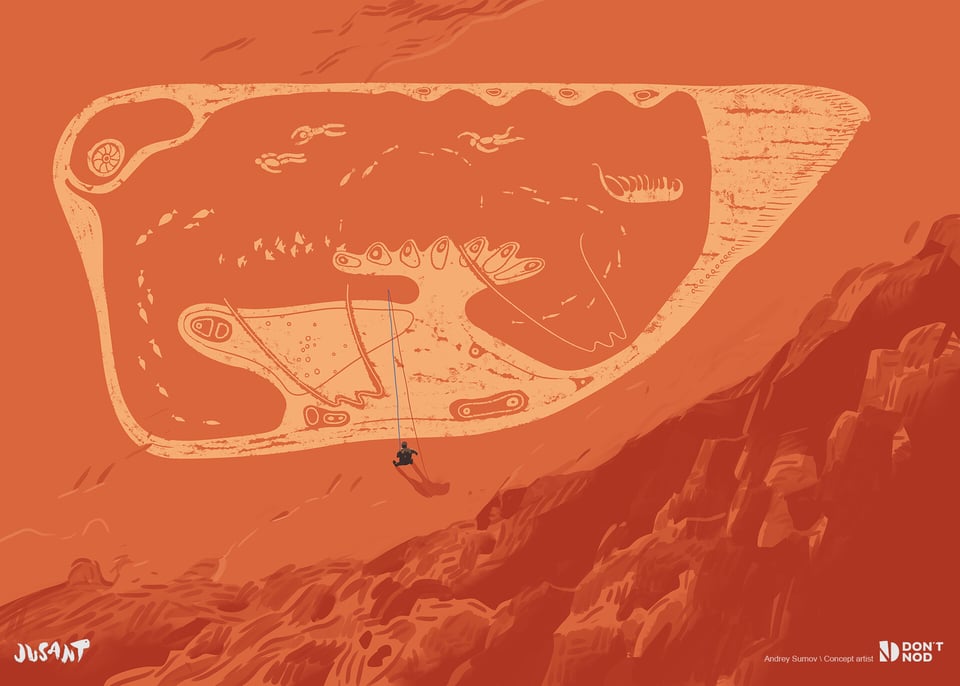
From there, the team quickly went about iterating on the idea, marrying the vertigo and majesty of games like Shadow of the Colossus and the then-recently released Death Stranding with the full-body awareness of games like Bennett Foddy’s QWOP and 2015’s Grow Home. The book as a whole offers an exhaustive account of the game’s entire development process, chronicling the origins behind Jusant’s fable-esque depiction of climate collapse and its story about becoming agents of change in bringing humanity in tune with nature. The artwork, however, is obviously the star and central focus of the majority of the book's duration.
The Art of Jusant is a beautiful compendium of the game’s production materials and concept art, spotlighting the work of artists such as Edouard Caplain, Don’t Nod’s artistic director who was instrumental in the visual design of Life is Strange, Russian designer Andrey Surnov, and UK-based artist Sheng Lam. It feels nothing short of hubristic trying to describe the whimsicality, and sheer imagination on display in these images in words, especially considering the fact that most of Jusant’s story is conferred non-verbally à la 2015’s Journey. The environments are gorgeous, with seashell-shaped houses and Mollusk-like enclaves chiseled out of cliffsides and hieroglyphic murals painted in bioluminescent hues. It’s a beautiful game, is what I’m trying to say.
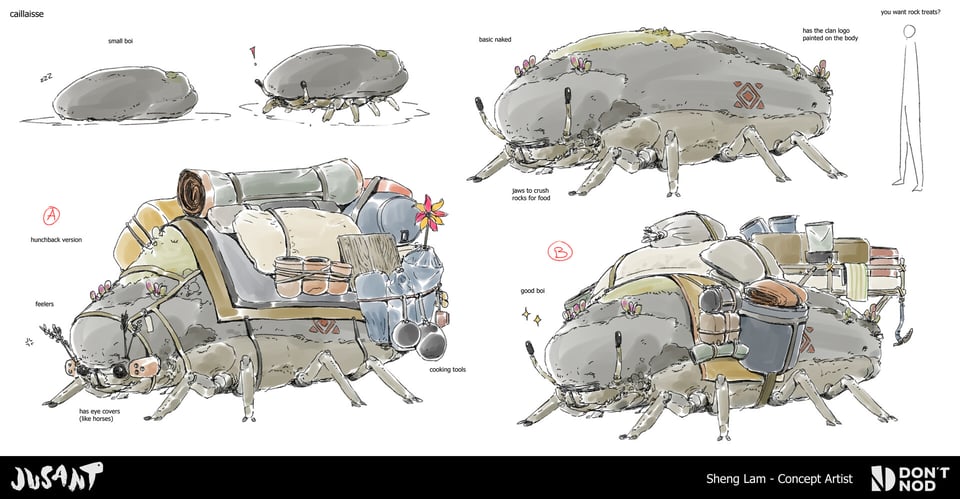
If you have an affinity for any of the aforementioned climbing games I namedropped, or similar eco-friendly speculative fiction like Scavengers Reign, I strongly urge you to give Jusant a shot at some point if you haven’t already. And if you’ve already happened to have played the game and enjoyed it, I strongly recommend picking up your own copy of The Art of Jusant. Admittedly, that might be a bit difficult, seeing as how it appears to be out of stock. At the very least, you can still enjoy the awesome artwork created for the game by checking out the Artstation portfolios of Caplain, Surnov, Lam, and company.
/out of frame
🎥 Toussaint: I finished playing The Posthumous Investigation over the weekend and I had a blast. Terrific artwork and a jazzy soundtrack all wrapped around an engaging literary noir time-loop premise. I also watched the noclip’s six-part documentary on Disco Elysium, which was an equally inspiring and sobering account of the game’s creation and the tumult left in the wake of its commercial and critical success. I highly recommend it.
🦸 Kambole: As well as the excellent Witch Hat Atelier (which I covered in the last newsletter), I've been catching up on the adaptation of Invincible. Hard not to wish for a little more adventurousness in the show's actual design and direction or more expressive acting between big battles but it's otherwise mostly fine – carried by expressive voice performances and the bones of Kirkman's comic (and the occasional squirm-inducing brawl), with some of the pure shock value moments turned down… a little. As the series hits its halfway point, a part of me hopes that it can add a little more visual flair to go with its reflections on comic book tradition.
🦫 Rollin: Finally saw Hoppers over the weekend, and you know what? This Daniel Chong fellow is going places. (We Bare Bears is a personal favorite, and "This MY Squad" has been my ringtone for years and years.)