Timing is everything
We interview Spktra about learning to animate his own music video, and finding the common rhythms between mediums.
by Kambole Campbell
A little while ago, a music video by an electronic artist named 'spktra' caught the eye of a number of animation publications – including my regular haunt Cartoon Brew and our friends over at Animation Obsessive.
What stood out about the music video, titled 'Spirit Jumper,’ was its reconstruction of cel animation, so true to form it's as though it leapt straight out of memory. Anyone who has read this letter knows that making animation isn't so simple as a thought just emerging, and of course, spktra (real name Josh Fagin) had spent five years researching and teaching himself the craft of animation as well as how to find the specificities of this look. As per the aforementioned interview, Fagin even sought out Glenn Wong, who worked on Batman Beyond, for character design, and the video was animated by Tamás Pazmany and Regina Nemes, who, according to the interview with Cartoon Brew, deliberately included inconsistencies in cleanup and left intentionally broken lines to better emulate the look of animator lines being transferred onto cel.
Fagin reached out to us a while back to share a little more about the project beyond the fantastic in-depth essay on lighting which he penned for Animation Obsessive. We spoke a little more broadly about linking the rhythms of music production and animation production, as well as how he sought out the little imperfections which contemporary audiences find themselves craving from visual arts.
How did you make the jump from music production to animation?
spktra: It's always felt like there is a line between producing music on the computer and animation because, in some ways, they're both starting with a blank page, and you're having to build the world you want from scratch.
With a computer, there's synths and samples and you could put those things in, and they give you a sound, but it's not quite like picking up a guitar or filming something, and exactly what you see is what you're getting. So I always felt like there's some sort of similarity in that.
But I didn't even know if I could direct anything. I don't draw, I'm not from the animation industry. I just read as much as I could, watched as much as I could, reread those same things, rewatched those same things, and here we are five years later.
I suppose animation and music are entirely different artistic practices, but at the same time they ultimately come down to timing. Because you were animating for a music video, I was wondering what your thoughts were on the connection between the timing of your music and the timing in your animation and how that affected how you learned.
It was crazy to me how musical it was. I've been playing the drums since I was about nine. So rhythm has always been the thing I've really understood, and I've watched animation for years. And it wasn't really until I started analyzing it and breaking it down, to learn how I could best speak to animators as I'm doing this, where it really clicked.
I was like, "Oh, it's all timing." And even when you, as a person watching it, think "this feels really bad. I don't know why, or it looks bad." A lot of that is timing. I think bad drawings can look and feel good if the timing is well done. It's all about those little subtle details that you don't necessarily see, but you feel when they're present, and you definitely feel it when they're lacking.
So I was learning all this stuff, understanding the concept of things like limited animation and stretching the most out of a scene that you can within a budget. It's so different from music where you can just infinitely do takes, you can infinitely tweak and change things around. You have to do the complete opposite with animation. Everything has to be way more deliberate and thought out from beginning to end, and so it was a totally different way of thinking for me.
But from the timing side, I was able to really figure out how to reuse shots in a creative way that you wouldn't even know that they were the same shot being reused across the film, or looping things in a way that doesn't feel like a loop. The way I would think about it was: in music you have eight bars, 16 bars, 32 bars, and like an eight-bar loop, it’s very apparent that it's looping because it happens every eight bars, so the loop is a lot quicker.
If you have like a 16-bar loop and you make it dynamic within it, it's less obvious that it's a loop, and so on and so forth. The more dynamic you make things within that loop, the more you can get out of it. Not that we use tons of loops, but it's these little parallels between music and the animation side where I realised that the mechanism of creation is very different, but the concepts are really similar.
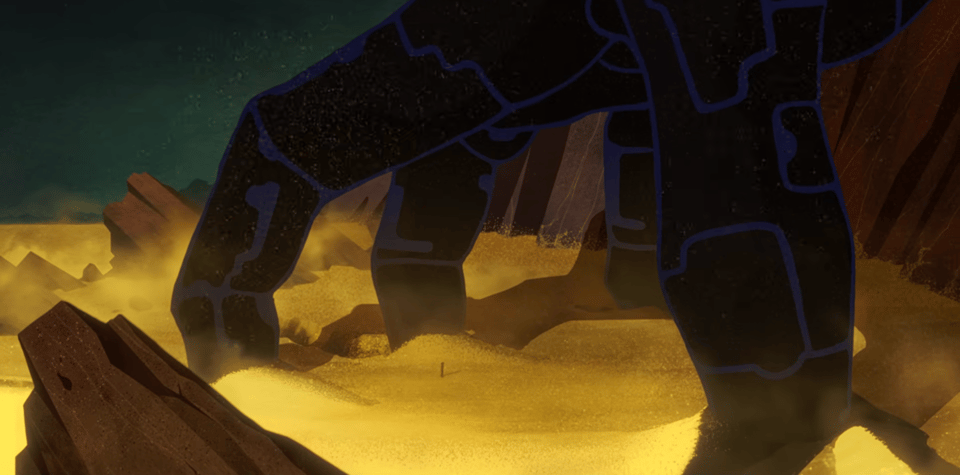
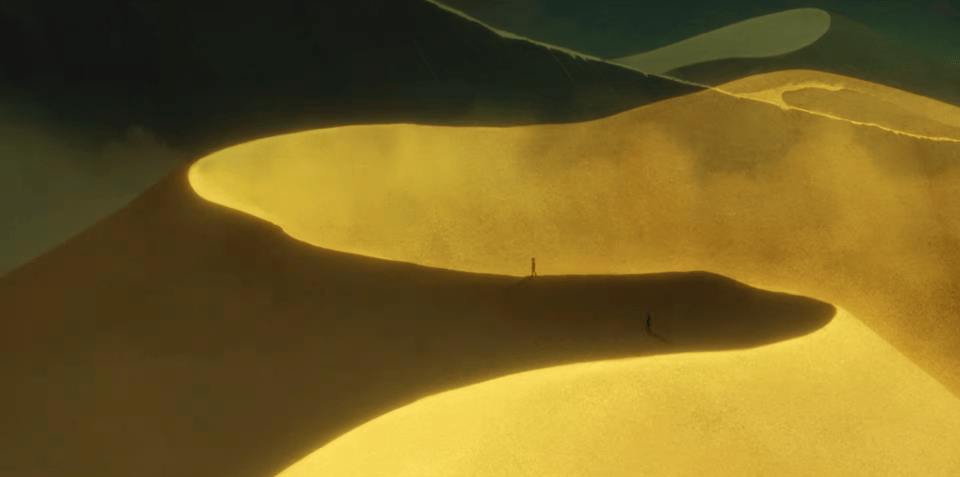
There's another interesting parallel in using software to simulate instruments and musical texture and then essentially doing the same for the music video, though you're visually chasing this specific era.
I think my thesis with the music, with the album, and with the animation is something I touched upon in the animation obsessive article, where you're at the opposite end of the spectrum of the shift from analog to digital, where they're trying to make things as clean and error-free [as possible].
To me, the space that feels good and that we as humans connect to, is physical. Grain, noise and music is physical, it's a realistic response to the environment around it. Whether it's the electronics in the area or in the grid or the cords you're using or the speakers, there are all these things that feel tied to reality, but then you get to computers, and at every step, it's perfect. And so you have to really fight to put all that stuff back in. But you can also be really selective about what you do. You almost pick the best parts, and not do the worst parts, where you're chasing your tail, trying to make something clean. You can just jump more or less to the point of "this is how dirty and textured I want it," and it's not any more or less than that. And I mean, it's the same thing with recording to tape musically, it was a nightmare.
You'd finish mixing something. From everything I've researched, so much of the sound of recorded music is through tape, until it wasn't. There's this fetishization about the good old days of mixing and the good old days of film and stuff like that, but it totally ignores the annoyances and the difficult things and the inconsistencies. Where with tape, you could record something, and the next day it would sound totally different simply just by sitting there, and that's not a good thing. That's really annoying!
It'd be like if you wrote something, and the next day all the words changed. But in some ways those are the things that make physical mediums what they are, for better and worse.
And that's what I touched upon with the light thing too. When you start looking at things like bloom inhalation, as much as those are pleasant things to us, they're technically errors. So the computer removes all that. With every single thing in audio and film and trying to emulate physical media, you have to almost look at what all those little errors are, because the sum of all those little things are what makes it feel authentic.
Why specifically the ’90s as a touchpoint? What about that era of animation fit with your style of music?
I felt, especially sonically, so much of the things that I was really inspired by were bands like My Bloody Valentine. There's a jungle producer named Omni Trio, and the album touches upon a lot of other sounds, but there is this root in that decade.
There's just a trend in electronic music which just keeps coming back. It just never dies. It always comes back as a more watered down version of the previous imitation. But it's just a recreation of '90s house, or like the most generic sounding '90s electronic music, when there's just so much other amazing stuff, and I didn't want to make something that just felt like I'm imitating this same thing.
I wanted it to feel like I'm just pulling from colors of that time period, less than trying to recreate something that necessarily exists in that time period, if that makes sense. And so, for me, when I think of animation and where that love started, it was waking up on Saturday mornings or after school and watching Batman: The Animated Series. That was the first piece of animation that I really remember discovering and definitely loving, and it's stuck with me throughout my whole life.
Maybe in some part the texture of that was imprinted upon me as I got older, and I was writing [Spirit Jumper] and asking myself, what do I want this to feel like?
I spent a lot of time looking at recreating the splatter textures and airbrush, they would use a toothbrush and dip it in paint and thumb the toothbrush head to splatter the paint. It gives it this grittiness that I just love, and you don't really see it in a lot of other shows, and it's totally different from anime style backgrounds that are detailed and textured and painterly in a very different way.