A longer shorts shortlist
Ahead of the 98th Academy Awards, we add some alternatives to this year's animated shorts shortlist.
by Juan Barquin and Kambole Campbell
I normally pride myself on avoiding any and all Oscars discourse, but the animated shorts section always still calls to me. So often it ends up becoming less of a showcase of what truly fun, and sometimes groundbreaking, exercises are happening in animation, and just a category dedicated to disappointingly conventional storytelling. Kambole and I have spent a hot minute complaining about how many of our favorite works get overlooked and how, well, uninspired the nominees are this year. They're fine, mostly, but they're also things we've seen before. So I decided to watch as many of the eligible animated films as were available online (or through requests or [REDACTED]), and used this excellent longlist for the sake of finding as many as possible.
Some of them were wonderful works I’d been lucky enough to catch during past festival screenings. A few favorites that I would recommend checking out are: Jan Saska’s Hurikan, a playful rush through Prague starring the hottest anthropomorphic pig since Porco Rosso; May Kindred Boothby's The Eating of An Orange, a sensual and surreal exploration of liberation reminiscent of Suzan Pitt's films; Jordan Michael Blake's Paradise Man II, an oddly inspirational bit of surreal and existential self-reflection; Cynthia Calvi's Gigi, an intimate and touching tale of real transition told through fantasy; and Baz Sells' Two Black Boys in Paradise, a precious and beautifully crafted queer stop-motion short that recently won the BAFTA for this very category.
And I’m going to stop listing things before I reach like 50 movies I really dug, all of which I’d argue are probably better Oscar nominees than those selected. So, in an effort to highlight some alternative choices, here’s my picks for what should have been nominated. – JB
12 Inch Pianist
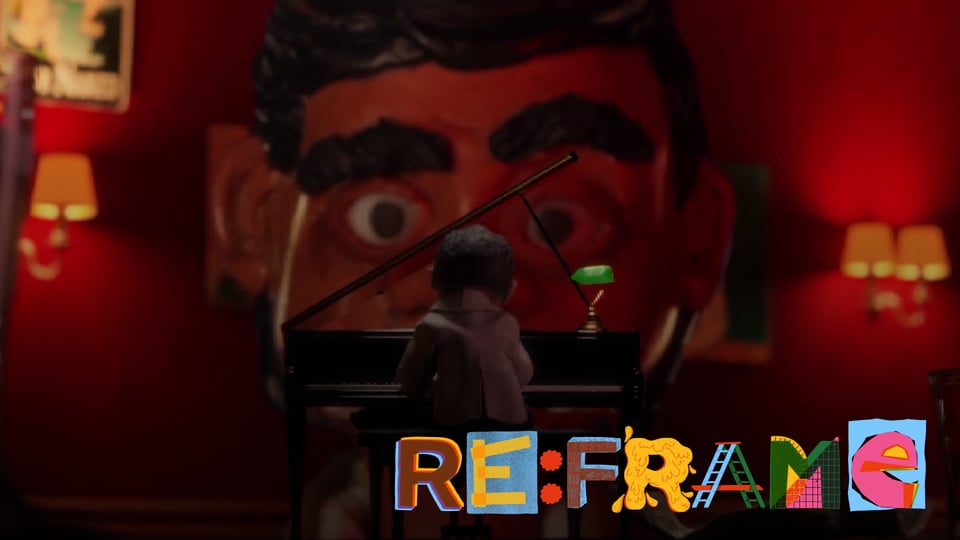
Every kind of "guy walks into a bar" joke has been told, but, back in 2013, the New Yorker published a wonderful variation on the one about the twelve inch pianist by Simon Rich. Even without the knowledge of how this tale plays out, the subversion is obvious as soon as Lucas Ansel’s stop-motion short delivers its first punchline, "You think I wished for a twelve-inch pianist?" and immediately pivots into a hushed drama about the bartender and his pianist. For a split second, the short feels bound to leap right into Anomalisa's depressing territory (and certainly the ultra-human model work feels comparable), but that’d be too obvious. Instead, 12 Inch Pianist never steps back from its sense of humor, always willing to figuratively and literally wink at the audience, but Ansel and co-writer Charlotte Wadsworth approach Rich’s story with absolute earnestness.
Their approach, including slight changes to the source text including some delightful wordplay gags, makes the whole thing feel more tender than one could ever expect. In great part, that’s because of the casual realism of the stop-motion animation itself, where the faces of these puppets look as weathered as any given human being drinking their troubles away. 12 Inch Pianist isn't just about making a joke land (or flop, as so many often do), it's about creating a universe in which the tiny tales we overhear become something unforgettable and massive. It's hard to say more about the short without giving it all away, but suffice to say 12 Inch Pianist is as tightly-scripted and hilarious as it is sincerely sweet.
Ordinary Life
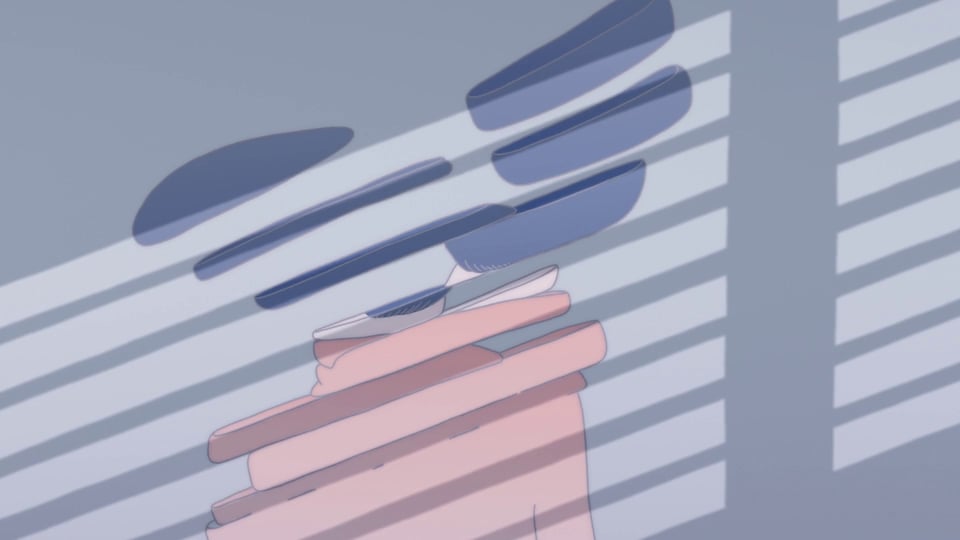
As it is one of the only shorts still unavailable for viewing, you'll have to just trust my recommendation on this one: Yoriko Mizushiri's Ordinary Life is easily the most intoxicating thing I’ve seen out of an animated short in a while. Having spent the past year curating a series around surreal animation, getting something this gorgeously and unabashedly avant-garde was a treat. Every beat of this is about indulging in minutiae presented in pastel hues and the way that these miniscule moments of our lives can often carry a great weight. Any sense of a traditional "plot" goes right out the window, as Mizushiri is more interested in offering slices of life – walking a dog, cutting one’s hair, wondering if the ring you once wore means anything – that feel reflective of the transitory periods in our life that make us question our very existence.
Kengo Tokusashi's soundscape is essential to the hypnotic imagery that Mizushiri offers up here, as well as in their previous collaboration Kamakura. What feels gentle at first in its minimalism shifts into unsettling and erratic terrain in the best way. And there's a tactility to the way she presents these objects and bodies shifting in slow-motion; you can feel the way a finger pulls up a dog';s lip to reveal their teeth as much as you can imagine the taste of that nigiri on its rotating platform. There’s a sensuality to every single gesture, be it action or reaction. For some, her work can be easy to dismiss as too enigmatic, as parsing the meaning of these sometimes disparate images can be admittedly tough if you're not on their wavelength, but that's exactly what draws me in.
Les Bêtes
To watch Michael Granberry's Les Bêtes (translating to The Beasts) is to step into a world that’s as horrifyingly beautiful as it is familiar. This is, in part, due to its very design as a stop-motion fantasia, a mode of animation that many have used to create odd and unique realms throughout history. But it’s also because the bare-bones narrative could easily be categorized into a tale of the rich exploiting those they deem as below them (and the inevitable rebellion that is bound to happen). The thing is – that kind of framework is easy to overlook when the craftsmanship on display is as engrossing as it is here and the sheer scale of what’s on camera at any given moment is as impressive as can be (especially when compared to the relatively pared-down work on 12 Inch Pianist).
Granberry doesn't limit himself to the traditional clay or puppetry (though there's plenty of ;'em here), but also creates characters out of a wide selection of everyday objects: a bundle of sticks can become a man, pieces of tissue paper can float and dance like fairies, glass gem marbles representing waves in the water. That Les Bêtes was inspired by the works of Władysław Starewicz will be obvious to anyone who has experienced his work, but just popping on something like Le Lion Devenu Vieux (at 42:33 in this collection) gives an ideal glimpse into the way Granberry’s character design, facial work, fluid movement, and shot compositions are all indebted to him. This isn’t just a great short, but a chance to open the door to a century’s worth of stop-motion (and I’d like to humbly recommend watching the first short in the linked Starewicz collection, The Cameraman’s Revenge, which is a short from 1912 revolving around a married pair of beetles cheating on each other).
While Juan has come in with choices that look beyond the Academy nominations for more experimental choices, my duet of picks here are perhaps the opposite to theirs: more reflective of my surprise that they weren't a home run for the academy, despite their shortlisting for the category. They're beautiful but relatively straightforward shorts, including one from a studio which has shown to be a darling in the animated features category quite often. Gentle additions to the shortlist rather than superlative replacements: all worth watching! - KC
Snow Bear
Veteran Disney animator Aaron Blaise solo-animated this sweet tale about a polar bear making its own friend. There's an environmentalist angle tucked away in this melancholic story, the bear's loneliness a symptom of dwindling populations as a result of climate change. I've been feeling wistful about bygone eras of animation lately, and Snow Bear is a showcase for a classical style that I wish would be back in vogue again. This isn't exactly a hidden gem, given the massive YouTube viewership, but it being the populist choice here also made me think that some more folks who are subscribed to this letter and by chance might not have seen it would appreciate it regardless.
Éiru
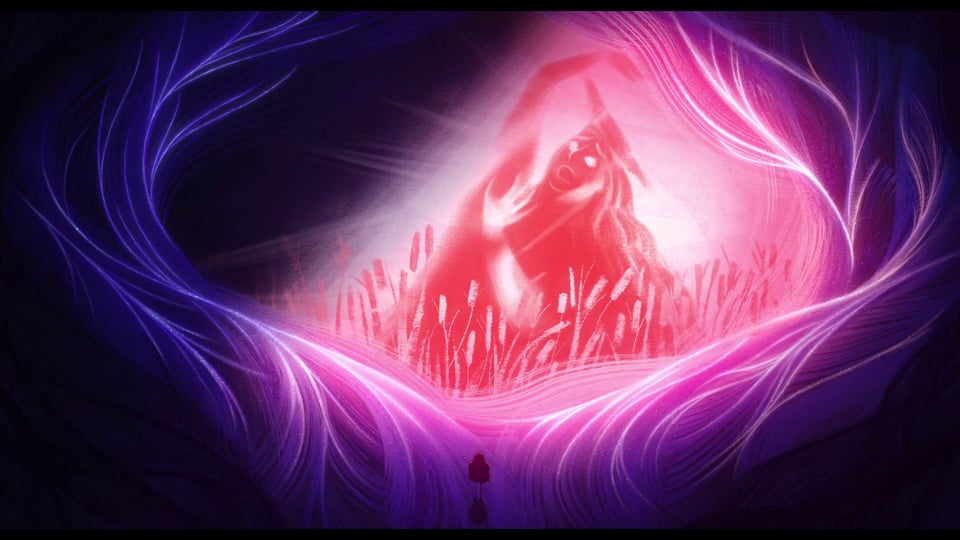
The hallmarks of Cartoon Saloon's style are immediately all over Éiru, a pacifist fable which dips into the realm of dreamlike fantasy. Directed by Giovanna Ferrari, who worked as an animator on Wolfwalkers and later as an animation director and head of story on My Father's Dragon, it follows a girl from a warrior village who delves into her village well to see if she can fix what's wrong with their water source. The phantasmagorical journey which follows is gorgeous, this secret world defined by swirling fluorescent colors. I'm going for style over actual substance here, because Éiru is a little didactic in terms of the delivery of its message, its finer moments of visual storytelling coming from choices in character design (like Éiru's softer silhouette compared to the jagged lines of her more violent kin) and production design.
Juan Barquin is a Miami-based writer, programmer, filmmaker, and co-creator of the queer film series Flaming Classics. They aspire to be Bridget Jones. Find them on BlueSky (and everywhere else) with the handle woahitsjuanito.