One conversation with Kensuke Ushio
Re:Frame interviews the prolific composer about his work in animation, collaborations with director Naoko Yamada and his European techno influences.
by Kambole Campbell
Seeing the name of the Japanese composer Kensuke Ushio (also known by the moniker 'agraph') always makes a project more exciting for me. The Tokyo-born musician has been working on anime projects since 2014's Space Dandy and Ping Pong: The Animation, directed by Shinichiro Watanabe and Masaaki Yuasa respectively – both very different and eclectic projects, Ushio matching that energy while keeping their identities distinct.
But Ushio had prior experience making themes for anime, through his former band Lama their song "Parallel Sign" was used in Eureka Seven AO. But his discography related to anime has become much more vast since then – having continued to score projects for director Masaaki Yuasa's former studio Science Saru and longtime friend Naoko Yamada on many of her projects since 2016's A Silent Voice (and in some cases both, like with The Heike Story and The Colors Within). With A Silent Voice playing for its 10th anniversary and Cocoon also playing at this year's Scotland Loves Anime festival, we spoke to Ushio about the different workflows for composing for the screen, his collaborations with Yamada, and growing up loving techno in the '90s.
What do you think makes a good song, and what do you think makes a good song for anime?
Kensuke Ushio: When it comes to anime music, I don't think it's up to me to decide. I think it's up to the director and the audience, so I don't know that I necessarily think "is this a good track" or not.
Personally, I love experimental music, and when I'm experimenting, I want to go in a direction that I've never heard before. The tools and the technology I have are for making electronic music. So the canvas I have is limited, but I want to be looking for something I don't know, something where I don't understand what's happening. I like to say that "if I understand what I'm saying, I'm not there yet." Even in Japanese, it's really difficult to explain this!
It's the same with any field, but I don't like being limited, so I don't want to restrict myself with words.
Speaking of the requirements of the director – what's your experience of the differences for composing for animation versus live action?
When I'm working on an anime film, I can be working on the music until the night before the preview screening, but if I'm working on a live-action film, at the point where I receive it or the point it comes to me, there is already sound. There's already sound effects because they've they've recorded sound, and so that's what has the biggest impact on me is the fact that the sound is already there in a live-action film.
You're writing tracks for particular scenes, and if you have a character falling over with a big crash, you don't want your melody to be hidden by or be overlapping with that. So you have to arrange it so that they are offset. It's not the artistic side, but the workflow that changes.
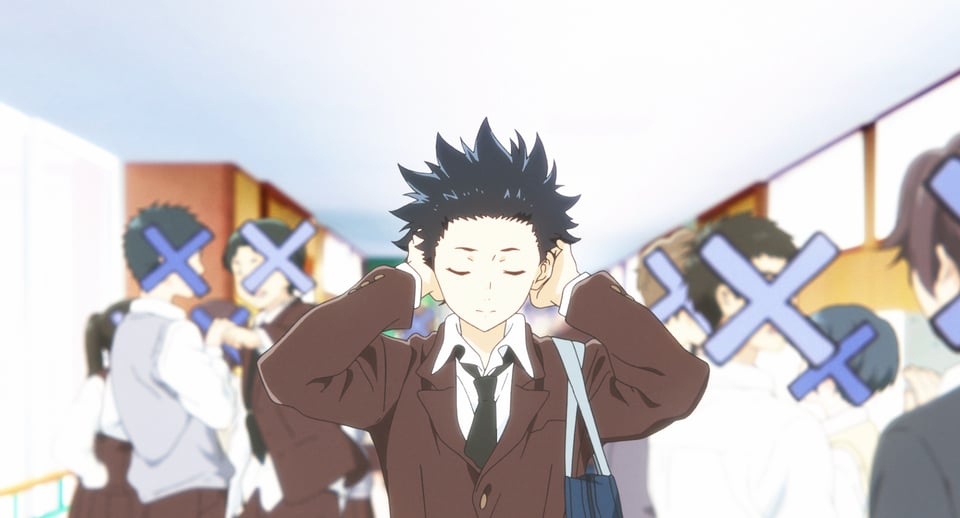
It's been a decade since A Silent Voice was released – I remember the gentle nature of that score very fondly. I was actually hoping I could hear a little bit about your work on that film with director Naoko Yamada. What were her hopes for the soundtrack, and how did you interpret that?
[Yamada] and I are friends from before we started working together, we do what we call concept work, which involves having a long conversation, but rather than using words we might bring a painting as a reference, or we might talk about poetry or certain architecture in order to get to the bottom of what kind of film this is. And then she will go off and do storyboards, and I will go off and create some music, and by the time the storyboards are ready, in this case I had I think 50 pieces already.
And so there is no direction from the director per se. We still work in the same way now: we start off by talking how we feel about it. There is no, "this is the kind of music I want" from Yamada-san. That way of working, starting with the concept work and then starting work on the music before receiving any kind of direction from the director, I think turned out to be effective. It's creative and an easier way of working for me. So I do try to incorporate that way of working, where possible [as] I'm not always working with director Yamada.
So it's a very open process?
Yes, but it's really closed for just the two of us. When we have the concept work, I make people get out. So people in the production team really hate me. [laughs]
What kind of paintings were you looking at for A Silent Voice?
I think we looked at work by the Italian artist Morandi and [Danish painter] Hammershøi, who are some of our favorite artists. So we do come back to them.
Did you come back to those painters for Liz & The Blue Bird and The Colors Within?
I think I remember we did bring that art book for Liz & the Blue Bird as part of our concept work, but the main concept for Liz & the Blue Bird was from elsewhere. So it's not always one that we use.

You've composed for a pretty vast range of genres across animation – what's the difference between composing for anime akin to A Silent Voice or more action-heavy work like Chainsaw Man or Dandadan?
The process of starting by creating a concept and then fleshing that out doesn't change. I often describe myself as a coffee filter. So you just put in different beans. You put in the Chainsaw Man beans, or you put in the Silent Voice beans, and it makes different coffee. But there's a range there as a composer, but it doesn't really change the way of working.
I suppose then maybe I should ask, what do you enjoy about working with the more industrial or drum & bass-inspired sounds of Chainsaw Man compared to the more ambient tones of your work with Yamada-san?
I started in music by learning the piano, and then I was awakened to techno music, and so I've always had these two aspects: the quiet music and the aggressive electronic music, side by side. You know, I would go to clubs and dance till dawn, and I would sit in front of the piano and listen to a single note. They've both been there in parallel, and I have this inexplicable, primitive love of all of it.
We've spoken about you homaging "Born Slippy" in the past in The Colors Within, so I wondered what other specific musicians inspired these two sides of your work?
I was in my teens in the late '90s in Japan, and we had a kind of fusion between the Japanese underground scene and the German underground scene. So like DJ Hell, and WestBam and the German underground techno heroes, and then UK acts like Underworld and Chemical Brothers and Aphex Twin. And I love Warp Records. It's almost embarrassing that they're all so obvious, but those were my heroes in my teens.
I love Aphex Twin – any particular tracks?
Avril 14th. I think Aphex Twin has a quiet side. It's not the melody [in Avril 14th]; it's the texture of the piano, which is something that I have been trying to recreate for decades. And it's this small piano sound [which seems] like it's resonating in a small little music room with like dust floating around in the air. It's poetic. That's the sound.
We've spoken a lot about the intangibles of making music but as you said, you use a lot of tech. Would you say there is a scientific component to it too? Full disclosure, I'm not a musician at all.
I think there is; I think it's a bit of both. I think it's also something that I sometimes don't think about, because even though I'm very much from the arts background, to me science is something almost entirely separate. But also art is supported by technology.
When the piano was invented in the 17th or 18th century, that was the height of technology.
Simple one now – what music have you been listening to this year that you've enjoyed? Actually, maybe it's not simpler.
Recently, to be honest, I'm so busy I don't have time to listen to music or watch movies or anything. But there is a German composer, Carsten Nicolai [aka Alva Noto], who has brought out an album for 12 Conversations, which is a rearrangement of the music of Ryuichi Sakamoto from before he passed away. So I listened to that.
What do you like about it?
I cannot explain music in language… it's nice for just zoning out. [laughs]