Hello, Goodbye, Lara
Kinema Citrus' 15th anniversary production is a brilliant modern take on a classic story.
by Kambole Campbell
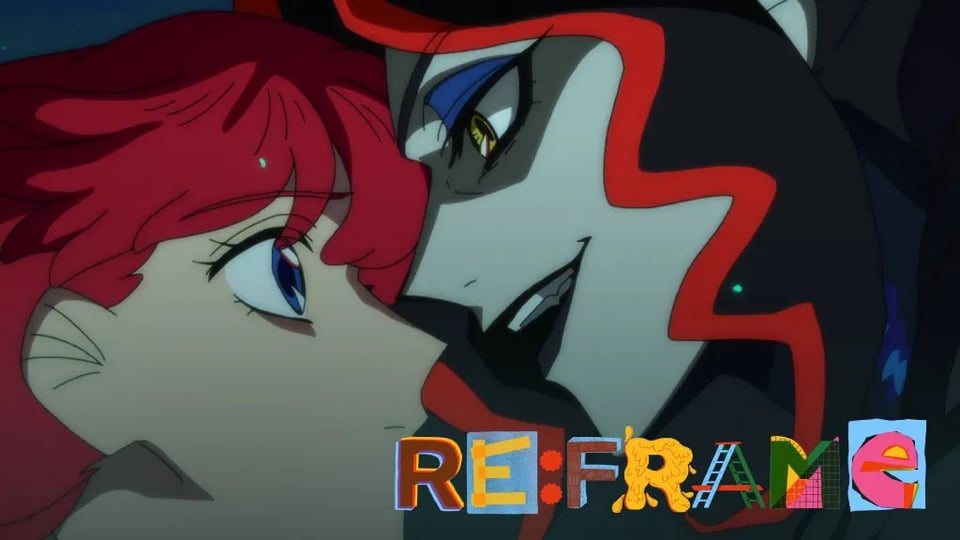
The Little Mermaid has been adapted countless times, a couple of those being in anime. But there are a number of things – other than the tentative yuri romance – which make Goodbye, Lara, directed by Takushi Koide in his series directorial debut, a highlight of the current anime season. The alternate path it takes from the Hans Christian Andersen fairytale occurs midway through its fantastic first episode prologue. Beginning in 1777, the story speeds through Lara's young life from birth through to the age of 10 and then adolescence.
The familiar notes are all there: throughout her childhood Lara is, to the frustration of her royal father, drawn to the world of humans – verboten to this world of mermaids. Lara's conviction that humans can't be as bad as he says is only strengthened when she encounters a human prince, an act of defiance which lands her in jail (?!) and introduces her to her banished aunt Grace, a witch. Grace gives Lara a forbidden potion so that she may explore the world of humans.
The catch is that she must find true love or turn into sea foam. Like in the Andersen fairytale (rather than the idealistic Disney version), the Prince ultimately rejects her, with Goodbye, Lara framing this through the lens of xenophobia as he recoils in horror at seeing her tail, calling her vile. Things fall apart, and she's given a second chance by Grace to visit the human world to find love: only this time she emerges in the year 2026, in the lakeside Otsu City, in Shiga Prefecture.
Lara and Mari's meet cute will be familiar to anyone who has seen their fair share of anime shows, with a strange girl falling out of the sky, though the spin Goodbye, Lara puts on it is both funny and immediately illustrative of the dynamic going forward. Mari doesn't flail or panic, she plants her feet and punches Lara in the face to break her momentum. (Don't question it, cartoon physics are at play.) Even with that playfulness, the darkness of an 18th century fairytale still reveals itself every now and then, such as Grace cutting Lara's tongue (and later joking about doing it again).
The animation production from Kinema Citrus is gorgeous, committed to a modernization of an old school style rather than just pure recollection, although it has some of that too (there are actual animation cels used in its opening). It captures the feeling of watching an older, pre-digital series and uses that for a story deeply concerned with the present, its classical anime rom-com touches and tropes never really feel like relics or an overly nostalgic reprise of children’s classic. (That said, there are some images in the premiere which do feel like a nod to the Musker and Clements film).
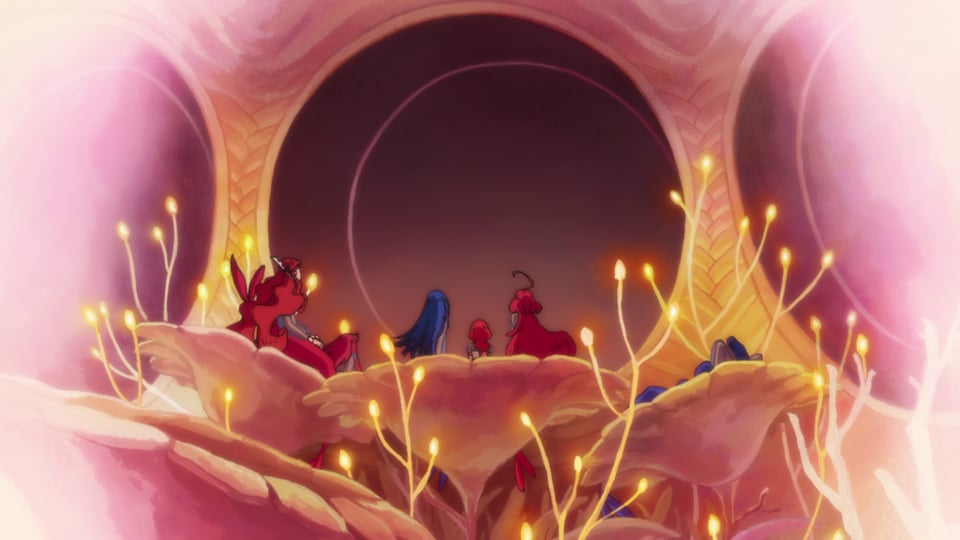
There's a poetry in how Goodbye, Lara recalls classic stories and styles of animation while building a story about not blindingly following the rule of law or tradition. Grace is one such example, the stereotype of the evil witch who in other stories would seethe with jealousy at Lara's youth and try to ruin her life out of that spite. But instead Grace beseeches Lara to break the rules so that she might truly live, and, in the episodes I've belatedly watched, seems mostly fine being Mari's pet fish and confidant (Mari is aware she can speak, it's a crucial point of the character that Mari believes in all the mermaid stuff but also isn't really concerned).
The fourth episode hints at Lara reconciling her still rather traditional beliefs about love with her emergence in the modern day by having her ask "what does it mean to be a prince?" while scrolling through movies and series about romances with princes on a streaming service, if the direction of the show wasn't already clear, by the time she met Mari. To its credit, the show doesn't over-emphasize Lara's fish-out-of-water unfamiliarity with the human world for laughs right out of the gate. There's an earnest exploration of modern love and its complications which stem from her naivety and questioning of everyone around her. When it does come time to poke fun at a royal mermaid trying to get a job, of course Koide and co. have what fun they can.
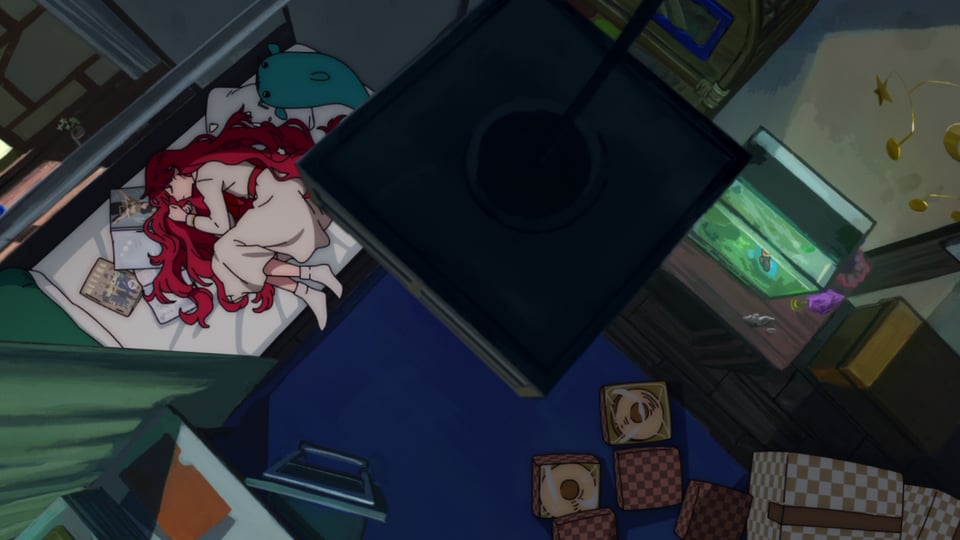
This sense of harmony between the new and the old is expressed beautifully in the show's visual direction, which even in a season full of pastiche and homage to the design sensibilities of the ‘90s, still stands apart for how it sheds a lot of the digital affectations of present day anime. Intentionally flattened shading and bold colors couple with character designs (courtesy of Shiori Tani) all feel quite classical – the volume of hair, the bold arrow-point noses and sharp chins all evoking the past in a way which feels fitting for a show which begins with a recounting not just a history long since gone, but the story of a classical fairytale. I also enjoy a lot of the smaller visual touches, like the gill-lines on Lara's ears or even how her blanket at Mari's house resembles her old tail.
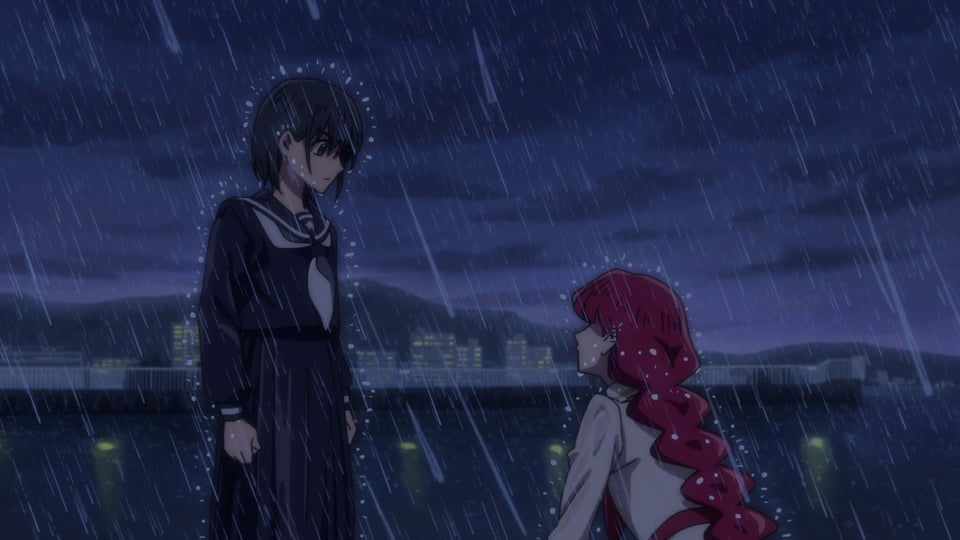
As well as the beauty of the density and color of the city, there's also some really good-looking water: the way the rain creates an aura around its characters, the allure of the surface of the lake in multiple colors reflecting off its surface, as well as the beauty of the water's depths. No surprise given that there is a credited 'Water Artist' in Naoki Yoshibe as well as MON, the 'Deep Sea Image Designer,' and also, you know, part of the subject of the series.
Beyond the art direction, the animation itself feels like a balance of fantasy (both in terms of the mermaid lore and the romance) with a sense of patient observation of the mundanities of the human world which remain wondrous to Lara – even if it's discovering how the ring pull on a drink can works, one long cut of animation showing Mari using a vending machine, giving Lara a drink, and showing her how to open it in one unbroken shot.
There's a sense of restraint throughout. That's displayed in part by the show's delicate soundtrack from Yuma Yamaguchi, with motifs that are a satisfyingly minimal dance of strings, piano, saxophones and minor vocalizations. It's also visible in the care put into the quieter moments and not just having an obsession with the bigger emotional scenes. That gentleness paves the way for such moments to stand out even more, like a lake exploding like a fountain in tandem with Lara's subconscious realization that she loves Mari (there is also a gigantic and ominous fish-shaped object which hangs over the lake after that).
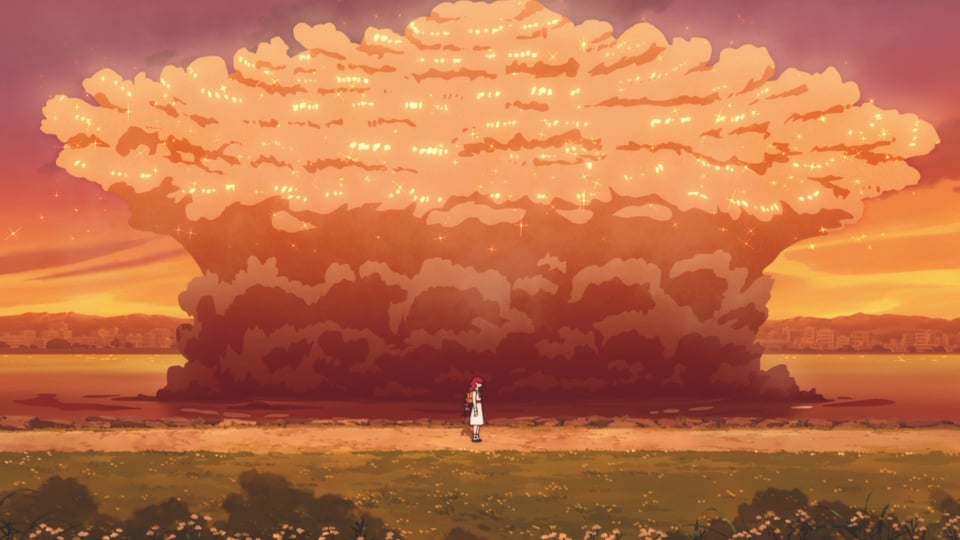
Not that Goodbye, Lara is quiet and contemplative all the time, it's also exuberant and fun, and even has some great boxing action, of all things: the third episode focuses on Mari, her competitive spirit and her love of and dedication to the sport as well as unpacking a tense rivalry with the captain of the boxing club Nagahama. This is to say that, even in Goodbye, Lara's appreciation of a time gone by, there is a sense of flexibility in the story and style and its thematic interests in expanding a character's rather traditional and myopic worldview, which goes a long way to making this feel far from retroactive.