False Memory, real shit
This exciting new Bilibili original harkens back to '00s anime, but doesn't settle for pastiche alone.
by Kambole Campbell
In a summer season rife with anime throwbacks to the cel-animated days of yore, False Memory is fascinating for how it embodies nostalgia for the media of millennial youth but also examines its own motivation to retreat into the past, asking if it's at the expense of the present.
Shuyu Li and Wenyu Liu's animated series, produced by Flint Sugar and Studio Tumble for the Chinese streaming platform Bilibili, is based around the idea of "memory collectors" – individuals who "exist inside memory," but ones specifically around instances which aren't on record, as they work somewhere between service worker, anthropologist, and archivist as they plumb the depths of others memories. The full series is now showing on Bilibili (with paid access on YouTube, the episodes are free later), following on from a popular 2021 short film pilot.
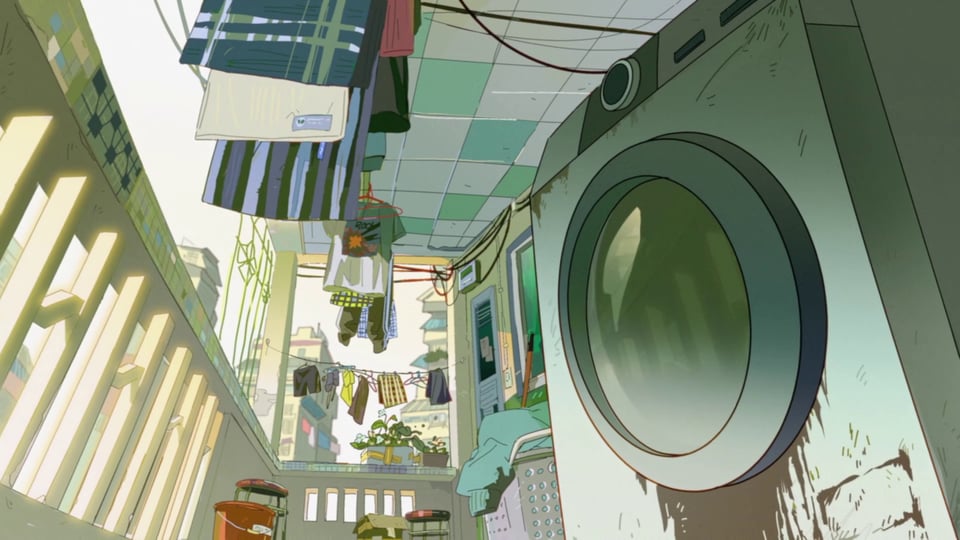
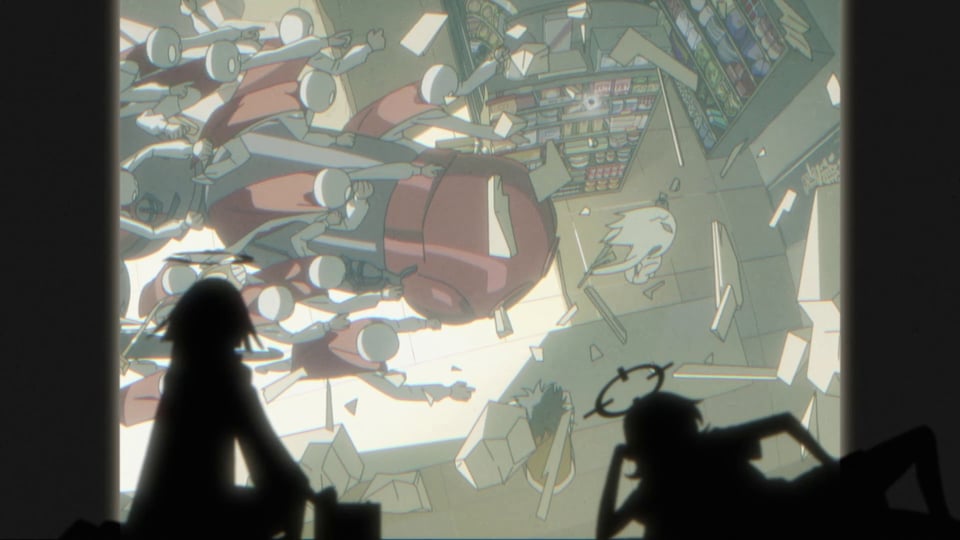
My first encounter with False Memory was only a couple months ago, at a Chinese animation showcase at Annecy's MIFA programme. The style immediately caught my eye, as its inspirations are rather immediately identifiable: it's a donghua riff on the visual stylings of early 2000s anime darling Fooly Cooly (FLCL) as almighty powers intrude on an otherwise mundane life, with teen angst externalized as larger than life action and incredible destruction, ("I'm actually looking forward to the end of the world. Every day is so ordinary now," one character says.) Giant objects quickly and gleefully leveling buildings, it's all driven by high energy and a taste for the ridiculous.
But the flexible premise, one based in a realm outside of reality in a more malleable plane of memory, gives False Memory the license to try on a number of different looks. For starters, different worlds or areas or even planes of existence are demarcated by different aspect ratios: 4:3, 2.35:1, 16:9, potentially more in the episodes yet to come. There's an emulation of the screentone of comics in one moment, the texture of cel or VCR static in another, a cleaner digital look in the next, so far the show hasn't confined itself much.
It begins at a place we later learn is called the Memory Collection Depot, a division of the Memory Administration Bureau. A talkative worker named Bai Zhong, bothers her taciturn boss with existential questions about the nature of their job, which is essentially like metaphysical janitorial work, cleaning up and capturing creatures which live in the unwanted and suppressed memories of people in the real world.
They view the memories almost like changing the channel on a TV, with Bai Zhong even asking "who is the protagonist this time?" as they switch to the memory of the main character Guan Chao. The FLCL influence (and perhaps a little bit of Hiroyuki Imaishi specifically) grows significantly upon meeting Guan Chao: the soundtrack feels like an echo of The Pillows with its droning guitars, Guan Chao is a classic case of wayward directionless youth, and his life is changed by a mysterious woman rolls into town with a guitar on her back.
Some surreal sequences later, Guan Cho arrives in the zone where the episode began, with the spectators to his memory at the Memory Administration Bureau (let's call them the MAB), he's tasked with assisting them by defeating and capture "bugs" feeding off of people's memories, imprisoning them as orange liquid filling up a transparent floppy disk. The payment for the temporary job is that he gets to return to his life.


False Memory's clear fondness for a specific era of animation (replete with low angle shots of power lines and cicadas chirping in the heat of summer), with its gorgeous still frames composed and framed as though they were photographs, is part of the feeling of a memory which permeates the show – not to say that The Ghost in the Shell and Goodbye Lara aren't making such considerations, but it's nice to see anyway. The longing does feel like it comes with a warning baked in: Guan Cho is first seen with a revolver, a gun which takes you through time, with years inscribed on its cylinder – he's trying to find the ammo when we first meet him, so he can turn the weapon on itself, an inherent violence or sense of annihilation present in wanting so badly to return to the past.
The show isn't just pure homage to a singular source, clearly bursting with a bunch of imagination of its own as it cobbles together weird gadgets out of disparate objects and wields the blank space of the mindscape to toy with scale. With the few episodes released so far it feels like there's so much more to discover: as a fan of the video game Control it delights me to know that there are other departments in the MAB, The Collection Depot which the show primarily follows really are the bin men of the astral plane, with the later episodes showing glimpses of the loftier departments.
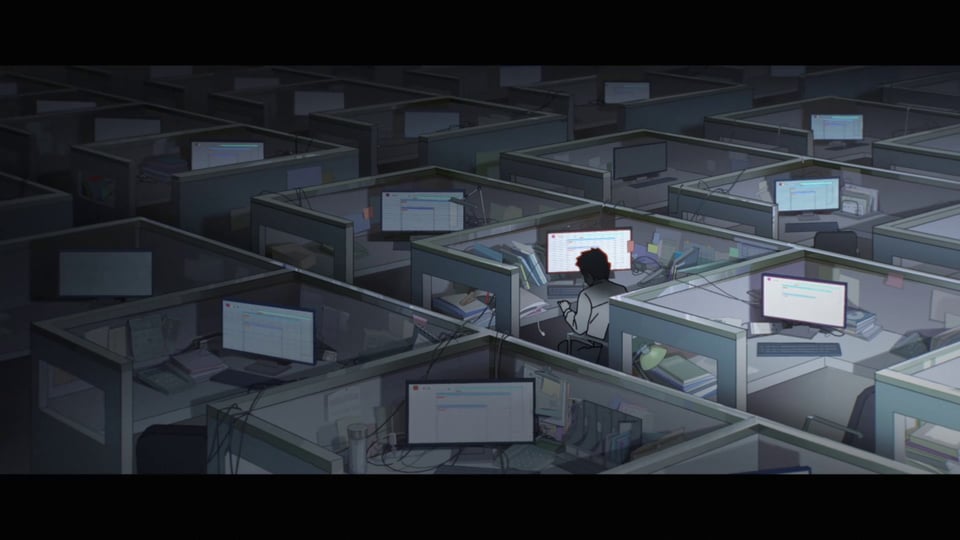
This show can be literally anything, any subject, as it proves by detouring into a melancholic reflection on the agony of the daily routine of the salaryman in the third episode before it flits back into its case of the week mode. From the existential fear of wasting our limited time to its stylish action sequences featuring characters fighting with literal finger guns, this chaotic, silly action comedy deserves your attention.