High Tech, Low Life: A review of the Art of Cyberpunk: Edgerunners
Gather ‘round, my Chooms
By Toussaint Egan
It's been nearly four years since Cyberpunk: Edgerunners’ premiere on Netflix. Given the passage of time, it's easy to forget just how large an impact Studio Trigger’s take on the universe of CD Projekt Red’s 2020 video game (and Mike Pondsmith’s original TTRPG) left on anime fans and gamers alike, playing a sizeable role in rehabilitating its source material’s abysmal launch and earning massive praise and accompanying accolades — including Crunchyroll's Anime of the Year award.
While David Martinez and Lucy Kushinada’s story may be concluded, Edgerunners' success continues to pay dividends — spawning not only a swath of spin-offs in the form of manga and light novels, but a stand-alone sequel (presumably set to premiere alongside CD Projekt Red’s own sequel currently in development). Being a fan of the series myself, I picked up a copy of the recently released artbook for Cyberpunk: Edgerunners, eager to parse through and glean any additional insights into the show’s planning and production. Was I satisfied? Yes, and no.
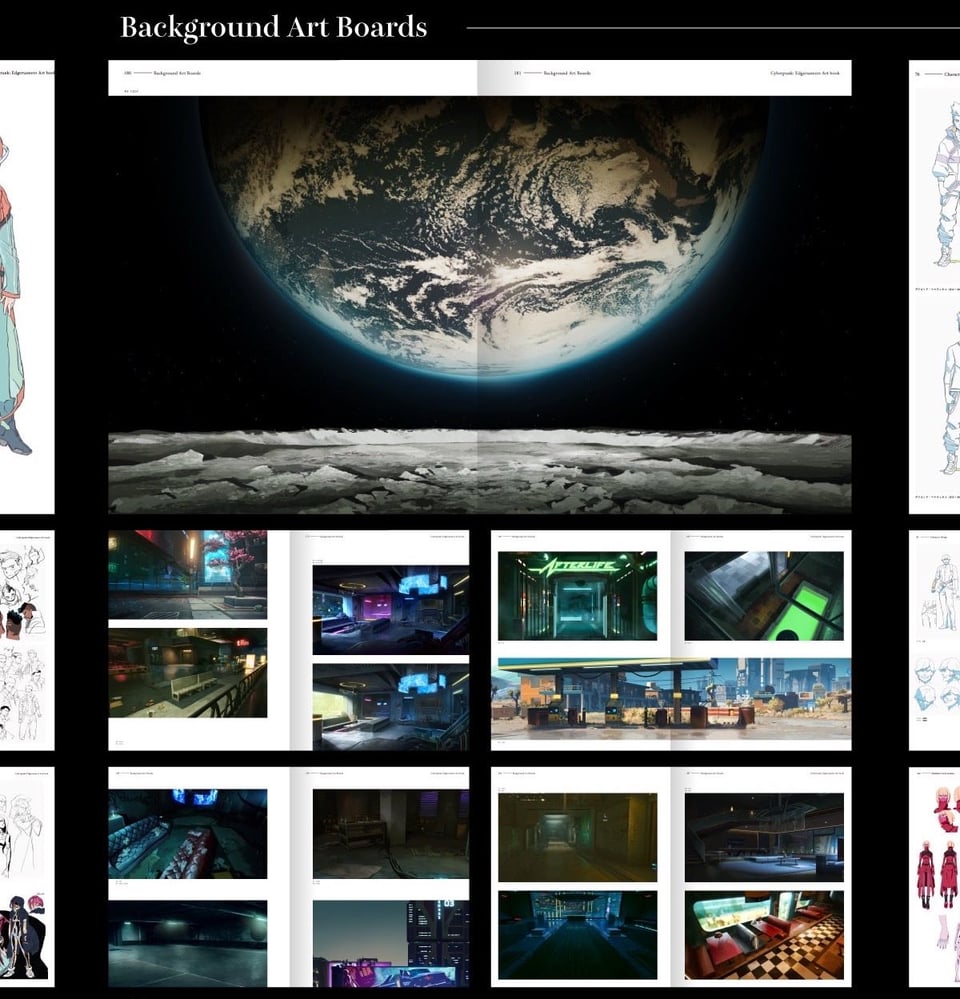
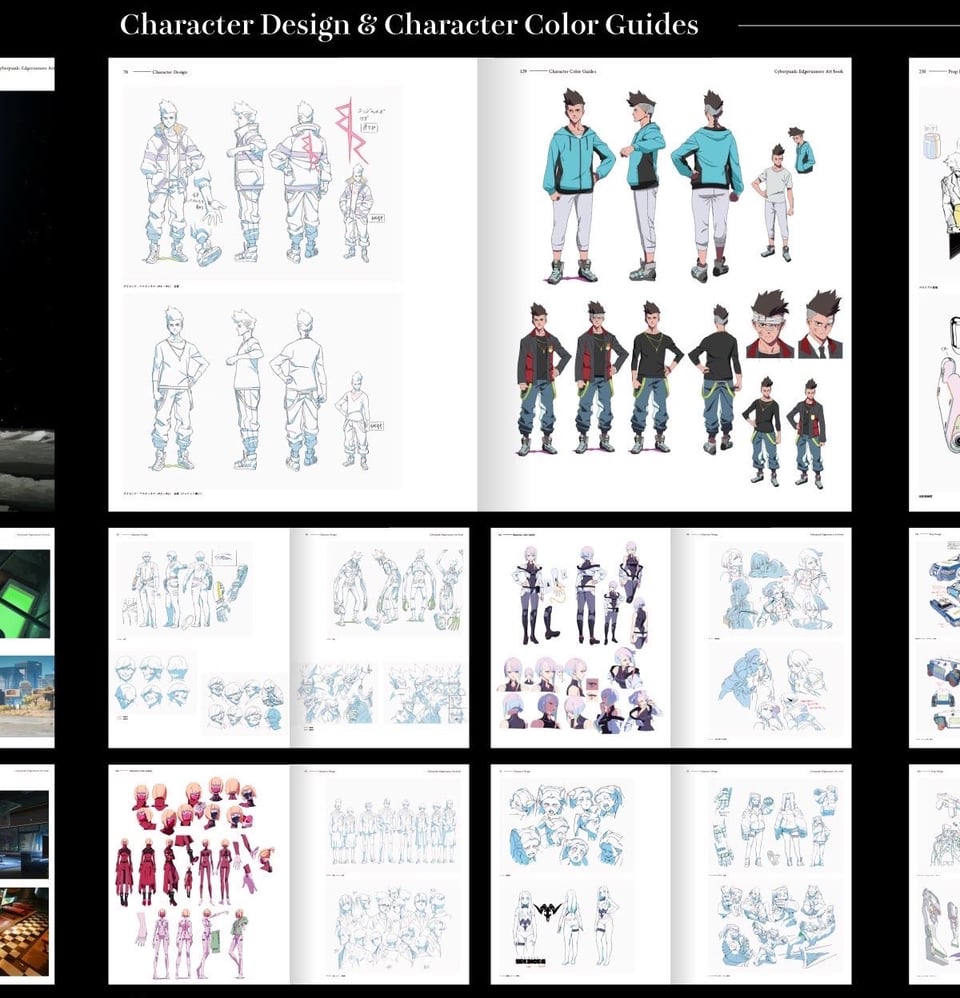
Taken as a whole, The Art of Cyberpunk: Edgerunners is a 318-page compendium of the anime’s various production materials, character sheets, color guides, official promo illustrations, and OP/ED storyboards, all neatly collected into ten chapters. Each chapter features a short paragraph written by Hiroyuki Imaishi, co-founder of Studio Trigger and chief director of Cyberpunk: Edgerunners, offering a bite-sized insight into what went into the materials of each chapter.
The commentary is rather light on hard details, with nothing in the way of commentary on the show’s writing and storyline which was handled chiefly by Bartosz Sztybor, Jan Bartkowicz, and Łukasz Ludkowski; CD Projekt Red’s own in-house trio of writers. While this is understandable, given that it’s an art book and all, there’s also a conspicuous absence of commentary on part of Yoh Yoshinari and Masanobu Nomura, the respective character designer and art director of Cyberpunk: Edgerunners, whose insights would've been much appreciated — especially into the what went into the initial ideation and iteration of the anime’s character and environment designs.
By far the most illuminating insight offered by the book is the reveal that Lucy, the deuteragonist of the series and protagonist David Martinez’s love interest, went through the most iterations of any character seen in the anime, with multiple pages of the book’s concept design chapter dedicated to alternate takes on her overall look and design. There's also the detail of how the only wholly original location in the anime to not be based on a preexisting location in Cyberpunk 2077 was the Arasaka Academy classroom where David confronts his one-time bully after choosing to adopt the Sandevistan cyberware implant.
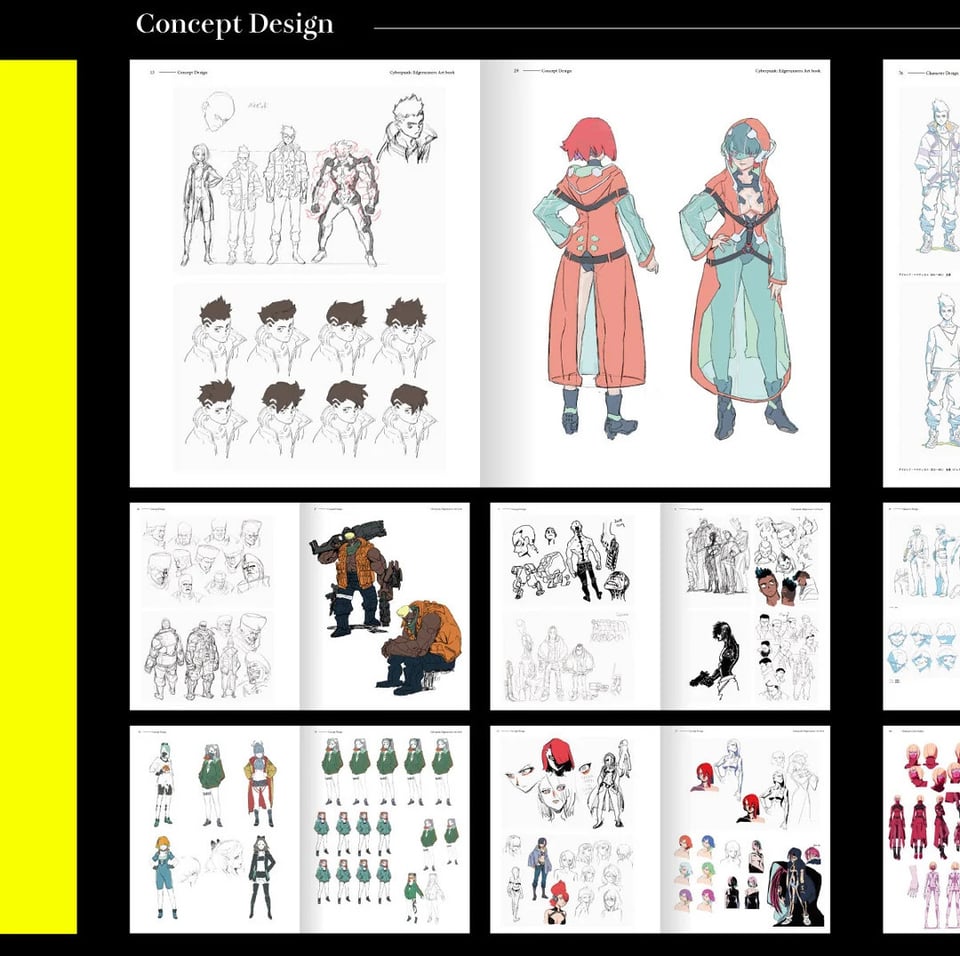
Aside from that, The Art of Cyberpunk: Edgerunners feels like an all-encompassing, albeit perfunctory bookend to the anime’s lifecycle, collecting nearly all of the visual assets produced for the series to date and signalling to the reader the conclusion of any subsequent additions. My personal favorite chapter is the book's final, dedicated to the various key visuals and promotional images for the series which include character portraits, cross-promo images for Cyberpunk 2077’s Edgerunners-themed update, and other minutiae of David, Lucy, and co. hanging out and shooting the shit.
For an Edgerunners completionist, it's a no-brainer purchase, but if you're looking for extensive information pertaining to the show’s origins beyond its character and background designs, it's as lightweight as a rookie edgerunner without their first implant.