Behind the Below and also Clara
We interview Amphibia creator Matt Braly about his new label and Kickstarter project, Clara & the Below.
by Rollin Bishop
Matt Braly has been very busy, not that you’d necessarily be able to tell. For all of the publicly announced and published projects the Amphibia creator has been able to share, there are plenty more that haven’t come to fruition. Like, for example, a Sony feature co-written with Steven Universe creator Rebecca Sugar that Braly recently revealed stopped moving forward in early 2025.
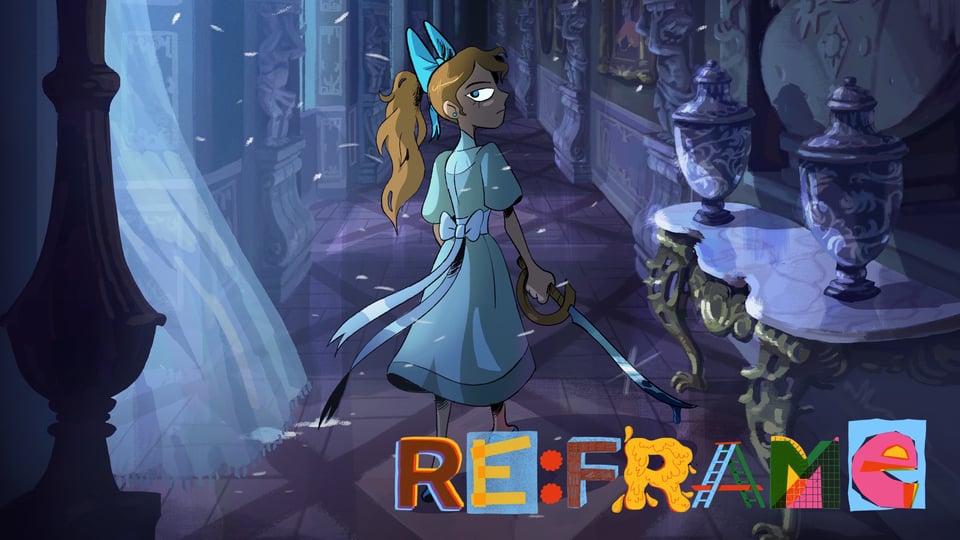
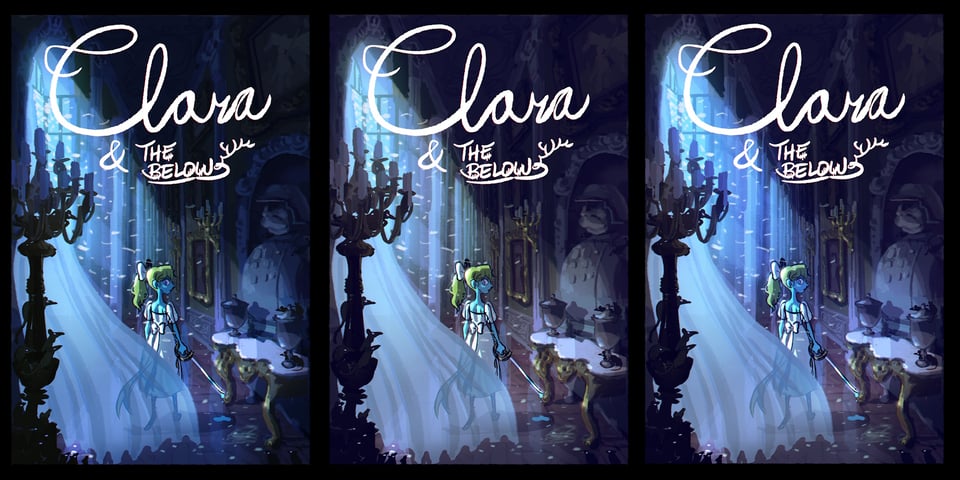
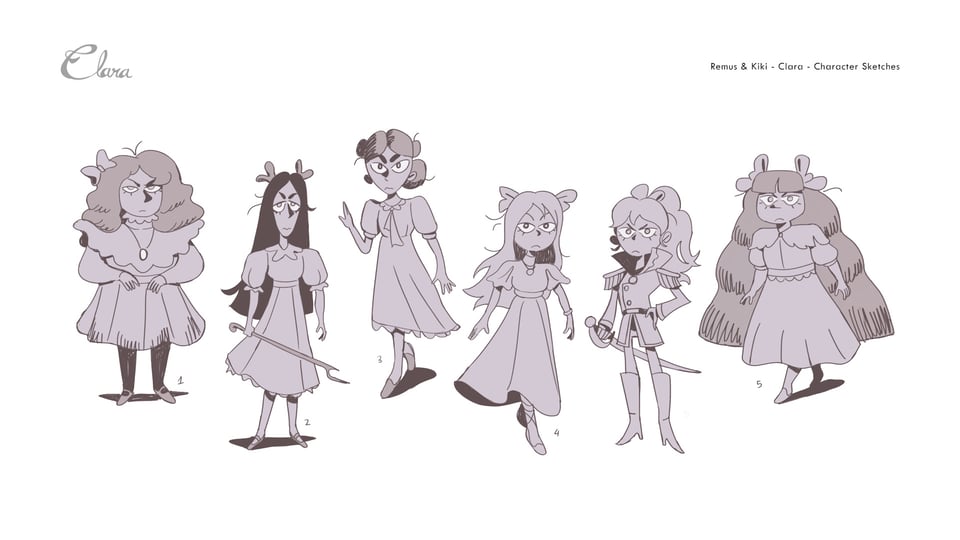
But it seems like Braly will only continue to be busy. Fresh off the reveal about the animated feature’s demise, he announced that his next animated project would be a gothic horror interpretation of The Nutcracker called Clara & the Below – financed through a Kickstarter, and that he’d be using the project to also launch an independent animation studio, Fantasy Project.
I was so touched by all the kind messages I received yesterday. It has given me a lot of encouragement for what will now be a big swing: My next animated project will be the first episode of a gothic horror interpretation of the Nutcracker called "Clara and the Below."
— Matt Braly (@radrappy.bsky.social) February 11, 2026
It's a big swing. The Kickstarter should, as this interview publishes, be going live. Ahead of that, success or failure, I spoke with Braly about the project, his feature that didn’t move forward, what it’s like working within the current system, as well as the invisible work that goes into animation. We'd not spoken since the end of Amphibia, so there was plenty to catch up on.
The following interview has been lightly edited for length and clarity.
Talk to me about founding an animation studio in this current environment – consolidating companies, cancelled projects, and risk-averse attitudes.
Matt Braly: When I say, “we're starting an animation studio,” it is more similar to starting a YouTube channel than it is starting like, “we're hiring 60 people and, my god, they're going to be full time,” because I would need hundreds of millions of dollars to do that. That's just not feasible. So what this is – think of it more like a label, where it's like what Fantasy Project stands for is a certain kind of story and a certain kind of quality that we're trying to make.
And it's not a vendor studio; I am not looking to do ads for people – that is not our modus operandi. We 100% have specific stories that we want to tell and want to try innovative ways to produce them, basically.
I put our email out there for inquiries, and it very quickly filled up with over 500 job inquiries. And we will be hiring if the Kickstarter is a success, but that's a little ways off. I'm really grateful that people submitted all of their information, but it's also a great indicator of, “holy shit, this industry is… people are on the ropes, man.”
How big is Fantasy Project at this point? How big is the label? And then, where do you want to be if the Kickstarter is successful?
It's just me and a couple other people right now. Basically, our first goal is producing this short, and we're going to be hiring people to help us make it.
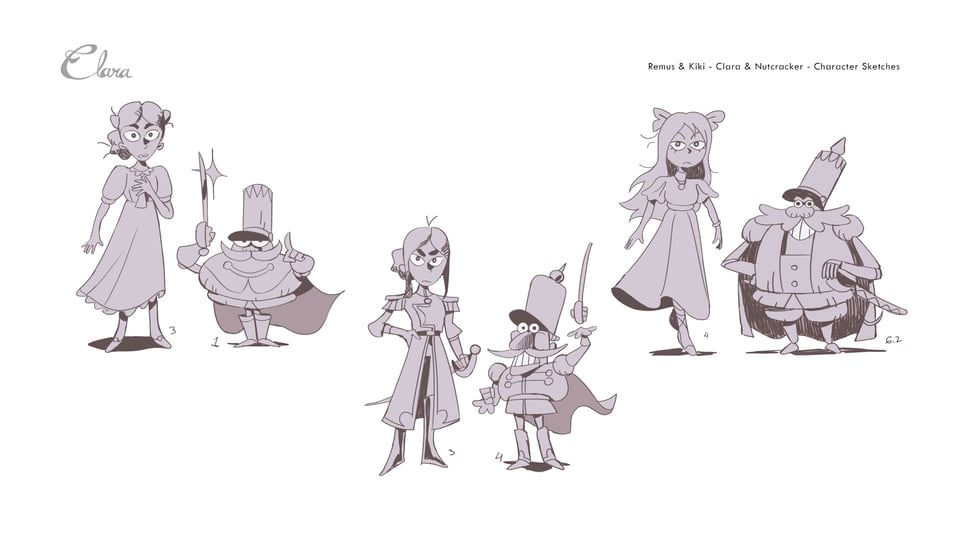
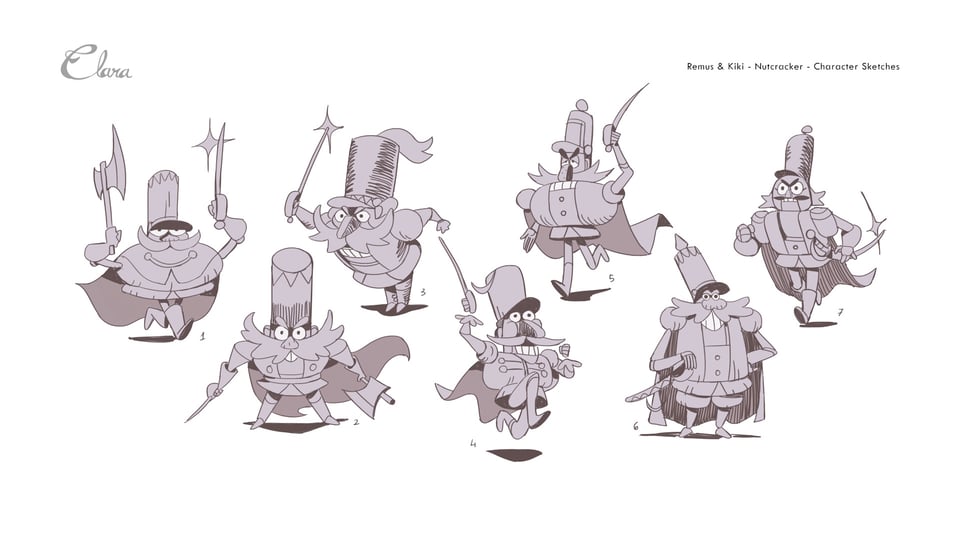
It's six to eight minutes, dialogue free. The best comparison I can give for Clara is it's a little bit like Samurai Jack or Primal: deeply inspired by those kind of silent, Genndy Tartakovsky protagonists who can talk, they just don't talk a lot. Characters talk around Clara, but she is mostly here to get a job done. That's sort of the flavor of the piece.
And some of that is cost related: we can't afford to create a very chatty cartoon right now. Maybe this way, though, we can really create something very magical that feels a little bit like Haunted Mansion, a ride where you're watching this thing on the holidays, you've got your eggnog, and it's kind of spooky and wintery and should pull you in with visual storytelling.
Restraints, though, lead to creative decisions that are very interesting. I think of Silent Hill and the fog, for example.
Yes, 100%. It was something I was thinking about – Silent Hill is such a great comparison, because so much of Clara & the Below takes place in this kind of surrealistic landscape under her house called the Below, where she goes and she fights these ghosts, hoping to collect their soul energy so that she can bring it back and cure her father, who's got this really weird disease. And the Below is very snowy; that was a choice where I'm like, “We can use the snow to obscure!”
In Silent Hill’s case, what an iconic atmosphere because of those limitations. So we're looking to do something… a blizzard is scary because visibility is poor. She's fighting down there, and she can't always see ahead of her.
Why this story, of all stories, to kick off this Kickstarter project?
I'm a huge fan of The Nutcracker. I think it is just a wonderfully Baroque-feeling story already. But the number one thing was actually about establishing a baseline for the artists that I'm going to be working with. This is a little hard to explain, but I'm going to do my best.
Basically, it's great to have a strong sense of atmosphere that unites many different creative sensibilities across different fields. I have these friends who I love to bits and we've always wanted to collaborate, but when pitching very original, ungrounded things, we're all seeing something different in our head.
What's so wonderful about me saying, “it's a gothic Nutcracker,” is everyone, we're kind of calibrated already. You're sort of like, “Oh, I think I know what that means. You're talking about, like, Crimson Peak, like a little Guillermo del Toro, maybe. It's wintery and spooky, and there's ghosts and we've got the uniforms.” It's a creative foundation from which we can all get on the same level and then be creative.
That was the practical reason. The emotional reason is that I love this story; I love the ballet. I've always seen The Nutcracker as very untapped.
All of this is like a second salvo, right? With the initial being your previous movie not working out. What can you tell me about that?
I knew I couldn't launch this venture – Clara & the Below, Fantasy Project, a Kickstarter – without being completely transparent with animation enthusiasts and fans that, “yeah, my previous project is a bust,” and so this is a rebound for me. This is a bounce back. And that was so important.
Actually, I reached out to the feature studio I was working with, and I got permission to actually say, “hey, this project's not moving forward.” And it was a way for me to do a baton pass and get into my next thing. Maybe I can use this colossal failure to at least launch me into something else.
But in this business, you're actually expected to just like, shut the fuck up and not talk about these projects that never made it – even the ones that are deeply personal, and I think that is incredibly toxic and destructive to careers, because if some person, some guy or gal, has spent three years developing an incredible project at a feature studio, and they're not allowed to talk about it, show artwork for it, or… how are they going to get another job? It's a really big problem, and I understand why it is the way it is.
But I'm very grateful that this studio was at least like, “we understand, you should tell people.” Of course the great irony of me posting, like trauma dumping to the internet, and being, “Hey, I had this great project. It was very personal to me. It was about Thai spirits. And here's a little bit of the artwork.” That was me being like, “I'm moving on. I cannot keep hoping that someone's going to pick this movie up.”
Because we've taken it around, and it was rejected almost over a year ago. So we did have time to recoup and try to see, is there some kind of path forward for this thing that is unconventional? And after a lot of stops and starts, I was like, “Guys, if I don't produce something, I'm gonna go batty. I'm a creator. I need to tell stories. I cannot be a standup comedian in an empty room,” which is what you are when you're in development. You're basically pitching this incredible hypothetical movie to no one.
Ironically, wouldn't you know it, the exposure to this project, which we'll just call Untitled Thai Spirits Film, has really ignited a lot of interest in the project. So there are a lot of people reaching out, being like, “well, can we still make this film happen?” Again, where my head is at is like, “No, I'm going this way for now.” In the future, if animation comes back in the sense that people are taking risks again, and they want to make a story like this, of course my phone is always open. Whoever wants to make this film in the future, absolutely, but for now, I really need to move on and tell new stories.
Is there just a creative itch that you can't seem to scratch? You've been busy, to be clear, since the end of Amphibia. We're talking art book, we're talking the Tokyopop stuff, we're talking the comic book. You've been doing things.
I'm extremely busy. And I can't tell you how many pitches and treatments and almosts that I have experienced in the last three years. We are talking huge IP that whether it's Neil Gaiman stuff or Star Wars or – although I'm glad the Neil Gaiman stuff did not pan out, but… Star Wars, big video game IP.
I want to be clear to everybody out there, all you're seeing on social media for 90% of the time are people's wins. And I'm not publishing the 10 rejections I got in the span of the last three years. It is rough out there. It is just no after no after no. And sometimes you get paid to do those treatments, sometimes you don't, and you just have to take the no and move forward and find something else. But I've pitched so many projects and worked on so many things in the last three years, I – Rollin, no joke, I’ve forgotten some of them. I'll just be going through my files and I'll be like, “oh shit.”
It is such a buyer's market for studios, and the amount of talent that is out there, it has allowed executives and studios to be a little disrespectful, if I'm honest. They'll have bake offs. Oh my god, they'll have these bake offs. And people will be in these bake offs that you would not believe, like high-caliber talent, and they're all expected to do treatments for free.
And then the team at the studio or the executives sit down with all of these, oh my god, these phenomenal British Bake Off cakes. And just like… “No, no, no.” But it's like, “holy shit, you just rejected an idea from the creator of such and such. Like it was nothing.”
There is this weirdness in the business where the value of an individual vision, the auteur vision, it is just in the can. It is in the toilet, nobody gives a shit. This is sort of what I've been telling people: the level of Not-Give-A-Fuck-itis has never been higher.
It is so exec-driven now, oh my god, it's so exec-driven. Execs will bring you something that they have written – at least, I hope they've written it, Rollin, and it's not, you know, you know, it's not something else… wink, wink, wink, wink, wink. But it's what they want. It’s like a made-to-order project, and you'll just sit there with it and be like, “five years ago, you guys were really interested in what creators wanted to say.”
This is another thing about things like KPop Demon Hunters or these big wins that you're seeing – even something like Goat, these things were greenlit four, five, six years ago. That was a different era, basically, and now these pitch rooms will have execs and development teams that have such power. There's so many of them, the soup strainer has never been tighter packed. It's really wild. That's a tangent, but I've been very busy, just not on stuff that you will see.
When you were working on Fantasy Project, were you looking at other indie studios in the same space doing similar stuff? Glitch comes to mind.
We did look closely at these studios, and we told ourselves, “what can we offer that's different? What can we offer that's similar, but different?” Those shows, which are phenomenal, that Glitch and SpindleHorse are making, they're very dialogue-driven. So, I was like, “what if we bobbed in the other direction and we tried to produce something that was just not dialog-focused? And then maybe we can create something that will really stand out for feeling more like a spooky rabbit hole that you are getting deeper and deeper into. Can we pull that off?”
But you'll notice a lot of indie projects are quite dark. They have mature themes and often a lot of violence. And that's because the direct-to-consumer market, they're aching for something they can't get anywhere else, obviously.
But also, I did really want to ground what we make in human history, in human art, and that is why The Nutcracker, again, is such a great choice for us, because that music is public domain. And we can take those leitmotifs that you'll recognize and put a twist on them in a way that it's going to feel new again. We have this incredible composer named TJ Hill, who did all the Amphibia music; he did Owl House Season 1 music. He's phenomenal, and he's so excited to get in there and twist these melodies. It's that kind of thing that I think will help give the project commonality with other indie things, but also maybe, hopefully, a little bit of distinction.
The 💙 for Clara & the Below has been incredible and I couldn't let you start the weekend without hearing some of the amazing music we're brewing. That's right, TJ Hill, composer of #Amphibia & #TheOwlHouse is BACK. Enjoy this teasiest of teases and follow our KS page below👇
— Matt Braly (@radrappy.bsky.social) February 13, 2026
Obviously, I wish you all the success in the world, but as you brought up “Braly’s Folly,” what happens if this doesn't work?
Oh, it's very simple. If we can't pull it off, we can't reach our goal or whatever, I will be publicly very embarrassed. But in the grand scheme of things, is that really so bad? People will be like, “Damn, he couldn't pull it off, but, I mean, he tried.” I feel like everyone who's reached out to me is watching this – it's like Palpatine going, “We'll be watching your career with great interest.” It really is just like that, where they're like, “I'm watching this because, god help me, I want to do it too.” That's where a lot of people's heads are at.
In many ways, I was kind of hoping that people more famous than me would try this first. Just people who have just a little bit more reach and a little bit more… But I feel like I had to be a little bit like Frodo, where he's like, “Fuck it, I'll take it, man. I'll take it, and you can watch me go out into the middle of the battlefield and get sniped.” But at least someone has to try.
What really pushed me over was not only the rejection of my own project. It was Netflix buying Warner Bros. and Disney getting in bed with OpenAI. And to me, those two things, they were alarming. And I know that we all have opinions about, “Well, would it be better if Netflix bought Warner Bros. or Paramount?” Both bad, both bad.
I hate this false dilemma where it’s like, “But you know, Netflix is the better choice.” I do not care. It is terrible either way. Netflix should not own Batman and Harry Potter, I am sorry, it is just too much crap for one person. It's an unbelievable amount of IP power. People will be like, “Well, but you know, Disney owns Marvel and Fox.” I'm like, “Well, that shouldn't have happened neither! That was also bad! This is bad!” [Ed. note: Immediately after this interview, Paramount ultimately won the bidding war for Warner Bros. after Netflix declined to up its offer.]
It really was those two things that really convinced me. I don't know, in 10 years, what is even going to be left? Are we just all going to be writing for Netflix? Am I going to be creating content for Netflix, and you're going to be writing for Netflix? We're all just going to be part of this Netflix sausage factory, and the people working there are phenomenally talented, and they've had so much success, but the domination and the boundless greed is just neverending. Do you need Harry Potter and Batman to win this war? No! It's just bananas. And you know, hey, that's capitalism, baby.