
RedMonk June 2026 Update

Welcome to the second annual Hot Vibe Code Summer!
A lot has changed in the past year, but one thing hasn't: the enduring appeal of code generation that's prompt-based, fast, and—crucially—fun. Still, 2025 already feels like a long time ago. Security suddenly matters in a way it didn't, with the Shai-Hulud worm tearing through the software supply chain. The models have improved by leaps and bounds, too, to the point where some developers are now experimenting with multi-agent orchestration. All this acceleration makes me want to do the opposite for a moment—step back and take the long view on how technology actually gets adopted.
My summer reading includes Walter Isaacson's The Innovators (2014), which digs deep into questions of change, stasis, and artificial intelligence in the tech industry. What does disruption really look like? What conditions best foster transitions to new forms of human-computer interaction—from the behind-the-scenes political maneuvering that enabled the ARPANET in the '60s, to the personal computer revolution of the '70s and '80s, to AOL's disc-distribution blitz in the '90s? Many of these stories are well trod, but they're worth revisiting in our current moment.
What struck me about this twelve-year-old book isn't just its focus on AI—which in 2014 read more like science fiction than inevitability—but how presciently it imagined our relationship to these tools. The throughline runs from Ada Lovelace to Alan Turing to Marvin Minsky, and lands on Isaacson's sharp claim that "the future might belong to people who can best partner and collaborate with computers."
I'm celebrating 2026's Hot Vibe Code Summer by looking back in order to look forward—and, naturally, building.
- Kate Holterhoff
Subscribe nowLinks Roundup
- Nine kinds of agents. "The grid helps you ask better questions. It doesn’t give you the answers."
- An interesting post about the new dynamics of trust and quality in open source in the age of generative AI. The Ladybird browser is no longer going to accept external contributions to the code base.
- According to a post in the AI Secret newsletter, bots now outnumber humans on the internet. You can argue about when this happened - but the bot traffic explosion has all kinds of implications for businesses, particularly those that make money from ads. How are we going to price for this new reality? The data came from Cloudflare CEO Matthew Prince, based on the Cloudflare Radar, the company’s internet tracking tool. From our perspective perhaps the most interesting point to note is that agent traffic is going to dwarf human traffic pretty quickly. The implications for how we scale systems are quite interesting.
- An ambitious manifesto for a Cambrian explosion in chip design and manufacture, from our friends (and clients) Ainekko. Generative AI can be a force multiplier in the design process - we're not sure who else is thinking about what vibe coding chips might look like, but Ainekko is.
- If you've read the term "context" in terms of agents and LLMs and nodded sagely and carried on with your life, then may we humbly suggest you take a few minutes to read this excellent explanation of context by Ivan Pedrazas. It's a model of clarity.
- "The fact that we have not solved the problems yet is not an argument to disconnect. It is an argument to engage, especially if you work in technology and already have an arsenal of relevant skills. You do not learn to govern a tool by refusing to touch it. You learn by using it and understanding well enough to critique it, shape it, contribute to it, and set boundaries around it. You learn how to make it boring."
Recent RedMonk Research
- In the wake of last week's AWS Summit, Steve O'Grady wrote up some thoughts on Kiro and the AI IDE space, from local vs cloud development to what the control points are in the space and how open weight models matter there: Kiro and the AI IDE Market RM clients mentioned: AWS, the Eclipse Foundation, Fastly (Glitch), GitHub, Google (Windsurf), IBM and Microsoft
- In this RedMonk post, Kate Holterhoff discusses image hardening in 2026. Why image hardening blew up, why images don’t come pre-hardened, and why developers are paying attention: Why Hardened Images are Suddenly Everywhere RM clients mentioned: Docker, Red Hat, Bitnami by VMware/Broadcom, Google, AWS, and Chainguard
- At RedMonk, we've been watching the appetite for abstractions that sit above cloud primitives grow over a period of years. Primitives are still dominant, but there's increasing demand for alternatives - demand that we've seen fulfilled through a wave of new providers. What's interesting is that these providers have generally eschewed general purpose in favor of specialization. What's more interesting is that they're now becoming less specialized and more general purpose: The Unbundling and Bundling of the PaaS Market
RM clients mentioned: Cloudflare, GitHub, Google (Cloud Run/Firebase), Heroku (Salesforce) and Render - Earlier in June, the G7 weighed in on the debate around open source and AI, complete with its own multi-tier categorization schema for models with widely varying interpretations of "open." Though this argument is never stated explicitly within the document, in my view it's essentially a tacit push for "open weights" and away from "open source," and that's a good thing: The G7 on Open Source vs Open Weights
- Steve O'Grady has been thinking about Bun, the Node.js alternative runtime (among other things), and what it can tell us both about what happens when a key infrastructure project is increasingly maintained by AI as well as what it can tell us about Anthropic's intentions as a project steward. So he ran some numbers, and will be curious to track these over time. Not just on the AI contributions front, but where Anthropic is on its open source maturity curve: What Bun Can Tell Us About AI, Open Source and Anthropic RM clients mentioned: AWS, CircleCI, Docker, GitHub, Google, Microsoft and Salesforce (Slack)
- Having mentioned that some of the newer large vendors to the market were earlier on the open source maturity spectrum, Steve wanted to provide some more concrete details on what that spectrum looks like and how the specific tiers are characterized. So herewith, one take on the open source maturity spectrum. RM clients mentioned: AWS, GitHub, Google, IBM, and Microsoft
- At Google I/O Rachel Stephens watched a panel make a compelling case that AI means developers should focus less on syntax and stop being married to a single tech stack. That same evening, she hung out with Flutter devs who had changed jobs specifically to keep working on Flutter. In this RedMonk post Rachel tries to reconcile the advice for developers to decouple their identity from their dev tools with what it means to be part of a developer community: More Than Syntax RM clients mentioned: Google
Recent Videos and Media Appearances
- A RedMonk x IBM webinar (registration required): Move faster, ship safer: RedMonk’s analysis on how leading engineering teams use agentic AI
- In this SUSECON conversation, Rachel Stephens talks with David Stauffer from SUSE about how Rancher Prime helps bridge the gap between developers, operators and platform teams. They discuss how Rancher started as a developer-friendly way to manage Kubernetes, how SUSE Application Collection brings trusted supply chains closer to developers and how AI-powered workflows can help platform teams manage security, observability and Kubernetes operations more efficiently: Kubernetes Without the Chaos
- JSON Schema might be the most important technology you’ve never thought about. In this MonkCast, Rachel Stephens sits down with Juan Cruz Viotti, founder of SourceMeta and member of the JSON Schema Technical Steering Committee. They discuss how JSON Schema is the backbone of OpenAPI specs and just might be the language of AI: Juan Cruz Viotti on JSON Schema, the Invisible Infrastructure Powering APIs and LLMs
- In this RedMonk What Is – How To video, Kate Holterhoff talks with Mark Gamble and Matthew Groves from Couchbase about why fragmented data stacks break down under agentic workloads and how a unified operational platform changes the equation. They walk through Couchbase’s AI services, model co-location for governance, and the agent catalog for observability and tracing, then demonstrate on-device vector search with Couchbase Lite for edge use cases where sensitive data can never leave the device: What is a Trusted Data Foundation? How to Build Agentic Applications with Couchbase
- RedMonk’s James Governor and Kate Holterhoff sat down at Fort Mason to give their take on Microsoft Build 2026. Their first impression: Microsoft shrank the event and aimed it squarely at developers, borrowing a lot from GitHub’s playbook: RedMonk Quick Take: Microsoft Build 2026
- Google Cloud Run is a few years old now, and in this RedMonk Conversation, James Governor sits down with one of its founders, Steren Giannini, to talk through its origins and future: Steren Giannini on Google Cloud Run: Past, Present & Future
- In this MonkCast Conversation, RedMonk analyst Kate Holterhoff talks with Evan You, the creator of Vue.js and Vite and founder of VoidZero, just days after VoidZero announced joining Cloudflare. Evan clarifies what the deal does and does not include, as well as the history of how it came about: Inside the Acquisition: VoidZero Joins Cloudflare with Evan You
- Kate Holterhoff sits down with Jack Herrington, Principal Software Engineer at Netlify and maintainer of TanStack AI, to walk the May 2026 TanStack npm supply-chain compromise: Jack Herrington on TanStack’s npm Mini Shai-Hulud Compromise
RedMonk Recommends
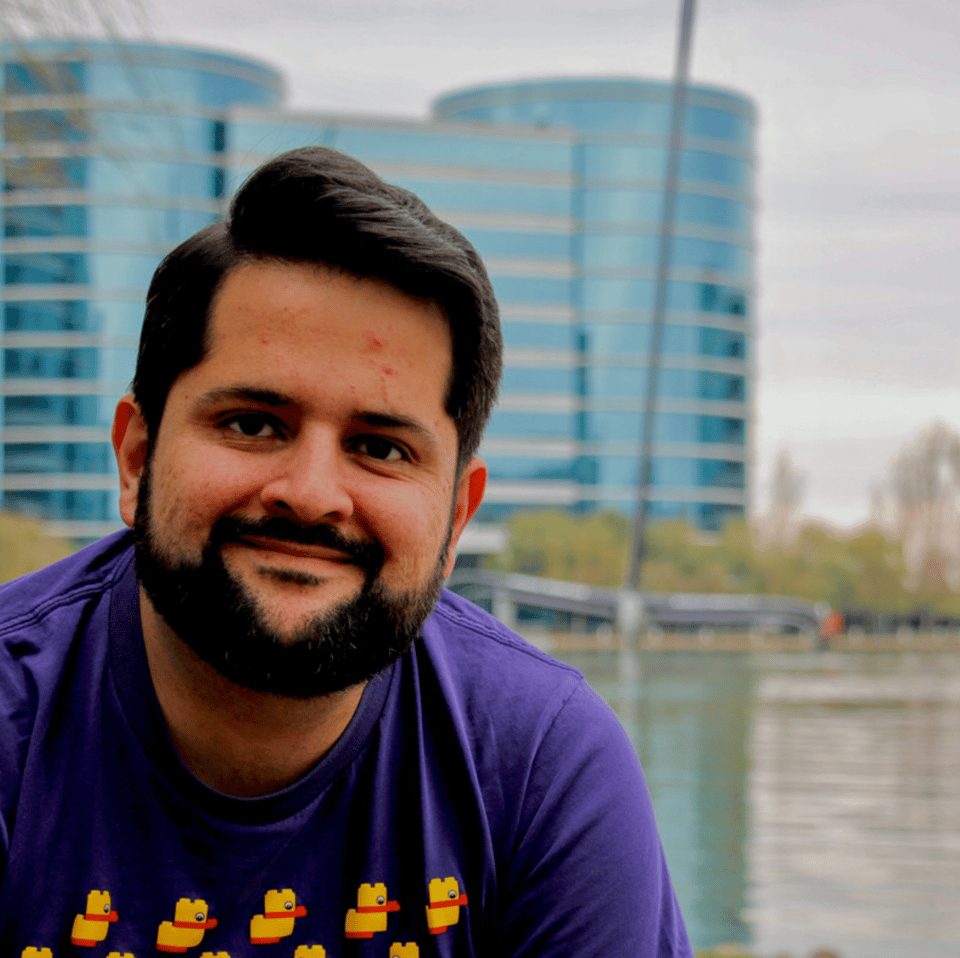
One of RedMonk’s favorite people, and an alumni speaker of the Monktoberfest, Ricardo Gonzalez is a senior product manager with 15 years of experience driving results for mission-critical, enterprise software like Oracle Zero Downtime Migration. He’s also got an MBA. Beyond his impressive academic background and technical skills, Ricardo is an absolute delight to be around: friendly, energetic and an excellent communicator - in four languages, no less. Oh, and in the event that it matters for hiring purposes, he is a U.S. Citizen. Whoever ends up hiring Ricardo will be happy they did.
Tickets for the 2026 Monktoberfest on Sale
Monktoberfest tickets are available! One important thing to note: due to contractual changes at our prior venue, we’ve been forced to move.
The good news is that we’ve found a great new venue. The bad news is that it’s smaller, and thus we have fewer tickets available. Tickets will therefore be at a premium, and may go quickly.
What we’d ask given the scarcity, then, is please only purchase tickets if you can reasonably expect to be there. As a small event, last minute no shows are very difficult for us to handle.
If you can make it, though, we’d love to see you. Tickets are available here.
Monktoberfest D&I Applications Open
Our goal for Monktoberfest is to create a conference at which everyone feels welcome and valued. We are excited to help foster this inclusive environment through our diversity and inclusion program. If you are a member of an under-represented group in tech and would like to join us at Monktoberfest, please consider applying here.
Meet the Monks
Events we'll be attending:
- Figma Config: 23-25 June 2026, San Francisco
- AMD Advancing AI 2026: 21-23 July 2026, San Francisco
- Render ATL: 12-13 August 2026, Atlanta, GA
Events we'll be hosting:
- The 2026 Monktoberfest: 1-2 October 2026, Portland, ME

