
79th Issue: Corita Kent and Charlie Soong
Today’s theme is interesting people whose names start with the letter C. Yes, that’s a reach.
Corita Kent was a nun and artist who lived in Los Angeles in the 20th century, but her most active years were the 1960s and 1970s. She was always interested in art, and when she became a nun at age 18, the sisters encouraged her and she earned her BA and MA in Art and Art History at Immaculate Heart College and the University of Southern California. Corita worked at Immaculate Heart College and chaired the art department. She was unique and interesting, and many students were drawn to her popular classes.

Her art became more and more political as the times changed, addressing humanitarian crises and the Vietnam War. The Los Angeles archdiocese wasn’t a fan, saying that her work was communist and blasphemous. In 1968, Corita went back to being a secular person and a lot of her fellow sisters did the same. Partially due to this, Immaculate Heart College closed in 1980.

Corita made hundreds of art pieces for posters and book covers, murals and more. She made a stamp for the USPS, she made a piece of art called Rainbow Swash that covered a 150 foot high gas tank in Boston. She was commissioned to make art for the 1964 World’s Fair, and she won awards in printmaking for her piece called The Lord is with Thee. She showed her work at hundreds of exhibitions across the country, and you can still see her art in many prominent museums all across the country today.
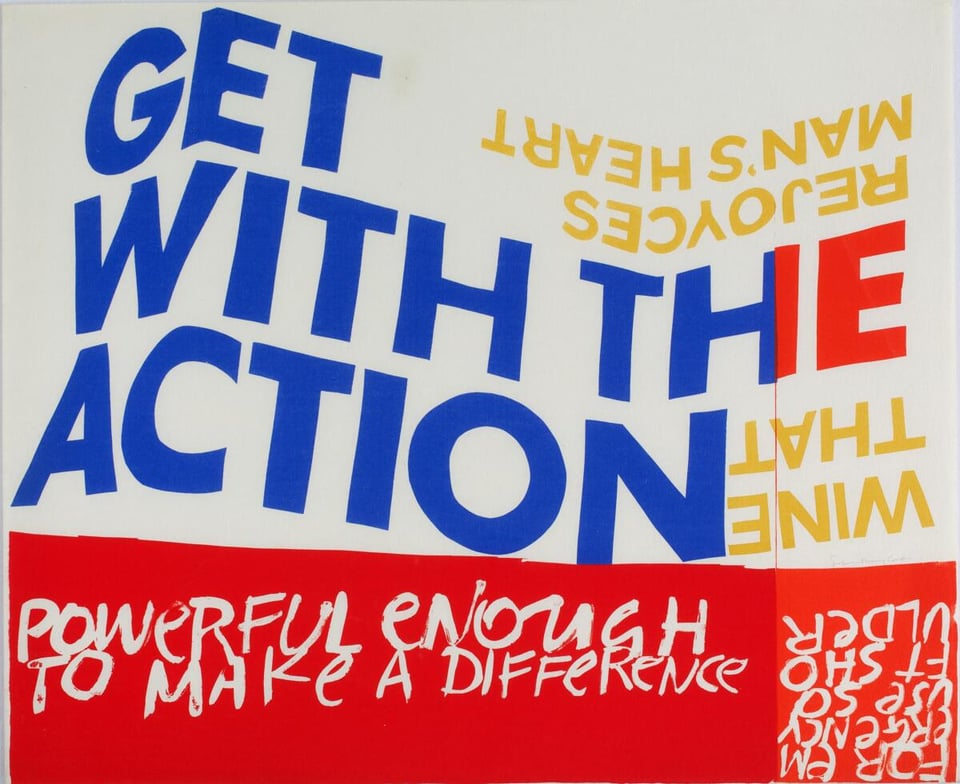
Corita died of Ovarian Cancer at the age of 67 in 1986. You can see some of her art and learn more about her here: https://www.corita.org/
Another person whose name starts with C is Charles Jones Soong, also known as Soong Yao-Ju. He himself had an interesting life, but all three of his daughters did too. You can read more about them in this book, if you’re interested: https://www.goodreads.com/book/show/43811202-big-sister-little-sister-red-sister (I found it at the library). He was born in 1861, and was adopted by an older relative who took him to Boston when he was a teenager. He worked with that relative in a tea and silk shop for a little while but then ran away and signed up to be a cabin boy on a Coast Guard ship. He worked under Captain Eric Gabrielson, and when Eric was transferred to North Carolina, Charles followed him. In Wilmington, he converted to Christianity and began being trained and educated to go back to China as a missionary. Locals took an interest in him, and various rich people got him into Trinity College (which is now Duke University) where he studied for a year and then transferred to Vanderbilt. He got his degree in Theology in 1885 and then was sent to Shanghai a year later.
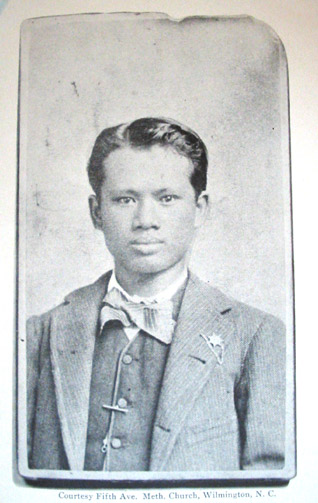
Charlie was a missionary for only a few years before he lost interest. He started a couple of businesses – printing and publishing – and then slowly began to become involved in an underground revolutionary organization called the Red gang. He met Sun Yat-sen at a Sunday service in a church in Shanghai, and they became friends quickly, having Western education, Hakka ancestry, Christian faith, and revolutionary desires in common. Charlie Soong started funding Sun Yat-sen’s campaigns. Unfortunately, the uprising in 1895 failed and Sun Yat-sen fled China. Charlie was incognito enough that he could stay in Shanghai, and he kept funding Sun Yat-sen.
While this was going on, Charlie got married and had children. He married Ni Kwei-tseng, and had three daughters and a son. The daughters were Ai-ling, Ching-ling, and Mei-ling, and their son was called T.V. Charlie sent all of his kids to study in the United States. All of the girls were sent to Wesleyan College (Ai-ling was only thirteen!), though Mei-ling finished her studies at Wellesley. When Ai-Ling graduated in 1909, she came back to China and became Sun Yat-sens’ secretary. He became President, but then in 1912 the republic fell apart, just when Ching-ling came back home. Now everyone knew about Charlie’s connection to Sun Yat-sen, and he and his family fled with him to Tokyo until 1916.
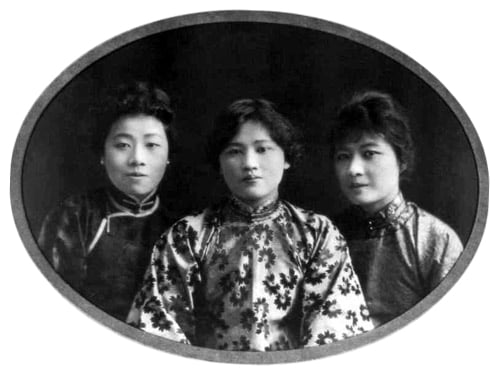
While they were in Tokyo, Soong Ai-ling married H. H. Kung, a wealthy banker, and her sister Ching-ling took over the job of Sun Yat-sen’s secretary. They secretly kept in touch and fell in love, but Sun Yat-sen was already married. They moved back to Shanghai in 1916, but Ching-ling escaped back to Tokyo secretly and was disowned by her father. He broke all ties with Sun Yat-sen too. Ching-ling became an important figure in Communist China and survived the Cultural Revolution among other internal turmoils in the country.
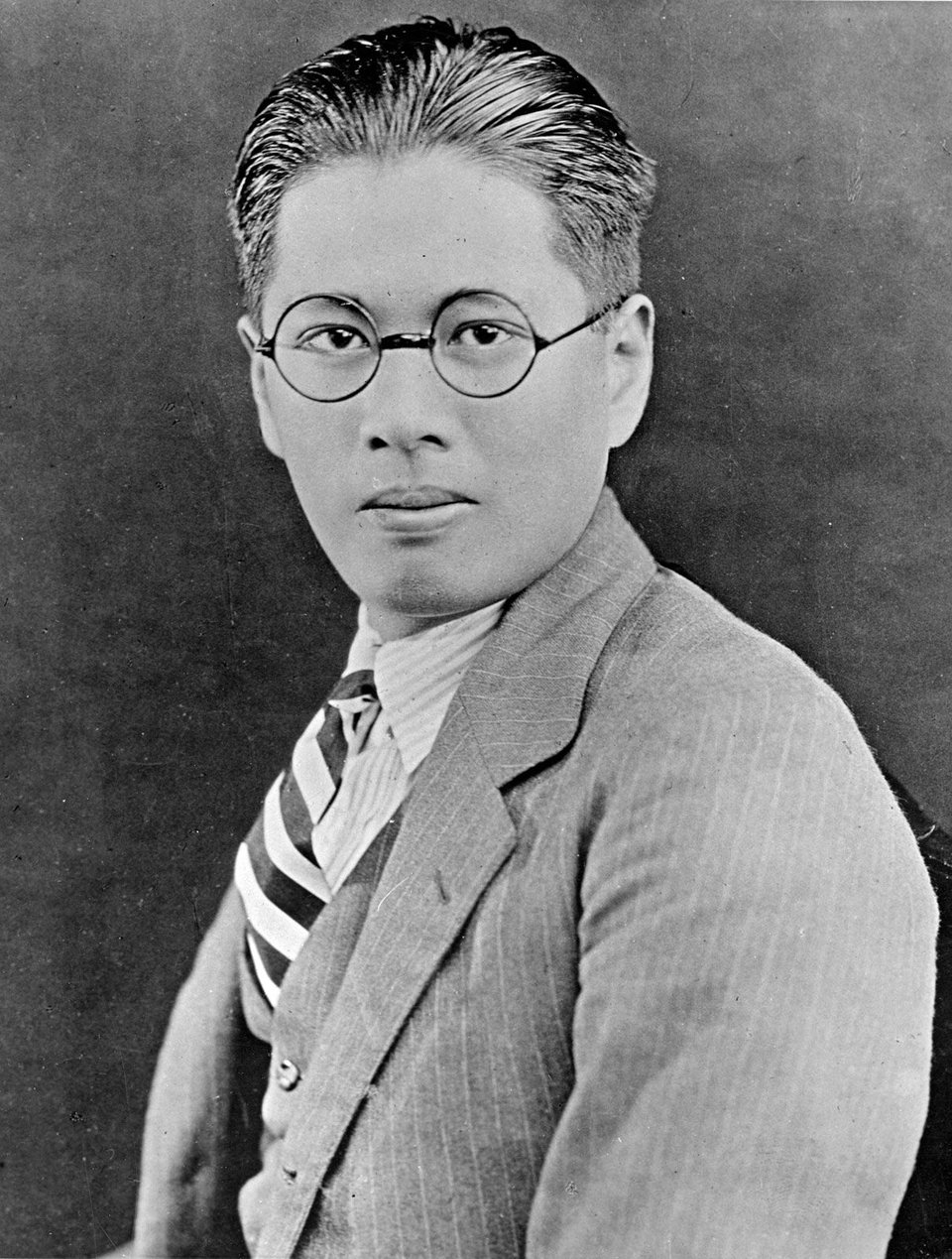
Charlie Soong died in 1918 from kidney disease. His other two children, TV and Mei-ling, also had interesting lives. TV went to Harvard and Columbia University, and then was recruited by Sun Yat-sen to be minister of Finance from 1925-1933, also serving as Governor of the Central Bank of China. He also founded the China Development Finance Corporation, and became Minister of Foreign Affairs during World War II. He had his hands in Chinese politics all through that time period, working as a diplomat and funding various things like the Flying Tigers (First American Volunteer Group, pilots for the Navy, Air Force, and Marines that bombed Japan and defended China).
Soong Mei-ling, the youngest sibling, ended up meeting and falling in love with Chiang Kai-shek in 1920. He was older, married, and a Buddhist, but he divorced and converted to Christianity for her. They stayed together for almost fifty years. Mei-ling became known as Madame Chiang and was very active in Chinese politics. She was popular in China and also abroad, her southern accent endearing her to Americans (since she studied in Georgia as a teenager). She established schools for orphans of Chinese soldiers, visited the United States several times during the Second World War to lobby for support, and was super ostentatious and fashionable. She had an impact though, and some would say that her prominence led to the US Women’s Army Corps recruiting a unit of Chinese-American women they called the "Madame Chiang Kai-Shek Air WAC unit".
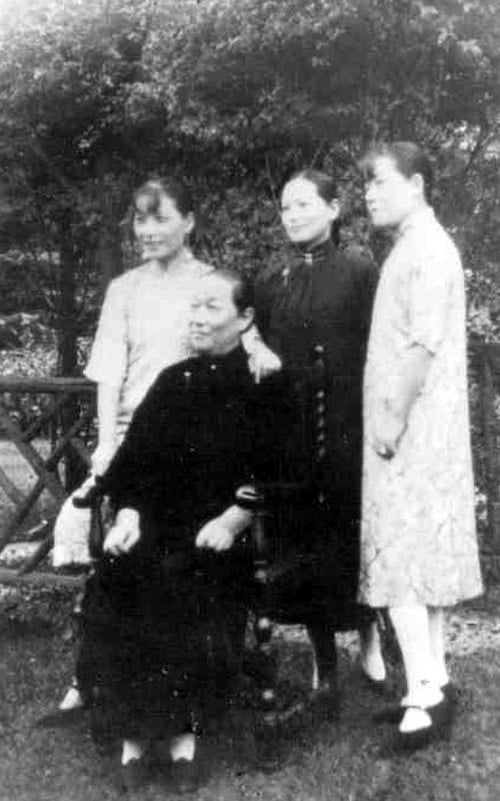
When Chiang Kai-shek’s government was defeated in 1949, she moved to Taiwan with her husband, while Ching-ling stayed in China, siding with the communists. She was still active in politics and foreign affairs, but allegations of corruptions due to her luxurious lifestyle followed her. After her husband died, his eldest son Chiang Ching-kuo took over, and she never had a great relationship with him, so she moved to New York and also stayed in New Hampshire in the summers. She went back and forth between New York and Taiwan for the last years of her life, and died in Manhattan in 2003 at the age of 105.
The whole family is fascinating and I recommend reading up more about the sisters, since I haven’t covered it all here. Thanks for reading!