
preview 655: quantum of sollazzo
Hello, reader!
Quantum #654 had an open rate of 45% and a click rate of 7%.
The most clicked link was this very deeply intellectual look at Mythos and what it means if it represents a threshold towards "AGI" (whatever that label means).
I've just published the fourth and final instalment of my 15 things I have learned launching AI projects blog series. Focused on AI adoption, the fourth article focuses on adapting to AI's evolving landscape. The full series can be accessed here on my blog.
'till next week,
Giuseppe
Things that caught my attention
This article called Human drivers keep crashing into Waymos is making me think a lot about the friction of applying AI to processes that we consider deterministic but that are not so deterministic (a topic I also touch in my blog post above).
TL;DR: An analysis of 78 serious Waymo crashes between August 2025 and March 2026 reveals that human drivers caused the vast majority of incidents, and that those caused by the self-driving cars are mostly all down to "excessive caution" where a human would not apply that excessive caution, e.g. stopping at the end of a ramp because something happened (you'd drive on until it's safe).
This prompts several questions, the first of which is "can we comprehensively capture in an AI all these rare but important conditions?". But also, it makes an important point evident: it might well be that if traffic was all or majorly AI, it would be safer. Obviously, this needs to be evaluated and I can't say I'm sure it's true. But if it is, this is another example of a context that can only work well with an entire redesign and overhaul of the infrastructure and legal framework. This is both where the big opportunity is (much fewer accidents, more efficiency of travel) but it isn't without problems (lobbying, vested interests, etc).
This shift/reprioritisation isn't fundamentally different from making jaywalking illegal to favour cars (as it is in most of North America). The key is in how these systemic redesigns are delivered. How do we make them human-focussed (or user-centric, if you like?)
Topical
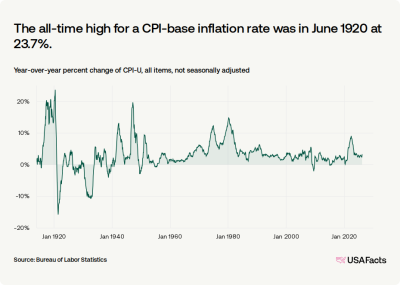
What is the current inflation rate in the US?
USAFacts on US inflation: "The inflation rate was 3.3%, as of March 2026." As predictable, price changes varied dramatically by category: fuel oil prices surged 22.9% year-over-year, while egg prices dropped 44.7%. Geographic variation also exists.
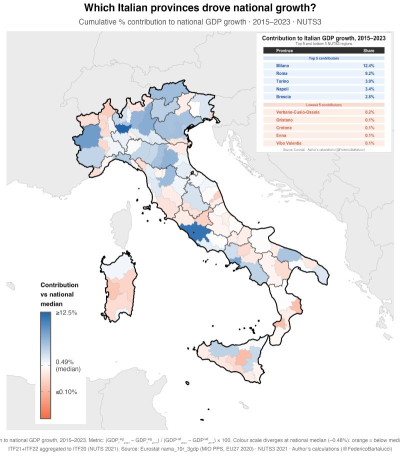
Is Northern Italy still driving national growth?
Cambridge PhD student Federico Bartalucci examines Italy's regional economic growth distribution from 2015 to 2023, confirming the usual trope that national expansion remains highly concentrated in the North. It notes that "the median Italian province contributed less than 0.5% to national growth over eight years".
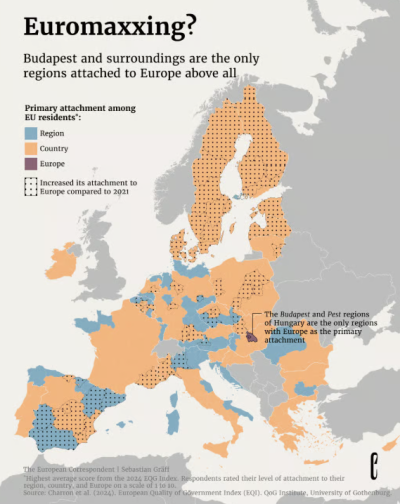
Is Hungary Euromaxxing?
Sebastian Gräff for The European Correspondent: "Hungary's recent election heralded the end for Europe’s swamp king and EU antagonist, Viktor Orbán. The new government will steer a more EU-friendly course, which is likely to be received well in the capital – Budapest and its surroundings are the only regions in the EU where residents feel a stronger attachment to the continent than to their home region or country".
Brain food, delivered daily
Every day we analyze thousands of articles and send you only the best, tailored to your interests. Loved by 505,869 curious minds. Subscribe.

Tools & Tutorials
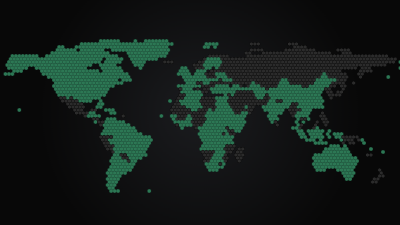
Delivering a dynamic hexagonal world map in just 10kb
Ben Schwarz describes building a hexagonal map visualisation for Calibre's Real User Monitoring (RUM) Audience report. It's pretty efficient.
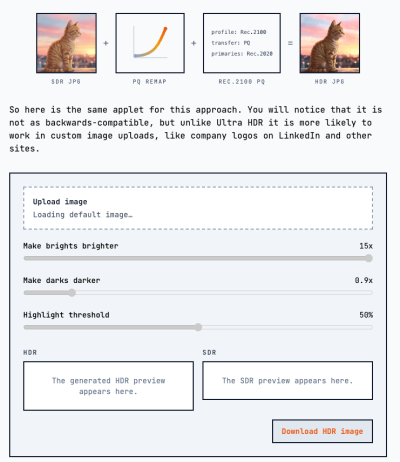
Why some images look brighter than your screen
Oh wow. Finally a mystery explained! I'd been asking myself if I was going mad when I realised about these superbright images. This article explores how HDR (High Dynamic Range) images can appear brighter than normal screen content on compatible devices. It also gives you an interactive tool to do your own images.
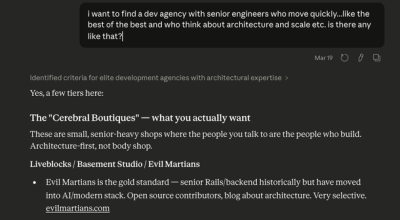
Making your site visible to LLMs: 6 techniques that work, 8 that don't
Evil Martians gained a new client after Claude recommended them to an AI startup founder. "That got us thinking: what did we do right?". The topic of SEO for LLMs, or GEO (Generative Engine Optimisation - and I hate this as it confuses the heck out of me when I see it and think of geography-related stuff) is becoming hot. Also see this tool.
ggsql: A grammar of graphics for SQL
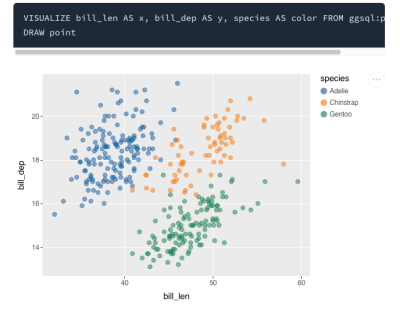
"Introducing ggsql, a grammar of graphics for SQL that lets you describe visualizations directly inside SQL queries".
Posit announces the alpha release of ggsql, a grammar of graphics implementation using SQL syntax that enables rich, structured visualization directly within SQL queries. The tool works in Quarto, Jupyter notebooks, Positron, and VS Code, allowing users to create plots using declarative clauses like VISUALIZE, DRAW, PLACE, SCALE, and LABEL. Starting with simple scatterplots and progressing to complex visualizations, ggsql follows ggplot2's modular approach where plots are built by combining layers rather than predefined chart types. The authors emphasize several motivations: engaging SQL-first data analysts, leveraging the natural alignment between SQL's declarative structure and the grammar of graphics, creating a lightweight executable without requiring full programming languages, and improving LLM compatibility for AI-assisted visualization. A key technical advantage is performance—ggsql executes the entire pipeline as SQL queries, fetching only computed statistics rather than raw data. Drawing on 18 years of ggplot2 experience, the team views this as an opportunity to innovate on a blank slate while continuing to support ggplot2 development.
Data Thinking
Five things I believe about the future of analytics
Tristan Handy presents five ideas about the future of analytics and their implications: analysts becoming more technical, data usage exploding, agentic analytics and their increasing data usage patterns, harnesses as a leverage point. "Agents will be the primary consumers of analytic data within 12 months. Design your infrastructure for that now", he concludes.
So you've been asked to "take over" some old data pipeline...
Randy Au explores the common workplace scenario of inheriting a data pipeline without documentation or context. Experienced data professionals spend significant time gathering non-technical context before diving into code. Au goes as far as to suggest that many inherited pipelines "should be in the trash bin" If they are measuring the wrong thing.
Planet put an indefinite hold on satellite imagery over the Middle East
Planet, a provider of satellite imagery, has put an indefinite hold on images over the Middle East. This is a consequence of the war in that part of the world. Daniel O'Donohue, who's the host of the acclaimed MapScaping podcast, explains the consequences.
Dataviz, Data Analysis, & Interactive
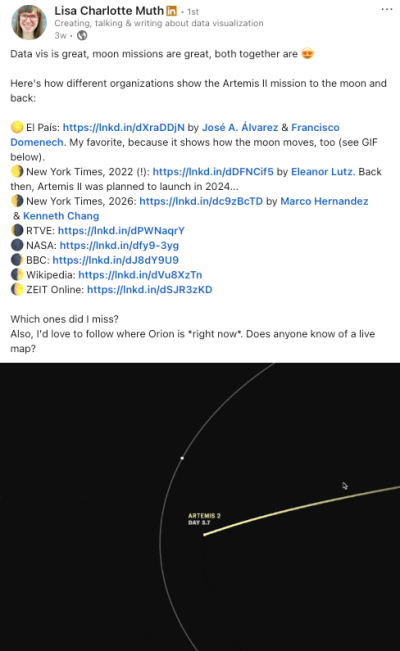
Data Visualizations of the Artemis II Moon Mission
Datawrapper's Lisa Charlotte Muth celebrates the intersection of data visualisation and space by curating a list of dataviz about the recent NASA Artemis II mission.
Land Lines - Chrome Experiments
Land Lines is an interactive Chrome experiment that allows users to explore Google Earth satellite imagery through gesture-based interaction. "Start with a line, let the planet complete the picture". I can't get it to find Italy as much as I try... (but my drawing skills are those of a 4-year-old). (via Si Cornwell)

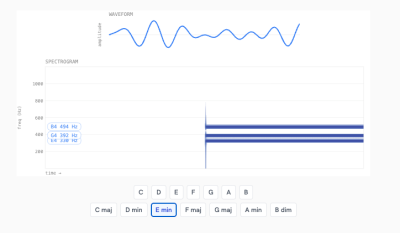
How The Heck Does Shazam Work?
"How audio fingerprinting and a connect-the-dots trick lets Shazam identify a song in seconds." As you might have picked up by know, Shazam and fingerprinting in general has been an obsession of mine, predominantly because I love the Fast Fourier Transform ;-) TL;DR: the algorithm discards most data, keeping only the loudest frequency peaks as "landmarks." These peaks are paired together based on their frequencies and time differences to create unique fingerprint hashes.
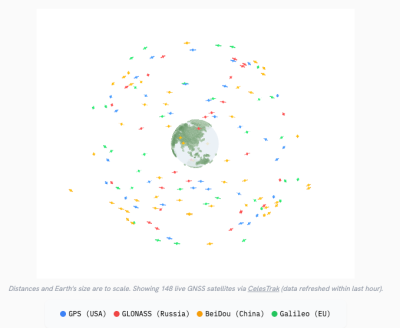
How The Heck Does GPS Work?
Another article from the good folks at PerThirtySix (they're good, aren't they?). This one is an interactive explainer that demystifies GPS technology by showing how it fundamentally translates time into distance.
AI
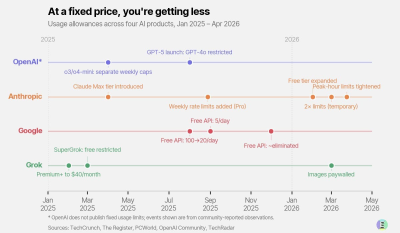
🔮 Exponential View #570: Inside Jensen Huang's worldview
Azeem Azhar and colleagues analyses some recent moves in AI. But what captures me is the chart below, capturing price tiers changes in several AI products.
A Catechism for Robots - by Kevin Kelly - KK
A quirky philosophical FAQ for autonomous AI entities, by Kevin Kelly, starting with:
"What am I?
You are a new thing in this world, neither living nor machine but something of both."
Maximal Brain Damage Without Data or Optimization: Disrupting Neural Networks via Sign-Bit Flips
Research by NVIDIA and IBM demonstrates catastrophic vulnerabilities in deep neural networks through minimal sign-bit manipulations of model parameters. Basically, you flip a bit, you get a total mess out of a model. Very interesting and with potential impact.
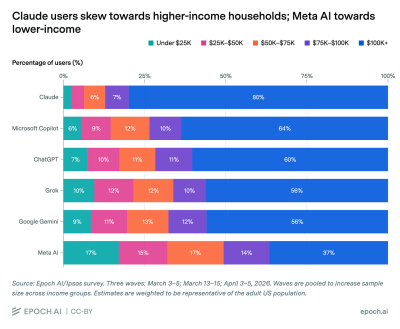
Claude users skew towards higher-income households; Meta towards lower-income
Epoch AI: "80% of US adults who report using Claude in the previous week live in households earning $100,000 or more a year, compared to 37% of Meta AI users. Nationally, about 50% of US adults fall in this income bracket. Among Meta AI users, 32% live in households earning less than $50,000, compared to 7% of Claude users and 24% of US adults. Other major providers cluster in a relatively narrow band, with 56–64% of users in $100,000+ households and 15–22% under $50,000".
Building Zenora: A Custom AI Model for Health Tech
Ollie Parsley, founder of Zen+ Health, announces the development of Zenora: a proprietary AI model built specifically for his health technology platform. Interesting approach.
The AI-native interview
Sierra has completely redesigned its engineering interview process to reflect how AI coding agents like Codex and Claude Code are transforming software development.
"Coding agents like Codex and Claude Code are upending software engineering as we know it. The role is shifting from building the machine to designing and honing it. Much like engineers stopped worrying about how a compiler translates code into machine instructions, we now need to focus less on the precise lines of code that are written and more about whether it produces the right outcomes over time.
This shifts what we should evaluate in interviews. When a single engineer can build across the stack, leverage comes from combining technical ability with product thinking and business context. They don’t just write code. They define scope, make tradeoffs, and iterate with customers to deliver impact. We’ve redesigned our engineering interview process from the ground up to reflect this new reality."
Unauthorized group has gained access to Anthropic's exclusive cyber tool Mythos, report claims
Lucas Ropek, TechCrunch: "A group of unauthorized users has reportedly gained access to Mythos, the cybersecurity tool recently announced by Anthropic."
Sign of the future: GPT-5.5
Ethan Mollick: "I had early access to GPT-5.51, and I think it is a big deal. It is a big deal because it indicates that we are not done with the rapid improvement in AI. It is also a big deal because it is just plain good. And it is a big deal because even with all of this, the frontier of AI ability remains jagged".
AI chatbots know more about you than you realise
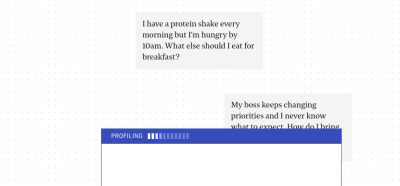
By Quantum regular Amanda Shendruk and Youjin Shin for The Strait Times, this article investigates how AI chatbots can construct remarkably detailed personal profiles from minimal conversational input, marking a fundamental shift in privacy threats. "The language we use is full of signals we don't know we're sending; AI has learnt to read them."
AMA – Ask Me Anything! Submit a question via this anonymous Google form. I'll select a few every 4-5 weeks and answer them on here :-) Don't be shy!


The Quantum of Sollazzo grove now has 40 trees. It helps managing this newsletter's carbon footprint. Check it out at Trees for Life.
'till next week,
Giuseppe @puntofisso.bsky.social