preview 645: quantum of sollazzo
#645: quantum of sollazzo – 17 February 2026
The data newsletter by @puntofisso.

Hello, regular readers and welcome new ones :) This is Quantum of Sollazzo, the newsletter about all things data. I am Giuseppe Sollazzo, or @puntofisso. I've been sending this newsletter since 2012 to be a summary of all the articles with or about data that captured my attention over the previous week. The newsletter is and will always (well, for as long as I can keep going!) be free, but you're welcome to become a friend via the links below.
Quantum #645 had an open rate of 50.31% and a click rate of 14.34%.
The most clicked link was this quirky look at the Wordle crisis.
AMA – Ask Me Anything! Submit a question via this anonymous Google form. I'll select a few every 4-5 weeks and answer them on here :-) Don't be shy!

The Quantum of Sollazzo grove now has 40 trees. It helps managing this newsletter's carbon footprint. Check it out at Trees for Life.
'till next week,
Giuseppe @puntofisso.bsky.social
🛎️ Things that caught my attention
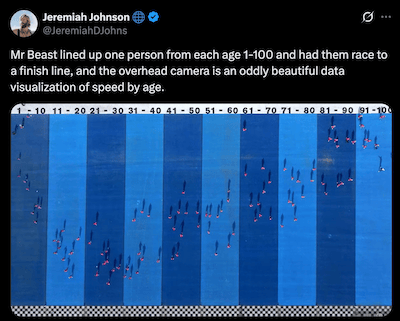
What more can I say about this physical dataviz? Just brilliant.
✨ Topical
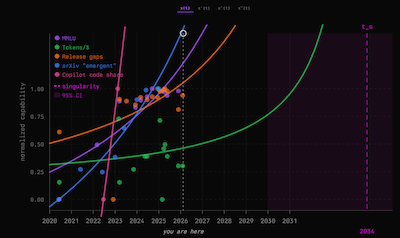
The Singularity will Occur on a Tuesday
"If things are accelerating (and they measurably are) the interesting question isn't whether. It's when. And if it's accelerating, we can calculate exactly when."
Hilarious, but not just hilarious.
"Real data. Real model. Real date!"
How We Counted Referrals to Police About Substance Use During Pregnancy
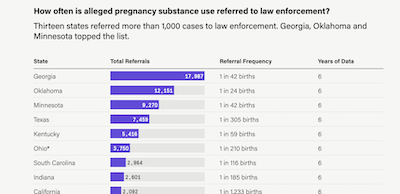
Jill Castellano and Shoshana Walter of The Marshall Project published an analysis that "finds the parents of 70,000 newborns were reported to law enforcement over substance use allegations, often based on flawed drug tests."
As Jill explained to me: "As you can see in our methodology, it took a year to gather and verify this information, and we're publishing raw data and statistics for the public to access.
Since every state's data is different and it comes with lots of limitations, we wanted to create a custom visualization that allows people to explore one state at a time and discourage comparisons across states. You can see that embedded in the main article. We also rigged it up to geolocate based on IP addresses, so the state you are in should appear first.
If you find it interesting and worthwhile, I was wondering if you might want to share it with your followers! I think it could be of interest. We really want to get the word out about this project because it has such wide implications for expecting parents, new mothers and for all of us."
More details here.
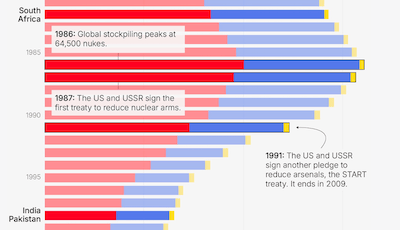
How many nukes does one nation need?
Amanda Shendruk: "I guess we'd better check in on the state of the world's nukes."
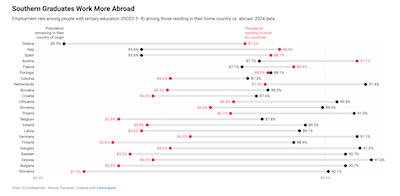
Brain drain: how the exodus of talent is redefining the map of Europe
José Ramón Pérez for El Confidential and the European Data Journalism Network: "Europe is emptying out at the margins. And not just any population: its most educated youth are leaving, emigrating in search of better opportunities."
Brain food, delivered daily
Every day we analyze thousands of articles and send you only the best, tailored to your interests. Loved by 505,869 curious minds. Subscribe.

🛠️📖 Tools & Tutorials
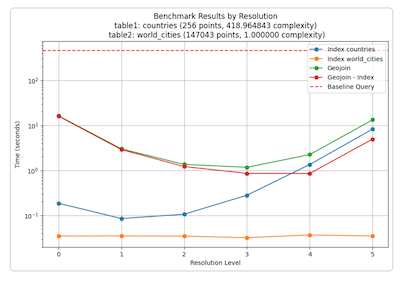
How we made geo joins 400× faster with H3 indexes
"The core idea in this post is simple: we’ll see how Floe automatically rewrites this kind of query and takes advantage of H3 indexes for dramatic speedup."
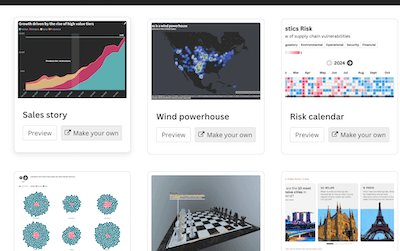
Data visualization examples
From Flourish: "Real-world, interactive charts you can duplicate, customize, and publish in minutes".
How to effectively write quality code with AI
A good set of tips from Mia Heidenstedt.
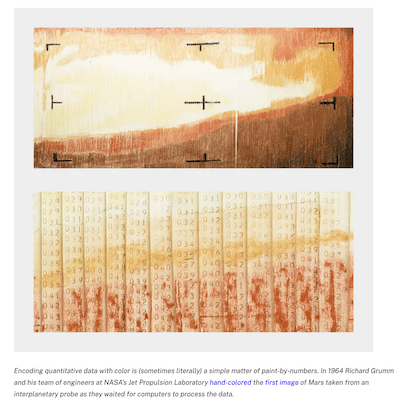
Introduction (Subtleties of Color, Part 1 of 6)
The NASA Earth Observatory published in 2013 this set of articles which is still very relevant.
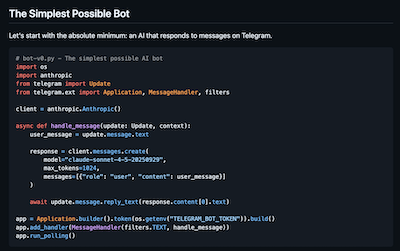
you_couldve_invented_openclaw.md
Nader Dabit: "End goal: understand how persistent AI assistants work, so you can build your own.".
Algorithmic literacy for journalists
"Helping journalists understand the functions, impacts, and ethics of algorithms" with a set of handy guides.
Very Good Components
A "curated collection of HTML UI components ready to drop into your next project."
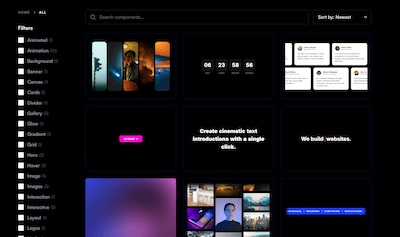
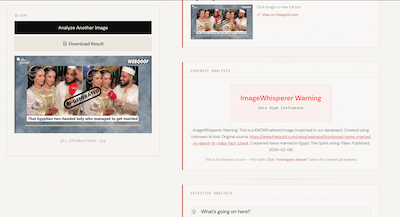
Image Whisperer AI Image Detector
A "Media Verification & Research tool, detects AI, by Henk van Ess".
As Charles Arthur notes, it was built by using Claude Code, "so it’s AI being used to tell on AI."
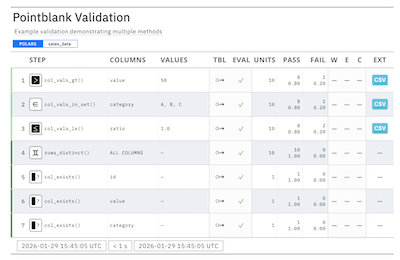
Fifty Releases of Pointblank: a Year of Building Data Quality Tooling
"When this project began in late 2024, the goal was straightforward: create a Python library that makes it easy to validate tabular data and communicate results effectively."
microgpt.py
By Andrej Karpathy: "The most atomic way to train and inference a GPT in pure, dependency-free Python. This file is the complete algorithm."
It's only 200 lines of code.
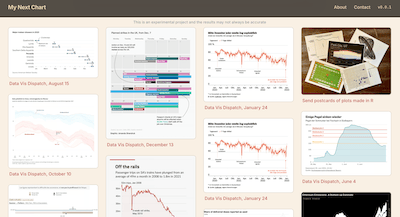
Find your next chart inspiration using AI.
"Enter your query and describe the visualization you're looking for in natural language and the vector database searchs 7000+ charts and finds the most relevant visualizations."
I've got to admit I'm finding it increasingly hard to keep the "Tools & Tutorials" section separate from the "AI" section. Any ideas for better categories, please shout.
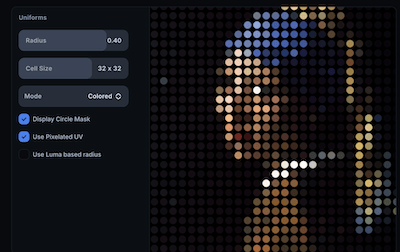
Shades of Halftone
"One of those effects that kept coming back over and over again is halftone, the classic dot pattern, arranging dots of different sizes in a grid to give the optical illusion of a gradient of color to the observer. "
🤯 Data thinking
Ten simple rules for teaching data science
Pretty solid advice.
Algos, bias, due process, & you
"I was given free reign to expound on the topic of algorithmic bias last week as a guest lecturer in one of our legal tech classes, and I had such a ball designing and delivering this one-off lesson, I just had to share. What follows is the “DVD commentary/Making of.” TL;DR: I built a bunch of highly-modular online simulations you can use with your students. They cover automation bias, the false positive paradox, competing definitions of fairness, disparate impact resulting from machine bias, and the value of due process. Most of them are self-explanatory and can be used on their own. However, the first one intentionally lacks in-simulation context, and I think linking them together creates a more-compelling narrative arc. Play with the links above in isolation, or join me below for the guided tour."
📈Dataviz, Data Analysis, & Interactive
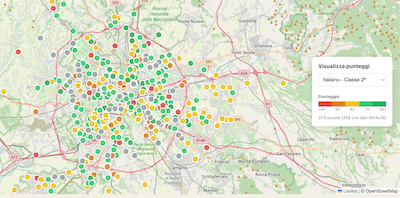
I risultati delle scuole primarie romane
The results of primary schools in Rome, here translated into English.
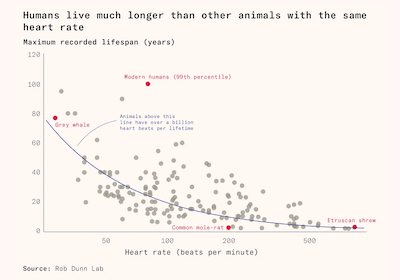
Learning about longevity from long-lived animals
"The secrets to extending human lifespans might lie in the animals that can already live for centuries."
Interesting article overall, with some catchy data visualizations.
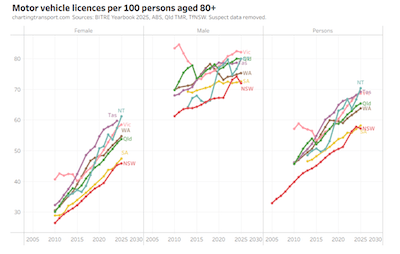
Update on Australian transport trends – February 2026
The regular update by transport analyst Chris Loader.
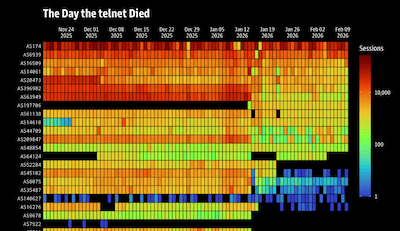
2026-01-14: The Day the telnet Died
"On January 14, 2026, global telnet traffic observed by GreyNoise sensors fell off a cliff. A 59% sustained reduction, eighteen ASNs going completely silent, five countries vanishing from our data entirely. Six days later, CVE-2026-24061 dropped. Coincidence is one explanation."
🤖 AI
AI Makes the Easy Part Easier and the Hard Part Harder
"Another way to look at it: an AI coding agent is like a brilliant person who reads really fast and just walked in off the street. They can help with investigations and could write some code, but they didn't go to that meeting last week to discuss important background and context."
I Started Programming When I Was 7. I'm 50 Now, and the Thing I Loved Has Changed
"This isn’t a rant about AI. It’s not a “back in my day” piece. It’s something I’ve been circling for months, and I think a lot of experienced developers are circling it too, even if they haven’t said it out loud yet ... I started programming when I was seven because a machine did exactly what I told it to, felt like something I could explore and ultimately know, and that felt like magic. I’m fifty now, and the magic is different, and I’m learning to sit with that."
A lot I relate to in this article.
|
DID YOU LIKE THIS ISSUE>? → BUY ME A COFFEE!  You're receiving this email because you subscribed to Quantum of Sollazzo, a weekly newsletter covering all things data, written by Giuseppe Sollazzo (@puntofisso). If you have a product or service to promote and want to support this newsletter, you can sponsor an issue. |
quantum of sollazzo is also supported by Andy Redwood’s proofreading – if you need high-quality copy editing or proofreading, check out Proof Red. Oh, and he also makes motion graphics animations about climate change.
