quantum of sollazzo logo

quantum of sollazzo

Archives
Sponsor
Subscribe
October 6, 2026

677: quantum of sollazzo

Quantum of Sollazzo

NO. 677 ·

alt text

Did someone forward you this email?
If so, you can subscribe here.

You can view this email online here.

Things that caught my attention

I'm currently recovering from surgery, but I can increasingly spend time sitting with the help of a donut cushion, which means I had some time to write this newsletter.

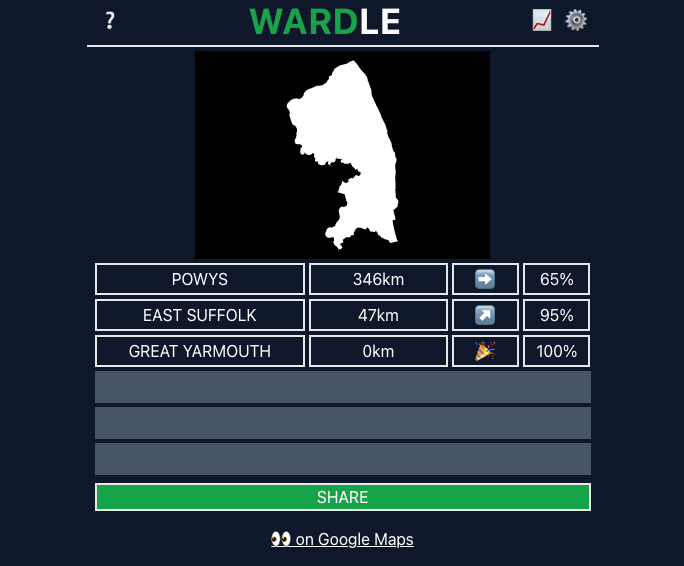
It's always great when you are reminded of one your longest-running websites because a fan writes to you about the fact... it isn't working 😃 Last week, a user of my Worldle spin-off Wardle, a take on guessing UK local authorities by their geographic shape, contacted me to say that they'd seen the same council (by coincidence: my local council, Haringey!) three days in a row. I suspected some issue in the random seed allocation, and unleashed Claude Code on it, which confirmed the diagnosis and offered a simple fix. Fix deployed, and happy users: we now have a lower-than-chance probability to have the same council 2 days in a row.

Wardle

And if you're wondering: yes, I also had a ward-based version of this, hence the name. But it was honestly too hard for even the geekiest among my geo-friends.

·

Speaking of using LLMs, I had a brilliant experience a few weeks back. I was meant to print some cyanotype maps for a friend (little advert: I do sell hand printed maps and accept commissions...), one of which included the building outline of Tehran, Iran. My usual workflow includes getting the building footprints from Open Street Map, but in this case the data was particularly lacking, especially in the area they wanted.

I was about to give up when I thought: well, I can definitely find satellite imagery of Tehran, so maybe I could extract the building shapes using a script and some AI. So I asked Claude. Its reply: "Short version: don't build this from imagery yet. Tehran is actually well covered by Microsoft's ML footprints even though OSM is thin there, and that's a much better starting point than anything you'd segment yourself."

It gave me the imagery extraction script, but also pointed to data, via the Ouverture Maps Foundation, which was pretty comprehensive. Mind-boggling, as it basically understood what I was after, then gave me a more sensible alternative route. Wow.

·

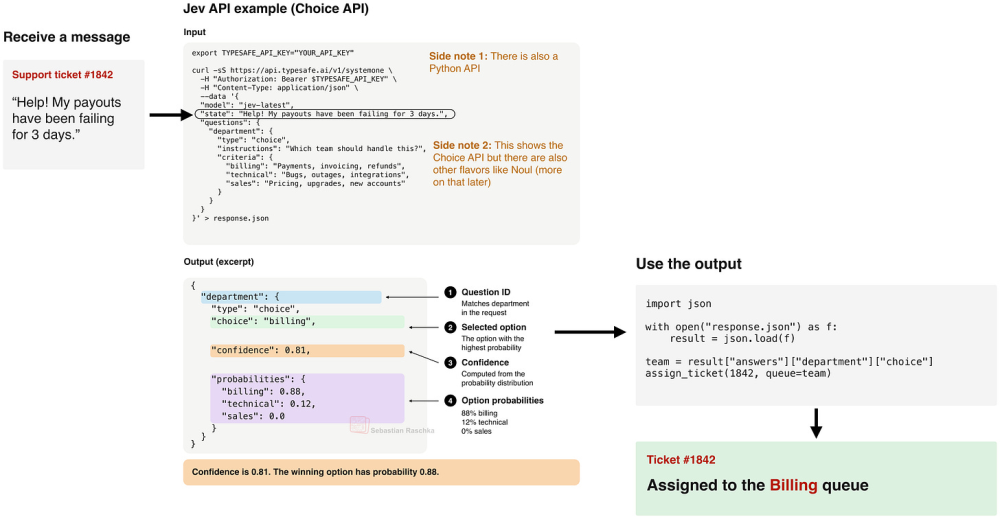
One major theme you will see in this newsletter is the growing interest in System One AI, which are essentially general purpose classifiers. Classifiers are obviously not new, and they were a staple of the pre-LLM Machine Learning era. What is becoming increasingly remarkable is their ability to be general purpose, without any training required, while still providing great accuracy at a speed and cost that is a fraction of LLMs. Obviously, LLMs are becoming increasingly good at classifying and interpreting, but, strictly speaking, this is not their core skill. I've tried a couple of these – Jev is cloud-based and the one that's getting the most attention, but open source systems like Laya and Rizzo-Flow run happily on my 8GB M3 Macbook Air, which is impressive. One of the tests I did was to pass Rizzo-Flow the text of a speech in Hansard, give it a few topics to choose from, and it got it right in milliseconds.

Pretty cool, no?

·

Quantum #676 had an open rate of 51% and a click rate of 15%, and the most clicked link was local search engine Hister.

'till next week,
Giuseppe @puntofisso.bsky.social

Sponsored by Jane Street

Jane Street depends on all sorts of messy, real-world data to understand financial markets and the global economy: think world news, decades of weather patterns, deidentified credit card spending, or packet captures of stock exchange market data feeds.

We're hiring Data Engineers to turn datasets like these into reliable inputs for trading. Working closely with our researchers, you'll evaluate unfamiliar datasets, build robust ELT pipelines, develop deep domain expertise, and decide what's worth exploring next. 

The job requires a mix of engineering, data analysis, and product sense. If you love the detective work of investigating a weird dataset and figuring out what it actually means, we want to hear from you. No financial background is necessary.

We have openings in New York, London, and Hong Kong.

Topical

Data Visualization State of the Industry 2025 Report

Nightingale's yearly report on data visualization is now out.
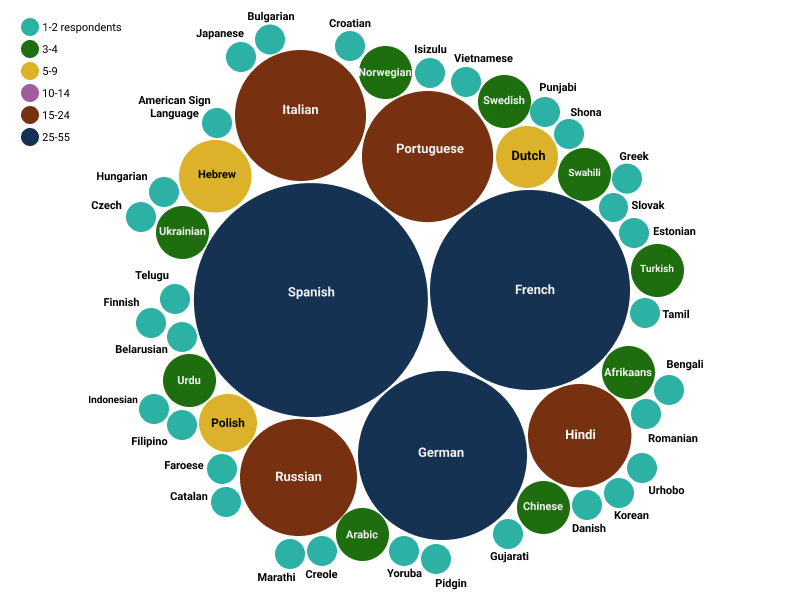
Data Visualization State of the Industry 2025 Report

The drone war never sleeps in Kyiv

Joseph Roche and Meike Eijsberg report on the war in Ukraine, and have some pretty good charts attached, showing that Kyiv endured 60 hours of continuous air-raid alerts in late August, ending the city's previous pattern of attacks only at night, as well as impacting life and governance.
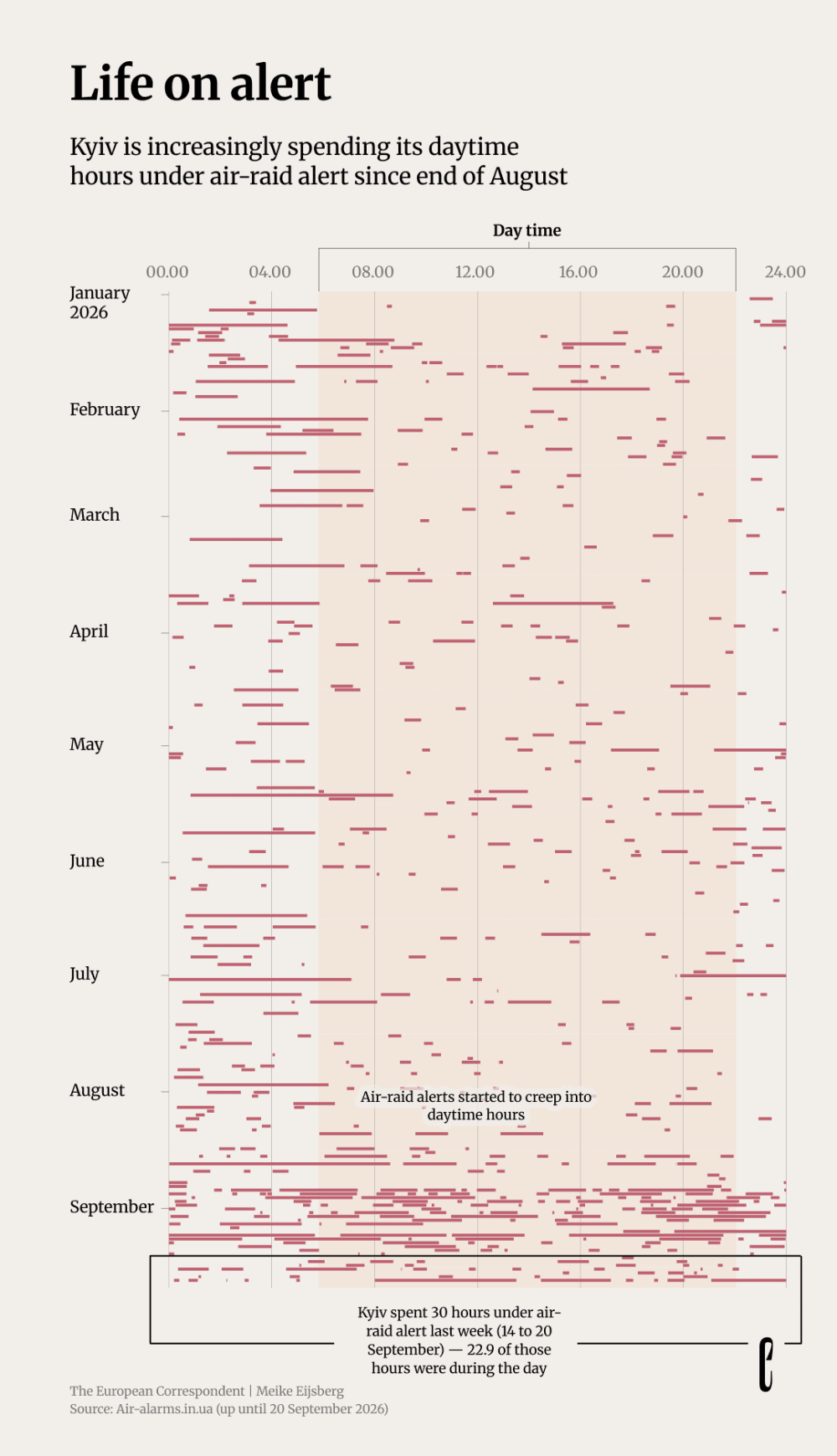
The drone war never sleeps in Kyiv

Tools & Tutorials

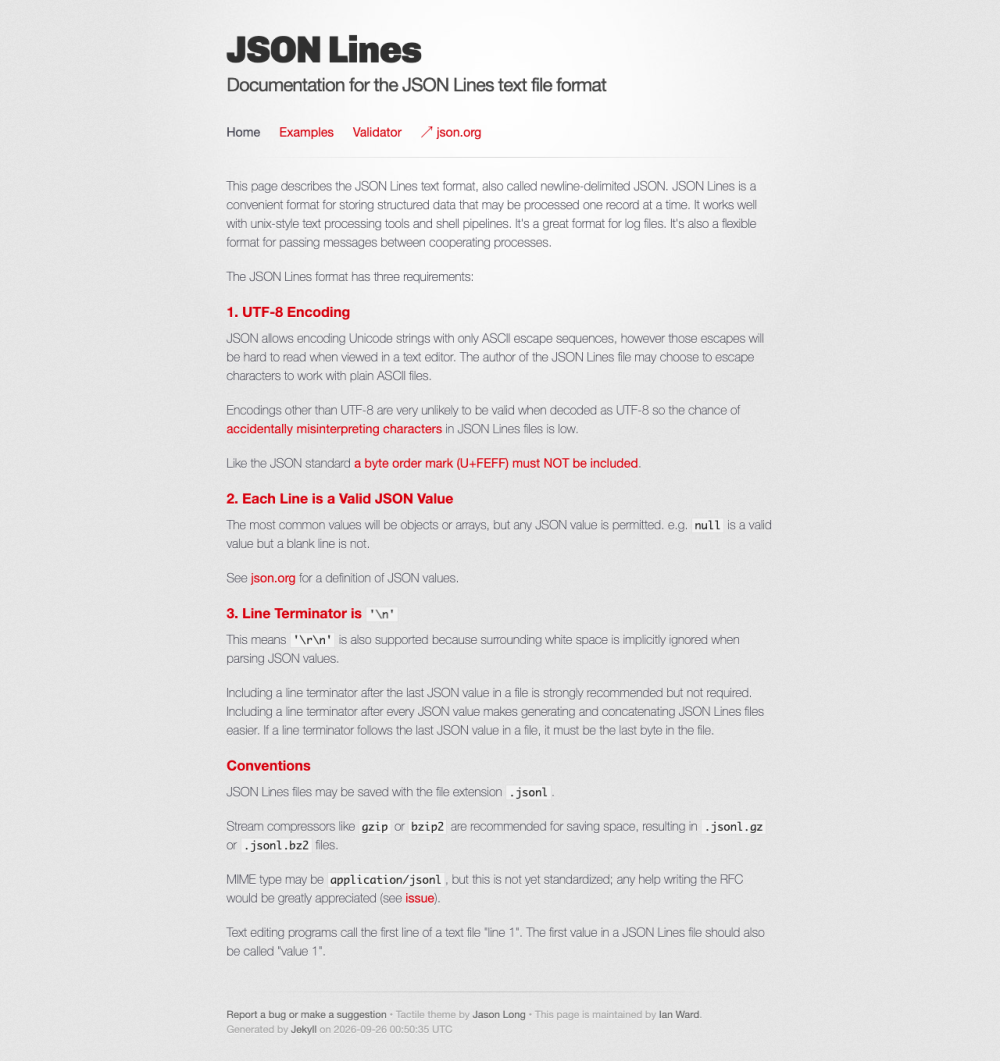
JSON Lines

"JSON Lines is a convenient format for storing structured data that may be processed one record at a time. It works well with unix-style text processing tools and shell pipelines."
JSON Lines

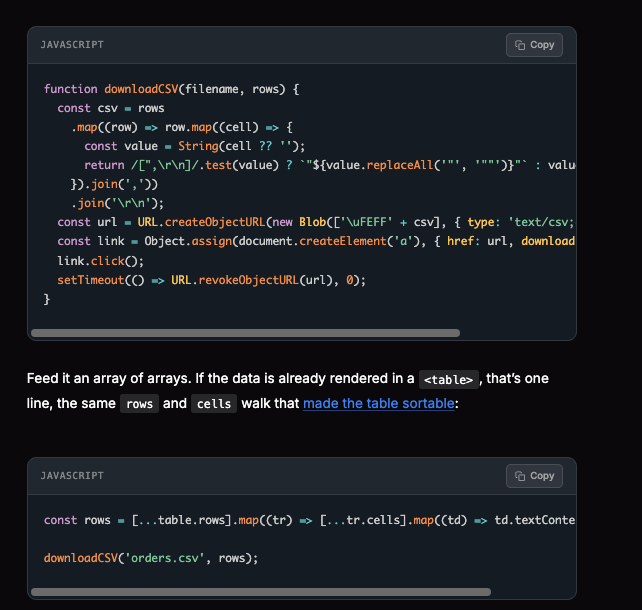
Skip the CSV export library: 12 lines of vanilla JS

An invite to use vanilla Javascript, showing a 12-line function that converts a table to a downloadable CSV without libraries or backends.
Skip the CSV export library: 12 lines of vanilla JS

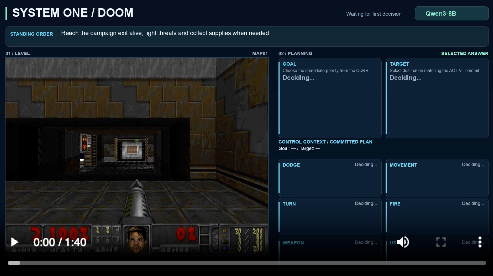
Two techniques for working with System One models

The author uses Jev with tiered goals (short-term sub-goals fed back into fast loops) to create a model for playing Doom in a human-like way instead of just holding down "shoot".
The author argues System One models could rival domain-specific classifiers, predicting big labs will soon release their own choice-only "System One" model variants.
Two techniques for working with System One models

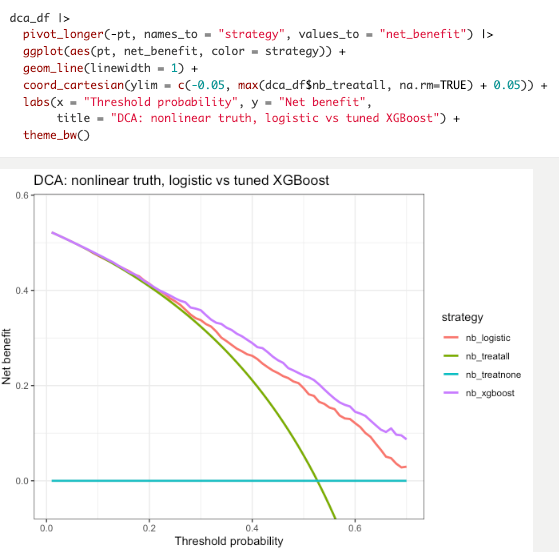
ROC, Paper, Scissor, Shoe

"We see ROC-AUC so often with classification models, we know the higher the better, but there is always that, well it depends scenario. I’ve always wanted to know what the pitfall is, how to avoid it, and how to do better. Let’s go from the basics on how to code ROC-AUC from scratch to decision curve analysis!"
TL;DR: coding ROC-AUC from scratch reveals it can look excellent (0.95) yet hide a terrible PPV (0.17) under low prevalence.
ROC, Paper, Scissor, Shoe

run-llama/liteparse: A fast, helpful, and open-source document parser

"LiteParse is a standalone OSS PDF parsing tool focused exclusively on fast and light parsing. It provides high-quality spatial text parsing with bounding boxes, without proprietary LLM features or cloud dependencies. Everything runs locally on your machine."

tinyjs: desktop apps for macOS, Windows, and Linux in ~6 MB

"A JavaScript backend with full system access, a native webview window (WebKit on macOS, WebView2 on Windows, WebKitGTK on Linux), and nothing else. No Electron. No bundled Chromium. No HTTP server. No ports."
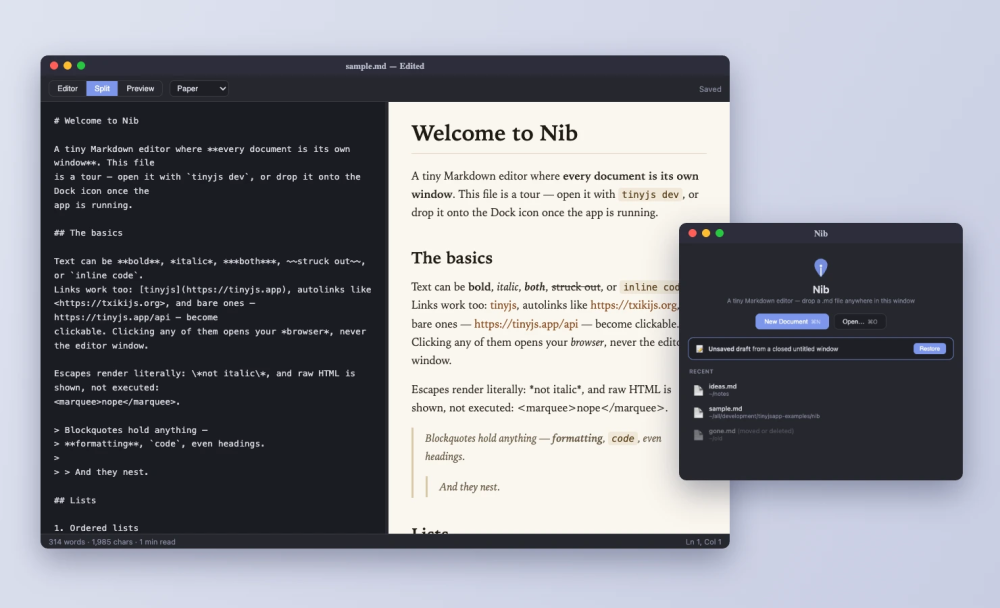
tinyjs: desktop apps for macOS, Windows, and Linux in ~6 MB

Building an Ultra-High Throughput AI-SQL Engine

"AI functions in SQL, and fast LLM-powered classifiers in general, are having their day in the sun. But they typically rely on costly, closed LLM APIs. We’re building Quail, the QUery-Aware Inference Layer, to jointly optimize query planning and model inference for open-weight models. Across 29 QUAIL-B queries, Quail is 1.84x faster on average than well-tuned vLLM baselines — up to 14x! Star us on GitHub, and try it out in our live demo!"
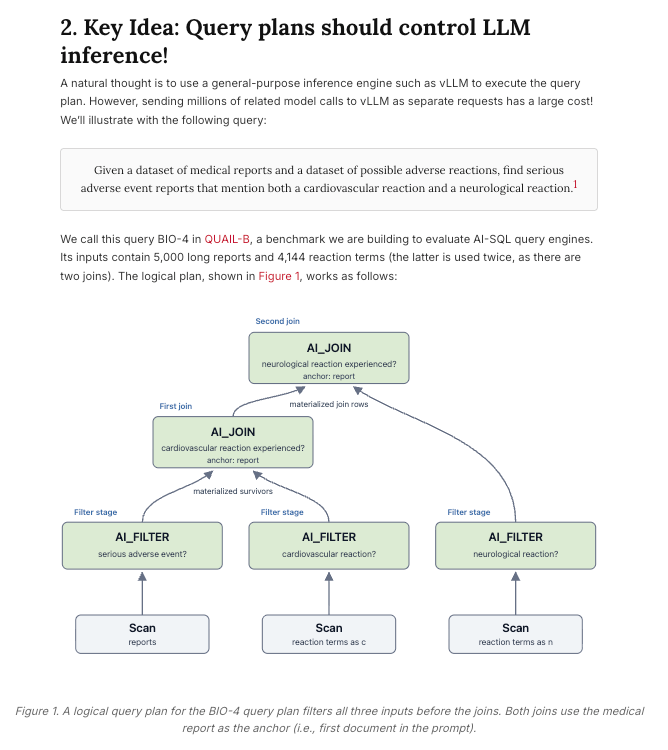
Building an Ultra-High Throughput AI-SQL Engine

Language Models for Text Classification: From Bag-of-Words to Jev

"Sure, the latest state-of-the-art GPT and open-weight LLMs can do the same kinds of classification tasks as Jev, while also being capable of much more general decision-making. But Jev’s advantage is that it can handle those classification tasks much faster and more cheaply.
At the other end of the spectrum, for a narrow, well-defined problem, Jev probably won’t classify anything better, faster, or cheaper than a special-purpose classifier. But its selling point is that it is far more general than those task-specific models.
"

Language Models for Text Classification: From Bag-of-Words to Jev

Data Thinking

Feedback mechanisms are terrible data sources

My friends who (probably, rightly) hate NPS will love this article, arguing that Collected feedback is broad, noisy, and hard to interpret, often buried under issues like aesthetic dislikes or accidental clicks rather than real signal. Even when signal exists, it's rarely actionable since negative feedback like "software not working" lacks clear direction for improvement.

Dataviz, Data Analysis, & Interactive

It's official: Airline websites are slow, but they don't have to be

This piece of statistics is mind-boggling: 95% of 111 top airline booking sites fail Google's Core Web Vitals on mobile, with only 5 passing. All 10 top-rated airlines fail.
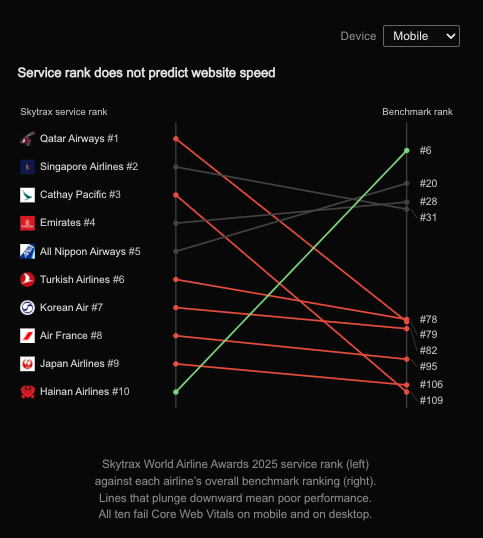
It's official: Airline websites are slow, but they don't have to be

Mind the tone

A light-hearted article for us transport nerds by The European Correspondent, analysing public transport announcement jingles. Interestingly, until recently Paris had inconsistent jingles, with one line having four different tones.
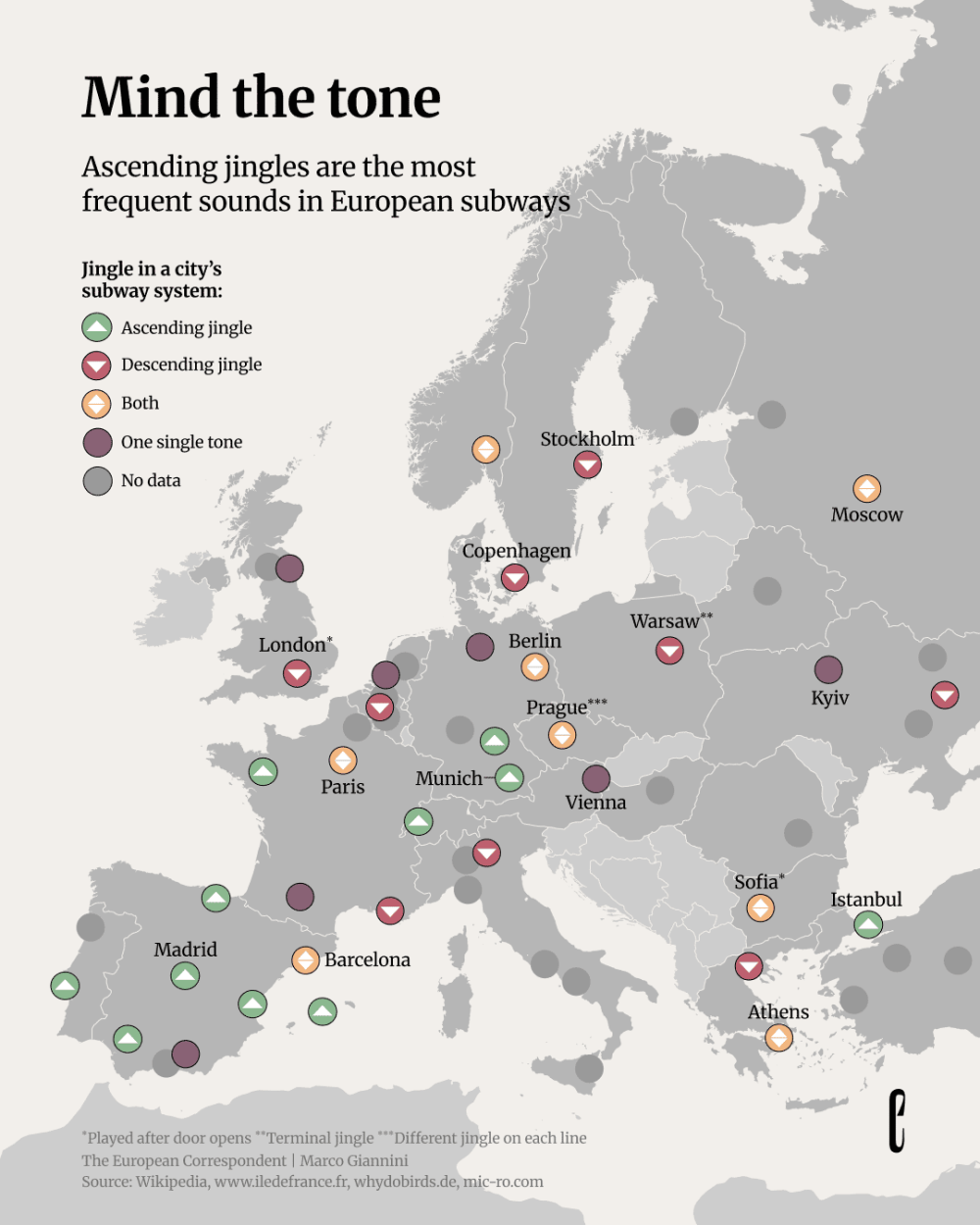
Mind the tone

GeoDS - GBNames

"Our research, carried out at the ESRC Consumer Data Research Centre (GeoDS), is exploring the generational and inter-generational residential movements of family groups across Great Britain, using historic censuses and recent consumer registers."
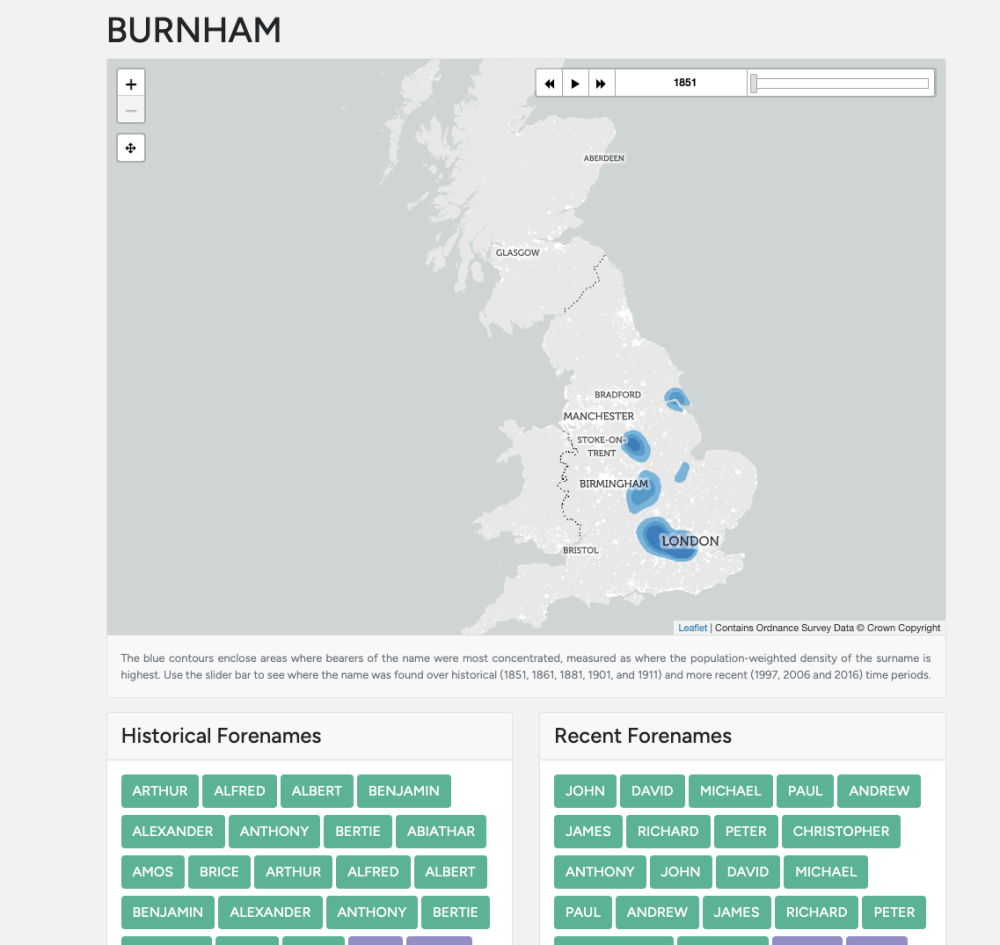
GeoDS - GBNames

There are only twelve 4x4 sudokus - and a cool trick for finding minimal subsets

"There are only twelve 4x4 sudokus! ... Or 288, depending on what counts as different solutions to you."
Brute-force search shows exactly 288 valid 4x4 sudoku solutions exist, reducing to just 12 structurally distinct ones once digit permutations are accounted for. A combinatorial rabbit-hole, pretty well written, and code shared.
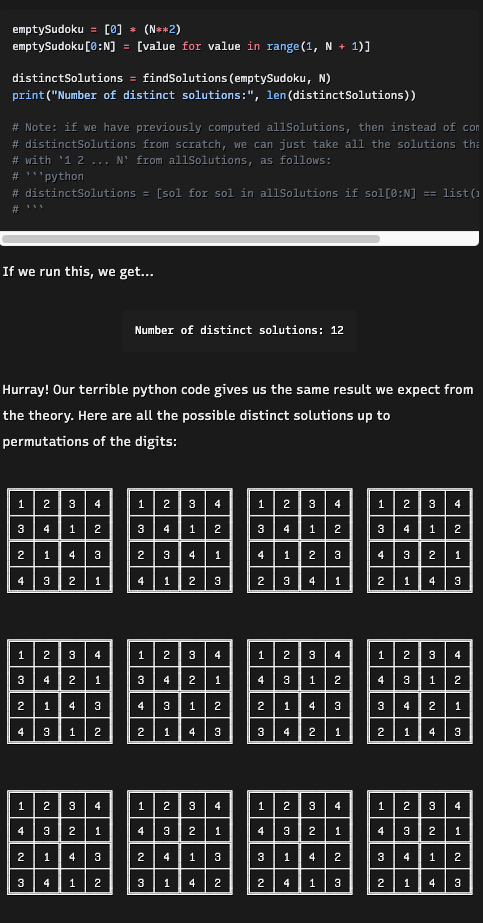
There are only twelve 4x4 sudokus - and a cool trick for finding minimal subsets

Lottery of Life

"You are about to be born again.
A lottery of 102 billion animal births counted each year.
Each turn is a random draw from this pool.
The odds are real.
"

Lottery of Life

AI is taking over... the internet

Ok, I'm officially a big fan of The European Correspondent 😃 This one I link to predominantly to show the clever chart below. Better seen on the live page, as it's animated.
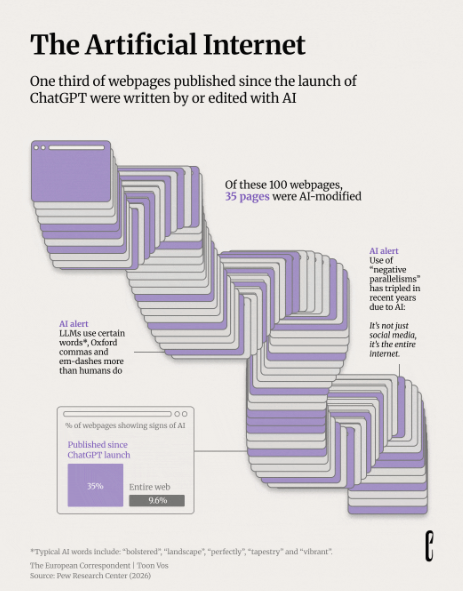
AI is taking over... the internet

Do we actually know how to make cities safer for women?

Amanda Shendruk shows that in over 100 countries, there's at least a 10 percentage-point gap between men and women feeling safe walking alone at night.
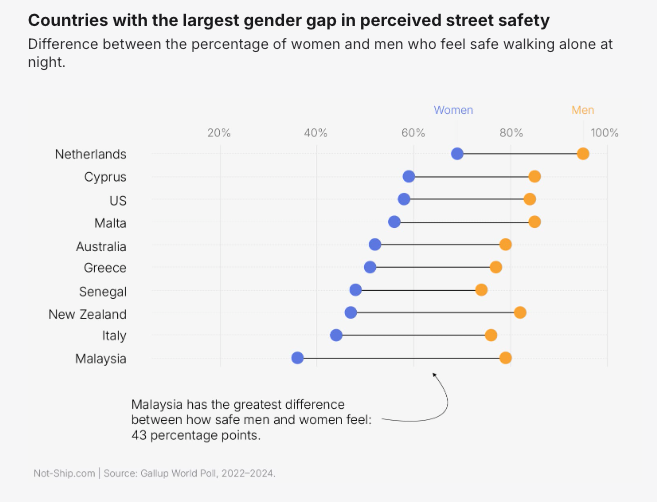
Do we actually know how to make cities safer for women?

Burning Man Death Rates - A Short Lesson in Statistics

"Summary: Three people died at Burning Man in 2026. This was about a quarter of what the crude national rate would predict (~12 deaths). Calculating the age-standardized death rate, we’d expect to see an average of 4.9 deaths. At this rate, seeing 3 deaths is not abnormal. However, Burning Man’s near zero death rate over its existence is abnormal, and likely due to selection bias of healthier attendees and other confounding demographic factors."
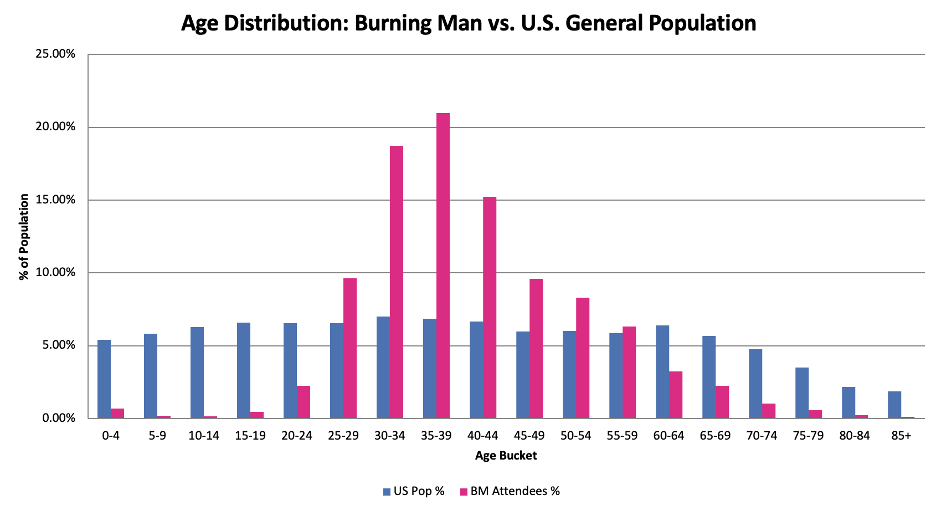
Burning Man Death Rates - A Short Lesson in Statistics

AI

Pluralistic: Textured (18 Sep 2026)

A critique of AI: LLMs excel at statistical extrapolation, producing text that is statistically indistinguishable from human writing, but this often results in the world being described or visualised as smoother than it is under more in-depth scrutiny. This is bad for true understanding.

(via Andy Redwood)

Ed Zitron's AI prediction track record

I often link to Ed Zitron's AI-skeptic pieces. This is a critique of his arguments, mostly focussed on the accuracy of his predictions, both about AI tech and finances.
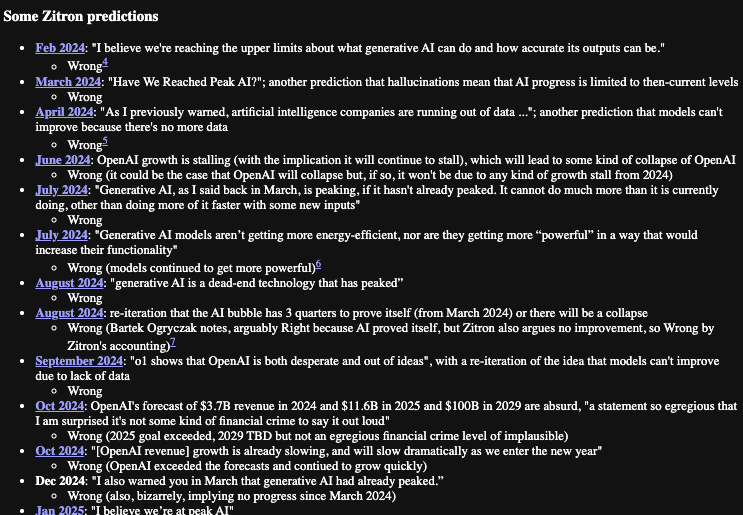

Ed Zitron's AI prediction track record

DID YOU LIKE THIS ISSUE?

Buy Me A Coffee

You're receiving this email because you subscribed to Quantum of Sollazzo, a weekly newsletter covering all things data, written by Giuseppe Sollazzo (@puntofisso). If you have a product or service to promote and want to support this newsletter, you can sponsor an issue.

quantum of sollazzo is also supported by Andy Redwood’s proofreading – if you need high-quality copy editing or proofreading, check out Proof Red. Oh, and he also makes motion graphics animations about climate change.

Logo for ProofRed

The Quantum of Sollazzo grove now has 50 trees. It helps managing this newsletter's carbon footprint. Check it out at Trees for Life.

Quantum of Sollazzo. · The data newsletter by Giuseppe Sollazzo

(c) 2012-2026 Giuseppe Sollazzo · London · UK

Unsubscribe

Don't miss what's next. Subscribe to quantum of sollazzo:
← Newer 678: quantum of sollazzo Older → 676: quantum of sollazzo
Powered by Buttondown, the easiest way to start and grow your newsletter.