
664: quantum of sollazzo
Hello, reader!
Quantum #663 had an open rate of 48% and a click rate of 15%.
The most clicked link was Why South America Is So Good at Football.
'till next week,
Giuseppe
Topical
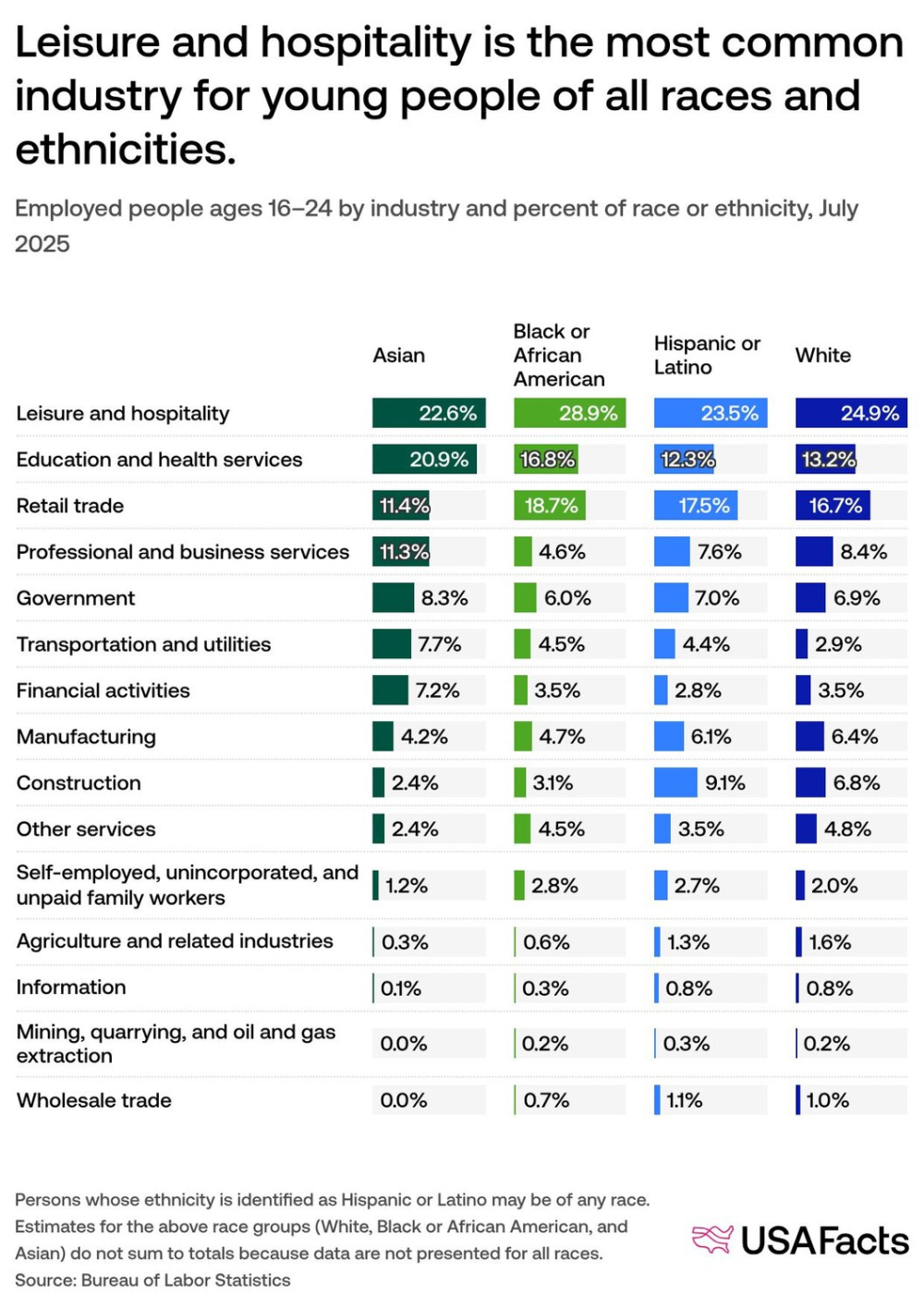
What kinds of jobs do young people have?
USAFacts reports on US youth employment, which is experiencing a resurgence after years of decline.
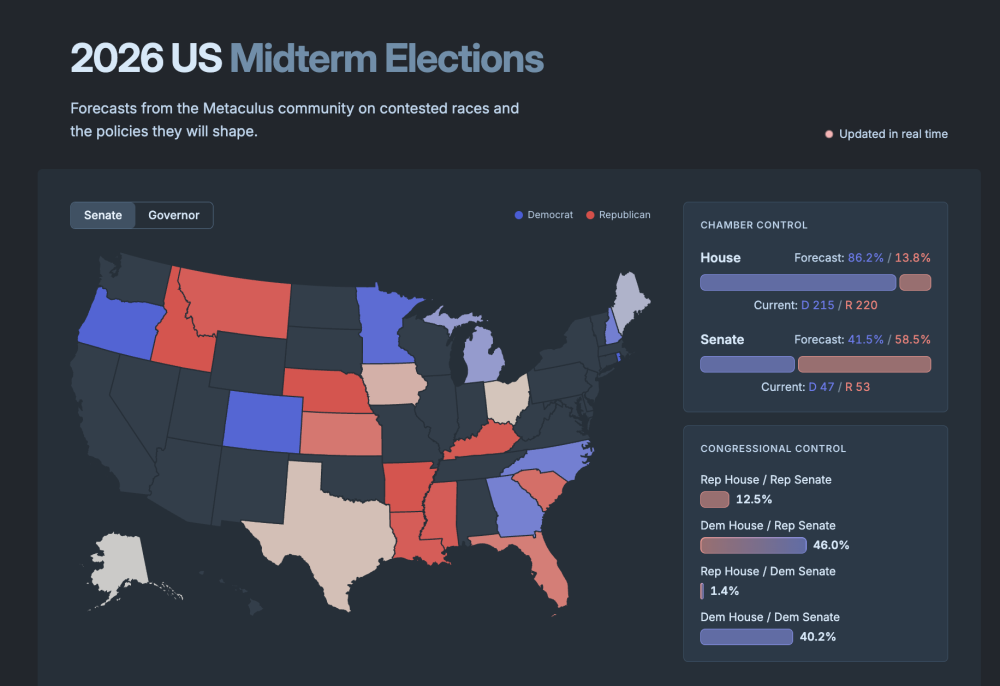
2026 US Midterm Elections
"Forecasts from the Metaculus community on contested races and the policies they will shape."
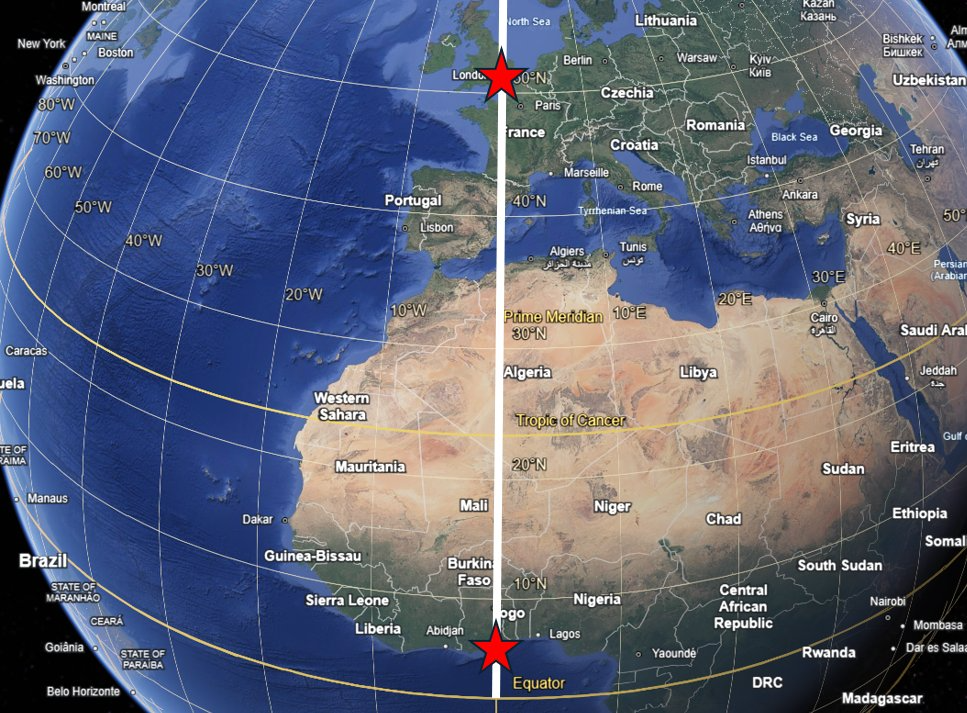
Iain Cameron on X: England v Ghana Prime Meridian
An unusual geographic coincidence: the World Cup group-stage match between England and Ghana was played between nations whose capitals are both on the zero-degree longitude.
While London is where the line was first created, apparently Accra is the only other world capital situated on this precise longitudinal line.
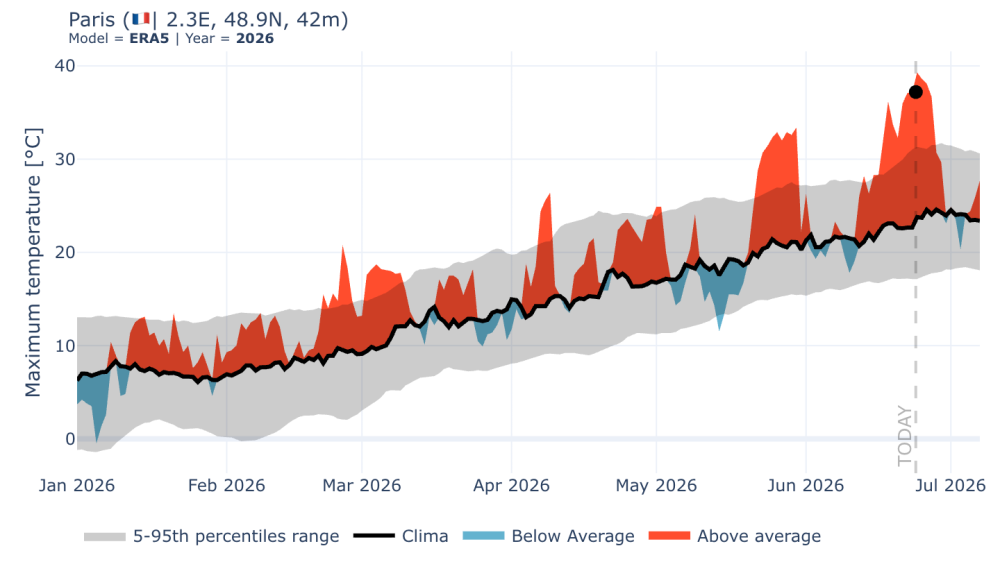
Schools are closed, records are broken. Let's talk heatwaves.
Amanda Shendruk in the last issue of Not-Ship examines the growing global heatwave crisis, starting with a key methodological challenge: there's no universal definition of a heatwave, with thresholds varying dramatically (e.g. Scotland declares a heatwave at 25°C for three days, while Malaysia requires 37°C).
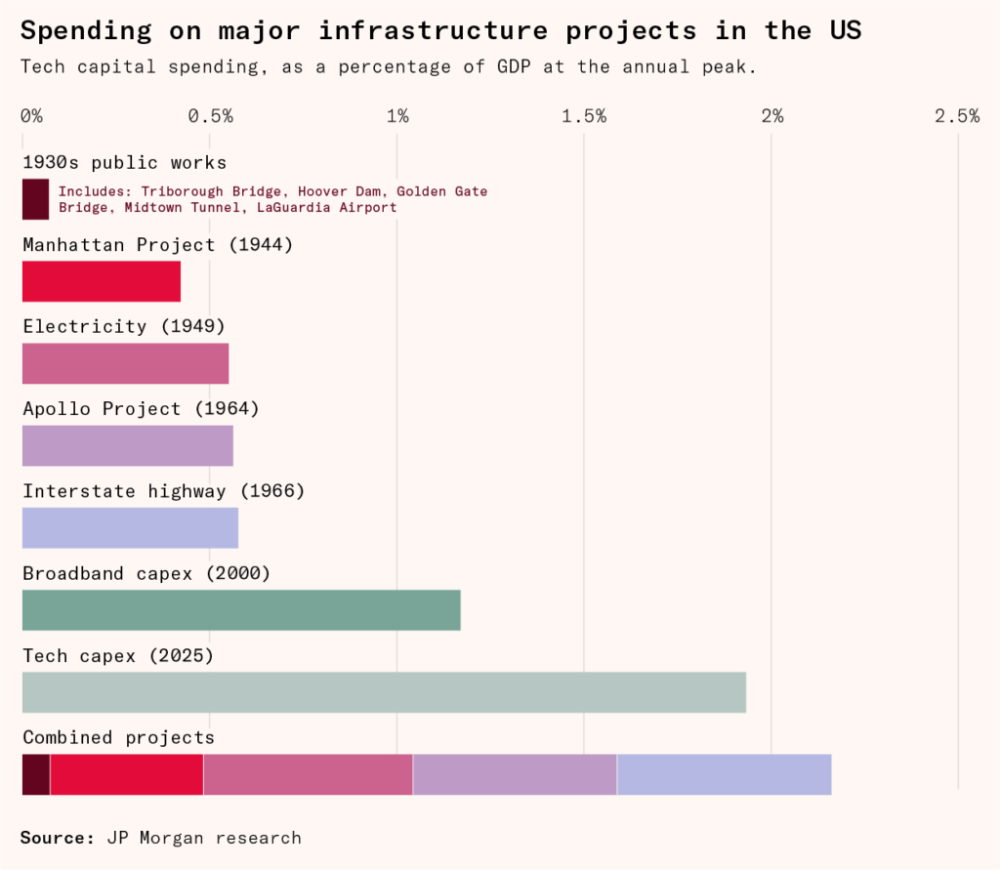
What's really slowing down the AI buildout
Works In Progress looks at the explosive growth of AI data centres within the context of grid connection capacity.
Brain food, delivered daily
Every day we analyze thousands of articles and send you only the best, tailored to your interests. Loved by 505,869 curious minds. Subscribe.

Tools & Tutorials
turso
"Turso Database is an in-process SQL database written in Rust, compatible with SQLite."
llm-algo-leetcode
"This is a practical LLM algorithm tutorial that covers Python, PyTorch, Transformers, inference optimization, VRAM management, and CUDA/Triton practice. It is not just theory: each concept is turned into a runnable, verifiable, and reviewable exercise so you can move from "reading" to "writing, debugging, and optimizing"."
Hello Data Science
"The Hello Data Science book is intended for anyone who wants to take on their first data science project to look for patterns, relationships, and meaning in data - without being intimidated while still being challenged. It is currently a work in progress. We have only released the first ten chapters as we continue to write the rest of the book."
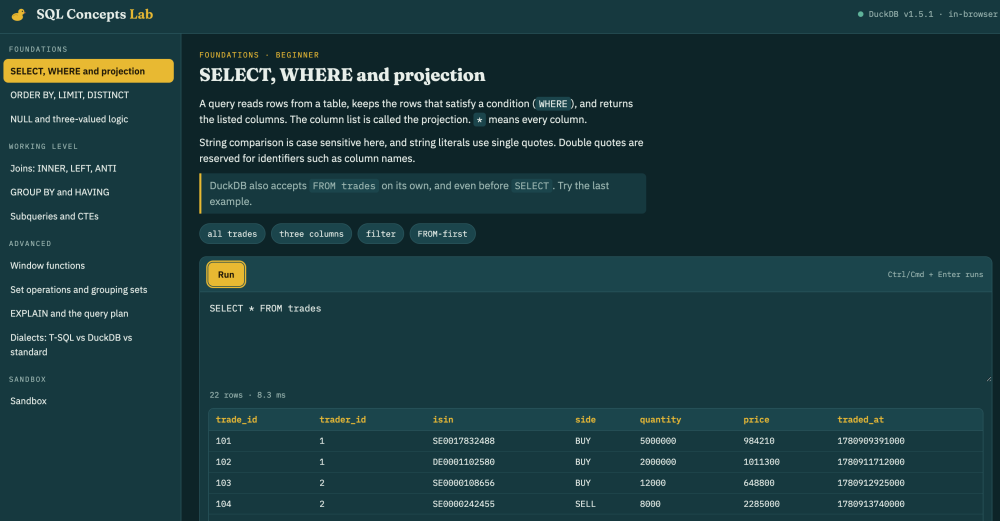
SQL Concepts Lab
Another interactvie SQL learning tool.
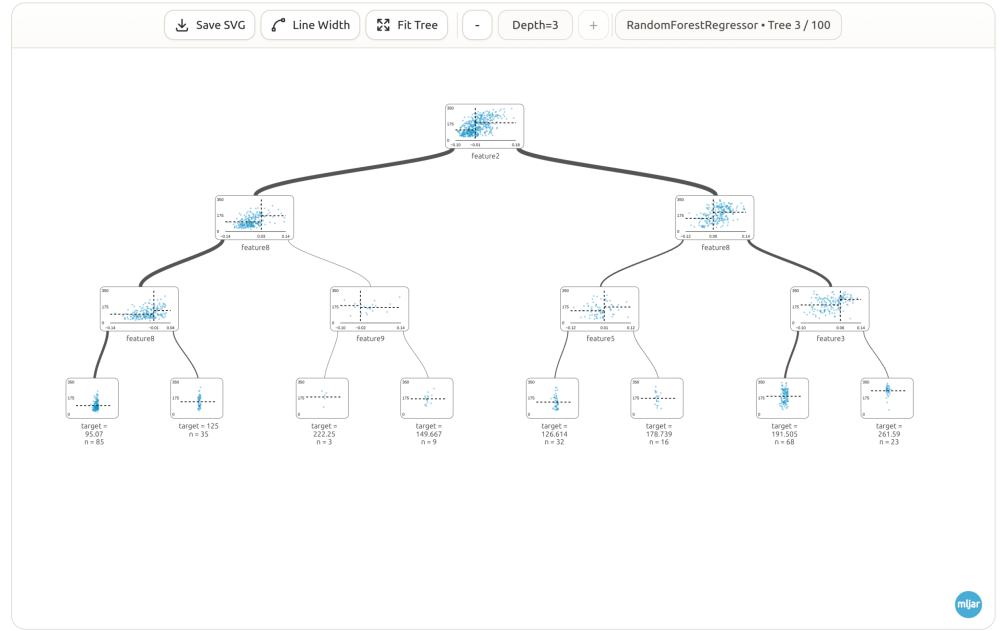
supertree – Interactive Decision Tree Visualization
"Visualize decision trees interactively in Jupyter, JupyterLab, and Google Colab. Zoom, pan, collapse nodes, and trace sample paths - all inside your notebook."
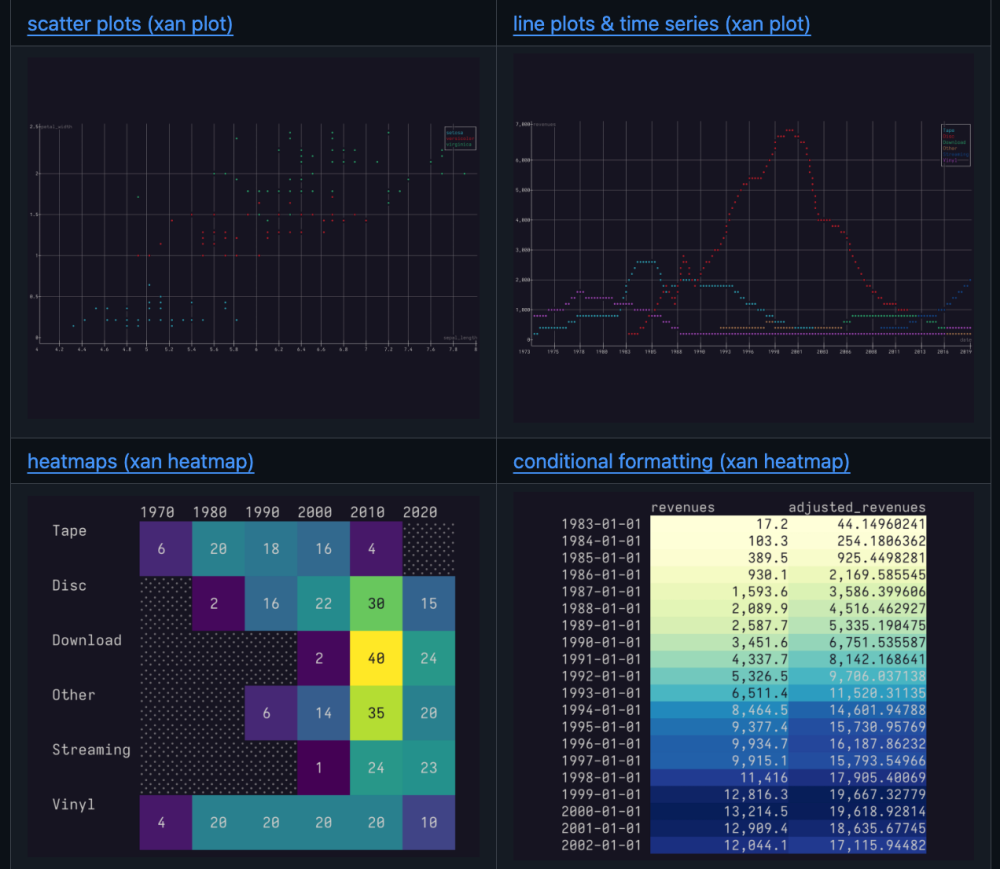
Data visualization from the comfort of your terminal
This is part of the documentations of xan, a CLI csv tool. xan can be used for data wrangling, but it also comes with amazing CLI-based dataviz capabilities.
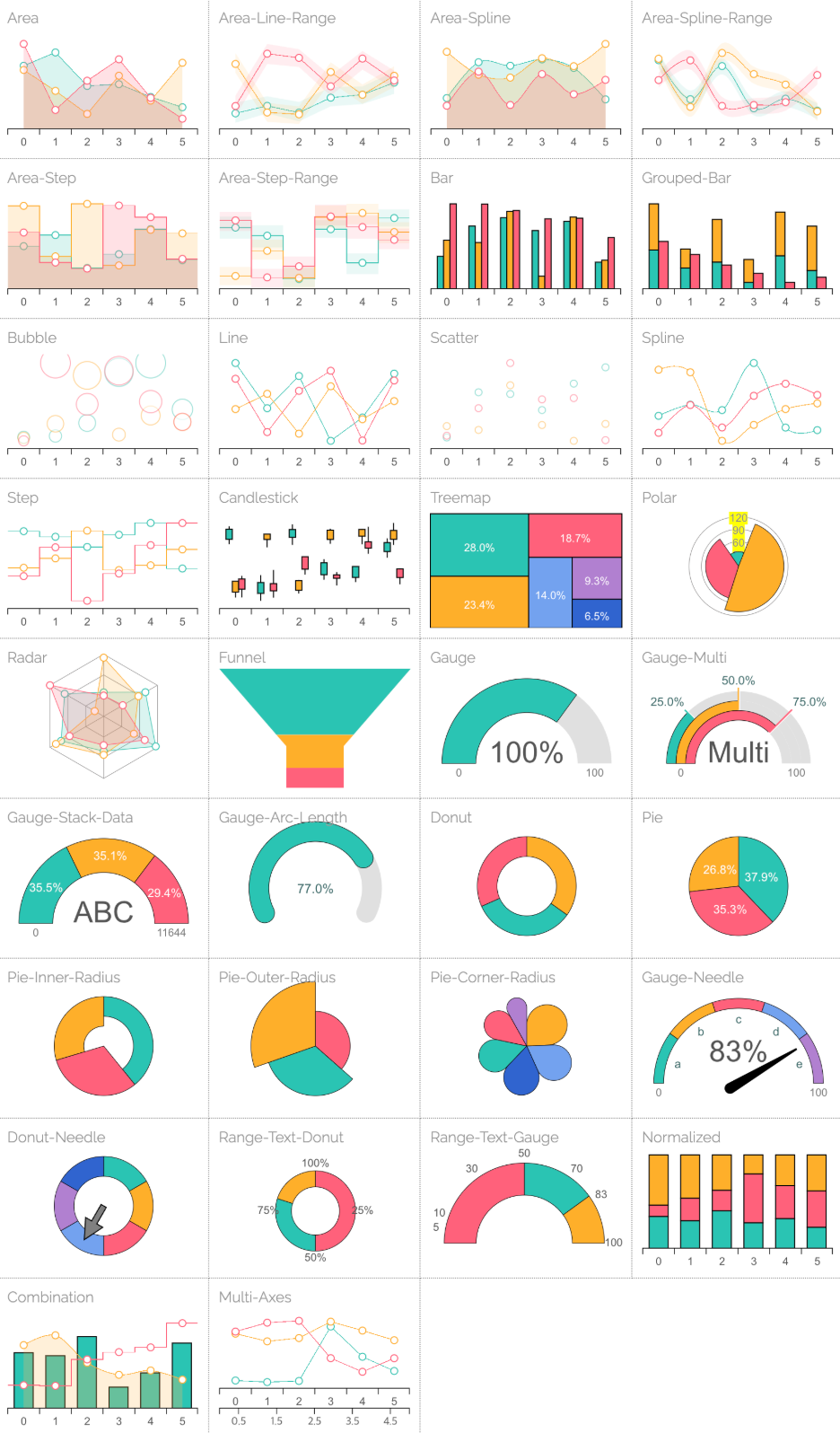
billboard.js
"Re-usable, easy interface JavaScript chart library based on D3.js, with SVG and Canvas rendering support."
I wrote a 70x faster SQL parser while barely looking at the code
PostHog engineer Robbie Coomber rewrote the company's SQL parser using multiple parallel Claude Code sessions, achieving a 70x speedup on his laptop. "It felt extremely empowering to be able to build something that would have taken months for someone with specific knowledge in a couple of days."
Lies, Damn Lies and Database Benchmarks
"A decent benchmark might be pictured as a strict Olympic Games-like running competition where the "Citius, Altius, Fortius" principle is precisely implemented. But in reality, when you approach the athletes, you start hearing unexpected noises. What is that? It turns out the competition is more like those weird contests you find on the Internet: the athletes must whistle "Yellow Submarine" accurately while running as fast as they can. The winner is no longer the fastest runner. It is whoever best balances raw speed against a skill that has nothing to do with running, and the quickest sprinter on the track can easily finish last."
Great analogy. The article uses ClickBench to illustrate how this applies to database benchmarks.
Broken Windows of Data
"How Booking.com scales a shared DWH across multiple teams without turning governance into a delivery bottleneck."
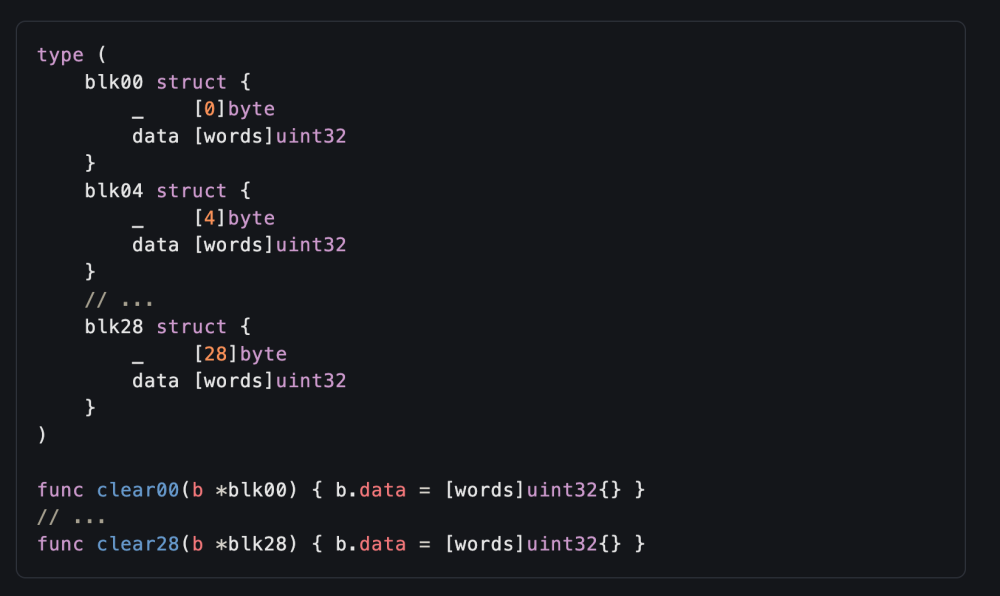
Optimization catalog. How 4 bytes of padding make array clearing 49% faster
This article explores a surprising optimisation quirk in Go: "adding 4 bytes of struct padding makes Go's array clearing 49% faster on Intel, all thanks to REP STOSQ."
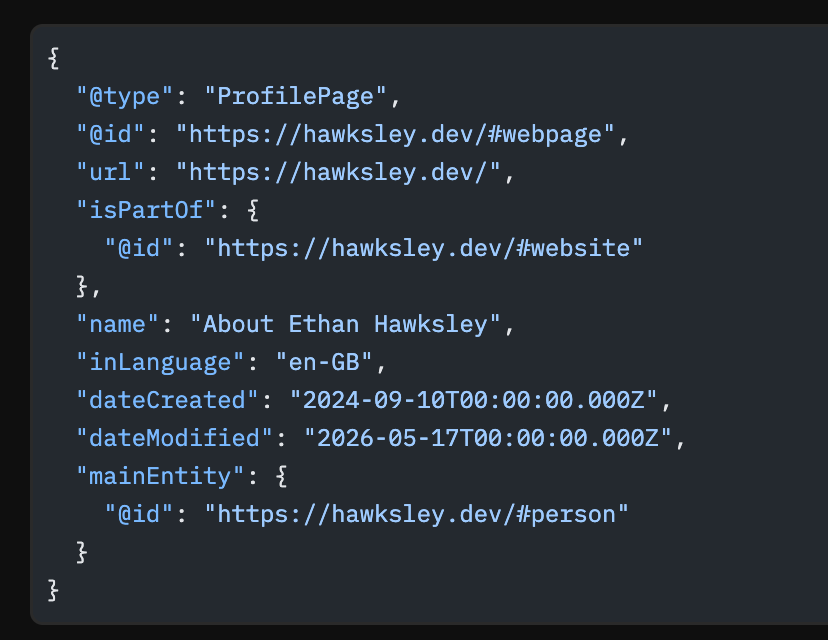
JSON-LD Explained for Personal Websites
Ethan Hawksley offers a comprehensive guide that explains how to implement JSON-LD (JSON Linked Data) on personal websites to improve search engine optimisation using structured data.
Data Thinking
Unstructured data is still a pain in the butt (but less impossible now)
Randy Au discusses the surging demand for analysing unstructured user data in quantitative UX research.
"For some reason, one of THE most popular quantitative UX research-y questions I get asked about now involves mostly unstructured user data. This is the "go analyze thousands of rows of unstructured text and 'make sense' of it all" type of question. The whole field of Natural Language Processing has been nibbling at these problems for many decades now, but as of late the demand for the work seems to be at an all time high thanks to the LLM boom putting it in people's heads that these language-based problems can be tackled with "AI" that does language convincingly.
For many of these problems, modern LLMs do represent the state of the art performance. I'm thinking about problems like "theme extraction" – pulling out a short summary of a text of it's primary theme, or "sentiment detection" – labeling whether the comment is happy or angry or sarcastic. While I did study some NLP back in my student days, that was literally in the age where "bag of words" was one of the dominant models of language, and markov chain language models were considered a little bit "fancy" due to how resource and data intensive the method was. So the fact that with a big LLM model, some prompting and practically zero labeled data can allow anyone to coax out almost state of the art results seems like unbelievable magic."
Why Technically Excellent Data Teams Still Fail
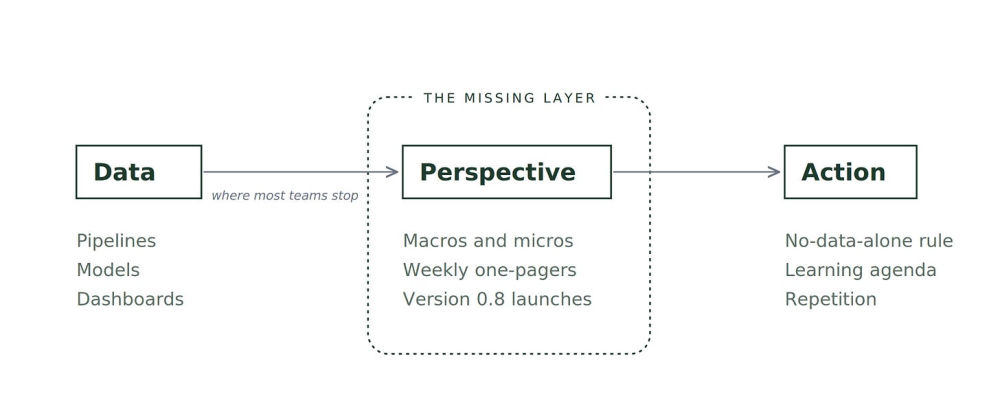
The core message of this article is that decisions, not deliverables, are the true measure of data team value.
"There is not much data in data roles, at least not where the value gets created. The work that ultimately creates value in an organization is decisions, and decisions require something that pipelines, schemas, and dashboards alone cannot provide. That something is Perspective: the interpretive layer between raw output and real action. Most data teams have no systematic way to develop it."
Dataviz, Data Analysis, & Interactive
A cartographic approach to visualizing the family tree of the hummingbird subfamily Trochilinae.
Not sure what I think about it, but it's nonetheless impressive. (via Nicola Del Monaco)

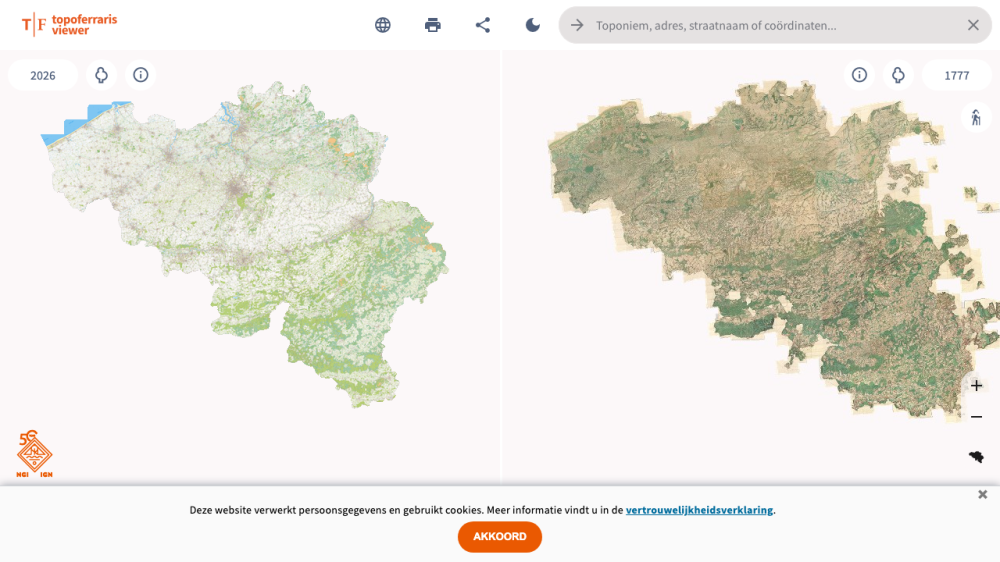
Topoferrarisviewer
The Ferraris Map was the first topographical map of the Southern Netherlands to cover almost the entire Belgian territory. This website allows to compare it with modern maps. (via Daniele Marinazzo)
Storied Colors
This "Color Index" is a catalogue that documents one color per day with detailed historical and scientific context. The project promises to tell each pigment's story "with its provenance, its chemistry, and the people who paid for it in poison". It's currently got 252 entries, and growing.

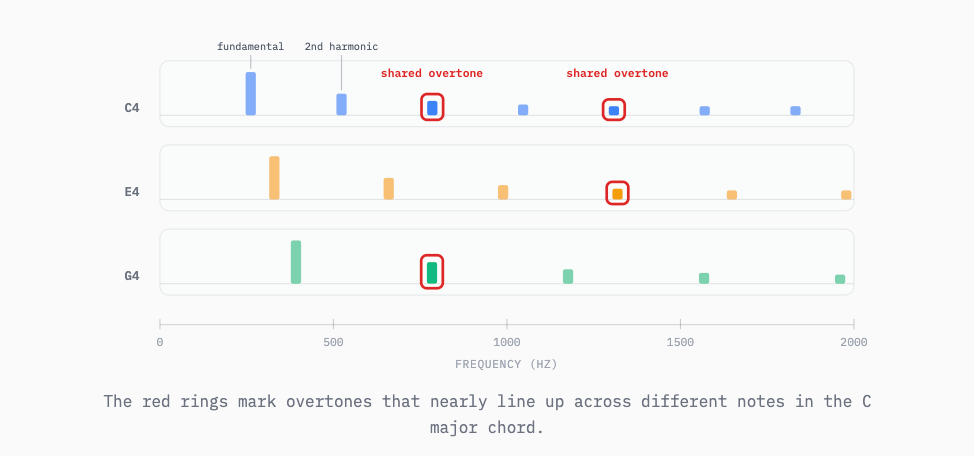
How The Heck Do Synthesizers Work?
" How simple mathematics shaped the sound of modern music." This interactive article explains how synthesisers create music through mathematics and physics, beginning with sine waves as the fundamental building block of sound, and exploring how complex musical tones emerge from combining multiple harmonics.
Beach Science
This is the first in a series of entertaining yet science-backed articles by Academic Michael Friendly, looking at several aspects of... beach life. The first discusses "the practice of lying on a beach towel and allowing fundamental scientific questions to bubble up from the sand and sea around you", the second is about "calibration", and the third explores how "temperature words are doing quantitative work while pretending to be qualitative".
Spenny
An interactive price-guessing puzzle. Think Wordle but for supermarket receipts. (via Jonathan King)

AI
It's 11:00 pm. Do you know where your AI agent is?
Janelle Shane examines the risks of unsupervised AI agents: "as someone whose name pops up when you search for "AI writers", I get unsolicited AI-related emails. Not all of them are considerate of my time, but usually people don't send me 6 emails within a minute."

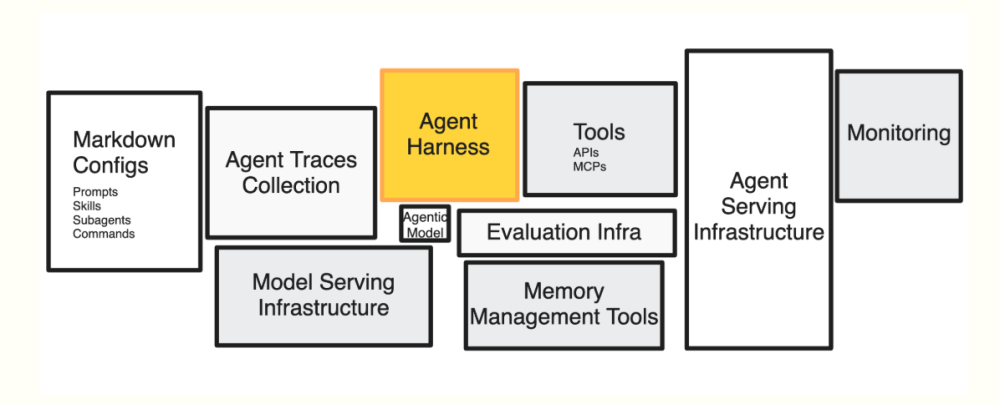
Hidden Technical Debt of AI Systems: Agent Harness
"If you have been building agentic products in the last twelve months, you have been writing harness code: system prompts, tool wrappers, planner-executor loops, retry policies, context compaction strategies, allowlists for which tools an agent can call from which surface, judges for when to stop, and fallbacks for when the model wanders. Even drawing workflows in no-code or low-code tools like n8n is harness work. Every team has built some of this. The good teams have built a lot of it. The bitter part is that almost all of it is going to dissolve into the next generation of models, and the teams who treat their harness as a permanent product surface are going to spend a year ripping it out."
AMA – Ask Me Anything! Submit a question via this anonymous Google form. I'll select a few every 4-5 weeks and answer them on here :-) Don't be shy!

The Quantum of Sollazzo grove now has 40 trees. It helps managing this newsletter's carbon footprint. Check it out at Trees for Life.
'till next week,
Giuseppe @puntofisso.bsky.social