
Just the News
Skipping any preamble, this week is all about Realms of Pugmire news, other Pugsteady updates, and discussing the nonfiction book "All of the Marvels."
Last week was particularly rough on me. Plus, I have a lot of Pugsteady news to get through this month, so I’m going to skip the usual advice or theory chatter and instead dive right into the important stuff. Okay? Okay!

News
First off, here’s a quick roundup of the latest episodes of Red Moon Roleplaying’s ongoing actual play podcast about Masks of Nyarlethotep, of which I am a player!
Let’s get to the biggest news, which is that I have another Realms of Pugmire crowdfunder!
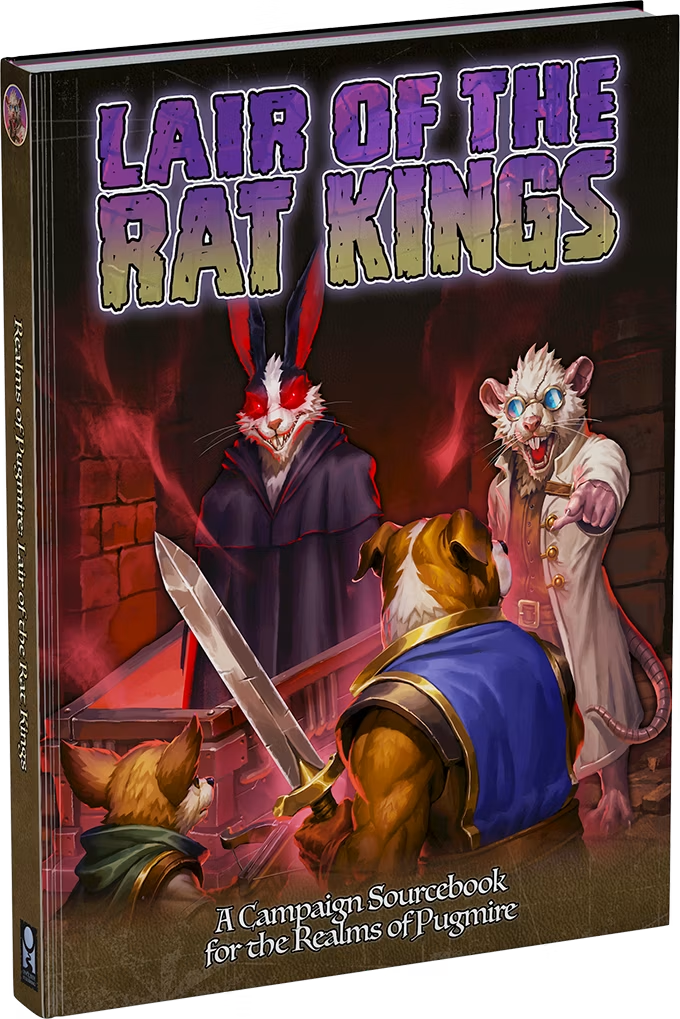
Lair of the Rat Kings is the huge campaign sourcebook for Realms of Pugmire, focusing on the rodents of the Underneath, the massive underground setting lurking behind the skin of the world. Inside you'll find:
Complete character creation rules for mouse and rat player characters, including a new system detailing their unusual psionic powers
Details on psionic inventions, and how player characters can create their own
Guide advice on running massive underground campaigns, along with details on the elusive and terrifying Cult of Labo Tor
A complete adventure introducing the Underneath, along with encounters and four complete mini-adventures which all link together into one massive subterranean campaign
This is a campaign focused entirely on delivering rewards as PDFs and print-on-demand books, so we can bypass tariff concerns (since they seem to keep popping back up), and it also means we can deliver the final rewards pretty quickly. We’ve already funded—in fact, we’re on our way to being nearly 300% funded—but there’s still ten days to jump on the backer train!
If you want to hear more about the book, I talk a lot about it in an episode of GM Talks!
However, speaking of Pugmire Unleashed, that’s now out in the wild if you’ve been waiting for it!
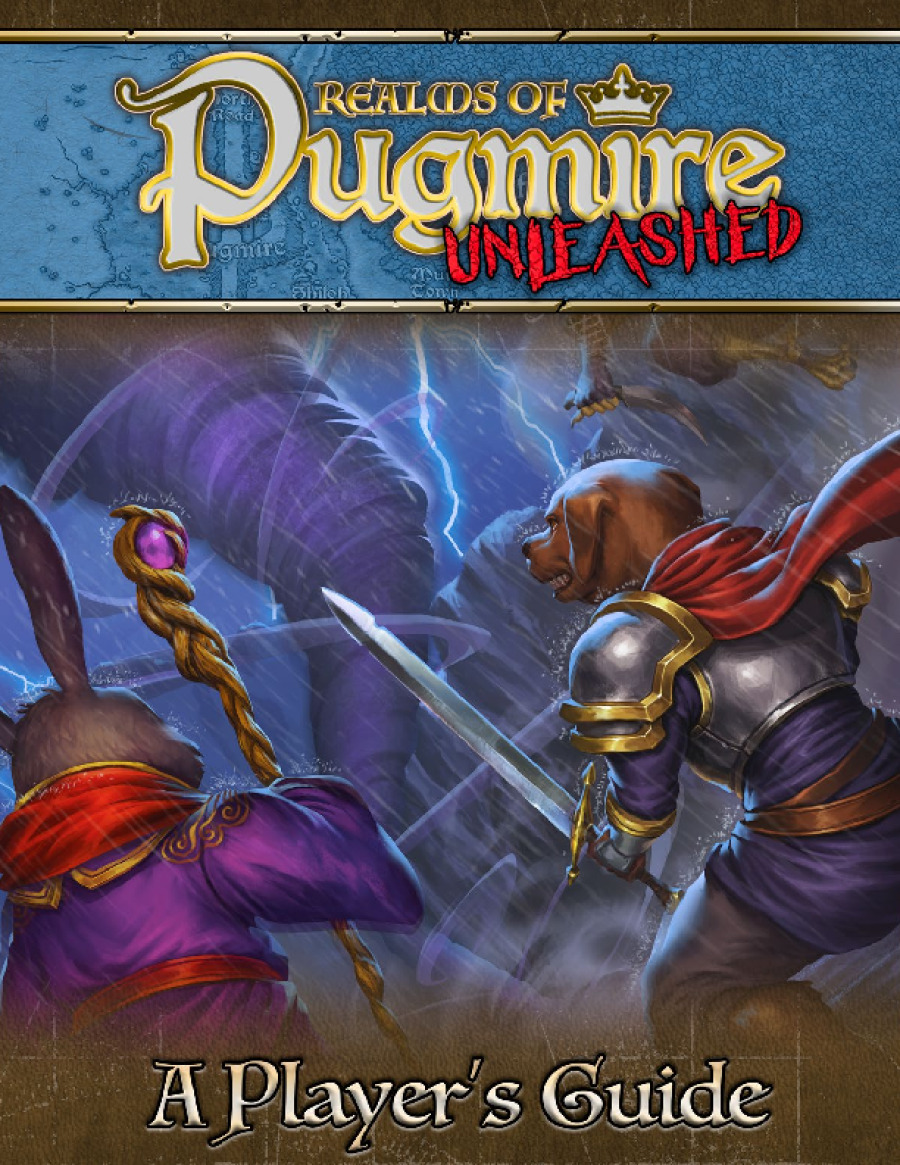
Pugmire Unleashed is a player’s guide for Realms of Pugmire, designed to focus on players and give them new options for games. Some highlights include:
Four new callings for dogs, including new tricks and spells
Complete setting and character-creation information for four new species: badgers, birds, lagomorphs, and reptiles
New rules for sailing and gunpowder weapons
More information on iconic locations like Houndton, Mutt Town, and Waterdog Port
Three exciting adventures for Guides to use at their tables
However, if you want to see my work in another crowdfunder that isn’t related to Realms of Pugmire, there’s always Cinematic Obsessions!
This is another of the Ghost Press anthologies of critical essays on movies. I always enjoy working on these, and this time I’ve convinced the crew to let me write about Dr Who and the Daleks, where Peter Cushing plays his version of the First Doctor! And, thanks to Russel T Davies, that movie now totally canonical, and everyone who reads this knows how important canonicity is to me.
The crowdfunder is launching soon, so go ahead and click the link so you can be informed of when it goes live!
My Media
I’ve been reading a lot of books lately, because those are about the only thing that seem to hold my attention these days. I also like reading books that are all about how the things I read are made, which led me to pick up All of the Marvels by Douglas Wolk.
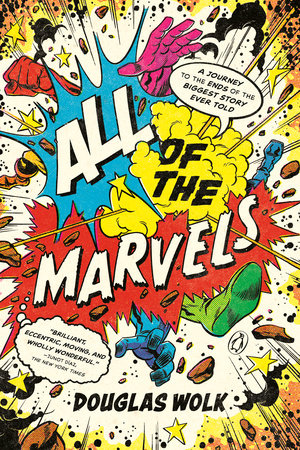
Wolk does something utterly wild: He approaches every single issue of Marvel Comics as part of one vast, interconnected work, and then proceeds to read all 27,000 issues of it in order to figure out (a) what that work is and (b) what it says as a cohesive body of work. The “utterly wild” part is assuming it’s a cohesive body of work to begin with, but he makes a comprehensive (if not entirely compelling) argument for it before diving in. I picked it up partially because I’m a fan of said Marvel Comics, but mostly because I could not fathom how he’d talk about everything in such a massive epic within the scope of a few hundred pages.
The short answer is, of course, “he doesn’t.” Because he can’t talk about every single issue in even a small amount of detail, the book instead turns into a guided tour of select parts of the Marvel canon, which he uses to illustrate his larger points about it as a body of work. As a result, three interesting things come out from this exercise.
First, it’s a sincere (if, by design, somewhat flawed) attempt to extract overall themes and arcs out of this massive story, which I didn’t think was even possible. He waits until the appendix to present it as a cohesive narrative that breaks down into four or five parts, and while I have quibbles about quite a bit of that, the fact that he made the effort and it actually kind of works is incredibly impressive all by itself, even if it does risk turning the entire Marvel canon into a story about Reed Richards and Doctor Room. Still, since he’s placed a stake in the ground and said “this is a complete body of work,” others can now engage with it on the same level, which is a worthy feat all by itself.
Second, he makes sure to shine a light on some of the more obscure and esoteric parts of the saga. Yes, there are chapters covering The Fantastic Four and The Amazing Spider-Man, but he also talks about things like Master of Kung Fu and the Linda Carter romance comics. Further, for as much praise as he heaps on the saga, he’s quick to point out faults, and doesn’t excuse them. So again, it’s a doomed prospect, but he is making a sincere effort to approach this Sisyphean task at least somewhat objectively.
Finally, due to the nature of discussing his methodology (for lack of a better word), he ends up breaking down the method and approach to reading monthly serialised comics. While that might seem silly to do, in reality reading styles and tastes have changed, and what was intuitive when these comics first came out does benefit from spelling out to people new to the process. Combined with the fact that this style of publication is slowly fading from the world, it makes sense to explain something that would have been implicit to audiences in the 1960s. As a result, the book ends up being not only a love letter to Marvel Comics specifically, but to monthly American comics as an art form.
Honestly, I could have read several volumes of this, but it’s probably best that he used the limits of one book to make sure he focused on the larger picture and goals he set for himself, rather than getting beached on the shores of X-Men-specific continuity or whatever. (Seriously, Jay & Miles X-Plain the X-Men spent twelve years talking about just the X-comics, and they still only got from the 1960s to the early 2000s, because Wolverine’s other mutant power is ludicrous continuity.) It was a thoroughly enjoyable read, and I’m glad I picked it up.
Hopefully things will be in better shape next time. See you then!