A Predicament Landscape, June 2026
We’re at the end of June, midsummer has passed, and sweltering heat covers much of Europe. The oak in our garden has luckily recovered to its full glory after a spring invasion of larvae. In the darkness at the bottom of our unused well glitters only a foot or two of cold silver water. Most evenings I pick mint leaves outside and make tea. Our daughter turns 1 on Saturday. Life passes swiftly and richly. Savour it.
The work with A Predicament Landscape is an endless chippin’ away and, fortunately, the past few weeks has seen some progress. The first fully connected Overlay, Home as a place of production, has been written and published. Furthermore, since this is the first real newsletter, I would suggest you read In The Borderlands if you haven’t already. It provides a rich context for where we’re at currently with the landscape. Some other Overlays with some material written are A world safe for children, Attention, Quit your job, and Soulmaking. Read on.
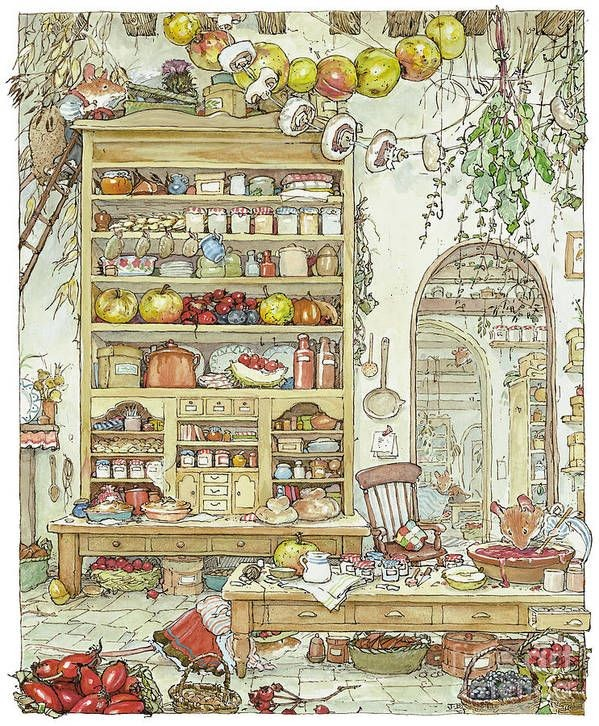
Home as a place of production
As the market economy swallowed the world, nearly all production left the household for the factories and offices. With the increase in production capabilities following the industrial revolution the home became a place of consumption. Ready-made food and microwaves entered the kitchen cabinets, tools for building and maintaining begun to disappear, living rooms closed their blinds was lit up by the television, land became lawn. The home lost much of its agency, it was no longer a place of production.
What are homes for? The great predicament cartographer David Fleming writes the following in Lean Logic:
Home is the household where you feel you belong.
[The household] makes people. It teaches near-perfect grasp of a language. It creates and makes in us the essential skills of conversation, listening, looking at the person who is talking to you; it transmits humour, loyalty, love, manners, reciprocity; it builds confidence and identity; it enables its members to discover which sex they are; given a chance, it arranges its own food, cooks it, serves it up and sustains a conversation while it is eaten; it is a library and reading room, a first aid centre, a support service for the new-born, and a source of comfort for the elderly and dying. For its friends, it is a provider of food and drink, comfort and conversation, bed and breakfast. It is the building block from which society is made. It is self-regulating and self-sustaining; it provides its services free, and renews membership indefinitely.
Even this type of production, the making of people, has become threatened, not by industrial manufacturing but by the way modern technology has seeped into every crevice of modern life. However, the tide is turning. We must find ways to strengthen our agency. We must make our homes into places of production. The direction is clear, decrease the external consumption in your home, perhaps getting rid of your TV or exchanging your laptop for a stationary computer, opt for whole food groceries instead of premade dishes, simultaneously increase your own production, learn to knit, mend clothes, try making saurkraut or kombucha, bake your own bread, grow your own herbs, weave baskets, I don't know, invent things, solder electronics, make your own furniture, build stuff, create beauty, sing, write, paint, talk, play, love.
Parts of the modern world were aided in this process by the covid-19 pandemic which forced many to leave offices and conduct their work from their homes. As one sliver of production entered the household, others, still small, followed. Crocheting, baking, gardening, making, mending, and more time spent with other members of the household. Suffering and deaths aside, it was a strangely transformative time for many, not easily forgotten.
I am excited by the prospect of people scaling back their ‘work work’ in order to do more ‘life work’. Everything we can do to loosen the grip of consumer capitalism on our lives helps us reclaim a bit of autonomy. It might also encourage us to engage with the real cost of the products we buy. Do we understand what really went into producing a phone, a pair of jeans, an apple? The costs to the environment, people and communities that we have externalised and that are neither visible nor accounted for might become more tangible once we learn to make and repair some things for ourselves again. These endeavours become even more empowering if they’re done in community. Total self-sufficiency is hard, and to me also not desirable. The exchange of knowledge, skills, and goods is a vital element of a more equitable and fulfilling future.
Our homes are the places we have the most control over. Let’s start here. Let’s replace personal comfort, convenience and safety with communal vitality, pleasure and agency.
- Karen Rosenkranz, The home as a place of production
Ask yourself, what do you regularly consume that you could acquire the ability to produce yourself? What can you make, build, cook, create, and care for that makes your home into a place of production?
Spread the word. Expect more to come soon.
Blessings to you all,
from where the forest begins