Humans In The Loop -- Wednesday, May 20, 2026
It's Wednesday which means another absolutely surreal day in the AI economy: Meta laid off 8,000 people. OpenAI is preparing for a trillion-dollar IPO. Nvidia just made $81.6B in a single quarter selling GPUs to every company panic-buying its AI future. Meanwhile the rest of us are over here trying to figure out whether learning vibe coding belongs under “skills” or “survival tactics” on LinkedIn.

Imagine your company's best quarter ever landing on the same day HR emails pink slips to 10% of employees. That is exactly what happened at Meta on Wednesday, when 8,000 employees were notified of layoffs while the company sat on $56.3 billion in quarterly revenue and net income of $26.8 billion. The cuts are structural, not performance-based, and they come with a clear destination: every saved salary goes straight into GPUs.
Meta is also canceling 6,000 open job requisitions, bringing the real headcount reduction to 14,000 positions. Another 7,000 workers are being reassigned into new AI-focused teams with job titles like 'AI builder' and 'AI pod lead.' The company's 2026 capital expenditure guidance sits at $125 to $145 billion, nearly double last year, which is roughly four to five times what it pays its entire human workforce annually. More cuts are planned for August and fall.
- Meta's cumulative cuts since 2022 now exceed 33,000 jobs, surpassing the 'Year of Efficiency' campaign that shocked the market three years ago.
- Block, Amazon, Oracle, and Cloudflare have all cited AI explicitly in major layoff announcements this year, and across all U.S. tech, 113,000 workers have been cut in 2026 at an average of 825 per day.
- Nearly half of all tracked 2026 layoffs have been explicitly attributed to AI by the companies making the cuts, though some economists suspect companies are using the label to dress up routine cost-cutting.
🧠 Ha’s Take: The uncomfortable reality of the AI era: Many companies are no longer using efficiency gains to grow headcount. They’re using them to fund AI infrastructure instead. Meta spending more on GPUs than people is not just a tech story. It’s a signal that the economic model of modern companies is changing in real time. But the companies that win long term likely won’t be the ones that simply cut fastest. They’ll be the ones that figure out how humans and AI actually work well together. Right now, most organizations are still much better at reducing headcount than redesigning work.

One day after Elon Musk lost his lawsuit trying to dismantle OpenAI, Sam Altman told his bankers to start the paperwork. OpenAI is preparing to confidentially file its IPO prospectus as soon as this week, working with Goldman Sachs and Morgan Stanley, and targeting a public debut as early as September at a valuation that could top $1 trillion. The timing, coming the morning after Musk's legal defeat, was almost certainly not a coincidence.
The company, last valued privately at $852 billion, serves more than 900 million weekly active ChatGPT users and surpassed $30 billion in annualized revenue. The IPO would cap a journey from scrappy nonprofit research lab to the most valuable AI company in history. The wrinkle: OpenAI still burns cash at a historic pace, and investors will eventually need to see the actual numbers when the S-1 goes public. Anthropic, meanwhile, which had been widely expected to file first, now has to decide whether to rush or wait.
For non-tech CEOs, this matters because an OpenAI IPO means OpenAI will have public shareholders demanding revenue growth, which means your vendor is about to get a lot more aggressive about selling you something. Expect pricing conversations to get interesting.
- Anthropic's odds of beating OpenAI to a public listing collapsed from 69% to 20% on prediction markets after the filing news broke.
- SpaceX, which absorbed Elon Musk's xAI earlier this year, is also expected to file its own IPO prospectus publicly as soon as this week, valued at roughly $1.5 trillion.
- OpenAI has raised more than $180 billion in cumulative private funding and still burns through cash faster than almost any company in history.
🧠 Ha’s Take: The most fascinating part of an OpenAI IPO is not the trillion-dollar valuation. It’s what happens when the world’s most influential AI lab shifts from “move fast and build the future” to “meet quarterly earnings expectations.” Once public shareholders enter the picture, the pressure changes: more revenue, faster enterprise adoption, more aggressive monetization. Which means AI is about to move even faster from experimental technology… into core business infrastructure. And for CEOs, the window to stay “AI curious” instead of becoming “AI operational” is closing quickly.
Nvidia reported first-quarter earnings after the bell Wednesday, and the number that best captures the moment is this: data center revenue alone hit $75.2 billion in a single quarter, up from $39.1 billion a year ago. The whole company did $81.6 billion in revenue, beating Wall Street's estimate of $79.2 billion. For context, that is more than the entire annual GDP of several small countries, earned in 90 days, almost entirely from selling chips that run AI.
The company also guided Q2 revenue to between $89.1 and $92.8 billion, ahead of the $87.3 billion analysts expected. The stock initially dipped more than 2% after-hours, which is what happens when you beat estimates and the market still expected more. Nvidia's earnings have become the closest thing Wall Street has to an official AI health report: when Jensen Huang says demand is strong, enterprise tech budgets follow.
- Hyperscaler capital expenditure across Microsoft, Google, Amazon, and Meta now totals roughly $725 billion committed for 2026 — and most of that money is pointed at Nvidia.
- Nvidia guided for an $8 billion revenue hit from export controls on its H20 chips sold to China, and still beat estimates on the top and bottom lines.
- Nvidia alone has contributed roughly one-fifth of the S&P 500's total gains this year, making it the most important single stock in the index.
🧠 Ha’s Take: At this point, Nvidia is no longer just a semiconductor company. It’s becoming the infrastructure layer for the AI economy. The scale of spending here is staggering: hundreds of billions of dollars flowing into GPUs before many companies have even figured out their actual AI strategy or operating model. Which creates a strange moment in tech: the infrastructure buildout is happening faster than organizational readiness. A lot of companies are still asking: “What should we actually do with AI?” while the largest companies in the world are already pouring hundreds of billions into building the infrastructure that will power the next economy.
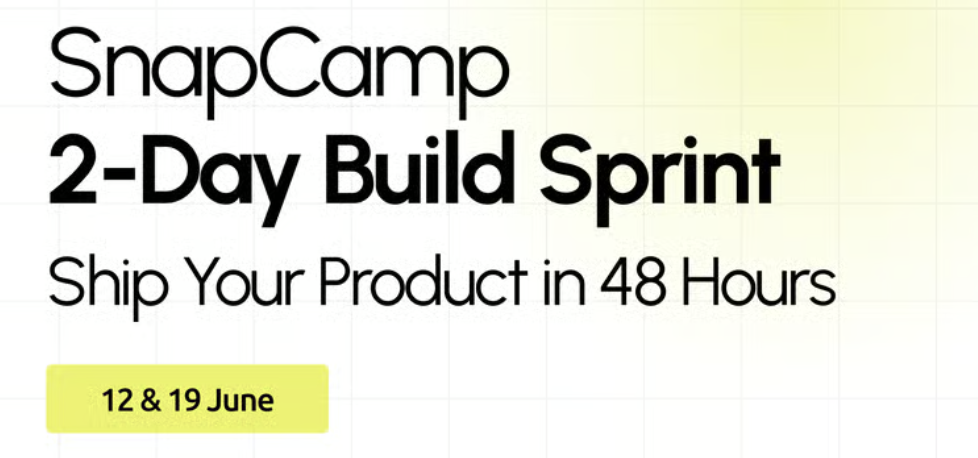
Our next 2 day SnapCamp AI bootcamp will start June 12! 🤖
Most people know AI matters. But far fewer know how to actually build with it.
SnapCamp helps non-technical professionals including execs, PMs, founders, and operators go from: idea to working AI product with live instruction and 1:1 engineering & deployment support.
Read what our bootcamp participants are saying
Interested in a private bootcamp to help your team become AI-native?
Email: Garrett@Snapdev.ai