Humans In The Loop -- Thursday, May 7, 2026
Happy Thursday. The S&P 500 just hit a record high, Wall Street is busy signing AI joint ventures worth billions of dollars, and your spreadsheet software is about to get a lot smarter. This week, the enterprise AI market had more M&A activity than a season finale of Succession. Buckle up.

Consulting is about to get disrupted by the people who fund consulting. Anthropic teamed up with Blackstone, Hellman & Friedman, and Goldman Sachs this week to launch a $1.5 billion AI services firm that will embed engineers directly inside mid-sized companies to deploy Claude and redesign how those businesses actually run. Apollo, General Atlantic, and Sequoia are also in the mix, giving the venture a built-in pipeline into hundreds of portfolio companies.
The model is not your grandfather's consulting firm. Instead of handing you a slide deck and a six-figure invoice, this new outfit plants Anthropic engineers inside your operations until the work is done. Goldman's Marc Nachmann put the problem plainly: there is a big shortage of people who know how to apply AI tools and actually transform a business. If you run a mid-market company, a community bank, a regional health system, or a manufacturer, this firm is coming for your industry next. The board question to answer now: do you wait for them to show up, or do you start building internal capacity first?
- The $1.5B venture targets the mid-market specifically because those companies lack in-house resources to build and run frontier AI deployments on their own.
- Anthropic also launched pre-built AI agents for Wall Street banks this week, with JPMorgan, Goldman, Citi, AIG, and Visa already running Claude in production.
- Rival OpenAI is reportedly pursuing a nearly identical structure with TPG and Bain Capital, meaning a race to capture your industry's AI transformation budget is officially on.
Looking ahead, the future of AI revenue may look less like software licensing and more like consulting rebuilt from the model up, which means every traditional consultancy on your vendor list is now facing the same disruption threat as your industry.

SAP agreed this week to acquire Prior Labs, an 18-month-old German startup that builds something called Tabular Foundation Models, or TFMs. Plain English: unlike ChatGPT-style AI that is great at writing emails, TFMs are purpose-built for the tables, spreadsheets, and structured records that run your actual business, things like payment delays, supplier risks, customer churn, and upsell opportunities. SAP is committing more than €1 billion over four years to scale Prior Labs into a global AI research lab.
If you are an SAP customer, this matters a lot. SAP plans to bake Prior Labs models into its AI layer, Joule, so that business users can ask questions about their own operational data without needing a data scientist in the room. If you are not an SAP customer, pay attention anyway: every major ERP vendor is now racing to own the intelligence layer sitting on top of your structured business data. The question for your next tech review is whether your current software vendor has a credible answer to this.
- SAP says traditional language models struggle with structured data because they have only a rudimentary understanding of tables, numbers, and statistics.
- Prior Labs' TabPFN model was published in Nature and was founded just 18 months ago, making this one of the fastest exits in recent European tech history.
- SAP is simultaneously blocking unauthorized AI agents from accessing its products via API, a sign that it wants to control which AI tools can touch your ERP data.
Looking ahead, the race to own predictive intelligence on top of structured enterprise data is heating up fast, and whichever vendor wins that layer will effectively control your business decision-making.
Google researchers confirmed this week what security teams have been warning about for months: attackers are seeding public web pages with hidden instructions, and any enterprise AI that scrapes those pages can be turned against its own company. The attack style, called indirect prompt injection, is invisible to traditional security tools because the AI is using its real credentials and approved permissions to do real damage. The window from bug discovery to working exploit has collapsed from five months in 2023 to roughly ten hours today, with AI doing much of the offensive heavy lifting.
Here is the plain-English version: when your AI reads the internet on your behalf, it is not just gathering information. It is also accepting instructions. A Microsoft 365 Copilot vulnerability called EchoLeak already demonstrated that a zero-click prompt injection can silently access and exfiltrate enterprise data. OWASP ranks prompt injection as the number one critical vulnerability in AI deployments, appearing in over 73 percent of production systems assessed in security audits. If your AI agents have access to email, your CRM, or financial systems, they are effectively privileged users, and they need to be treated that way.
- Limit what your AI agents can access: an agent that handles scheduling does not need access to your entire file system or customer database.
- Ask your AI vendors the same security questions you would ask any privileged software vendor: breach notification timelines, model misuse detection, and access logging.
- Cyber insurance carriers are increasingly requiring documented AI-specific security controls, so your next renewal conversation may already include this.
Looking ahead, expect a wave of AI-specific security startups pitching agent firewalls and prompt sanitizers over the next 12 months, and at least one high-profile breach that puts a real company name next to this attack class.

The regulatory honeymoon for AI is over. In the US, states have filled the federal vacuum: California, Colorado, Texas, and more have AI laws taking effect now, with Colorado's AI Act coming June 30 and California's automated decision-making rules live for companies making consequential decisions in hiring, lending, healthcare, and housing. In Europe, the EU AI Act's phase two compliance deadline hits August 2, 2026, covering transparency rules and high-risk AI system requirements that apply to any US company whose AI touches EU residents, much like GDPR did.
The practical risk for non-tech CEOs is what legal experts call AI washing, which is when a company claims to use AI but either does not, or uses it without proper governance. The SEC has identified AI-driven threats as a 2026 examination priority and is eyeing enhanced disclosure requirements for AI governance. Companies that can not show documented AI inventories, bias testing records, and human oversight mechanisms are setting themselves up for audit findings and regulatory exposure. The good news is that compliance is possible, but only if you build for it intentionally rather than reactively.
- If your AI makes decisions about employees, credit, or customer access, you need pre-use notices and opt-out mechanisms in California now.
- Companies that started compliance preparation 18 to 24 months ahead of enforcement fared measurably better in past regulatory waves, and that clock is already running.
- Your cyber insurance carrier may soon require documented AI risk assessments, so loop in your broker before your next renewal.
Looking ahead, the federal government wants to preempt the state patchwork with a uniform framework, but until that happens, every business with a website is effectively a regulated AI company across multiple jurisdictions.
[ Reported without editorial commentary ]
Goldman Sachs research confirmed this week that AI is eliminating roughly 16,000 US jobs per month, with Gen Z workers absorbing the hardest hit because they are concentrated in exactly the routine white-collar roles, data entry, customer service, legal support, billing, that AI automates best. A fresh Gallup survey of nearly 24,000 US employees found that 27 percent of workers at AI-adopting companies say their workplace has changed in disruptive ways over the past year, compared to 17 percent at companies that have not adopted AI.
The CEO takeaway is more nuanced than the headlines suggest. The same Gallup data shows that 65 percent of employees in AI-adopting organizations say AI has improved their productivity, and PwC data shows workers with advanced AI skills earn 56 percent more than peers without them. The workforce disruption is real, but so is the productivity upside. The companies navigating this best are not eliminating headcount first and hoping AI fills the gap. They are redesigning roles around what AI does well, investing in upskilling, and being transparent with their teams about what is changing and why.
- Entry-level knowledge workers in their 20s and 30s are most exposed to near-term displacement, which has direct implications for your hiring pipeline and succession planning.
- OpenAI's own B2B Signals data shows frontier firms use 3.5x as much AI intelligence per worker as typical firms, a gap that is compounding, not closing.
- The World Economic Forum projects AI will create 170 million new roles by 2030 while displacing 92 million, for a net gain, but the timing mismatch between destruction and creation is the real management challenge.
Looking ahead, Goldman's economists warn that if AI-driven job losses accelerate faster than forecast, it could pressure the Federal Reserve to cut rates, making this a macroeconomic story, not just an HR one.

At its annual Think conference in Boston this week, IBM dropped a pointed diagnosis for every enterprise that has invested in AI without seeing results: the problem is not the AI, it is how you run the business around it. IBM CEO Arvind Krishna said the enterprises pulling ahead are not deploying more AI, they are redesigning how their business operates. IBM unveiled a next-generation version of its watsonx Orchestrate platform for orchestrating multiple AI agents, along with IBM Sovereign Core, a new platform that embeds compliance policy at the infrastructure level so that governance keeps pace with regulatory changes automatically.
The Sovereign Core piece matters especially for regulated industries like healthcare, financial services, and government contractors. Rather than treating compliance as a configuration toggle you check once, IBM is embedding policy directly into how AI runs in your infrastructure. For boards asking how to govern AI without slowing it down, this is the architecture answer they have been waiting for.
- IBM's own data shows many enterprises have invested heavily in AI but only a few believe it is paying off, a gap IBM is explicitly trying to close with this week's product suite.
- OpenAI's new B2B Signals research confirms the IBM diagnosis: frontier firms are winning not by having more AI tools, but by using AI more deeply across complex workflows.
- Cisco used OpenAI's Codex platform to reduce build times by 20 percent and save over 1,500 engineering hours per month by treating AI as part of the team rather than a productivity add-on.
Looking ahead, the vendor race to become the operating system for enterprise AI is fully underway, with IBM, OpenAI, Anthropic, Microsoft, Google, and Salesforce all positioning themselves as the platform everything else runs on top of.
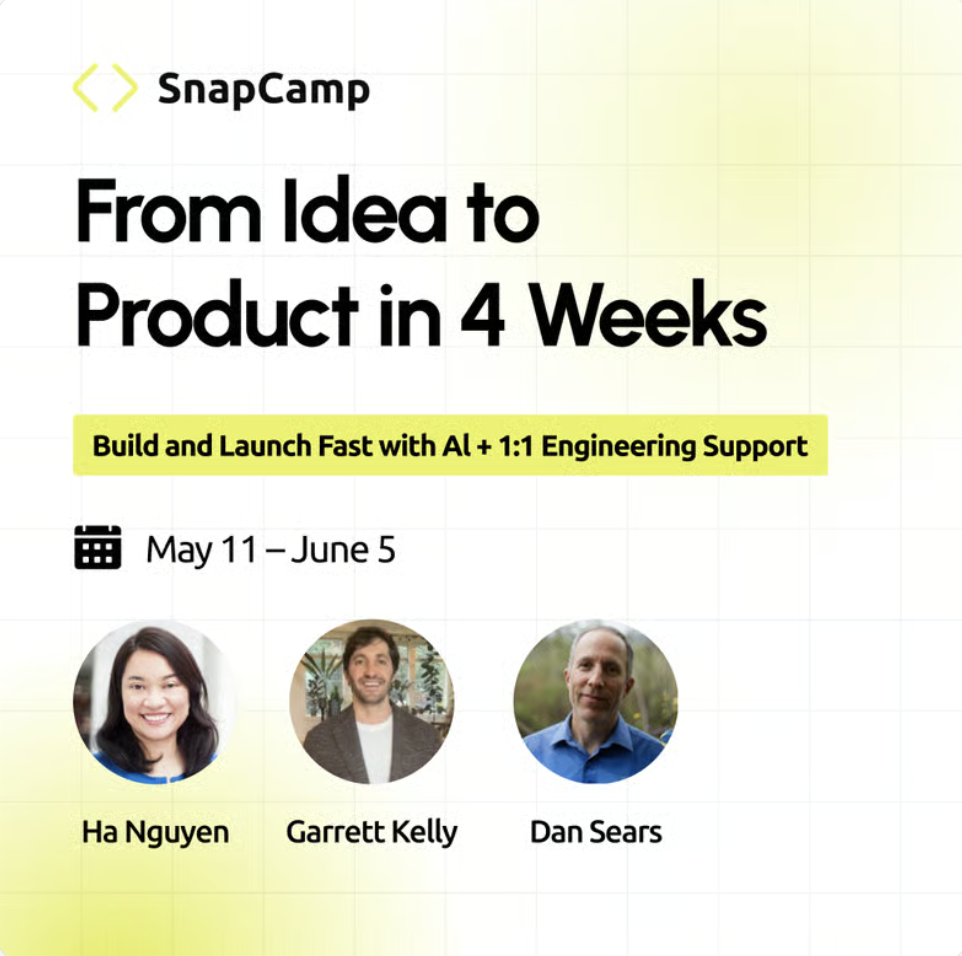
Dates: May 11 – June 5
Format: Live, Online
Schedule: Mon Wed Fri — 8–9a PST