History of the North
The first in a series of explorations into the history and folklore of the regions of Thiusland
The North, named as such as it’s the highest point north of the Continent of Thiusland, has a tundra-like environment, and is covered in snow for the majority of 6 months during the season of Kolrom. Large impenetrable glaciers and ice flows dominate the northern ocean but the bay of the northern sea gives ample water for the sea life as well as the fishers of the North to thrive.
History of the Northern Community
History Long Past
Historically the North was, as all of Thiusland, the domain of elemental beings of gigantic stature, the element of water being predominant in the area. Dwarves walked the lands in the time of the elementals but their numbers were few. Their creations and exploits still can be found in the depths of the earth.
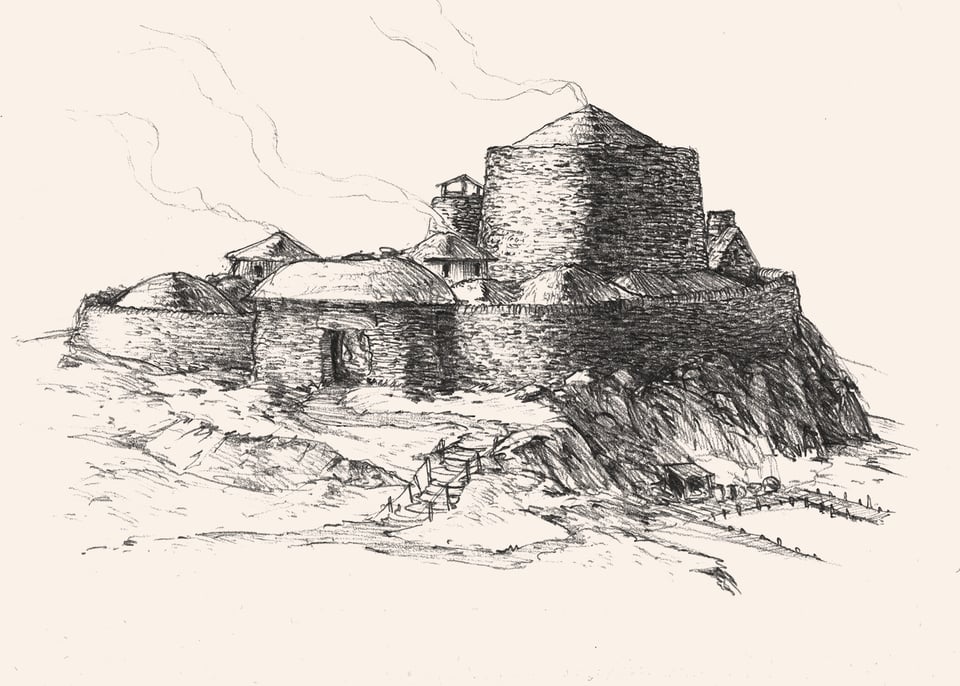
In the grand arc of time, it was relatively recently that humans ever set foot on the shores of the North, 260 years from the current histories. The first to arrive were humans and humanoids fleeing the war ravaging their home continent of Saian, they were the only ones brave or stupid enough to travel into the frozen wastes to escape. Their gamble paid off, and although losing many of the refugees during the passage, they were able to make it to the harsh but hospitable shores of the northern sea. They brought their boat inland along the river to a defensible ridge, thinking like those accustomed to war and brought the boat into the safety of a rock-shelter before settling on the ridge.This would be built over the next 16 years into Gondrindell, the first settlement of the North.
The Recent Past
From the refugees of Saian, and their home in Gondrindell, much of what came to be the Northern people and culture grew. These folks were the first to implement the governance system of Elders, as the eldest woman of their crew had been their stalwart guide from Saian. They also started the tradition of honoring those who traveled far off the land and returned, as it took courage to face such a dangerous unknown and much knowledge was to be acquired along the journey.
New settlements first started in this pursuit of the unknown, shelters and waystations to allow those who explored to rest and feel safe. It wasn’t until Vollfahdell and Hologall that a settlement was started by other people than the descendants of the original refugees; Vollfahdell was built by druids traveling from the central plains and Hologall by explorers from the eastern bogs.
Each settlement started as a self-sufficient entity, the readily available resources and plants of the area playing a large role in their unique construction, crafts and palettes. Across the land, one thing united all the scattered people: the sea. It provided all of them with food and purpose, sailors being central in all communities of the north. On the water was where communities would meet and friends would be made - all folks being equal when held on its waves - and from these early meetings and trading between sailors the seeds of what would become the greater northern community was born.
The God’s North
It was soon after this, nearly ninety years, that the lives of the people of the north would be irrevocably changed. The news came first from a fisher from Tontindell; As she recounts it, she had made camp near a shrine dedicated to the God of the ocean tides after being forced off the sea by a fierce storm. After praying to the god for safety, she went to rest but was soon awoken by a thunderous sound like her tent was struck by lighting. As she went out to look, she found a naked and shivering child with no hair, and bright golden eyes. She called out to them and upon coming closer, the child looked confused and in pain, so she brought her fur lined blanket to them and as she approached, felt deeply in her soul the want, no, the need to protect and care for this entity.
The entity was brought to Tontindell by her and was soon idolized by the town. The people could tell there was something special to them, even if they could not yet fully articulate it. Word spread to star seers and mystics of the far corners of the north and when they came to see this mysterious child, the reality was unveiled, that a God stood before the north in the flesh. Under the care of the mystics, the God learned to speak, and to command. By this time stories were coming from the slow overland routes rarely tread: Gods of all kinds had been found in Thiusland.
It was a strange symbiosis for the people, to see the holyness but also to care for it like one does for a child. The mystics and elders of the North decided it would be a community effort to raise the God, and built a home for it near the shrine it was originally found at. During their growth the God seems ever curious, watching the ways of those around them and crying out only for demanding things when the need struck them, otherwise staying silent. The people around them tried to keep their curious skepticism of this God and their divine power, and many disagreed regarding how best to treat them. At the turn of their 15th year on Thiusland the God awoke and started making proclamations.
All comforts and warmth the world of Thiusland had to offer would be brought to their home, which would be rebuilt to house such splendor.
All shrines to the sea, the storms, and the moon were to be remade to them, as they were the true God.
In step with this they demanded to meet the other Gods walking on Thiusland and determine if they were false or not.
Thus began the changing of relationship between the Northerns and the God, who they now saw meant to rule them. And as one can imagine, not all were happy or willing to be ruled. The meeting of the Gods happened on the 25th anniversary of their coming to Thiusland, it solidified their bonds, and their dominion, from then on the Gods saw themselves as allies and true rulers of their own clearly defined slice of Thiusland.
Trade deals, economics, borders and hierarchy grew rapidly in the next years of the Gods' rule and transformed the landscape, and at first it seemed for the best. New oddities, delicious foods, art and people were able to spread more freely in the land as infrastructure was built to support quickly interweaving settlements. Any who opposed this new focus of development were labeled as antisocial, heretical and troublesome. Whole families and settlements were forced to the fringes by ostracization for not believing as the rest of the world seemed to march blindly towards a shared goal. As the supporters and the powers closest to the gods grew in wealth they took from others in order to feed their greed, and the imbalance inherent in the hierarchy began to become all too apparent. And as the people stood up to this injustice and met to discuss the dark turn things were taking they were met by increasing oppression and violence. For the first time armed militias were established in Thiusland and the war their ancestors fled so long ago seemed to become an approaching reality for the Northerns...
The war is well chronicled in the first book of our series, along with the timeline of the events following as the dusts settled after it. The war is now over, but the scars of the God’s rule are ever present in the North and Thiusland, it's up to those in the community to come together and build back what was lost and define a new way forward after the age of Pious Rot.

