
Release Notes #5: Artist Commerce
Why don't we see more artist-led brands in the market?
Hi everyone! Welcome to issue #5 of Release Notes. You can read the previous issue here.
A few notes:
Thanks to everyone who reached out after last month’s newsletter. It was great hearing from all of you! I’m juggling a lot at the moment and doing my best to keep up as well as write something useful to think about, so this month’s notes came a bit later than usual…
A few of you asked about this: My intent is to keep this newsletter and anything else I write free. I’m not interested in making this some kind of subscription or putting up a paywall or anything like that. I appreciate you taking the time to read, if at all. If you do want to support, I’d appreciate it if you bought a fragrance from my site!
Finally, I tried to do better about links for additional reading/reference in this one.
In 2021, I installed a small Vitsoe shelving system into Ceylon’s office in LA’s Chinatown. I’d admired the brand since reading about it in design school and hoped to one day eventually buy a system. Once the business had grown enough to need an office space, I jumped at the opportunity to make that dream a reality. The entire process, from purchase to installation was really cool!
[As a side note, I still think about that office space quite often and wish that I had the mindset to turn it into an art gallery before we left it.]
The initial inquiry process included providing the local sales representative with photos and precise measurements of the wall where the system would be installed. Once we talked through the space’s needs, we went through about 16 (I know!) iterations of extensively detailed shelving configurations and positions, to ensure the system was just right. After confirming the order, I waited 6 months for delivery. This was peak Covid, and the long wait was due to the fact that the company makes each piece in its own facility before shipping via ocean freight. After delivery, I watched in awe as an incredibly skilled installer provided by the company quickly re-measured the walls and put the system together in about 30 minutes. What struck me during the process was how thoroughly the company had thought through what owning and installing its system meant and would require. On the logistics side, even in the midst of an evolving global catastrophe, they were able to still perform the entire process at an exceptionally high level. It made me want to dig even deeper into this niche furniture brand.
Vitsoe was founded in 1959 to “realize the furniture designs of Dieter Rams” after the company’s co-founders encountered Rams’ interior design work at his then-employer Braun. Most people who are familiar with Rams’ work usually think of the iconic home appliances he developed there, almost none of which are currently available in the market (which is something I’d like to write about another day). We feel Rams’ impact everywhere in modern electronics as that particular design language is cited as being an influential precursor to the industrial design you see today, especially from companies like Apple. However, it was Rams’ interior work for Braun that set the stage for Vitsoe. Building an interior design and furniture company around an industrial designer’s vision isn’t particularly groundbreaking, especially in the case of Rams: He had formal training in interior design and woodworking, making him an ideal partner in both the creative and technical sense. However, I think it's worth reflecting on the idea of forming a company around his artistic/creative practice, which allowed a complete realization of his vision beyond a simple product line.
Extending the Artist Practice
In a strange incident indicative of the times we live in and somehow related to the last newsletter, the Judd Foundation sued Kim Kardashian in 2024 after she appeared in a video two years prior claiming that the furniture in her brand SKKN’s office was designed by the artist Donald Judd. The furniture turned out to be an imitation. In filing the lawsuit the foundation aimed to have the video removed, a public retraction issued, and the knock-off destroyed.
Donald Judd Furniture serves as an extension of Judd’s practice as a leading figure of an art movement known as Minimalism. Judd created tables, chairs, shelving, beds, desks, and more out of necessity after his relocation to Marfa, Texas significantly increased the amount of studio space he had available to use but also sharply narrowed his options for high-quality, durable furniture. As Judd expanded the types of furniture he produced, he was able to work with skilled local craftsmen to realize his designs. Today, you can primarily see Judd’s furniture at The Judd Foundation (either in NYC or Marfa) or occasionally on exhibition with Salon 94, the commercial gallery that represents his estate. You can also buy the furniture directly from the Foundation, complete with customized options for materials and color.

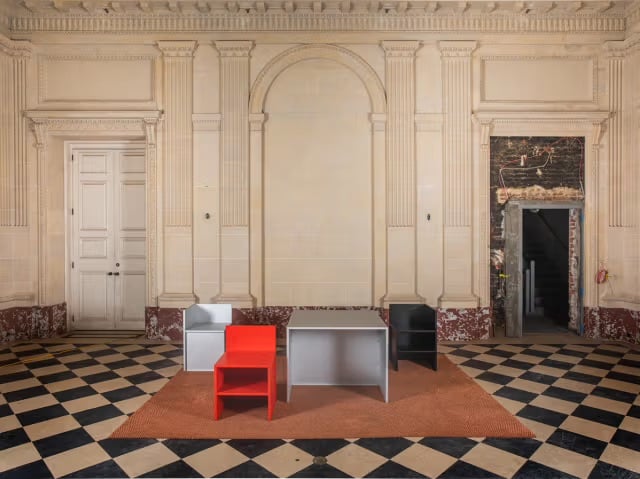
Looking at both Vitsoe and Donald Judd Furniture, there are some obvious similarities, such as their concern with creating elegant, minimal, and durable furniture that not only is highly functional but also inverts the relationship between spaces and the objects occupying them. In both cases, the furniture defines the space, which allows them to live within a variety of interior styles, be it mid-century modern, industrial, traditional, art-deco, etc. Additionally, both also foster a sense of continuity beyond a given space for the user, allowing and even encouraging transition. The Vitsoe system is meant to be de-installed and re-installed (and potentially added to) when its owner moves from one home to the next. Judd’s furniture is literally a sculpture, so of course it should move with its owner. You are collecting the furniture. Even among high-end furniture brands people might be more familiar with, I’d argue that this is pretty unique. So what provides that special factor that makes it possible for their products to exist this way? I think it has something to do with both emerging out of artistic practice.
What Sort of Works
For as long as I’ve been working directly with visual artists, I’ve wondered why we don’t see more brands in the market that feature them prominently, either as the founder or providing the foundational creative concepts when it comes to product development. Even artists hired as creative directors appear to be a rarity. Usually, they appear for short-term collaborations or marketing, but full utilization across product development is another thing altogether. I cringe a bit when I see an artist on social media showcase a store window they’ve been hired to do or some other campaign that will barely make much of a difference in the contracting company's fate, or their own career trajectory.
Even when artists are brought in to make products that form the core of a brand, it can be a bit of a carousel, where many artists participate but no singular vision dominates. Interior brands like Mutina and cc-tapis routinely tap artists as direct collaborators, producing tiles, rugs, and other objects that, at times, are almost indistinguishable from the artists’ work away from the commercial sector. However, when thinking about these sorts of brands, it feels like they frame the purchase as picking and choosing one artist over another, which can be interesting on a product level but doesn’t actually cultivate a deeper relationship with an artist’s vision. To me, that feels limited.
Luxury houses have developed extensive programming that intersects with the art world and, at times, brings artists into the creative process beyond marketing. These range from Dior’s Lady Art collection to Loewe’s Craft Prize. Dior’s highly prestigious program, currently in its 10th year, brings artists into the maison to design special edition handbags. The bags typically sell out and a strong secondary market has emerged for them, similar to the artists’ original works. Loewe annually holds the Craft Prize through its foundation with an exhibition featuring finalists that travels worldwide. Loewe specifically tries to take a non-commercial position, arguing that the prize seeks to “support international artisans” who “demonstrate an exceptional ability to create objects of superior aesthetic value.” I find it interesting that these companies, who are typically led by creative directors, themselves celebrated as a sort of celebrity-artist-designer with a particular vision to be realized in seasonal collections, can’t find more robust ways of integrating artists to bring entirely new verticals, divisions, or even whole companies into existence. Why is that the case? More importantly, how do we shift that reality?
The Future of Artist Commerce
Recently, the artist Theaster Gates purchased Pickard China, a legendary US-based porcelain maker. It’s an exciting development because Gates is one of the most influential artists working today whose practice incorporates a significant ceramics component. As an artist, Gates has the kind of vision that might open a new interesting direction for the heritage brand that could set it on the path to reversing its decline. Pickard, having been the premier provider of porcelain to customers ranging from the White House, private clubs, golf courses, and high-end hotels has experienced a similar generational decline found across many other domestic manufacturing sectors, so there are multiple really interesting angles to watch out for over the next few years.
I think we’ll see more cases of companies like Vitsoe, Donald Judd Furniture, or even the Theaster Gates-Pickford tie-up as time goes on. I’m excited for what’s possible when it comes to the fusion of the creative and the technical with real business experience. Obviously the challenges to making them competitive such as finding a stable position in the market, developing a dedicated audience, and employing sustainable production or distribution practices are still there but I’m hopeful. I also don’t think the method in which the artist comes into the picture doesn’t matter quite as much, either as a founder or as an acquirer/next-generation owner, so long as they are directly responsible for the vision.
There’s something to be said for all of these artist-commerce concepts coming in at the luxury tier and I think that’s not always going to be the case going forward.
I’ll elaborate on it more in next month’s newsletter, but I think that this is the core thesis of what we want to do with Goliath, which is to create a world where it is more common to encounter brands and companies that are natural extensions of an artist’s practice for more interesting and potentially more long-term successful outcomes.
Links
The Future Is Not Tech Forward
I’ve been doing some background research for my thesis(!) and a few books on my list provide deep dives into the strategy of staking the post-WWII economy on technology, essentially outlining how we got here where AI and data centers have become such a massive part of the future we are being pushed into. I really enjoyed Edward Ongweso Jr.’s recent article exploring some of these ideas.
Is Art Criticism Today Too Affirmative?
I’m in an art criticism course and this is something I was thinking about as I started writing about art more and more. Ben does a great job of reframing things and offering new context about a declining sector of the art world. Do you read art criticism?
See you next month.
Patrick