Orhan's Morning Brief
October 21, 2026, Wednesday · MORNING EDITION
|
|
WEATHER · TOP NEWS · RESEARCH RADAR · CHART OF THE DAY
|
Good morning
Your high-signal briefing for today. The most consequential items come first.
Dallas, TX
54°
Clear
H 79° · L 54° · Rain 1%
|
New York, NY
47°
Clear
H 64° · L 47° · Rain 0%
|
Chicago, IL
42°
Partly cloudy
H 63° · L 41° · Rain 2%
|
Anthropic recorded a net loss exceeding $80 billion in the first half of 2026, according to a Wall Street Journal report cited by Reuters. This figure underscores the enormous and sustained capital consumption of frontier AI development. The disclosure comes as the company is reportedly preparing for an IPO.
Why it matters: The scale of these losses reframes the economics of frontier AI and raises fundamental questions about the financial sustainability of the current model-building race—directly relevant to AI and finance.
Reuters · Read original →
Anthropic has drafted proposed legislation that would impose AI risk-oversight requirements on systems trained with more than $1 billion in compute costs, according to Politico. The $1 billion threshold is designed to target only the largest frontier models while avoiding burdens on smaller developers. The draft signals growing industry involvement in shaping AI regulation.
Why it matters: A major AI lab actively drafting its own regulatory thresholds is a significant moment for AI governance and policy, with likely knock-on effects for research funding and competitive dynamics.
Politico · Read original →
Amazon has open-sourced TorchNeuron, a PyTorch-compatible compiler enabling AI workloads to run on its Trainium chips. The move is a direct challenge to NVIDIA's software ecosystem dominance by lowering the barrier for developers to adopt non-NVIDIA hardware. Open-sourcing the toolchain is a strategic bet that hardware adoption follows developer familiarity.
Why it matters: This intensifies competition in AI infrastructure, which could meaningfully shift costs and access for researchers and institutions running large-scale models.
Crowdfund Insider · Read original →
|
★ THOUGHT LEADERS MONITOR
|
Adam Tooze's Chartbook links 1261 explores the intersection of AI and the US current account, arguing that AI-driven productivity and…
5:45 AM, October 21 · View original →
· Profile on X
An ECB report finds that AI adoption and green energy investment helped the Euro Zone absorb a significant energy price shock with less economic damage than historical precedents would predict. The report attributes improved resilience partly to productivity gains from AI deployment in energy-intensive sectors. This is framed as early macroeconomic evidence of AI's structural economic impact.
Why it matters: For an economist tracking AI's aggregate effects, ECB-level evidence of measurable macro resilience linked to AI adoption is a rare and consequential data point.
Global Banking & Finance Review · Read original →
The Economist examines a structural shift in US scientific research toward private, non-university institutions, driven by philanthropic funding and corporate R&D labs. The piece argues that the locus of frontier research is migrating away from traditional academia, with implications for open publication norms and public accountability. This trend is accelerating as federal research budgets face pressure.
Why it matters: This directly concerns the institutional future of academic research and raises questions about access, incentives, and the role of universities in knowledge production.
The Economist · Read original →
MIT Technology Review reports on scientific efforts to decode the molecular mechanisms behind exercise's benefits—muscle building, bone strengthening, cardiovascular improvement—with the goal of developing pharmacological mimetics. Researchers are identifying specific signaling pathways activated by physical movement that could be targeted by drugs. The aim is not to replace exercise but to extend its benefits to those unable to perform it.
Why it matters: Exercise-mimetic drugs represent a potentially transformative area of medicine with broad public health implications, particularly for aging and disabled populations.
MIT Technology Review · Read original →
A NEJM ahead-of-print trial finds that once-weekly retatrutide, a GLP-1/GIP/glucagon triple receptor agonist, produces significant reductions in obstructive sleep apnea severity, extending the therapeutic reach of this drug class beyond metabolic disease.
Why it matters: If confirmed, this expands GLP-1-class drugs into sleep medicine, a high-prevalence condition with major cardiovascular and cognitive consequences, with broad clinical and economic implications.
NEJM · Read original →
|
★ NO TRACKED CHART UPDATED TODAY · SPOTTED IN COVERAGE
|
When do people experience mental health conditions for the first time?
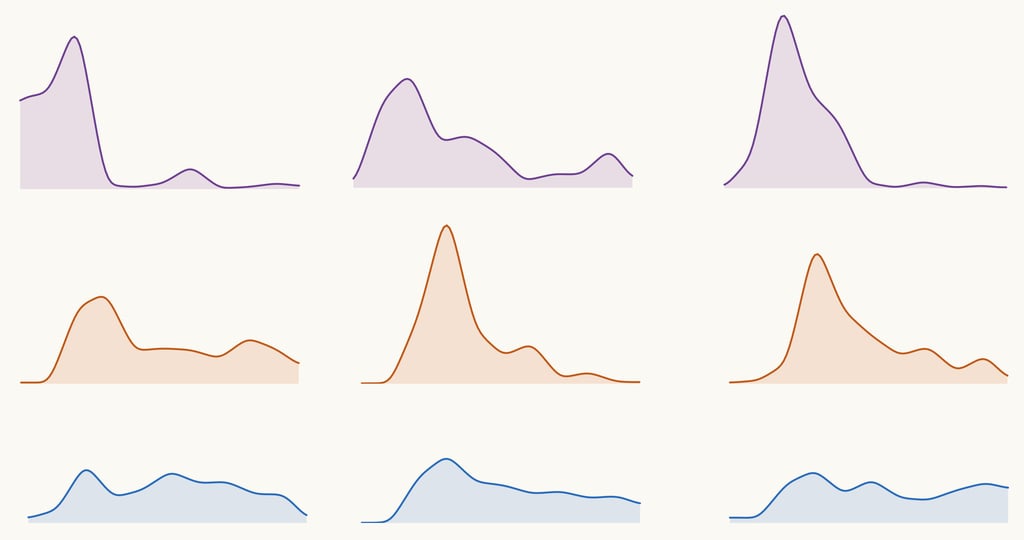
Knowing when people are most at risk allows us to offer support when it might make the biggest difference.
Source: Our World in Data
· View source
· Found October 21, 2026
Source notes: Chart of the Day: no tracked chart source could be loaded.; FRED fred_treasury_10y: TimeoutError; FRED fred_cpi_inflation: TimeoutError; FRED fred_gdp_growth: TimeoutError
|
A PERSONAL FIVE-MINUTE BRIEFING
|
|