Orhan's Morning Brief
November 2, 2026, Monday · MORNING EDITION
|
|
WEATHER · TOP NEWS · RESEARCH RADAR · CHART OF THE DAY
|
Good morning
Your high-signal briefing for today. The most consequential items come first.
Dallas, TX
66°
Overcast
H 83° · L 66° · Rain 29%
|
New York, NY
44°
Clear
H 66° · L 44° · Rain 1%
|
Chicago, IL
55°
Overcast
H 60° · L 53° · Rain 7%
|
AI models have empirically refuted a long-standing computer science hypothesis, according to a newly reported finding. The result is described as upending prior research assumptions in the field. Details of which hypothesis was overturned are not provided in the metadata, but the claim is that the challenge came directly from AI model behavior.
Why it matters: A machine-learning-driven falsification of a foundational CS hypothesis would be a landmark methodological event for any AI or computer science researcher.
streamlinefeed.co.ke · Read original →
The Economist reports that AI-assisted cyberattacks are proliferating, with hackers exploiting AI tools at scale. OpenAI and Anthropic are identified as actively pursuing cybersecurity as a major commercial opportunity in response. The piece frames this as both a threat escalation and a significant new revenue frontier for leading AI labs.
Why it matters: The intersection of AI capabilities, security risk, and the business strategies of frontier AI companies has direct implications for AI governance, economics, and institutional risk.
The Economist · Read original →
Chatham House has published an analysis asking whether the current AI investment surge constitutes a productive boom or an asset bubble, and what either scenario implies for the global economy. The piece engages with macroeconomic channels through which AI could drive growth or, alternatively, capital misallocation. It represents a substantive policy-oriented framing of the AI-economy question.
Why it matters: A rigorous geopolitical-economic institution weighing in on the AI boom-vs-bubble question is directly relevant to any economist or finance-focused academic tracking AI's macroeconomic impact.
Chatham House · Read original →
|
★ THOUGHT LEADERS MONITOR
|
Adam Tooze's latest newsletter links curate analysis on an 'AI price shock,' a reassessment of the UK's difficult recent economic decade…
5:31 AM, November 2 · View original →
· Profile on X

Source visual: Financial Times
Germany has failed to meet its winter gas storage targets, the Financial Times reports, leaving Europe's largest economy exposed to spot market purchases at higher prices. The shortfall is expected to push up energy costs for other EU member states as well. The situation reflects ongoing structural vulnerabilities in European energy supply following recent market upheavals.
Why it matters: European energy security and commodity price dynamics have broad macroeconomic consequences, including inflationary pressure and fiscal stress across EU economies.
Financial Times · Read original →

Source visual: Financial Times
Japanese energy groups have announced a $21 billion deal spree targeting LNG and shale resources on the US Gulf Coast, the Financial Times reports. Japan, the world's second-largest LNG buyer, is acting amid ongoing global energy market upheavals. The moves reflect a strategic push to lock in long-term supply amid price and supply volatility.
Why it matters: A $21bn reorientation of Japanese energy procurement toward US shale is a significant signal for global commodity markets, trade balances, and energy geopolitics.
Financial Times · Read original →
North Korea's Artificial Intelligence Technology Research Institute and Information Technology Research Institute No. 1 are reportedly developing generative AI, according to NK Economy. The development signals that state-directed AI research is under way in one of the world's most isolated and sanctioned economies. Few technical details are available, but the institutional framing suggests a coordinated national effort.
Why it matters: State-level generative AI development in North Korea raises novel questions about AI proliferation, sanctions evasion, and the geopolitics of frontier technology.
NK경제 · Read original →
An NEJM ahead-of-print piece argues that learning health systems can be made computationally actionable, proposing a framework to continuously integrate real-world clinical data into evidence generation and care improvement at scale.
Why it matters: Computable learning health systems represent a structural shift in how medical evidence is produced and applied, with major implications for both clinical practice and health economics.
NEJM · Read original →
|
★ NO TRACKED CHART UPDATED TODAY · SPOTTED IN COVERAGE
|
Around half of people will experience a mental health issue in their…
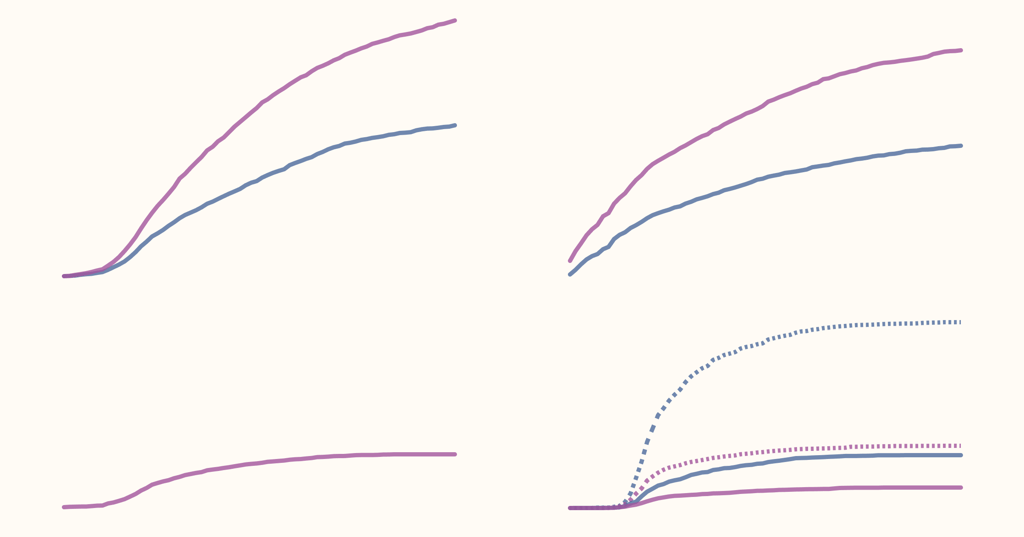
What is someone’s risk of developing depression, anxiety, or other mental health issues at some point in their life?
Source: Our World in Data
· View source
· Found November 2, 2026
Source notes: Chart of the Day: no tracked chart source could be loaded.; FRED fred_treasury_10y: TimeoutError; FRED fred_cpi_inflation: TimeoutError; FRED fred_gdp_growth: TimeoutError
|
A PERSONAL FIVE-MINUTE BRIEFING
|
|