Orhan's Morning Brief
November 16, 2026, Monday · MORNING EDITION
|
|
WEATHER · TOP NEWS · RESEARCH RADAR · CHART OF THE DAY
|
Good morning
Your high-signal briefing for today. The most consequential items come first.
Dallas, TX
–°
Unavailable
H –° · L –° · Rain –%
|
New York, NY
–°
Unavailable
H –° · L –° · Rain –%
|
Chicago, IL
–°
Unavailable
H –° · L –° · Rain –%
|
IMF chief has warned that AI circular financing—where AI companies invest in each other's equity and debt in self-reinforcing loops—has now exceeded $1 trillion, creating systemic financial stability risks. The warning comes as the global economy is described as 'standing on one leg,' with concentrated AI-sector leverage potentially amplifying any correction. The concern echoes broader unease visible in Nvidia's pre-market drop and weakness in major IPOs.
Why it matters: A trillion-dollar circular financing bubble flagged by the IMF is a macro-financial risk directly at the intersection of AI and economics that every informed academic should track.
CNBC · Read original →
Anthropic's IPO has been reported by The Economist as placing competitive pressure on OpenAI, with coding agents identified as the current primary revenue driver for frontier AI labs. The piece raises the question of what sustainable business models look like beyond coding automation as the market matures.
Why it matters: The competitive IPO dynamics between the two leading AI safety-oriented labs will shape the structure of the AI industry and research funding for years ahead.
The Economist · Read original →
Nvidia has accumulated approximately $530 billion in supply-side financial guarantees, with forward commitments rising by nearly $250 billion in a single quarter. This scale of supply-chain lock-in is interpreted as a deliberate strategy to corner AI chip supply before competitors can scale. It coincides with a 2.1% pre-market decline in Nvidia shares and broader weakness in AI-linked equities.
Why it matters: The concentration of AI hardware supply in one firm at this financial scale has profound implications for AI market structure, competition policy, and systemic financial risk.
Tom's Hardware · Read original →
|
★ THOUGHT LEADERS MONITOR
|
Brad Setser highlights that China's current account surplus has risen to nearly $900 billion, an extraordinary external imbalance that…
11:45 AM, November 15 · View original →
· Profile on X
The US administration is reportedly planning an 'AI National Champions' programme that would formally designate Nvidia, Amazon, and Microsoft as strategic AI companies, according to the Wall Street Journal. Such a programme would likely involve preferential access to government contracts, export licences, and possibly subsidies. This represents a significant shift toward industrial policy in the AI sector.
Why it matters: State-backed designation of AI national champions would reshape competitive dynamics, procurement, and international AI governance in ways directly relevant to both AI and economics research.
Yahoo Finance · Read original →

Source visual: Financial Times
The ten largest IPOs of 2026 have fallen more than 20% on average, reversing four consecutive years of post-flotation gains, according to the Financial Times. The decline is attributed partly to fading AI enthusiasm among institutional investors. This marks a potential inflection point in the risk appetite that has financed much of the recent AI investment cycle.
Why it matters: A systematic reversal in IPO performance signals a tightening in the capital markets that have funded AI and tech expansion, with broad implications for research commercialisation and university spinouts.
Financial Times · Read original →
Apple has launched a formal research app in partnership with OpenEvidence to study how users seek and use AI-generated medical advice. The study will collect structured data on real-world interactions between patients and medical chatbots, addressing a significant evidence gap. It represents one of the first large-scale empirical investigations of AI health-seeking behaviour at consumer scale.
Why it matters: Rigorous behavioural data on how people use medical AI could substantially influence clinical guidelines, regulatory frameworks, and health informatics research.
Convergence Now · Read original →
Researchers frame the design of fault-tolerant quantum circuits as an agentic evolutionary program synthesis problem, using a large language model guided by a circuit verifier to automatically discover error-correcting circuit solutions that have previously required manual expert design.
Why it matters: Automating the discovery of fault-tolerant quantum circuits via LLM-based agents could substantially accelerate the timeline to practical quantum advantage, sitting at a high-impact intersection of AI and quantum computing research.
arXiv · Read original →
|
★ NO TRACKED CHART UPDATED TODAY · SPOTTED IN COVERAGE
|
No matter how you ask, more Americans are negative than positive…
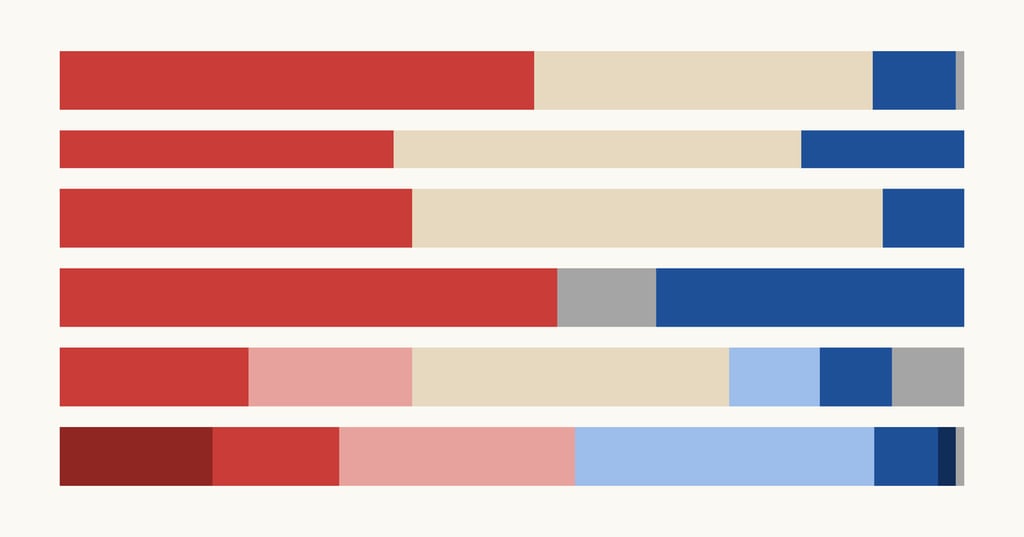
Five high-quality surveys ask about AI in different ways. Their wording matters, but the overall picture is consistent.
Source: Our World in Data
· View source
· Found November 16, 2026
Source notes: Chart of the Day: no tracked chart source could be loaded.; FRED fred_treasury_10y: TimeoutError; FRED fred_cpi_inflation: TimeoutError; FRED fred_gdp_growth: TimeoutError; Weather Dallas, TX: URLError; Weather New York, NY: URLError
|
A PERSONAL FIVE-MINUTE BRIEFING
|
|