Orhan's Morning Book
September 3, 2026, Thursday · MORNING EDITION
|
|
WEATHER · TOP NEWS · RESEARCH RADAR · CHART OF THE DAY
|
Good morning
Your high-signal briefing for today. The most consequential items come first.
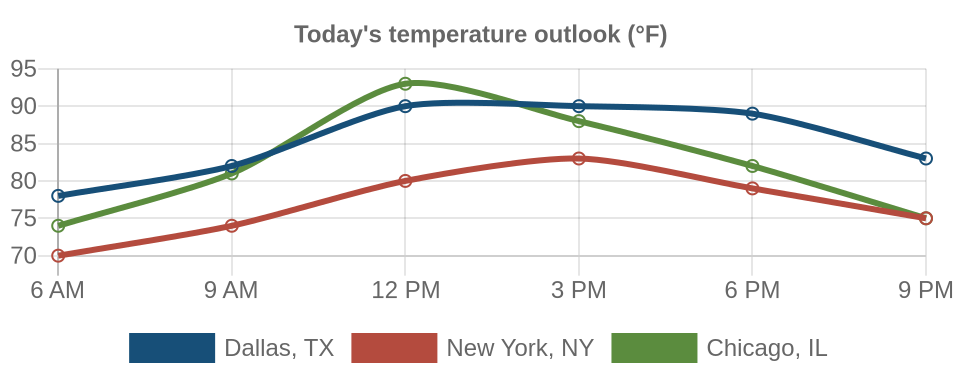
Dallas, TX
78°
Clear
H 91° · L 78° · Rain 16%
|
New York, NY
70°
Overcast
H 83° · L 68° · Rain 80%
|
Chicago, IL
74°
Clear
H 93° · L 74° · Rain 12%
|
The Economist frames Nvidia as the 'central bank of AI', arguing the company's control over GPU supply gives it systemic influence over the entire AI economy analogous to a monetary authority's control over liquidity. The piece examines how Nvidia's pricing power, allocation decisions, and technology roadmap shape investment and development across the sector. This positions Nvidia as a macroeconomic actor, not merely a hardware vendor.
Why it matters: Understanding Nvidia's quasi-monetary role is essential for any economist or finance scholar analysing AI's structural impact on capital allocation and market concentration.
The Economist · Read original →
The Financial Times publishes an analysis arguing that the rise of AI requires fundamental revisions to standard economic frameworks, particularly around productivity measurement, labour markets, and the theory of the firm. The piece challenges conventional GDP and TFP accounting as poorly suited to capturing AI-driven value creation. It signals growing mainstream economic consensus that existing models are inadequate for the AI era.
Why it matters: This directly bridges AI and economics—two of this reader's top interests—and raises methodological questions relevant to academic research and policy.
Financial Times · Read original →
Columbia University highlights a metascience study drawing on 12 million empirical research results to identify patterns in how scientific findings are distributed, replicated, and biased across disciplines. The analysis offers large-scale quantitative evidence on the reliability of the empirical research base. It has direct implications for understanding publication bias, replication crises, and research design across fields.
Why it matters: A dataset of this scale provides rare empirical grounding for longstanding debates about research quality and reproducibility that affect every academic discipline.
Columbia University · Read original →
|
★ THOUGHT LEADERS MONITOR · IN THE NEWS (DIRECT POST ACCESS UNAVAILABLE)
|
Adam Tooze examines the circularity of Big Tech earnings—where AI investment and cloud revenue reinforce each other in a self-referential loop—alongside the financial squeeze on mid-tier US universities and a historical essay on European peasant conflicts, offering his characteristic fusion of political economy and historical context.
4:58 AM, September 2 · View original →
· Profile on X
The Economist's Bartleby column reports on experiments testing whether AI agents can cooperate effectively on multi-step tasks, finding significant coordination failures when agents operate in teams. The column synthesises recent evidence that multi-agent AI systems underperform expectations set by single-agent benchmarks. This challenges assumptions underlying many enterprise AI deployment strategies.
Why it matters: Cooperation failures in multi-agent systems are a fundamental constraint on the autonomous AI pipelines increasingly promoted across academia and industry.
The Economist · Read original →
NASA has launched a new space mission specifically designed to map dark matter, dark energy, and exoplanet atmospheres at unprecedented scale and resolution. The mission represents a major investment in cosmological survey infrastructure intended to run for years. Early data releases are expected to stimulate substantial theoretical and observational research across astrophysics.
Why it matters: A flagship cosmology mission of this scope will generate data that drives academic research agendas across physics and astronomy for the next decade.
The Economist · Read original →

Source visual: Financial Times
A Financial Times investigation finds that more than 160 major US companies, including VW and Amazon, cannot rule out the presence of sanctioned smelters in their supply chains when audited for conflict minerals compliance. The findings expose significant gaps in western supply-chain due-diligence frameworks and sanction enforcement. The story has direct implications for corporate governance, geopolitical risk, and commodity markets.
Why it matters: Supply-chain transparency failures of this scale carry material consequences for global trade finance, ESG compliance standards, and economic sanctions policy.
Financial Times · Read original →
A JAMA study of AI-enabled ambient scribes deployed across multiple academic health systems found measurable effects on clinician EHR time expenditure and visit volume, providing rare real-world, multi-site evidence on whether AI documentation tools actually reduce clinician burden rather than merely redistributing it.
Why it matters: Rigorous multi-site clinical evidence on AI scribe productivity effects is directly relevant to both health economics and the practical deployment of AI in medicine.
JAMA · Read original →
|
★ NO TRACKED CHART UPDATED TODAY · SPOTTED IN COVERAGE
|
The AI Cold War: Which Countries Are on Each Side?

The U.S. and China are building rival AI blocs. See how Pax Silica and W.A.I.C.O. are dividing the global AI landscape.
Source: Visual Capitalist
· View source
· Found September 3, 2026
Source notes: NEJM: HTTPError
|
ORHAN'S MORNING INTELLIGENCE · A PERSONAL FIVE-MINUTE BRIEFING
|
|