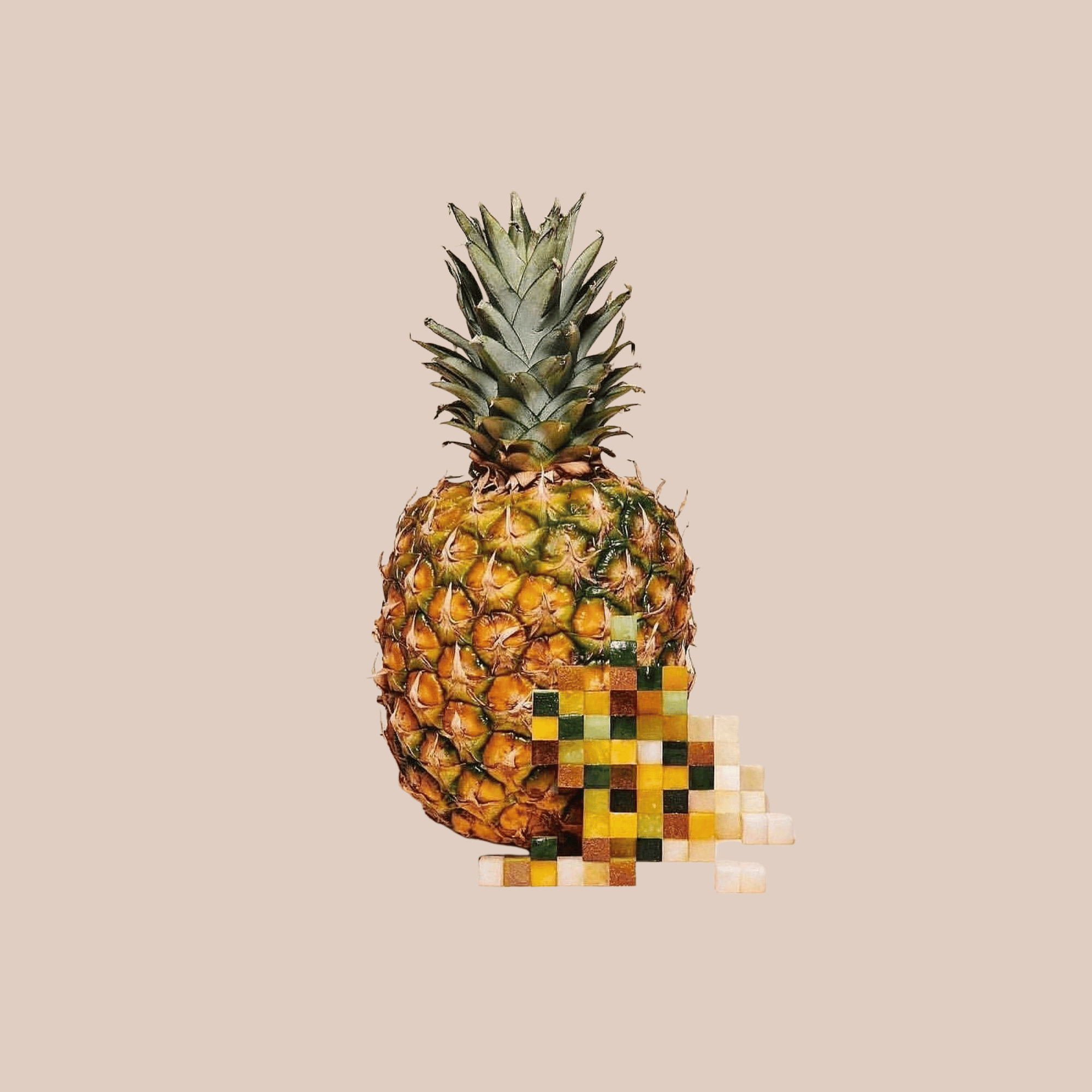

Welcome to Puerto Rico.
You may be on your way to the next glamorous and stunning beach that Instagram promised, and you’ll probably enjoy your stay and then leave without a second thought.
However, underneath this facade of perfection, the island operates under two faces, and neither tells the whole truth. One smiles for tourists, sunlit and bright, sellling paradise by the hour. The other silently fades, living in confusion, unsure whether it’s being watched or forgotten. Laws arrive like weather: sudden, distant, and rarely explained. And beneath the rhythm of daily life, a quiet question pulses through the streets, the schools, the storm-battered homes: if this is America, why does it feel like something else?

Puerto Rico stands as a paradox at the heart of American democracy—a territory bound by the stars and stripes, yet denied the full rights of citizenship. Its people are classified as U.S. citizens, and they serve in the military, pay U.S. federal taxes, and contribute to the nation’s cultural and economic fabric - and yet, when it comes to electing the President that decides their fate or even having representation in Congress, their voices are silenced.
Silenced.
Puerto Rico is walking in a limbo of twisted justice. How can an island founded on the principle of government by the people continue to be sidelined by their own mother nation?
“Puerto Rico stands as a paradox at the heart of American democracy”
— AHRIN JAIN (CEO, Head Journalist, Post Author)
What is Puerto Rico? A nation that has its own flag yet answers to another? A nation whose people are U.S. citizens yet never granted a vote? A nation that is trapped, with red, white and no exit?
Nothing here is what it seems, and everything is up for debate.

* THE PUERTO RICAN STATEHOOD DEBATE 🇵🇷 *
Politically speaking, Puerto Rico is part of the United States—but not in the way most Americans understand. It’s a U.S. territory, meaning it’s under federal jurisdiction but not a state. Its people are U.S. citizens, yet they can’t vote for the president unless they move to the mainland. The island has its own constitution and elected officials, but Congress holds ultimate authority. It’s governed by laws it didn’t write, and represented in Washington by a single non-voting delegate. In short: Puerto Rico belongs to the U.S., but is not even close to being equal with a state.
In fact, Puerto Rican officials have even said that their representation in Congress is a political joke. The island sends one official—the Resident Commissioner—to Washington, who can speak, sit on committees, and even draft some basic legislative proposals. But when it’s time to vote? They are condemned to silence. No power to approve or reject laws. No senators. No electoral votes. Over 3 million Puerto Rican citizens are governed by people they didn’t elect, and represented by someone who can’t represent them where it counts. The system isn’t broken—it was just never built to include them.

“[Puerto Rico’s] representation in Congress is a political joke.”
Statehood isn’t a polite conversation anymore—it’s a fight over what Puerto Rico deserves. In 2020, over half the island voted yes. Not maybe. Not someday. Yes. That should’ve been the moment. But Congress turned the other way, and the island stayed stuck in the same old limbo. Supporters see statehood as justice: voting rights, equal funding, a seat at the table with no asterisks. Opponents fear it’s a trade—culture for conformity, independence for even less control. And while the mainland debates, Puerto Rico waits, knowing that every delay is a decision in disguise.

The movimiento estadista de Puerto Rico (the official Spanish name for the Puerto Rico Statehood Movement) has silently stood and watched, seething but powerless. Their campaign has laid out everything, leaving nothing to question or to retaliate against - their driving point is that their population of over 3 million is higher than 19 U.S. states, over double that of Hawaii, West Virginia and many others. Furthermore, when you take a look at PPSM (People Per Square Mile), Puerto Rico is the most densely populated region of the entirety of the U.S, with around 1,000 PPSM, which is almost triple New York State’s PPSM.
That’s right - Puerto Rico has a higher population density than New York and still, its 3 million person population will not be granted statehood, denied a right to choose who will rule them.

And whatever happened to the age-old slogan that was seemingly central to the American political ideology - “no taxation without representation”?

While residents of Puerto Rico do not pay federal income tax, they do pay Social Security, Medicare, and numerous other federal taxes. They are subject to federal authority but do not have full representation in the federal government that imposes those rules - one, non-voting Residents Commissioner counts for almost nothing and certainly isn’t enough for over 3 million people.
The U.S. shoots out excuse after excuse, claiming that votes showing heavy pro-statehood turnout are unreliable and that creating a new state would be a hefty task. Many Congressmen and Congresswomen have eliminated statehood as an option, citing that a new state would require a reshuffling of Congressional structure. The number of representatives is capped at 435 seats by the Reapportionment Act of 1929, meaning there would need to be major shifts calculated to account for a 51st state.
The truth? These are just some of the tactics the U.S. uses to stall Puerto Rico on its rightful path to becoming a state. Polls and other sources familiar with the conundrum suggest that Republicans fear Puerto Ricans will lean towards becoming a Democrat-supporting state. The fact that, as of today, Republicans make up over half of Congres is a huge hindrance for Puerto Rico as every time the idea is even mentioned, it is shut down immediately by a Republican in the room. The excuse of Congressional organization complications may seem like a firm explanation, but in reality the U.S. could very easily arrange for new representative formats to include Puerto Rico; it owes those 3 million people nothing less.
Puerto Rico was the name given by the Spaniards before the island was handed over from Spain to the U.S. in the Spanish-American War, and in English it translates to rich port. Is that all the U.S. see Puerto Rico as, a moneymaking asset, whilst it is drowning in poverty and famine and suffering? How can they continue to deny an island of over 3 million statehood whilst they produce billions for the U.S. through mega-manufacturing and huge pharmaceutical undertakings?
Because Republicans couldn’t handle a potential new Democratic state, and that some basic reshuffling of Congress is too mighty a job?
Puerto Rico is being barred from the democratic justice that is central to America.
🇺🇸 🇵🇷
Every single night, 39.6% of Puerto Ricans go to bed, hungry and exhausted.
Every single night, 58.0% of Puerto Rico’s children go to bed, hungry and exhausted.
Every single night, 50.1% of Puerto Ricans go to bed, with no healthcare, no help and no funding.
All because Congress cannot handle the possibility of offering Puerto Rico statehood, or even just a slightly higher fund allocation to them.
Is this justice? Or is it manipulation, exclusion and deception as the U.S. tells Puerto Rico, time and time again, “not yet.”?
This is Puerto Rico.
And they will not go down without a fight.
THANK YOU FOR READING
I hope the injustice in the Puerto Rican political scene has entered your mind and has shown you what happens when Congress simply looks the other way.
If you’re someone who is an advocate for Puerto Rico becoming the 51st State of America, sign this petition by Change.org to use statehood as a means to eradicate poverty, famine, underfunding and so, so many other issues Puerto Rico suffers from: https://www.change.org/p/donald-j-trump-admit-puerto-rico-as-a-state-of-the-union

CREDITS - see below
RESEARCH SOURCES: Council on Foreign Relations, Current Affairs, Britannica, Wikipedia, Haverford College, Medium Newspaper Online, Rock The Vote, Puerto Rico 51st (this source was used for opinions from this group of Puerto Ricans, not factual information on this controversy), Le Monde, Congress.gov (official Congress website), Ballotpedia, Office of the Historian, Ronald Reagan Presidential Library (.gov) & The New York Times
You just read issue #175 of NTS NEWS. You can also browse the full archives of this newsletter.

Add a comment: