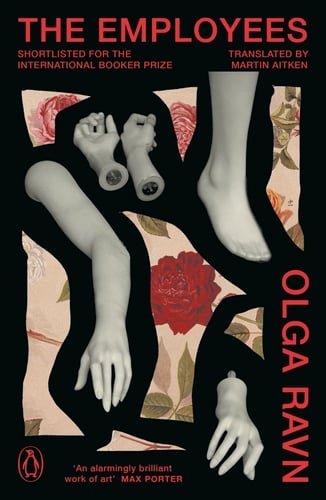
The Employees is almost entirely written as roughly 100 "Statements" formatted as one-sided interviews or anecdotes, all of similar format with an unspecified interlocutor, usually fitting on a single page. This is a format I always feel a bit disconnected from, though it's usually used sparingly in pieces of a larger narrative. The lack of a clear narrative, or I suppose better to say the fragmenting of the narrative through these brief, non-linear, and anonymous viewpoints, leaves an emotional distance. A lot of horror writing is very visceral, the language designed to be urgent and embodied, and this interview-based approach is frequently the inverse, the language more reserved, clinical, professional. Placing the entire story at this remove provides a particular emotional affect. This approach was of course intentional, and overall I enjoyed it. It's a fast read, more of a novella really, given how short some of the chapters are.
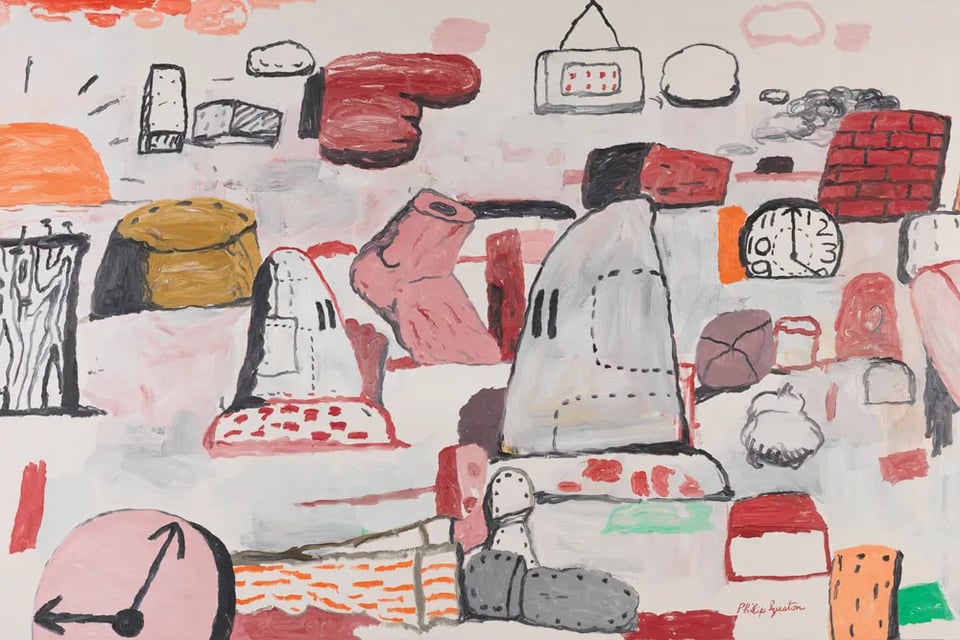
The beginning introduces descriptions of a room dedicated to mysterious objects and the employees' relationships with them. It reminded me of visiting museums, something I haven't done since 2020, and of being nearly alone in one of the main galleries, I think at the Portland Art Museum, with many large paintings nearby but facing a large Guston illuminated by the skylights in the ceiling 25 feet above me. I'm not the biggest fan of Guston's work, I find it visually and emotionally confusing and frequently sort of disgusting. It's difficult for me and I guess the slightly mixed observations of the Statements about the objects in the book is what brought it to mind. These early sections of the book made me think of ekphrastic poetry, of attempts to sublimate an emotional response through the intellect so it can be expressed through language to others, which seems like a recurring theme in later Statements.
As the Statements progress, we come to understand that we're located on a spaceship far from Earth, referred to only as the Six-Thousand Ship. It's unclear what exactly this means, perhaps the number of people on it, or perhaps the number of years it's intended to travel, as the main explorations of the book becomes the state of mind of the anonymous, eponymous employees, which seem largely comprised of biomechanical humanoids grown to maturity in 2 years, living indefinitely long and with the ability to be re-uploaded into new bodies. There is a strong sense of loneliness; the human employees provide vignettes of their lives left behind on Earth, vague pondering of the mindset and humanity of their humanoid coworkers, humanoid coworkers express and wonder the same, but lacking a history, directed more to what future can be found.
Gradually things fall apart.
Statement 175
It felt good to kill a human. I regret that it's caused such an uproar among the crew, and I'm sorry too for the dismayed looks on your faces, however much you're trying to hide them. I'm a pomegranate ripe with moist seeds, each seed a killing I'm going to carry out at some future time. When I've no more seeds inside me, when there's nothing left but flesh, I want to meet the man who made me. These are my conditions.
There's some echoes of Asimov here in a flawed understanding that the humanoids cannot do harm, and of course Blade Runner and Alien are universal references when discussing synthetic humanoids. But my main point of comparison for The Employees was Aniara. The jobs of the "employees" are not really discussed at all, with the exception of brief discussions of a captain and officers and an extended Statement from a funeral director. References to physical relationships between employees are almost non-existent. That is perhaps unsurprising since their entire lives are explicitly a workplace, the humanoids apparently created to be tirelessly devoted to their undescribed work.
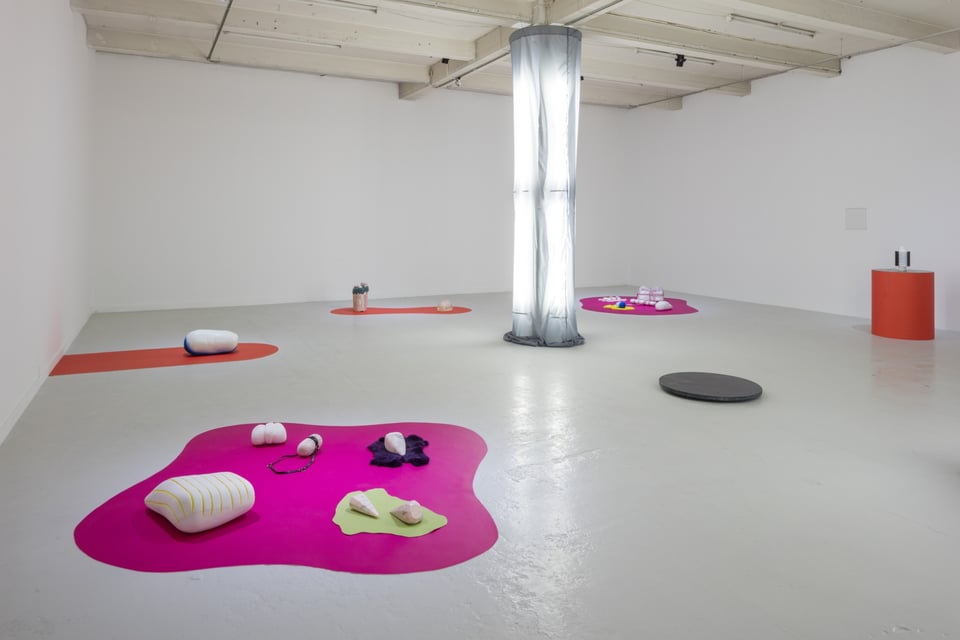
It seemed relevant that this book was published in October 2020 but I was surprised to learn it was written in 2018 to accompany an art exhibit [1] giving a much more literal spin on my initial impression and the objects of the story closely mirroring some in the original exhibition. The isolation, the descriptions of memories of family you can no longer see, only a hologram that you watch while hugging yourself to imagine a lost human touch, seem stranger when juxtaposed with leather harnesses and melting blobs explicitly designed for what I imagine was a sort of fun experience with other visitors in the gallery. Maybe my emotional response was just my own associations with the art gallery experience I've been missing the last few years, but I wonder how out of place the repeated expressions that the entire human endeavor is doomed to entropy would have seemed when glancing up at fetish wear.
Statement 153
Yesterday I saw Cadet 21, a humanoid, standing on her own among the objects in the recreation room. Her eyes were closed. I watched her for a long time. A human being contemplating its creation. She stood quite still, in deep concentration. Eventually, she opened her eyes and looked at me, and her eyes were full of tears. I got the strong feeling that we have failed, and that our time is over.
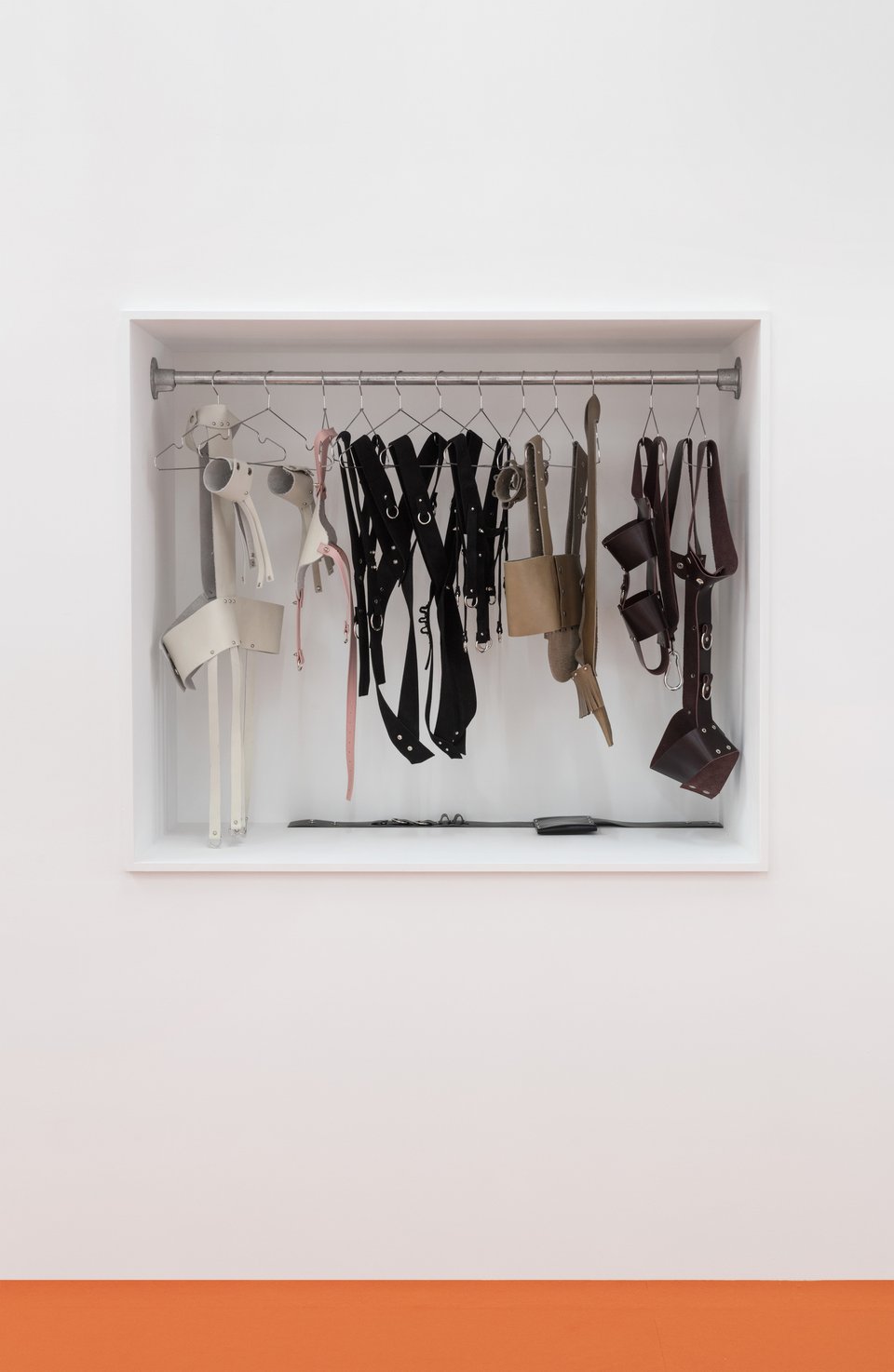
I read this in the English translation, originally in Danish. Having been so thoroughly reminded of the film Aniara, I plan to read now the poem that was based on, originally written in Swedish. Maybe there's something about Scandinavians finding absurdity in the end of things. White galleries like a neverending blanket of snow, civilization slowly covered, leaving only isolated indistinct mounds to indicate it was ever there.
[1] https://4columns.org/dillon-brian/the-employees
[2] https://overgaden.org/en/exhibitions/consumed-future-spewed-up-as-present
[3] https://artviewer.org/lea-guldditte-hestelund-at-overgaden/
You just read issue #1 of November Now Come. You can also browse the full archives of this newsletter.
Add a comment: