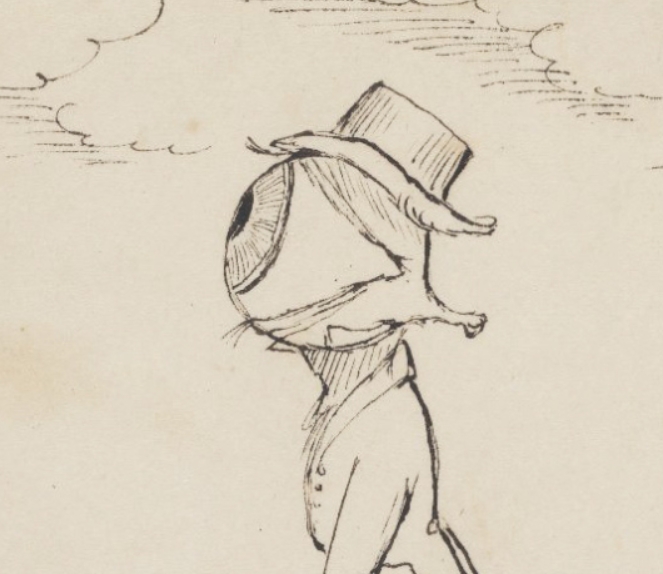
Jameson.
I’m sorry for the posting break, I can’t seem to find a rhythm this semester. I came down with a rough cold and although I’ve been back from the worst of it since mid-last week, all the mental energy I had was absorbed by teaching and childcare. Today is my first day feeling like I have something extra to give to thinking.
Let me give a warning, this is a long intellectually dense post about a Marxist theorist. I hope its interesting, but it might not be to you! We lost of great thinker in my world of intellectual life, and I wanted to share my continued excitement for his ideas as a tribute.
I have been wanting to write a post commemorating the passing of Fredric Jameson, the great Marxist cultural critic. He has long been one of the most influential thinkers on me, someone whose writings I have enjoyed since I was coming to grips with the phenomenon of Postmodernism as an undergraduate writing a thesis on Thomas Pynchon as a political novelist. I was also lucky enough to have him as a professor in graduate school, taking classes on Global Modernism and the Uses of Nietzche by the Left and Right with him during my coursework. In retrospect that I didn’t ever pursue him as an advisor or committee member was possibly a mistake. At the time, I felt like I had to get away from theory and into a teaching field to ever get a job, but there are no jobs and I should have stuck with what inspired me. This is no complaint against the mentors I did have, who were fantastic intellectuals in their own right. Yet I do think straying from dialectical Marxism was a mistake, in that it is the body of the work that I still think best describes the conditions of domination we all face in our day-to-day, and how the inability of liberalism to face down that domination with any coherent political program opens the door to fascist barbarity. That domination has only become more apparent to me after a decade of real-world work and union struggles, while I think the emptiness of liberalism, its insufficiency in the face of fascism, is apparent to all of us as we face down the disastrous resiliency of Trumpian politics to every liberal attempt to defeat it.
Some of my readers may follow those reflections well, while others may be scratching their heads, unfamiliar with the intellectual and political heritages I am describing (or perhaps unfamiliar with Fredric Jameson and his work entirely) so I’d like to spend this post describing the significance of his work for a general audience and more specifically what it means to me today, how it helps me make sense of our social and political realities.
Perhaps more than any books, Jameson’s early works, such as Marxism and Form (1971) and The Political Unconscious (1981) have informed my sense of what good thinking about literature and culture looks and feels like—not so much in its language, which is infamous (but I happen to love)--but in what it feels like to suddenly have a light go on from a piece of writing and see and feel something in startlingly new light. These books not only provide many striking examples of such insights (largely about the 19th-century realist tradition, think Balzac, Stendhal, Conrad) but a fairly thorough “theory” of just what is going on in such moments—the process of thought that allows us to see and understand something new about the relationship between literature and culture and the socio/political/economic realm. Which is another way of saying, gaining a liberatory insight into the domination of everything, especially how we are constructed as thinking and laboring subjects, by the logic of capitalism.
One of Jameson’s major early accomplishments was to recover a Western Marxist tradition of rigorous cultural critique from the ways the “vulgar” Marxism of at the time decrepit CPUSA and Stalinism traditions of reading class in strict and reductive ways into everything. I’m creating a bit of a strawman, but in the broadest strokes, for this type of Marxist, Balzac was a bad writer because he was socially conservative, monarchist in his sympathies, and his “realism” did not grant nobility and aspirations to the poor and working class, and agitprop garbage like Upton Sinclair was good writing because it was honest about the poor and working conditions and agitated against bosses. I don’t think it takes much knowledge to see how this judgment is so deeply unsatisfactory to most people’s aesthetic sensibilities, regardless of politics. Some decades of this drone from the American left had rightly led people to decide Marxism didn’t have a lot to offer art and was at best a useless heuristic and at worst intellectually conforming and stifling. A lot of post-modern intellectuals adopted a post-Marxist attitude and claimed we can no longer accept Marxism’s supposed interpretive totality, where reading was just a matter of seeing how a given work expressed a capitalist economic system of exploitation and class conflict in a simplistic way where those terms are accepted as already completely understood and just needing to be applied, repetitiously, across all available objects—a sort of imperial imposition of a singular truth on all possible works of art that tended to make reading and writing very boring and even mindless.
Jameson was a committed Marxist, but he knew this caricature was not accurate to the history of Marxist criticism in Europe (not to mention the third world), particularly around the (now infamous, then relatively unknown in the U.S.) Frankfurt School and its associates, like Adorno, Bloch, Benjamin, and Horkheimer. Jameson wanted to revivify this tradition, explain it to American audiences, and offer some explanations of something like a Marxist method of literary criticism, in all the richness he knew it had. I sometimes think about this project in how exhausted even leftists get by killjoy “woke” discourse that insists on moral assessments of art at the most superficial messaging assessment level. There’s more to loving and enjoying art as a leftist than “all your favs our problematic” and it would be wise for us all to think more capaciously about how we think without turning away the core set of desires we have for liberation and a just future, lest we become exhausted and cynical and alienate everyone, including ourselves. Jameson offered quite a bit of guidance on how to do that, even if you disagree with particulars.
For Jameson, pulling on the high Marxist tradition of the Frankfurt School and its associates, the relationship between a larger social/economic system (a totality) and any individual work of art of literature (or any other significant work of art produced within that social totality) was a lot more complex. He has a whole arsenal of well-developed technical concepts for understanding this (semi-autonomy, absent totality). His point was that thinking that simply fits given particular objects into an overall single social theory (or intellectual representation of the social totality) was succumbing to a logic quintessentially symptomatic of capitalism itself—the will to find simple 1-to-1 identity between an object and its value by abstracting the real into the symbolic. This is itself what capitalism does, it sees objects not for what they are as particulars, but for what they represent abstractly as bearers of value capable of being exchanged. If every novel only matters for how it expresses the same truths of social totality, all novels have been reduced of all their thick complexity as particular works of art into mere bearers of an abstract value. Every novel can be exchanged for any other novel in what it truly means, which is only ever one thing—the story of class conflict developed by Marx and Engels. For Jameson, vulgar Marxism was employing a distinctively capitalist method of thinking, of abstracting value from the particular into universal currents of exchange.
But the solution was never to stop being Marxist, to never abandon a critical grasp of the total social/economic system we live under. It was not just vulgar Marxism that was guilty of this abstraction, but also all the forms of rationality we employ across whole fields of study, where particulars are either constantly being made just to mean the larger theory or idea the writer wants to express about the world, OR all objects become merely particulars that don’t have anything to say about anything else and in which every particular thing remains equal to every other thing, once again abstracted and made identical with everything else. Because inevitably we are using words to describe things—words like novel or character or plot that we are taking as transparent references to particular objects of thought, but are abstracting particulars into concepts, erasing their particulars to fit them into a category to make something thinkable. Which is to say, we always have a larger theory of the total system of objects like novels—that novels have plots, characters, etc…—even when we pretend we are just working on particulars or doing surface reading or what have you, because it’s impossible to talk about things without abstracting at some level.
This is not just true of literary criticism, as Adorno and Horkheimer laid out in that essential work of the Frankfurt School, The Dialectic of Enlightenment, exchange abstractions structures Enlightenment-derived thought in all intellectual domains. This makes all modern thought deeply susceptible to reification, where instead of attending to the world in its complexity, you’ve abstracted it into a theory of all objects. You’ve made an object of intellectual value that can be circulated, in journals, in newspapers, as a way to dominate nature or humans in science and management journals (or as a trendy literary theory or as a politics focused on static identity categories), but you are no longer attending to anything that is outside that theory—in fact theories become deeply hostile to abnormalities like systematic change, dynamic class formations and transformations, and aesthetic experiences of undefinable uniqueness. Reification means, roughly, thingification—the gripping of the whole world so tightly in static knowledge abstractions that the world escapes, and all you are left with is a stale form of knowledge that carries market value for a time but freezes thought into one singular structure of domination of the real by the abstract.
This is what the capitalist world system does—freezes a particular historical structure of domination of persons and the natural world into a system of abstract exchange value—and it affects all the ways we try to think or imagine ourselves free of that domination whether through better knowledge, aesthetics, or politics. That this is a total system of domination, global in its reach both geographically and intellectually is a fundamental insight of the Frankfurt School. I don’t think we can locate ourselves remotely honestly in this world without accepting this framework and its extensive implications. First of all, all ideas, and all languages, are rapidly decaying of substantial content. We live in a world of profound disenchantment and alienation. As Adorno writes, “[hu]men pay for their increase in power [over nature, over fate, over each other, over a future] with alienation from that over which they exercise power.” We don’t deal in qualities, we deal in abstract value. We deal in symbols and language, in fungible abstractions. And that means, "There is no longer any available form of linguistic expression which has not tended toward accommodation to dominant currents of thought, and what a devalued language does not do automatically is proficiently executed by societal mechanisms.”
So far this line of analysis is not that far from forms of Romanticism, which decries the alienation of the modern world and tries to use art or philosophy to recover the authenticity of experience, of things themselves. And modern culture is replete with degraded “fungible” romanticism from the mass cultural wellness industry, to religious fundamentalisms and fascisms. However, the Frankfurt School developed as exiles from Hitler’s Germany, in profound opposition to fascism and its illusions of authenticity in racial barbarisms and mass orgies of hate. At the same time, they knew the liberal alternatives of enlightened humanism were far too much products of the degraded alienated modern world to ever effectively oppose fascism. They only offered a disillusioned status quo of daily domination by capital to the false glory of the masses taking revenge for its alienation through the murder of scapegoats.
What Jameson, taking after Adorno and others argued, is that you have to rather think, act, and create, dialectically. Which is to say, be attentive to the way the very forms of thought you are employing are also themselves productions of the social totality you are trying to critically identify. You have to sit with the contradiction that we are dominated by a global political/social/economic totality to the very constitution of our thought processes and senses of identity, and yet still must insist on a future of global liberation. We can’t return to some projected pre-modern state of unalienated commerce with the divinity of ourselves and the natural world. That itself is a false, reified symbol exchanged on markets or co-opted into diabolical politics.
Another way to say this would be something like “the only way out, is in.” An intensive process of thinking, imagining, and organizing that drives at its contradictions to expose the contradictions by which we all live, to expose how every image of freedom sold to us only intensifies domination, and by more firmly grasping limitations come to glimpse what it would look and feel like to be free of them, in a different reality.
This may all seem quite abstract, but it is anything but. It is a rigorous protocol for avoiding the temptations of abstractions that trap us in domination. It is simply difficult, which may not be inspiring, but I think an example from my own experiences in that most practicable realm of political organizing will help make it clear why dialectics is so fundamental, but also why it’s not an abstract system but a type of method of pushing contradiction.
In Union organizing, there are no good options. Every solution or bargaining goal achieved will trap you in a new set of dominations, often more diabolical and insidious than those you initially rejected. I’ve seen this happen, a contract is a victory and a trap. Workers get more job stability or pay, but they also get frozen in a new set of terms by the employer for years. If a union starts identifying with the achievement of the contract that has been won, and only trying to enforce it and its terms, the union suddenly will be transmuted from the voice of the workers to the voice of management, another tool in its arsenal of control, and become alienated from the very people whose aspirations it was meant to represent. That union will fail, it will become a target for “right to work” backlash, a bureaucratic obstacle for workers instead of a source of democratic control over the workplace, and open up a path for managerial reaction supported by workers* in the name of freedom. That will ultimately make exploitation worse, but it is a trajectory we’ve seen globally and with countless individual unions.
Rather, the union always has to be making demands on management in excess of the terms of the contract. The union has to remain militant, and even as the militancy fails, the union can continuously expose the will to the domination of the employer over workers to maintain a constant state of exposed tension at the worksite and build solidarity. The only end to the union and its work is a worker-controlled co-op, which means every contract is agreed to, in a sense, in bad faith, because you can never be friends with management, you can never work together with them. The principle that the workers should be in charge has to be foundational, and while that seems idealistic and impossible, it is far more idealistic to imagine that the contract is a victory for workers, rather than a tactical retreat. You have to sit in the contradiction that unions are failures until the exact day they aren’t, otherwise the union will fail. The problem with national unions is that they don’t take up unwinnable struggles for employees, they are conservative and contract-focused, liberal and not militant, idealistic and not materialist, and co-opted by liberal democrats who want capital to win ultimately because they are deluded that is a resolution to conflict rather than a sublimation of domination into a false liberal welfare order that will always collapse under its delusions that it has made anyone happy.
So much for a practical realm. But Jameson is a literary critic, first and foremost, and I trained as a literary critic, so I need to speak a bit more about what inspired me about his work in that area. This also will help zero in on Jameson specifically, not just the Frankfurt School tradition he brought to us in the U.S. (through his work and the extensive influence of his generous teaching and mentorship on countless graduate students who have gone on to make major intellectual contributions to cultural Marxism). While scholars like Adorno did write extensively about culture, their institutional profiles were primarily in philosophy and sociology, while Jameson spent his life teaching literature students in a literature department.
Jameson’s most important contribution remains his work on Postmodernism. It represents the essential diagnosis of how neoliberal economics and the end of socialist alternatives to the capitalist world system transformed cultural production across multiple domains, from art and architecture to literature and philosophy. The essays collected in The Cultural Turn and the book Postmodernism remain some of the most essential writings on the conditions of culture and politics since the 1980s. I think it has weathered all the critiques, and stood the test of time as a monumental contribution. It is at once a massive dispelling of cultural delusions (of the end of history, of stable liberal world order, of the flattening of historical aesthetic modes to mere stylistic options by the culture industries) and a reclamation of leftist conceptualizations of history, futurity, and utopia from their supposed defeat at the end of The Cold War. The contradictions it lays bare have if anything grown more dire, as liberalism attempts to defeat global fascism through Cold War NATO nostalgia and the managerial class doubles down on deluding us that they can reform our way out of the climate crisis without any real politics.
This work is a huge inspiration to me and has been since I read it in my undergraduate years (the 2000s). Although we don’t talk about postmodernism in the same way (I think it has been rightly relegated to being understood as a historically specific artistic style that is no longer alive) its passing proves Jameson right rather than dating him, since his work on the topic was an attempt to get postmodernism back into the history it was claiming escape from. At the time this was definitely against the intellectual currents. The right condemned postmodernism as radical relativism even as it was incorporating such intellectual and moral relativism wholesale into its worldview and rhetoric. The liberal center celebrated it as the properly witty and urbane triumphalism of a world beyond ideological conflict. While the intellectual left tried to recover the categories of play the sense of freedom from history offered by postmodern styles as a ground for radicalism freed from ideologies. Jameson flew against these trends by diagnosing how Postmodernism in all its forms expressed the crisis of value capitalism was finding itself in, the new extremes of alienation that were being experienced, and the historical specificity of the forms in a moment of mass financialization and abstraction of marketplaces and productive capacity. What he saw rather was that the scale and speed of the world system were rapidly outstretching our ability to represent it in art or economics, (nevermind politics), and instead of inventing new forms to grasp globalization, so much art and thought was rather allowing itself to be subsumed into those flows as flat, marketable, hip, stylized, consumer choices.
But in showing failures, Jameson always dialectically opened the door to possibilities. If postmodernism as a style or movement was a symptomatic failure of late capitalism, where could we turn to find new openings, new forms, and modes of representation? Jameson spent the rest of his career looking at Science Fiction, at Eastern European novels, television, at trends in world fiction, to seek out ways artists were inventing new forms to represent an unmappable global system of consciousness and trace out our domination by it. What I truly love about Jameson is that he doesn’t ever settle on one answer or one form. All are incomplete, all present contradictions, limitations, and failures, but he remained committed to the work of thought and art to place ourselves despite failure. Because failure is how we see. Contradiction is the work, not false transcendence, but the necessity of thinking despite our limitations. This results in a profound belief in aesthetics to invent new forms that can register history, even if they can’t fully represent them.
The formal registration of the force of history within the failures of representation of totality. That’s a mouthful, but it’s the best summation of what I learned from Jameson to look for in literature when I am reading. Not to look for reality itself or some reassurance of my worldview, but rather the effects of reality on consciousness and form. And in those effects, trying to find our limitations and come to know the boundary between the present and a better future. And with that, I learned a refusal of romanticism and its false promises, without succumbing to a cynical liberalism of the practical, to keep looking for ways to feel the utopian in all our failures.