
I got current on a manga for the first time in forever.

For however the cruel and indifferent the universe is capable of being, the universe also does manage to be kind and specifically caring when I least expect it.
Last Saturday, I had exactly an hour to kill before a social engagement and not wanting to queue up a YouTube video that didn’t quite match the time frame or tone, I found myself browsing Netflix just to see if they had any offerings that could fit the bill.
This is when the algorithm, both a blessed and damned thing, showed me Akane-banashi.
I would venture so far as to call it my new favorite sports anime, which is a wild sentence given that this is not actually a sports anime, but Akane-banashi share much more in common with contemporary Medalist (insofar of the particular judging of an interpretive art form) than say Bocchi The Rock, although given that this is a tale of mastering artistry, it does have plenty in common with the latter.
The opening of the anime explains the premise deftly. Akane, our protagonist, is obsessed with Rakugo, a Japanese performance art that is a mixture of storytelling, sketch comedy, acting, and a dozen other things. It is an art predicated on the performer’s ability to tap into the audience’s imagination and sense. It is not something I knew about before last Saturday, but much like with Haikyu, I learned a lot about it very quickly.
After watching the first episodes, I quickly realized this particular narrative was exactly what I needed and proceeded to read 207 chapters over the course of 48 hours (thank you to the Shonen Jump app for increasing whatever arbitrary limit you had going on before).
Akane-banashi does not open with Akane. It opens with her father on the day of his most important performance to date, his promotion exam. Predictably, it doesn’t go quite the way anyone expected, but it does does set Akane on her path to become a “shin'uchi”, or a master of Rakugo.
What follows is an examination of something that is never explicitly competitive storytelling, but in practice reads a lot like competitive storytelling. Yuki Suenaga’s writing is equal parts informative and entertaining, balancing heavy exposition and condensing down 15+ minute long stories into a handful of pages while Takamasa Moue’s art elevates the heightened reality that Rakugo aims to invoke.
It is engaging and compassionate. It is a meditation on the eternal question of technician and performers. It is a commentary on tradition and modernism. It is a framework on how I would probably try to structure a serialized story on slam poetry if I was forced to.
Akane’s connection to Rakugo is a little (read, a lot) more personal than my own connection to poetry. But her journey of learning how to perform on stage, of branching out from the style she knows, of seeking mentorship from other masters, of navigating the insular art scene. It all resonates in a unique way, while also being exceedingly distinct from it. Both are practices steeped in oral tradition, but the format and metrics for success are widely different. But I think that’s the joy of it right?
To see a journey so specific, and yet universal. Hell, panels later in the manga mirror exact sentiments I have written ad nauseam on this newsletter.
These are panels from later chapters taken so far out of context, but they are still technically spoilers.
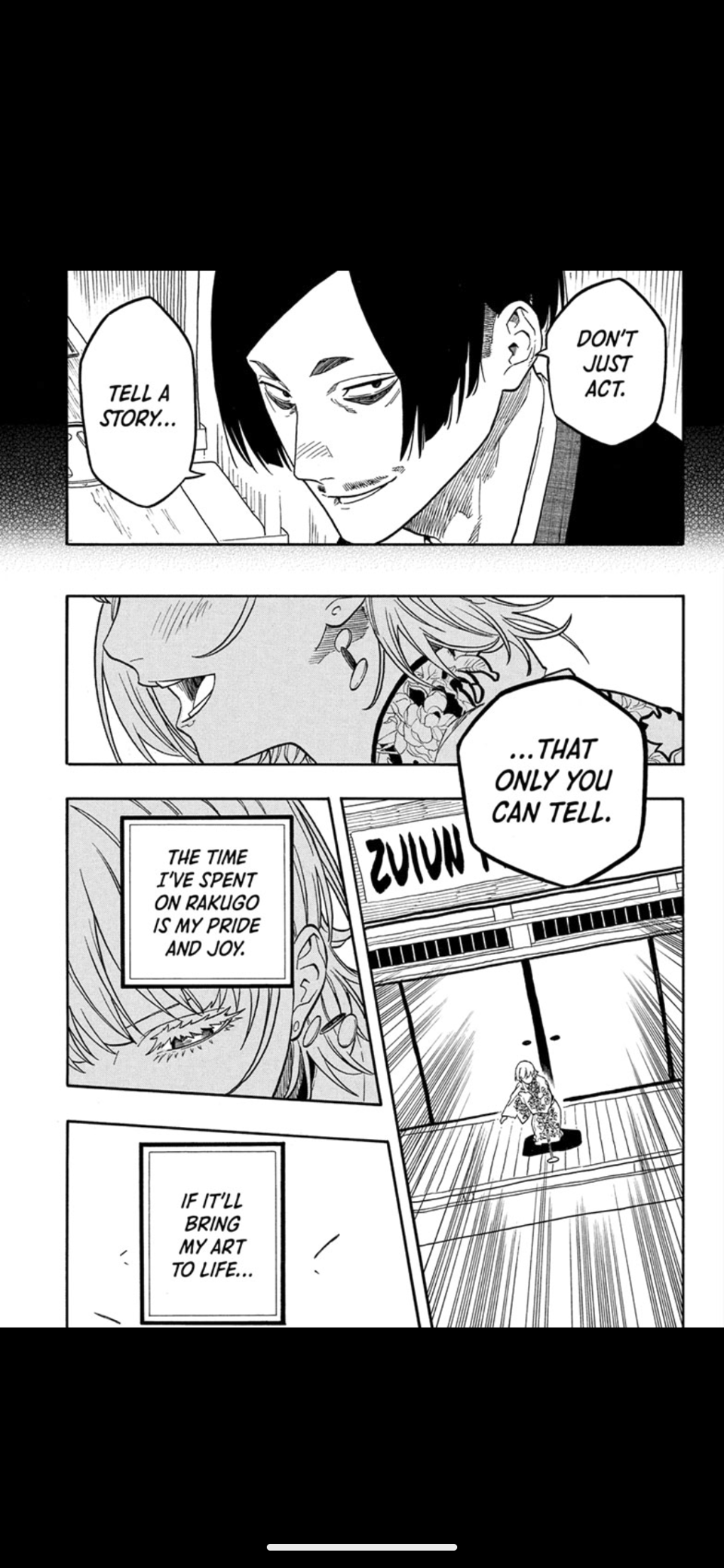
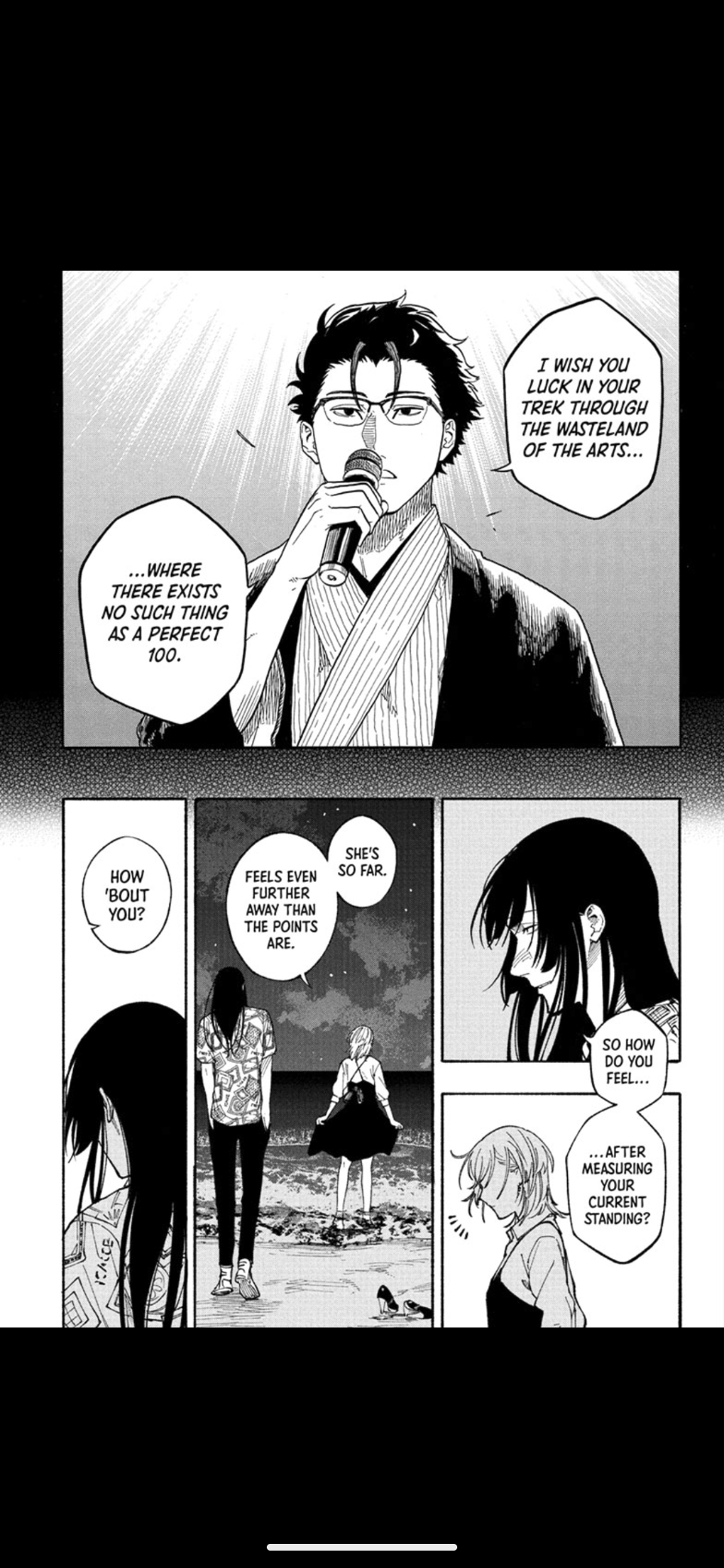
This has been a difficult year in more ways than one. But it has also bee a year where I feel more connected to my roots as a writer and as a creative. And it’s the kismet of the universe offering me Akane-banashi as a reminder that the work is hard, but the work is always worth doing, in an arena that more closely match my own than the volleyball and ice skating animes I’ve partook as of late.
It helps to remind me of why this is titled “Mixed Media with Mikkel” and not “Mikkel bemuses on the nature of storytelling”, even though they are certainly very similar things.


