Bad Times, Good Music
A look at Civil Disobedience, a jazz album by David Ambrosio's new quintet, that draws in socially conscious late 1960s Blue Note.
Donny McCaslin / Ingrid Jensen / Bruce Barth / David Ambrosio / Victor Lewis - Civil Disobedience (Blue Frog Records)

I first came to hear Donny McCaslin on David Bowie’s last record Blackstar. That was about a decade ago. In the time since he’s become one of those artists who I don’t exactly follow but enjoy enough that their name is enough to get me to listen to a record.
Such was the case with Civil Disobedience, out now on Blue Frog Records. It wasn’t so much that I didn’t know anyone else on this record, but McCaslin’s someone I always enjoy listening to. And he’s good here. But what surprised me was how good everyone is here.
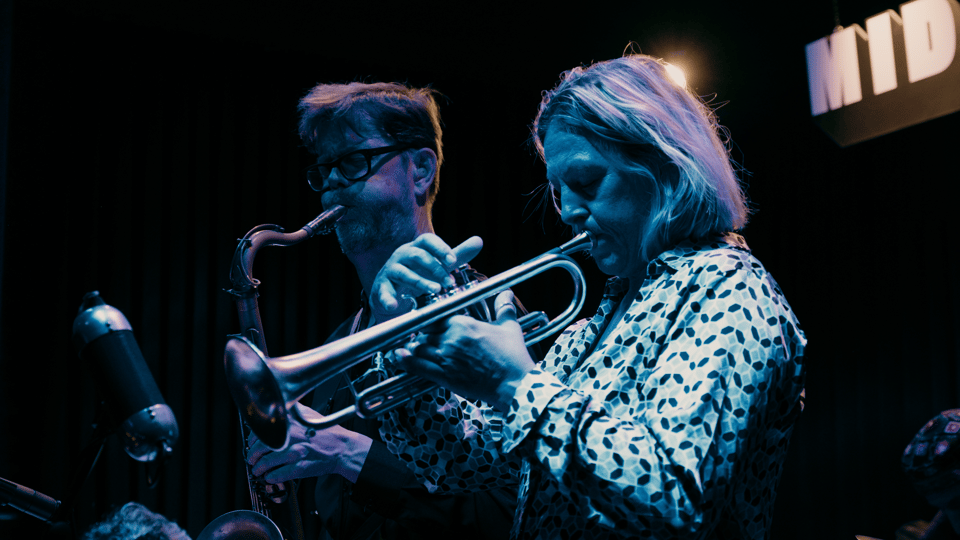
Civil Disobedience features bassists David Ambrosio’s new quintet: McCaslin on reeds, Ingrid Jensen on trumpet, Bruce Barth on piano, and Victor Lewis on drums. The title kind of gives the theme of the music away: it’s a bunch of themes from the late 1960s, all originally released on Blue Note and all with socially conscious thinking behind them. This turns what could have been just another jazz standards album into something a little different, a little more adventurous.
It kicks off with its longest performance, a nine minute version of Bobby Hutcherson’s “For Duke P.” Both McCaslin and Jensen play the theme in unison, giving the music a nice punch, and as the song builds they play slightly off of each other before easing into a Lewis solo. When McCaslin steps up, he reaches deep into his horn’s register for some low squawks, but mostly works around the middle with a nice, sweet tone. Similarly, Jensen stretches out too with a loud, brassy tone on her trumpet and plays a solo where she plays her horn in lines that run up and down, like she’s riding a bike on a hilly road.
The band slows things down for James Spalding’s ballad “A Time to Go.” The horns play low, slow-moving lines while Lewis gently rattles his cymbals and Barth’s piano plays little, glittery runs. It’s a big change from the opening track: it’s moody and has this edgy vibe to the way the two horns don’t quite mix, each trading off little runs while the other plays long notes. It’s a nice contrast and sets the mood for a more reflective place.
Things speed back up a little for “Irina,” a theme where McCaslin gets to play a nice solo and gets a Coltrane-line tone out of his horn, before Barth takes over with one of his own. It leads nicely into “Poor People’s March,” a theme written by Harold Land and inspired by Dr. Martin Luther King Jr’s march on Washington. It’s a little peppy, with the two horns playing chirping lines for the theme, and Lewis playing a gently swinging rhythm, but it opens up nicely for Jensen and McCaslin to play some call-and-response during their solos, the two quickly trading off fours.
But the end brings a real treat on “Ankara” where Jensen plays with a mute, giving her horn a sharp, Miles-like tone for her solo which leads into an extended trio section for Barth, Lewis and Ambrosio, giving them all section to show how well they mesh: Lewis mixes little fills into between bars of Barth’s solo, while Ambrosio holds it down on bass, and right at the end both Jensen and McCaslin gently ease their way back into the music. It’s some great playing and some of the stuff I’ve enjoyed most this year.
But then I haven’t listened to much this year. A new job has kept me busy and a writer's block has kept me from thinking too deeply about what I have listened to. In a year where we saw ICE patrolling the streets in the Twin Cities, shooting two civilians dead, and where the US armed forces have been firing on targets across Iran, writing about music has occasionally felt frivolous. Like there should be something important to what I do.
The music here brought me back to Earth somewhat. I enjoyed listening to it a bunch but it’s the programming and thought behind the music that helped the most. In the liner notes Ambrosio writes: “several of the compositions were inspired by significant events and themes associated with civil rights, anti-war, and economic equality movements that were so prominent during this period.” This was music written during a rough time: political assassinations, civil unrest in the streets, the threat of mutually assured destruction from above and a war happening on the other side of the planet. Times are hard now, but they have been hard before, and musicians found inspiration and beauty in those troubled moments.
It gives me hope. Hope that we can find that inspiration in these days, that we can get through it like we have in the past. Because we’ve been here before and we got through it then. And we can do it now. I’m not sure that I’m back in form, but I feel better than I did yesterday or the day before.