Memory Rising November 2026 newsletter
In this month’s edition:
New Survey on Academic Researchers Who Use Environmental Collections
Advocate for the new Public Archives Resiliency Act
College of Charleston Environmental Justice panel on December 2
Mini Consulting Sessions
This Month’s Recommendations
Welcome to the November edition of the Memory Rising newsletter! It is nice to have some good news to celebrate following last week’s election. I hope the progressive wins portend good things for climate action.
Last month I joined many other cultural heritage workers who work in the environmental/sustainability/climate change space in Baton Rouge for a convening related to the PROTECT-GLAM project. I lived in New Orleans for several years at the beginning of my professional career, and always love to revisit Louisiana. While I was there I paid close attention to the landscape between Baton Rouge, Lafayette, and New Orleans.
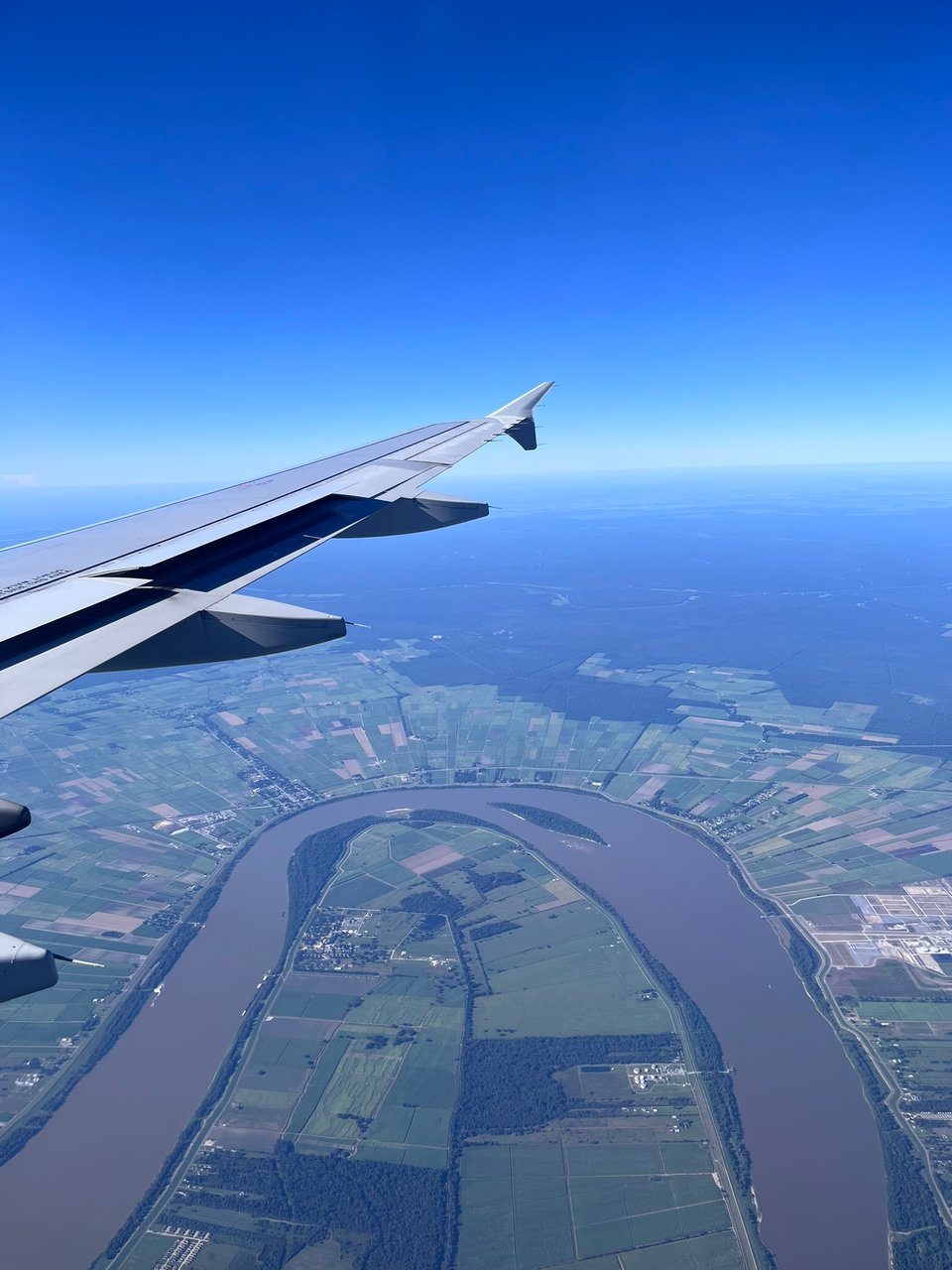
I always feel constant guilt about the carbon footprint of my flying so I try to combine trips and appreciate the vantage points offered from flying high above the landscape. Flying low over the Lower Mississippi Valley is one of the most fascinating visual experiences as you take in the river’s bends, noting the many natural and engineered aspects of the landscape. It is a landscape that bears the marks of greed and violence across generations. You can easily see how the river bottoms were divided for plantations, and the continued industrial legacy of Cancer Alley. But: there are also wetlands, marshes, birds, oxbows, and everything that makes the Mississippi River as mighty as its pre-engineered legacy.
-Eira
New Survey on Academic Researcher Use of Environmental Collections
Are you an academic researcher or instructor who uses archives in your work? If so, you are invited to participate in a survey on the use of environmental collections in academic archives for research and teaching purposes!
Researchers at Penn State (that’s Ben Goldman and myself) are conducting a study to better understand the information-seeking practices of individuals in higher education who have used archives to support research or teaching. We are particularly interested in learning about how researchers discover and utilize primary sources and historical records in their academic work.
We invite you to complete a brief screener to determine your eligibility for the full survey. If eligible, the full survey takes approximately 20-30 minutes to complete. As a token of our appreciation, you will receive a $25 Amazon e-gift card upon completion of the full survey.
Please click the link here to begin the screener, or copy and paste the following URL into your browser: https://pennstate.qualtrics.com/jfe/form/SV_50jTaEUlxEBAExo?r=mr
We would greatly appreciate it if you could also forward this email or share the link above with relevant researchers, scholars, and students in your academic community.
If you have any questions or encounter any issues, please email [email protected] or call 1-800-648-3617.
Advocate for the new Public Archives Resiliency Act
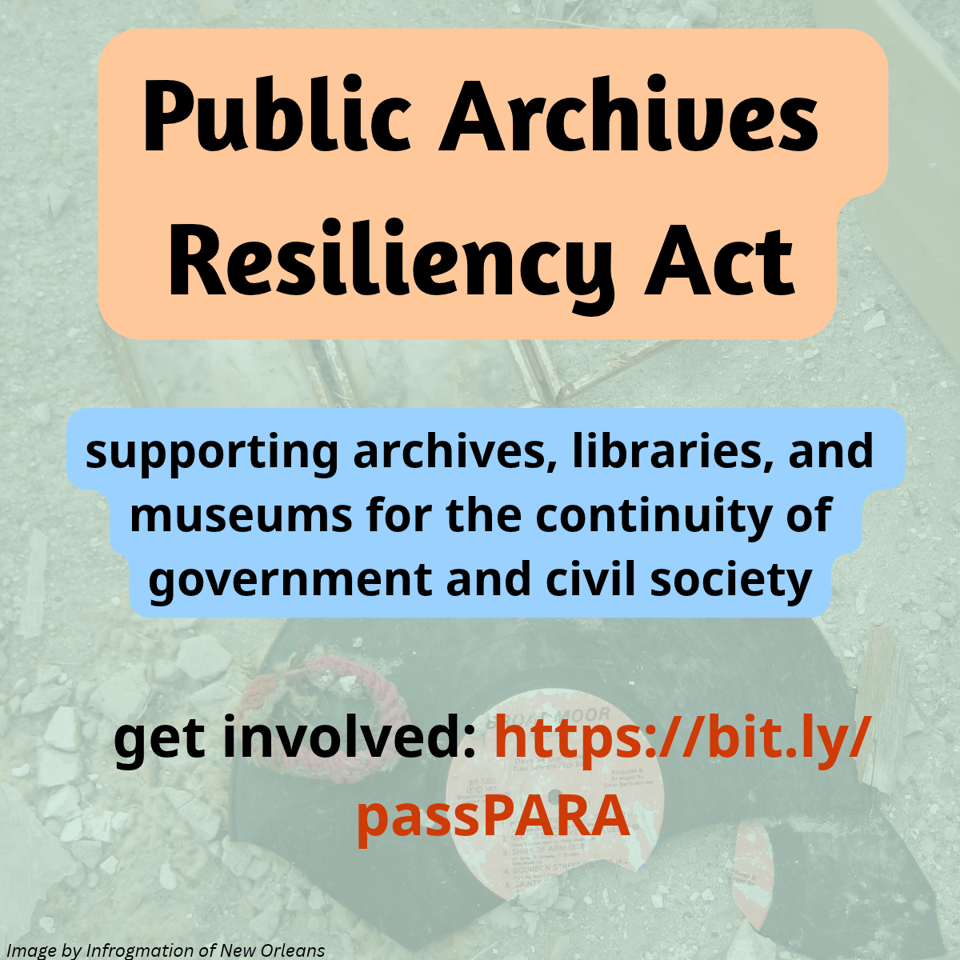
I’m excited to share that the Public Archives Resiliency Act has been reintroduced to the 119th Congress!
The Public Archives Resiliency Act (PARA) supports long-term resiliency for archival institutions, libraries, and museums in order to provide continuity and access to archival records, especially vital government records. The legislation would utilize the Institute of Museum and Library Services (IMLS) and the National Historical Publications and Records Commission (NHPRC) to direct funding toward archives at risk of critical infrastructure failure.
Want to do your part to get PARA passed? Join the mailing list to get involved! https://bit.ly/passPARA
College of Charleston Environmental Justice panel (December 2)
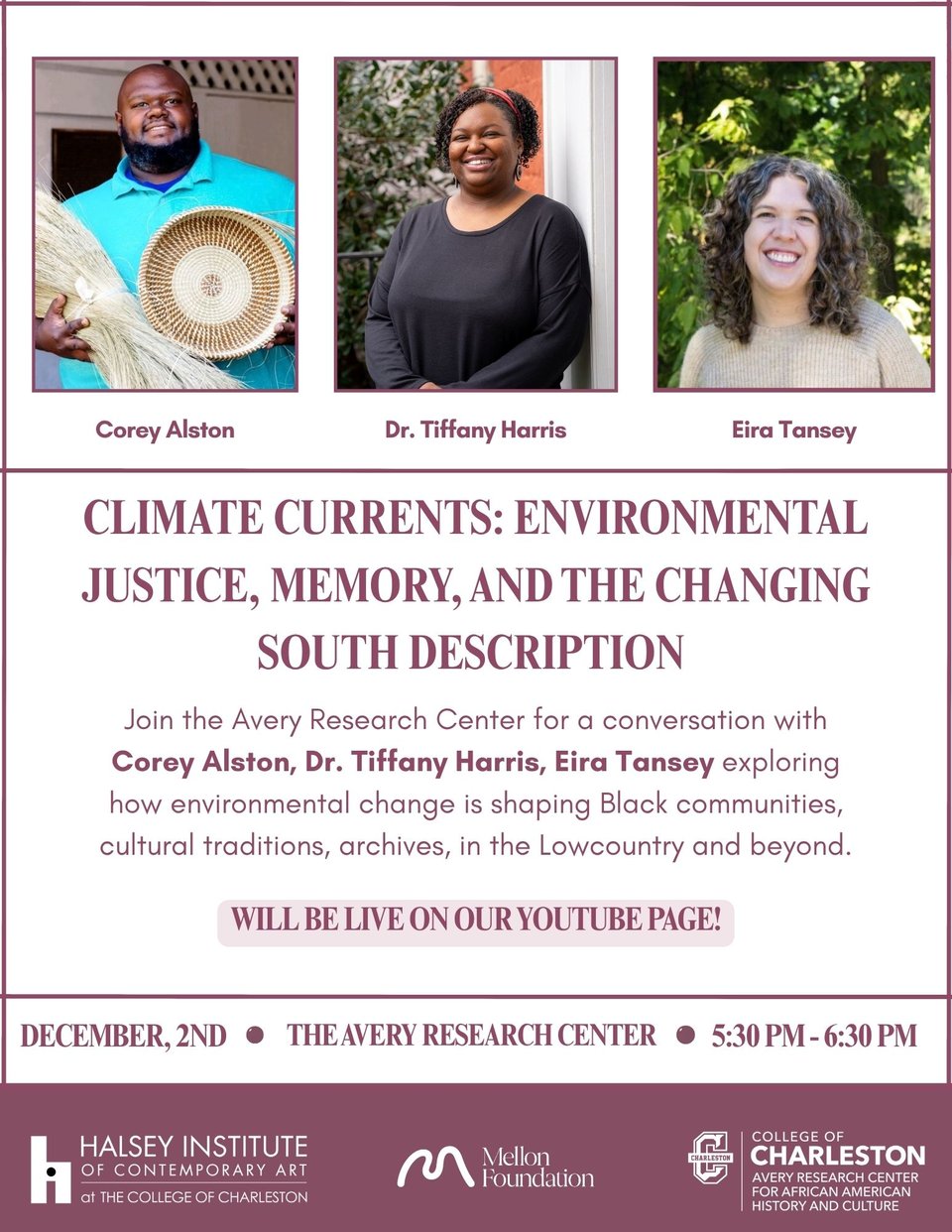
The College of Charleston is hosting a panel on Wednesday, December 2, 2026 at 5:30pm - 6:30pm titled “Climate Currents: Environmental Justice, Memory and the Changing South.” Corey Alston, Dr. Tiffany Harris, and myself will explore how environmental change is shaping Black communities, cultural traditions, archives, in the Lowcountry and beyond. This panel is part of an exhibition called GROUNDED IN GRAIN, WASHED IN THE WATER that is organized by the Halsey Institute of Contemporary Art and the Avery Research Center for African American History and Culture.
You can register to attend the program in-person or online.
Mini Consulting Sessions
Are you thinking about a history, climate change, or archives-related project and not sure about the best way to move forward and make it real? Are you a small organization eager to preserve your history?
Draw on my experience and prior work without the overhead of a long-term engagement! Sign up for a one-hour consulting session. We’ll chat about your idea, problem, or project, and I will share resources with you after the call.
This Month’s Recommendations
💧 LSU’s Mississippi River Model - I got to see this river model in person during a recent trip to Baton Rouge thanks to a convening for the PROTECT-GLAM project. I first learned about river models from reading John McPhee’s classic essay “Atchafalaya” and was so excited to see one in person. If you ever have the chance to see this in person, you must!!
🎹 Ohio is a Piano - This website has gone through several iterations as web technology changes, but I’m glad it’s still online because it’s one of my favorite examples of how the old internet used to be fun and goofy. The gist is that Ohio has 88 counties and a piano has 88 keys, so you can “play” a map of Ohio.
🔮 Ethereal Visions Luna edition tarot deck - I’ve been reading secular tarot for myself for years, and am starting to branch out into doing tarot as a side hustle. I recently bought this incredible deck at a shop in New Orleans specifically to use in readings for others. I love its Art Nouveau design that is a much more inclusive version of the traditional Rider-Waite-Smith deck, and after using it for several nights of readings at a local wine bar, others have told me how much they enjoyed the imagery as well.
Support My Work
The Memory Rising newsletter will always remain free since it is the main way that I advertise my public work and business services. If you would ever like to directly support my work as a fully self-employed archivist, you are welcome to send a “pay what you wish” amount via PayPal to my business account. Thank you for supporting independent cultural and memory workers!