
Describing Danchi Days (Part 1): Shakai-kei/Societal Game
Throughout Danchi Days' (out now!) development we came up with various ways to describe the game. Most of these didn't end up being particularly helpful when it came to labeling the game for marketing purposes, but I think in terms of critical analysis these terms could be of interest.
They are:
- "Shakai-kei" (Societal) games
- Neighborvania
- Adventure Novel
- Post-Cozy
- anti-RPG (we didn't come up with this one)
For this post I'll just talk about Shakai-kei/Societal.
Shakai-kei/Societal Games
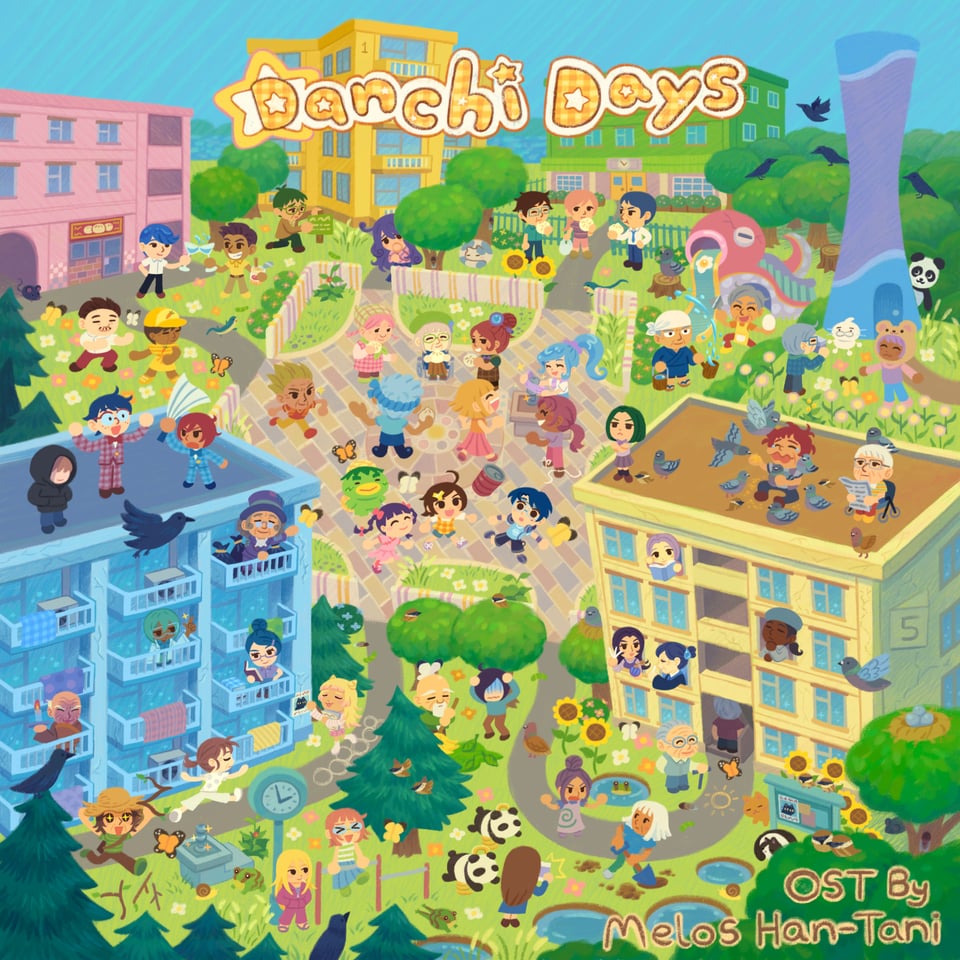
Danchi Days depicts a cartoonish microcosm of 2000s Japanese society through its gameplay, which, as you complete quests and explore, let you piece together the relationships of each of the danchi's neighbors (a danchi is a postwar, Japanese mass housing complex.), as well as how protagonist Hoshino and her family fit in.
These relationships start from closer bonds, like family and childhood friends, move outwards to depicting group bonds (like the local volunteer Danchi Council, or friendships like Ambar-Teddy or Pete-Daley). Followed by weaker ties - people the protagonist Hoshino only happens to meet and only interacts with a few times. Lastly, the game also depicts strangers, through their anonymous blog posts.
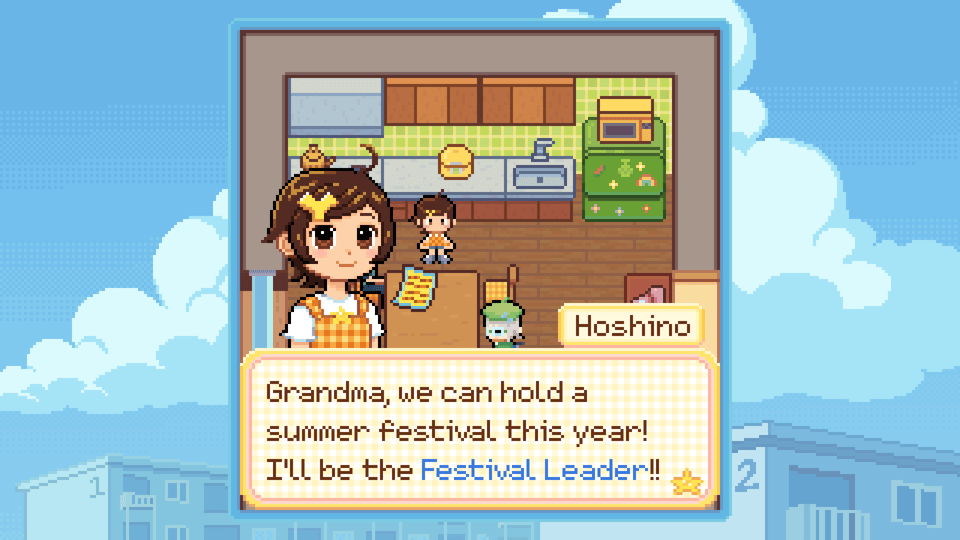
In addition to interpersonal bonds, the game also depicts bonds between people and the danchi. We have relative newcomers or workers (Barney the librarian, Donuts and Joe the comedians), longtime residents (Grandma Kimiko, Pete, the Carrots family), and relatively recent residents (Hoshino, Rio), and total newcomers (The Dongs). These characters' relationships to the danchi are sometimes shown in both the past and present, showing how people's relationships to places change across decades.
The game also depicts people's conceptions of themselves and their interests, through their personal websites, and sometimes even their home interiors.
Many games gamify friendship/romance with friendship, fame, or reputation meters, a mechanical system that turns relationships into checklist-based repetitive tasks.
On the other hand, Danchi Days is more content to let you just discover all these relations yourself without having overly-gamified ways to 'deepen' them (besides the act of RSVP'ing characters to the festival). You don't unlock a "walk with Grandma" event by giving her 15 cucumbers, instead one day in the game you're just able to take that walk with her.
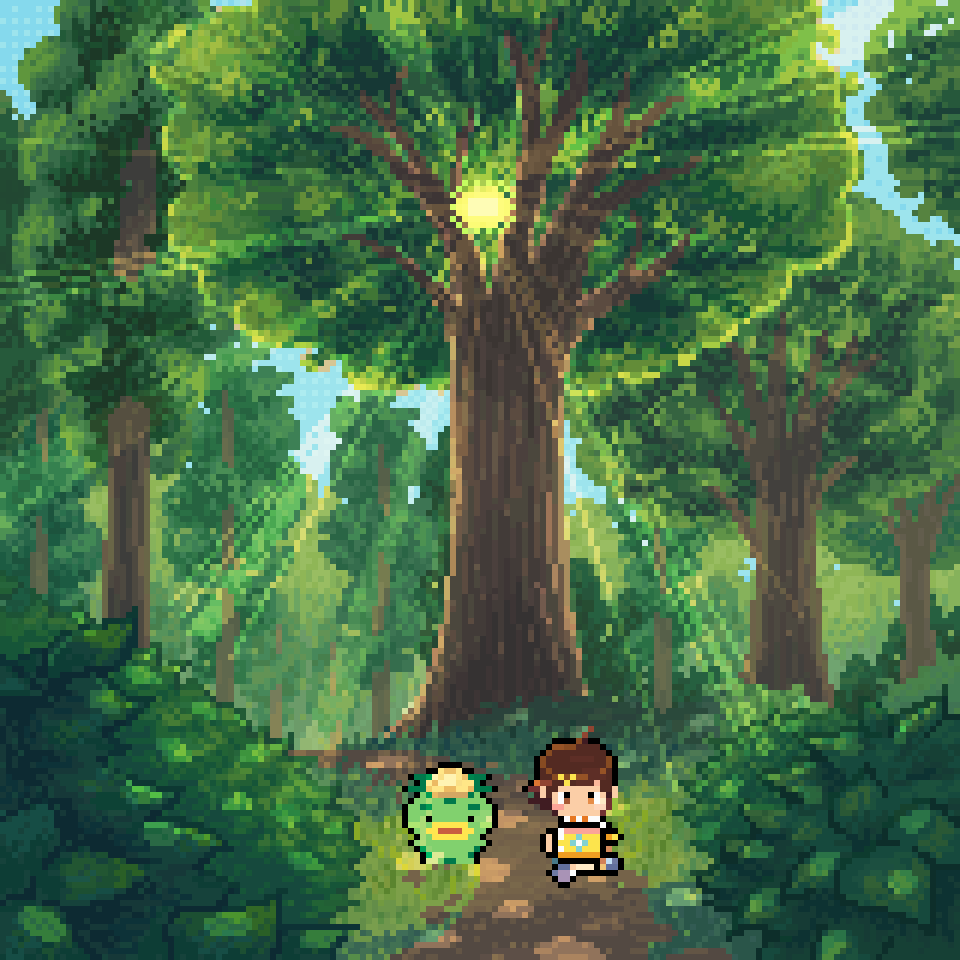
Avoiding numbers in the game's relationships helps prevent the game from feeling like a number-driven simulation. Instead, as you read each conversation and website and explore each location, slowly, an image of the whole danchi's society emerges in your mind, built up from all these small facets of characters and events that you see from different angles. Like a detailed tapestry or museum diorama that you can zoom in on the details of.
 (A recreation of Tokyo Dome)
Most characters in Danchi Days go on with their lives as usual after interacting with you. Through Danchi Days' story you're able to affect a positive change in their life by holding a summer festival, but it's not life-changing or revolutionary. It's more akin to the kind of change we can actually make in real life, a small one whose ripple effects we may not ever see outside of the immediate positive effects. They're not tied to the main plot in a strong way where you affect their final life outcomes (other than getting them to dedicate one night of their life to visiting a festival.)
There are slight magical elements to Danchi Days but it still exists on a mostly realistic register despite its cartoonish anime aesthetic. Race exists, class exists, countries exist, laws exist, real history exists.
Because the game is structured and written in this way, I think that's why it has an emergent interestingness to it that you can feel after playing it for a few hours. I think this emergent feeling is analogous to how real life can be interesting, a lot of mundane moments, chance encounters, interpersonal interactions, which on their own might not look that special, but have a emergent quality to them that is 'life.'
The above is what the game 'has', but let me also reframe it as what the player 'does'. Here are the main ways you learn about the game:
- Main Story (seeing the danchi through Hoshino's eyes and the main cast's history)
- Optional Story stuff (Neighbor RSVP Quests, Characters' Rooms), which you run into while exploring the danchi
- The Internet - learning about characters, and society at large
- Flavor text via looking at objects around the danchi
- Tactile engagement (stepping on stuff, the sense games)
- Discovering shortcuts and paths through the danchi via exploration
By doing these things, many of them freely and nonlinearly, you build your own understanding of the danchi and its history. But because the game is based on real life, real things, real people, this understanding of the game isn't just a self-enclosed, self-referential "lore multiverse", rather, the game features all sorts of arrows and vectors pointing outwards into our real world.
Some players have mentioned that characters and moments remind them of real people they know, or conversely, moments in real life that remind them of some things in Danchi Days! (I think this happens with all kinds of media, but I've noticed it the most in this game compared to my other games.)
Real life is made interesting because we interact and talk to others! It's because this is the game's focus that I like to think of Danchi Days as a shakai-kei/societal game.
Other Terms
In later posts, I'll talk about the terms "Neighborvania", "Adventure Novel", "Post-Cozy", and "anti-RPG" (coined by the MOON devs.)
(If you thought this was interesting, please check out Danchi Days, or check out our Discord Server!)

Add a comment: