
Danchi Days Accolades and Reviews (Week 1)
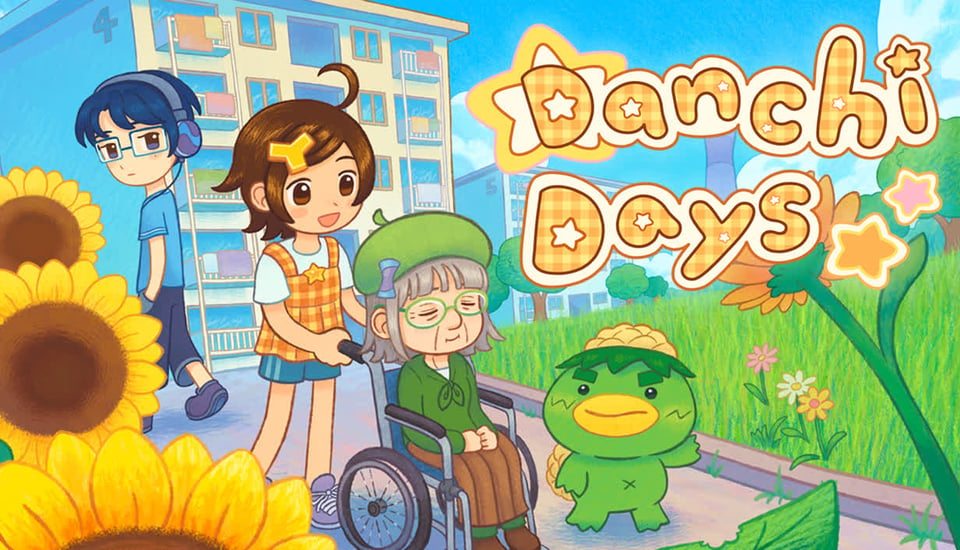
My new, "post-cozy" story-rich slice-of-life game set in 2000s Japan, with a retro internet, and no farming/sim/small business mechanics, Danchi Days has been out for almost a week, and I'm glad to see so many people enjoying it! We've been really thankful so many people have taken their time to write about the game, so I wanted to pick out some highlights from them, as it's always interesting to see how my games spark thoughts in others.
Financial Aside
On a sadder financial note, and not to be ungrateful for each of the ~1400 people who have bought the game, but Danchi Days has actually sold way way below projections that the ~60k wishlists would have suggested, which has been pretty shocking to the team and me and left us sitting with a lot of complex feelings to sort through.
My predictions were around 5,000-6,000 copies in the first week. The reasons are a bit complex (wishlist inflation, cozy gamer purchase intent, ad-driven wishlist conversion rates, the game existing outside of genre bounds, our marketing approach), and NOT as simple as timing, competition, or pricing, so I plan to talk about it in a later post.
However, maybe the low sales is somewhat fitting of the game's status as "post-cozy"... while it certainly resembles cozy games in some way (the intentionally cute aesthetic), very little about the game mechanically or narratively has much to do with cozy games. Perhaps players who wishlisted could pick up on this and are waiting for deeper discounts before trying the game out?
I had some sense there would be a price to pay for making something that's hard to pin down and understand through brief marketing copy / screenshots, but I didn't think the price would be this high, especially not given the wishlist performance which was looking good.
We're gonna try making some videos being clearer on the mechanics, but I think this is just a challenge of designing a game whose appeal/value is harder to capture in words.
In any case, we'd of course deeply appreciate it if any of you to share the game with a friend or two, especially before our launch sale ends on Nov. 12th!
That being said, I think players did pick up on this "post-cozy"-ness of Danchi Days, and I think it's evident in the reviews and response. The critical response from players/writers has been gigantic!
Once again, a huge thanks to the rest of gingham games who went above and beyond on this game. Sandy, with her story and co-direction, mogumu with her incredibly iconic art (especially for the 50+ characters), and Ume and Olivia for the marketing help.
Anyways, without further ado, here's a bunch of thoughtful things people have written about Danchi Days this past week!
Video Reviews
Sophie Vale, for Noisy Pixel (10/10)
- Dementia is a very tough topic to do justice to in any piece of art, but I think Danchi Days tackles how we cope with such dark places with a sense of grace and compassion that I’ve rarely seen.
- As a small indie title, it manages to embody wonder in ways I don’t often see explored quite as masterfully as this. It gets at connecting with others and the world, shows us the ups and downs of those connections, and makes me invested in maintaining them.
Bobsnax (5/5)
- "A labor of love towards life itself"
- "Dozens upon dozens of times that the game absolutely nails this feeling of empathy and understanding wonder."
- I've always disliked when cozy games or just media in general, like in animated films, tend to beat you with a sadness stick. I know real life is hard, and I know it's good and healthy to communicate these things to people of all ages, but sometimes it's giving emotional manipulation. Danchi Days is able to have an entire conversation about the nuanced sadness and reality of having a loved one with dementia without ever leaning into that. It is a miracle. It was the only concern I had going into the game and I'm so relieved that they didn't do that., maybe it's because I've had a lifelong severe disability myself, so I don't really like to linger in that sadness. I appreciate when a story is able to take a levity towards it because that's how I like to live my life.
Ryuji Shiryu, for Final Weapon (4.5/5)
- An intricate game with a charming cast of characters, and a translation that manages to tell their quirks even in other languages.
- Despite the number of neighbors that I've had to invite to the festival, I remember their names and gimmicks fairly well, which say a lot about the care that it took to craft each individual.
- It also hones in on the themes of having complex feelings of seeing your loved one grow older, experiencing memory loss, and developing conditions such as dementia, and the ways that people might try to cope with this reality.
- Having past flashbacks and seeing some of the older folks as their younger counterparts brings so much more understanding to their situation in the present and reflection on what it means to grow older.
Text Reviews
- The game resulted in me wondering aloud about public housing and Alzheimer's within, of course, the limits of the review embargo. I don't believe the game can provide simple solutions to such perennial crises, but it got me talking with my partner and friends. To me, Danchi Days presents a socially grounded approach that should be encouraged further in games and criticism. The different roles we can embody in video games allow us to develop our cultural values and political stances in relation to the spaces we live in. Making any kind of culture work (not just games!) is a fruitful exercise that will continue our personal investigations into the issues that stimulate our minds.
- Danchi Days generally believes in the internet as a tool that can be used for personal expression, growth, and connection with others, keeping that Web 1.0 spirit alive in the same way sites like Neocities and the IndieWeb movement are trying to.
- (The Sense Games) aren’t as kinetic as say, the WarioWare inspired microgames from last year’s Consume Me, but they manage to convey a broad range of actions by distilling them down to some essential component that captures the vibe of the activity. For example, a conversation with motormouth neighbour Chathie has you frantically dashing left and right as she hurls speech bubbles at you from the opposite side of the screen, encouraging you to bump them back at the right time to land a return hit as she moves horizontally herself. In this way, getting a word in edgewise with someone who loves to ramble plays like a desperate duel where you’re constantly looking for an opening to strike. Other sense games are more puzzle-like and meditative, getting you to slow down and recognise something as everyday as hearing the sound of water travelling through the pipes in the apartment building’s walls.
- Danchi Days is a game that pulls from influences outside the typical cozy sphere to create an experience that grounds you in the pleasures of exploring its specific time and place without flattening it into an idyllic, perfect moment. Its sweet, candy coating may be too saccharine for some, but it comes with a dash of melancholy to help it arrive at something more thoughtful and honest than merely a comforting, warm blanket.
- Danchi Days understands that nostalgia is cyclical. We’re experiencing the developers nostalgia for the 00’s through Hoshino, who is herself receiving secondhand nostalgia from the Danchi’s older characters, pining for their own golden age. This recursive contrast highlights how one generation’s “good old days” is another’s grim present.
Ivanir (gametips.gg) 9/10
- Instead of defanging the issues and making an artificially perfect world, Danchi Days’s biggest triumph is that it understands that life is a mixed bag with joy and sadness being both valid. As a result, the story itself ends up much more powerful and thought-provoking as the silliness endears and the harsher moments aren’t taken lightly.
- Danchi Days is an impressive game that understands how a cozy slice-of-life experience can be thought-provoking.
Bri Moore (Blonde Pizza) for Brick Throw
- As I grow older and I really look at the world around me, I get a bit disappointed. Things feel like they’re in complete disrepair, to such a degree I struggle to even begin to construct a plan to put them all back together again. In just my small town there are so many issues, one of the major ones being car accidents. Where I live are three of the most dangerous circuits in the country, leading to some of the more severe accident rates in the country as well. It’s a small town, no more than 26,000 people. Not the smallest town, but not big enough for the type of problems we have here, accidents being only one of many. I notice these problems and I begin to become angry. How did this happen? What about all of the residents that were supposed to care before me? Where were they and why did they let it get so bad? It sends me into a spiral that’s difficult to get out of. I begin to hate the place I live and the people that live around me with a deep passion; a passion born purely out of a desire for change. It is that part of me, that impassioned spirit, that then connects so deeply with the story of Danchi Days.
- Each day holding new adventures, new stories, new ways to interact with the world and its residents was done phenomenally and I couldn’t help but spend days of my time with all of these neighbors, laughing and crying as if they were the residents in my own town.
- There is just so much to this little game. It has so much to say in every moment with every character, every task, and every building.
Adam W for Start Menu
- Danchi Days wants you to hold contradictory ideas together in your head and come to your own conclusions. Is it okay to lie so long as it brings your community together? Is it so bad to grow old? Could the grumpiest critic of danchi life be acting from a place of love, rather than disdain? Everybody has their blind spots, and there are rarely easy answers. This is not a game content to give the player simple, moralising answers to difficult questions.
- As anime director Hideaki Anno once said, “we must put a bit of poison inside our works…particularly for children.” Danchi Days is another work in that great tradition. It’s a place that’s lovely to visit, a place that will die one day. A cherished memory I know that I will one day forget. I hope that the people who need it, find it.
Dari for Indiehellzone
- There’s a large variety of characters in Danchi Days to try to connect with, and they’re all weirdos. We have a young woman that loves maintaining the local water fountains. We have a man that insists on morning exercises, even at the expense of his aging body. We have a woman that likes telling lies if the lies indirectly help people. We have a comedian duo that suck at comedy so much that comfort can be found in the silence they leave behind. They provide simple vignettes of living at the danchi, while characters that get involved in the story like that girl Hoshino is in yuri with provides something more substantial.
- But disabled people are still people regardless of their disability. And in Danchi Days, Hoshino’s grandmother is still a person. She’s left a strong impact on the people around her and even if she can’t actively participate in things anymore, she still lives as a healthy member of society. And in advancing through the game, Hoshino soon realizes that she should respect her grandmother as who she is and value the time they spend together. No matter what happens in life, we just have to roll with the punches and find the mundane joys in life.
- It’s a feel good game with themes and ideas that resonate so much with me. It’s the first cozy game that I clicked with in a long time, and as someone that’s been pretty open about disliking cozy games, please understand that that means a lot. If you want something cozy – but not naively wishful – and something simple and sweet, Danchi Days is just perfect.
Miniike (on backloggd/steam)
- ...perhaps the greatest accomplishment of danchi days is its unbroken tether to Actual Life that never feels even a little intruded upon by any layer of abstraction. there's a real emotional gentleness that's gone into contextualizing every singleminded neighbor within a framework of real psychology that feels well-observed...their big traits merely organizational markers for people who are often entirely recognizable as types of people you have known or could know. its an incredibly sticky cast...even those with less immediately memorable presences have moments that lodge in my brain.
- danchi days breaches a lot of extremely scary, extremely structural political issues in a way that among other things sharply contrasts the "cozy game" scene this is ostensibly being smuggled into. the rise of the "cozy game" aesthetic was in and of itself tied to political moments...the endlessly escalating shepherds tone of How It Feels To Live In This Time, combined with more diverse audiences being introduced to games while also discovering the reactionary cesspoll of Gamer Culture, the whole "movement" is homegrown from a kind of No Bummers attitude. danchi days is as soothing and joyful as the very best of any of these games, and does so partly because its refusal to not contextualize and complicate its own world, in ways that are truthful to reality, helps give it a strong tactility that makes it more involving and soothing, not less. combined with the expected analgesic-adjacent rejections of big numbers and empty progression, the world feels entirely bespoke and impossible to forget.
zalifalcam for The Pixel Post
- (Google translated from french): "What struck me immediately about this title (created by the Japanese developer Sandy Powder) was not so much its aesthetic—which draws on the visual language of the Game Boy Advance era—but rather the originality of its cast. With very few exceptions, few video games feature a cast with such an advanced average age. While Danchi Days does allow you to play as young Hoshino—who is 12 years old—the majority of the characters are retirees, reflecting the actual demographic of danchi (public housing complexes) at the time."
Michael for Just Another Game Review
- The best way I can describe the writing, in hindsight, is that it feels like watching a show that’s targeted towards kids, but recognizes that kids aren’t braindead and have the capacity to tackle more complicated, upsetting topics if you present them right.
Stephanie Richards for Gamer Social Club (7/10)
- It’s cozy while still including a bit of real world difficulties. It’s entirely possible that Danchi Days, hitting so close to home personally, makes me wish it felt more grounded. Yet, there is a lot of charm to this game so if you want something on the shorter and sweeter side, this is one to consider.
Paula Vaynshteyn for The Nerdy Type
- Bringing back the Summer Festival is not going to cure Kimiko’s illness; nothing can, but I don't think that's the point of Danchi Days. It's about the danchi itself, the people within it and their combined histories. It's about the power of keeping those memories and traditions alive and bringing them to a new generation even when those who made them are beginning to forget. It's about hope and community, even in sad times, and of course, finding wonder in the mundane.
- Danchi Days is an incredibly charming game about connecting with neighbors, preparing a festival, and doing kind things for people you love. It’s a joyful and sweet adventure complete with an internet that’s actually more pleasant than not.
Japanese Reviews
I want to shout out some thoughts on the Japanese side of the world for those who read Japanese (or want to use Google Translate.)
- 高橋祐介 for 4gamer
- masa_kei's blog
- Twitter post from writer and critic Ginga Kondo
- 千々岩佑太 for indiegamesjournal.jp
- カワチ (kawachi) for gamespark
- ねりけし (nerikishi) for nostalpix
- 宮本デン for dengeki online
Lastly, a shoutout to all our Steam reviewers so far! Thanks for sharing your thoughts!

Add a comment: