6 Tips For Making Angeline Era-style Exploration
If you've played, you might know that Angeline Era's approach to exploration is very unusual. There's only a very minimal map, about half the levels "Have No Point", and treasures aren't really the main motivation for poking around. I thought I'd spend some time writing about what made the exploration work!
These tips are about my game Angeline Era, which you can play on Steam now! Be sure to subscribe here if you want to read more (or get announcements on my other games!)
Remember, these tips are what works for me, and a lot of players, at least. Remember, you can't please everyone... ha ha!
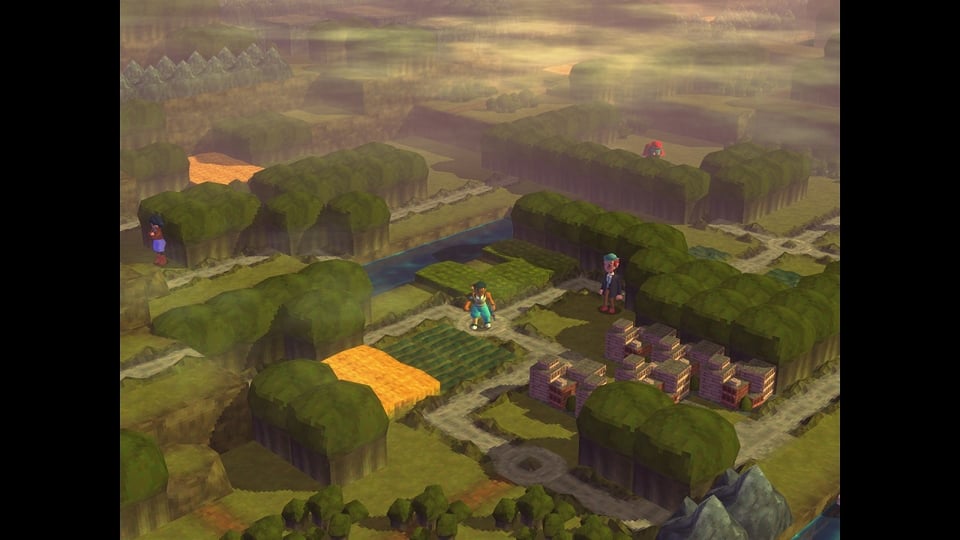
1. Have a personal philosophy of exploration
This is the number one trick to have good exploration in a game, because if you can have a strong personal philosophy of what exploration means to you, and have it not defined through gameplay experiences, then you will have a way of thinking of your real-life experiences and filtering them for what feels like interesting exploration to you.
For me, in the physical world, I like loosely motivated exploration that's open to change in the schedule. Like "oh we haven't walked around _ so let's go there today" or "Let's go see _ and the stuff around it." For me what's memorable about exploration is the random stuff you run into or think of along the way. It's letting a constellation and star system of meaning form in your mind with each new outing/exploration.
I'm not a huge fan of detailedly planning a day out, or e.g. the way that many Japanese parks/museums motivate guests to see everything through the accursed "Stamp Rally" rather than just walking around the damn thing. Likewise, I don't really like it when exploring in games is overly motivated by something that, when found, "checks off" the place in the player's mind as being irrelevant afterwards.
Having a personal philosophy necessarily means taking a stance against other players' views of games. I've read plenty of Angeline Era reviews complaining that levels feel "unfinished", "incomplete", or saying "there's nothing there". Should I change the game by adding more treasures, rewards, NPCs spelling every area out, or giving them checklists to make sure they've had the 100% Angeline Era Experience? I think this would border on ridiculous. And yet, it is kind of the way that "Exploration" tends to be done nowadays. I think it's boring though. Perhaps games are guilty in making people feel like explorers while really just churning through guided content, the player, fearing uncertainty.
2. Organic Appeal vs. Explicit Rewards
By designing levels from a personal philosophy, the appeal becomes more organic, hard-to-define, emerging from all the different decisions and things a player encounters. The opposite is everything being motivated with explicit rewards like "always have treasure" or "always have a lore NPC explain things". In AngEra, often nothing happens and that's still interesting... like life.
Of course AngEra compromises this at times by having explicit rewards in the overworld or levels, but I think it still shows restraint and approaches explicit rewards from a standpoint of trying to create some loose guidance and structure in what's otherwise a very guidance-free game. To compare to my real-life exploration, it's like picking a general place to go to and walk around, rather than tightly scheduling the whole day. Having that place in mind doesn't ruin the outing, rather, it provides a baseline narrative to the outing.
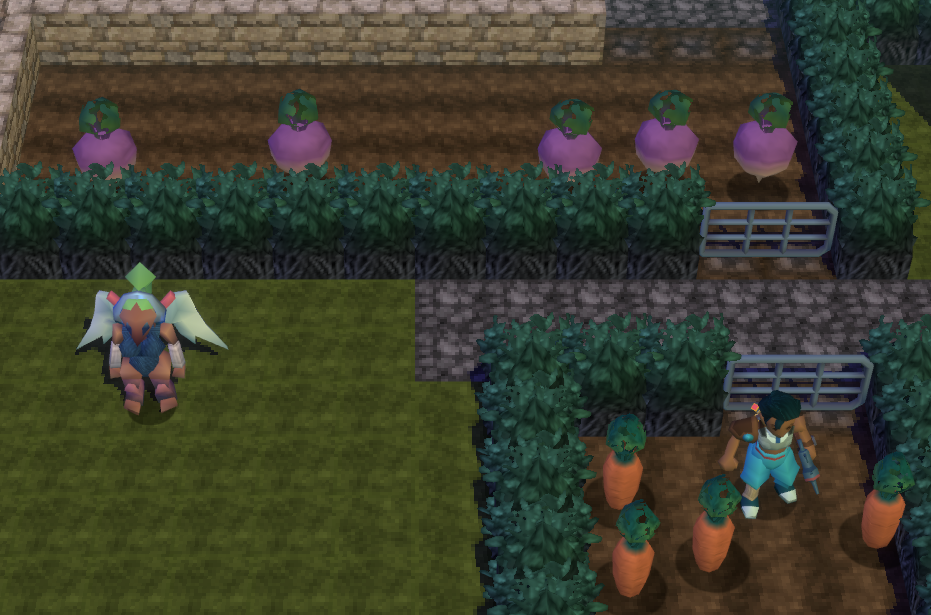
Rather than an AngEra non-scale level being able to be played, 100%'d, and filed away as done, I want to use this kind of organicism to create an effect similar to how film has the Kuleshov effect (a film's meaning being created in film via juxtaposed clips).
The way we do this in Angeline Era is how, by an AngEra non-Scale (i.e. non-action-heavy) level usually not having a clear GOAL, it creates ambiguity that is then a place for player interpretation. Having a single treasure be the endpoint is making the picture feel too clear. Rather than having a single obvious meaning, the meaning emerges from players being aware of multiple smaller, yet authored, things. Maybe a player sees only a few of these, coming away with something slightly different. Of course, this is just an ideal... and you can't really make ideals work practice, they're just good to guide... There are non-scale levels that have more of a 'point' and loose narrative arc to them. But they still aren't framed in a way that feels like "I Did It".
One thing to note is that some people genuinely seem to prefer more structure, or even knowing what the game thinks completely ahead of time. I think today's culture seems to have a desire for something to be framed as "Exploration" but like... has a minimap or item tracker, or neatly has a upgrade material or armor piece or worldbuilding-relevant lore chunk ready for you at every corner.
A note on Search treasures. (food/money) I don't know if people noticed this, but we tried to steer away from level design created for the sole purpose of creating a search treasure. Later in development I made a pass over the levels to switch towards (loosely in Marina's words) "Searches being used to resolve visual dissonance appearing in the levels (e.g. really suspicious looking spots)". I actually removed a lot of intentionally placed Search treasures.
Like, when you make levels you just end up with spots that look suspicious. A tedious person might say "you're hiding coins under every cross of bushes!" but actually that's not super common in the game... in fact, even when you get a 'mediocre' reward isn't it fun that you noticed this odd-looking thing about the level in the same way I did? I think some people just have trouble with having fun or not getting some really conventional reward with each thing you do in the game.
But following too many conventions are just a step down the path to slop.
By having a few search treasures in each level you get people to be aware of and utilize Search more often, which then makes it possible to hide hidden stuff or teleports or whatever, bc people will be looking for them.
3. Creating a sense of Intentionality via Humor
We have a lot of gags with searching and exploring. While these serve a straightforward slapstick function and can lighten the blow of how much you die in the game (it helps that death has a trickster Fae theming), I think there's something more important to these gags, which is that they convey a sense of intentionality to every inch of the game. If a place in the game has a few of these gags or jokes, it also helps convey that we put a lot of thought into the levels, lending the game a different weight compared to games focused on just finding treasure or gear. For a game to feel "alive", it has to have enough of these unpredictable moments that it's implied there's a lot more than is actually designed.
4. Designing based on Story
I feel like it'd be pretty hard to make interesting exploration without a strong story helping guide my decisions. The general structure of Angeline Era's 7 (at the time, 6) Zones was decided early on, so I was able to have that guide my level design decisions. Mountainous or cave levels could likely be put in Dunlow Mountains, farming-focused levels in Laigen Field. Levels with shapes similar to junkyards could be present in Throne's Pall... and so on. Having the story lay some guidelines for decisions gives everything more intentionality. It can be as simple as "this zone of AngEra is more urban" or "this one is more Fae" or "this one is more Angelic" or "this one is more far-out-from civilization".
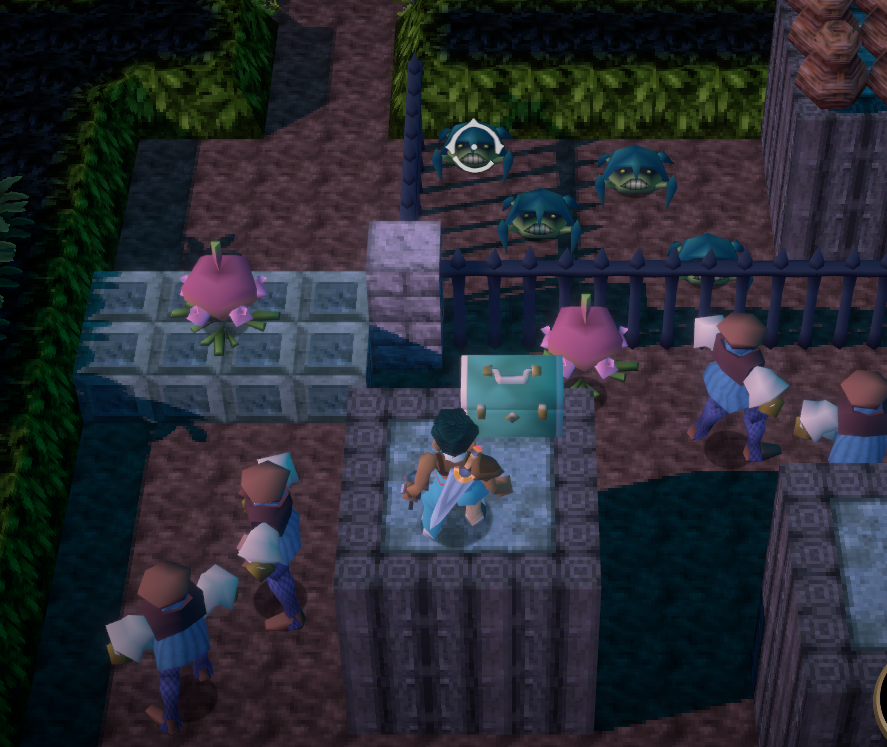
Part of this level (Brigand King's Sanctuary) design direction was influenced by knowing it'd be placed in a late-game area, buried in some woods.
5. Designing based on experience
Everyone has experiences, the deciding factor between making interesting exploration is really whether you have enough design structure in the game to let those experiences breath in a way that's communicative to players!
Let's consider Angeline Era's Ballyspire levels. Do you know them?
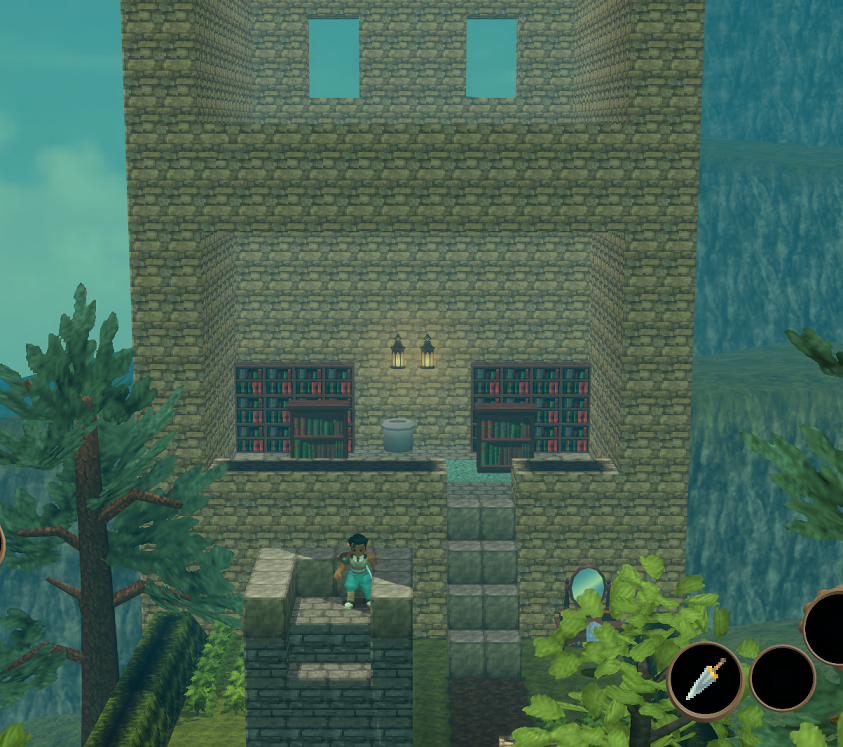
The ideas loosely come from two moments on our Ireland research trip. One, where we went to a Irish round tower and climbed to the top, and unexpectedly were given a certificate of completion upon returning to the bottom. The other comes from a info panel at Ballysaggartmore Towers in Ireland, which (I may be misremembering) had something to do with a dispute between brothers and eventually led to abandoning construction. This is kind of comedic. Eventually down the line I had the idea to make some tower-themed levels, and thought to connect it with these past experiences, and so decided on placing them in Mishal Park, a relatively populated area within Angeline Era. The levels are also intentionally goofy, staying in line with my past Tower Experiences.
Or take the moment when you end up in that level with the logs that kill you and the game over boots you to the title. Having grown up in the flat USA Midwest, it wasn't until in recent years that I walked up into some partly-clear-cut mountain lumber forests in Japan and realized just how noisy mountains could get, or how eerie and quiet they could get.
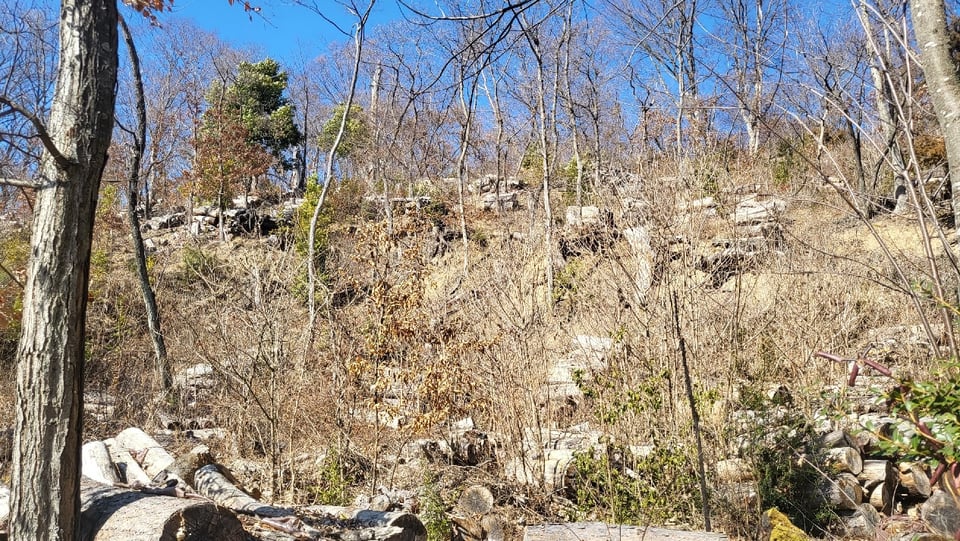
I also read a bit about how ancient Japanese would destroy and clear-cut forests to build temples, which must have meant someone had to spend their lives being good at clearing paths through forests and mountains. Like sailing on the ocean, it has the atmosphere of something that needs to be taken seriously, although nowadays someone like me can only imagine that, having no real need to go into mountains or forests. I've also read folk tales about homes vanishing and appearing in the woods, etc. It's these sorts of ideas that eventually lead to a slightly ominous, one-off gag level like the logs in Angeline Era.
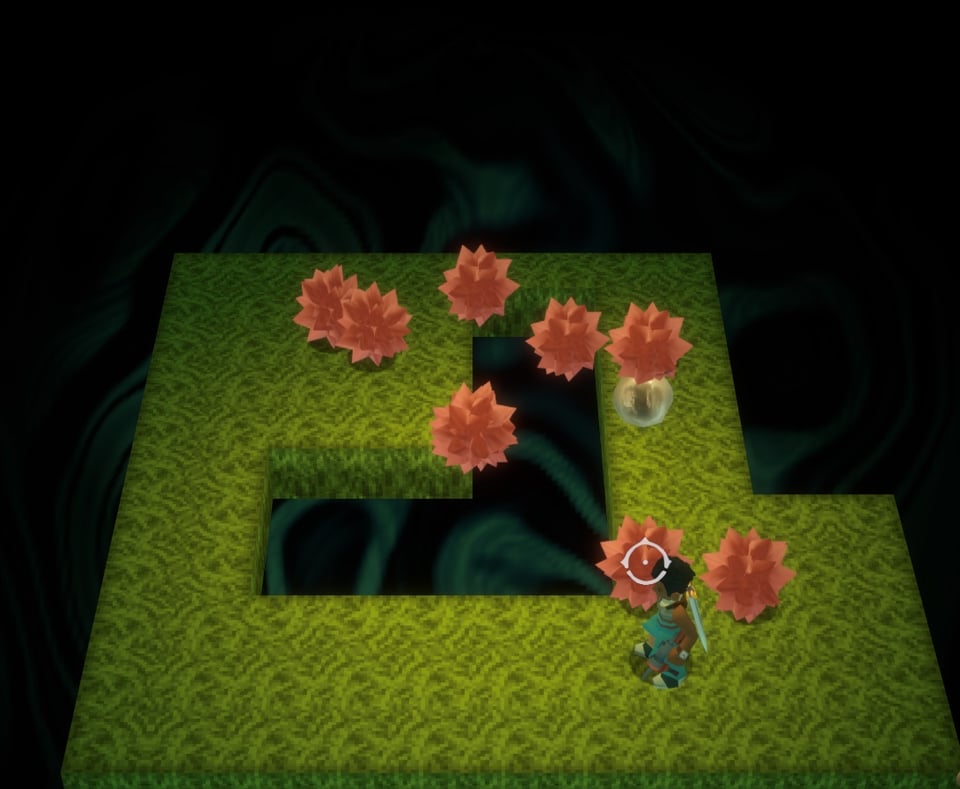
Or "A Lush Load" in Forfeit Growth, primarily made to have an eerie explorative level about being lost in a forest and explore the plant-like Fae more, the laughing bushes were inspired by a part of our Ireland trip where we visited gardens with a lot of bush hedges. You couldn't see past them but childrens' laughter would filter through... lending itself something of a strange aural experience.
Or take Flotsam Coast, in Ring of Muchlach, with the failed bread and breakfast, was from thinking back to staying at the B&Bs in Ireland. Some of the places surprised me for the number of East Asian women married to older Irish Men that were in these towns, some of the women cooking and serving the food at the B&Bs. These were in towns further out from major cities in Ireland, so I wondered what it'd be like living there. It made me imagine something in Era, someone trying to make some kind of coastside B&B but ultimately failing, leaving it to be squatted by Fae.
 And so on. Even the more action-focused levels often had thought put into them in terms of biome and environment, thinking about how I could try to illustrate another corner of Era. Lakeside walks, sprawling limestone, windswept sheep meadows, abandoned woodland estates, boardwalks over swamps and ponds, etc... even though these would end up in an abstracted form (Angeline Era scale level), they're still based in my experience seeing various environments in real life.
6. God is in the One-Offs...
I've written about this in the past in terms of having non-rigid, flexible coding with making games. I think ultimately a lot of gameplay ideas stemming from real life or narratives tend not to be neatly expressible within a perfect coding system. Stuff like, "make spiders jump out of the chest!" or "make this chest trigger an alarm" or "make the snipers destroy this chest" or "make the snipers in this level shoot really fast" or "make this search point break a window and spawn an NPC" in Angeline Era, were one-offs hacked into code in as unintrusive way as possible. I mean, the Cutscene System I created for Angeline Era/Danchi Days has a "One Off" command which itself has as many commands as regular commands (like "Show Text" or "Play Animation) lol.
I think being too programming-minded can lead to wanting to make really elegant coding systems, but the fact is that games don't need to be too robust in that way... they just need to not have bugs for 99.5% of users. Maybe this isn't needed for making cool exploration, but it definitely is for Angeline Era!
Real life is hard to define in clean rules... surprising stuff happens all the time... while walking, I saw a gigantic turtle being pushed in a wagon... a couple was fishing a baby bird out of a bush... college students were cheering me on thinking I was going to take their entrance exam. Ha ha!
Thanks for reading! These tips were about my game Angeline Era, which you can play on Steam now! Be sure to subscribe here if you want to read more (or get announcements on my other games!)
-
Nice read. Thank you for sharing.
I wonder if when translating experience into games, you think deliberately about past experiences to add, or it's just linked in the moment either on the spot or during game making.
-
↳ In reply to ColdEmber

Thanks for reading! It's a mix of both, and not always easy to consciously know when it's happening. In terms of level design examples I gave here, it's possible there were other things, and the stuff I explained is just what happened to come to mind the most when writing this post.
When designing the game, I think for more broad core decisions we try to think about what's important to us, although that's not always the case... sometimes it's just what we've been into the past three months that goes on to form large pillars of certain games
-
Hi, thanks for writing these. Super interesting! I live near Ballysaggartmore Towers! (Everyone just calls the area Ballysaggart Towers). The story most locals say is the owner had the towers build for for his wife (who was jealous of what his brother had). He asked his header gardener to make them, who had no experience what so ever in architect and he just tried his best.
The family were extremely disliked as they evicted many families during the famine.

Add a comment: