
An occasional series of essays by Matt Carmichael: now in paperback Kindle, and e-reader versions! See more at meetingmyheroes.com.
On Journalism and journalists
I’ll confess, I didn’t know who James Fallows was before he took the stage at my journalism school graduation. I mean, maybe I Googled him… No. Wait, Google didn’t exist yet.
In fairness, a lot was going on for me at the time. Did I mention I was graduating? That was one of those milestones that caused a lot of consternation and soul searching. A massive chapter in my life, childhood, was ending. The sub-chapter, college, was too. Friends would scatter, responsibilities would fire up (rent!) and a whole new phase would begin.
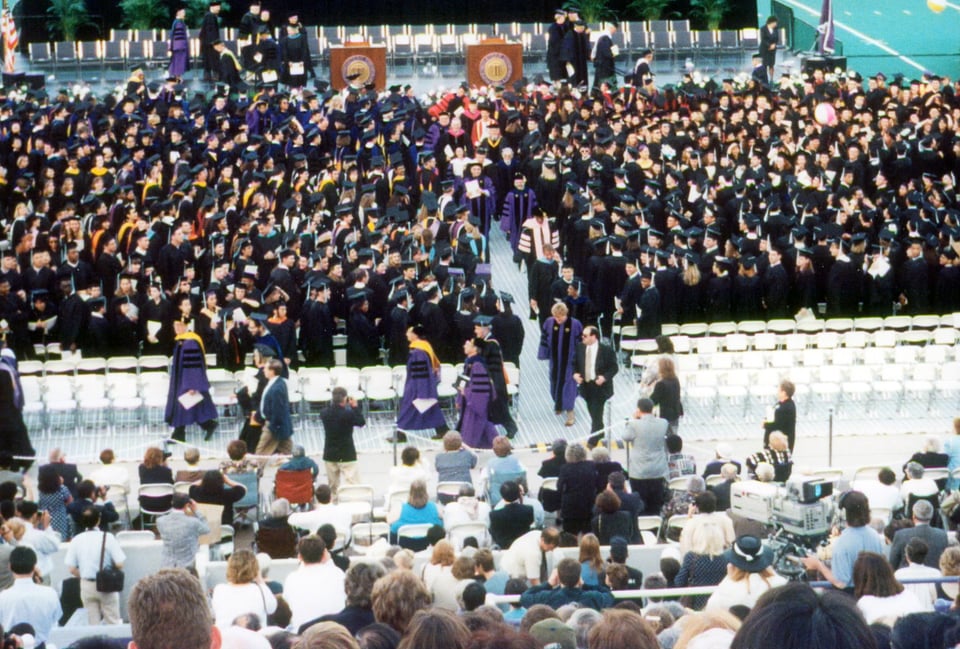
I had worked hard in school to position myself to at least have a good job on the other end (see: Meeting Steve Yahn). So I had that covered. That was a massive relief. I would start in July, giving myself a couple of weeks to recover from two major traumas, graduation itself and moving out of Willard and into a temporary apartment in Evanston while Jack and I looked for something more permanent.
I had two pretty solid graduation speakers. The main commencement was Robert Redford who basically apologized for his generation leaving a huge mess for mine to clean up. Sadly, they weren’t done yet and Gen-X is still trying to right the ship as they continue trying to sink it.
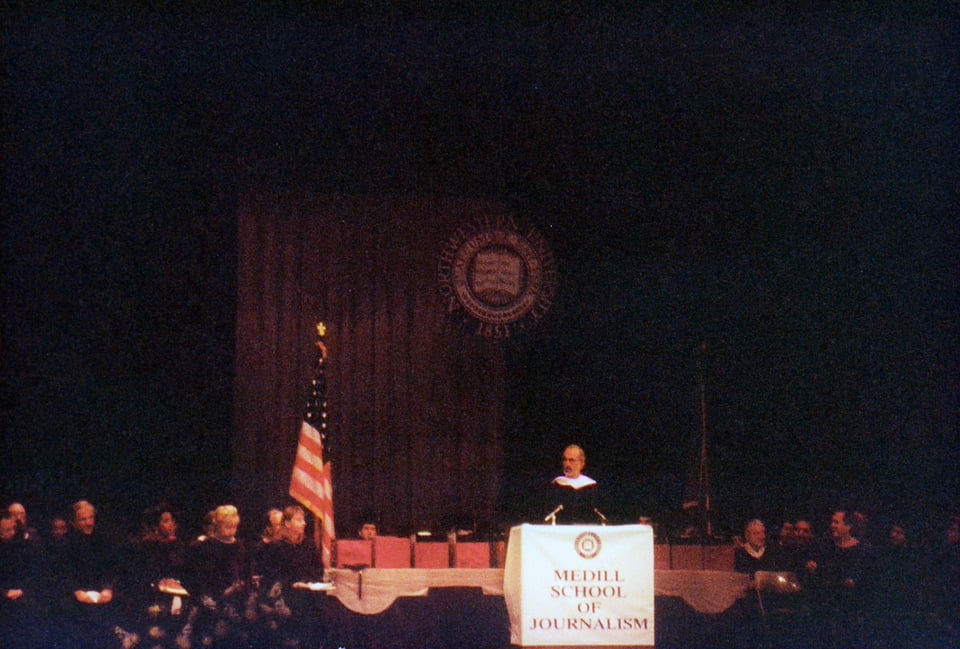
My Medill graduation was even more on point. Fallows has forever been at the Atlantic. He welcomed us into “the company of the world's journalists. On-duty journalists; in-training journalists; potential and wanna-be journalists; virtual and cyber journalists; and people who, no matter how they ultimately earn their living, still feel that because of the training they received here and at similar institutions, they are journalists inside.”
He spoke about role of journalists and the challenges they faced then. “Polls suggest that Americans are now happier to see a crop of new lawyers graduate than receive more of us, a thought to sober us all,” he said.
He noted that there are many paths to journalism. I’ve laid out mine in this newsletter and book. He laid out his in the talk.
Mostly he talked about how important our profession is and would be and how we need to overcome the challenges.
His words resonated. I’d been thinking a lot about those challenges and the amazing opportunities the Internet created. I had pushed the journalism school to pivot to training us for this new medium and all it entailed. Eventually they would have some classes (Alison Scholly taught one), and I would also make my own as an independent study under Abe Peck (another hero). I was compared to Nikita Khrushchev, banging my shoe on the table (this would not be the last time I was called a shoe-banger.)
Fallows said that, because journalism cannot be regulated or steered by outsiders, our craft depends more than any other on constant self-examination by those inside. Through your life as professionals you will -- or should -- be continually involved in scrutinizing and improving what we do.”
He might have had some inkling but that self-examination has been a primary occupation for many in my profession. And decades later many more problems have cropped up, many more outsiders have tried and even succeeded in steering our craft and not nearly enough solutions have been found.
I was perhaps part of the problem, starting my career with the naïve feeling that was popular at the time that “information wants to be free” before I fully understand the real costs of creating that information to begin with. In fairness, publishing was fairly flush at the time and “just sell a sponsor against that” quickly was a perfectly good funding model still for all kinds of wild projects.
Fallows said that one criticism of journalism is that it “often emphasized what is urgent rather than what is important.” He challenged us then to make our daily goal, “making the important, interesting.”
The speech so impressed me and my family that attended that my grandfather’s wife, Jane, went to one of Evanston’s many bookstores, and gifted me a copy of Fallow’s book, “Breaking The News: How the Media Undermine American Democracy.”
(I just noticed his previous book had been subtitled “Making America Great Again,” in which he, “recommends utilization of the vast skills and resources of immigrants to the United States.” Huh.)
I’ve often thought about Fallows and that speech and the book, which I would read on my early el commutes to Ad Age’s office on Rush St. I still have the email from Medill’s Dean’s office which was kind enough to send me a copy of the text, which is also now posted on the Atlantic’s site.
Before that commute began, however, I had not two but three traumas. Shortly after my graduation, my grandfather had a heart attack and died suddenly. My family were at the cottage in Holland. There was a tree that served as the base of the hammock I frequented. We’d lost the tree years previous but I’d talked them into saving a 7-foot stump to keep the hammock going. It had finally also rotted away and, as I recall, it collapsed dumping me on the ground in the process. My dad and I went into town to get some concrete and a pole and when we returned my mom met us outside and said, “My dad’s gone.”
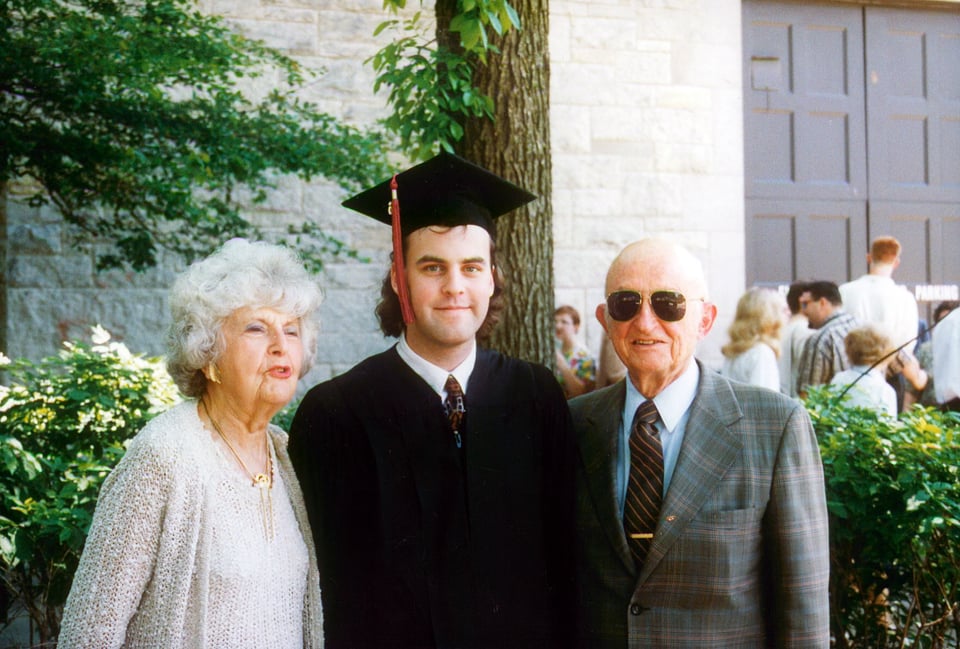
I stayed at the cottage unable to face it, I guess, while they headed back home. That was short sighted because then I was just alone, which wasn’t a good idea either. I racked up quite a long distance bill that day, I’m sure, which my grandfather would no longer be able to chastise me about as he did the family accounting for the place. I appreciate all the friends who answered their phones that day, and every day.
My grandfather, my last living grandparent, was affectionally called “B” because my sister would play Peas Porridge Hot with him when she was young. A child of the depression, he got his CPA because he figured that the world would always need accountants. That was true, even during the periods where he’d help companies reorganize and refinance and then they would inevitably it seemed reorg him out of his role post-transition. He wrote resumes on a typewriter on the massive industrial desk in his basement. Many, many resumes. But he did well, and provided well, and wanted his eldest grandson to get an MBA and go into business. That said he was proud and excited to see me graduate and head into the workforce.
I think about him and his words often, too.
I finally got a chance to meet Fallows two thirds of the way between then and now. I was at Livability and doing a lot of work with GIS and a new product ESRI had called Story Maps. I went out to their user conference in San Diego to speak, present, tape a podcast, and learn. James Fallows was also there and was working on his book, “Our Towns,” about all of the great stories in America’s small towns. Since that was the focus of Livability, too, we had some things to talk about. Fallows was old friends with ESRI’s founder, Jack Dangermond and I got my friends at ESRI to introduce us. Or maybe I just made that happen, as I do. I picked up “Our Towns,” at Reader’s World, the bookstore in Holland, one of Livability’s Best Places to Live, and the town where cottage was. It’s a place I’d been countless times with my grandfather and the rest of my family, which seems fitting.
I told Fallows that his speech stayed with me and we chatted a few times over the course of the conference. And of course, I have and continue to read his important work in the Atlantic… with interest.
It’s a great prompt, that “make the important interesting.” I’d add also making it accessible, and personal, although those are maybe just tools of interesting. It’s certainly something I’ve tried to do at least most days. I suppose I began as “cyber journalist.” Now, I am still journalists inside.
And it was remarkable for me, years after graduation, to run into James Fallows. Not by any means a peer, but at least as a fellow member of this all-important collective known as journalists.
Meeting my heroes is an occasional series of essays by Matt Carmichael: now in paperback Kindle, and e-reader versions! See more at meetingmyheroes.com.
You just read issue #80 of Meeting my Heroes. You can also browse the full archives of this newsletter.