The Piety of a Homecomer
A dispatch from a visit to the childhood home of Wright Morris, Nebraska novelist
Dear friends,
Here's a short dispatch from some recent travel, a part of my work in progress. I hope you enjoy.
Wright Morris, born in Central City, Nebraska, in 1910, was one of those writers whose work enjoyed a contemporary reputation that did not much outlast his life. He won seemingly every literary award he could during his lifetime, including multiple National Book Awards and Guggenheim Fellowships. But hardly anyone seems to read him today. I discovered his work because I found a long line of his novels on my college library's discard shelf. A writer who was once a necessity for the collection had become so no longer.
Although Morris was a religious skeptic and an heir of the counterculture, I would term him a pious writer. Piety, after all, can designate not just religious faith but respect for parents and homeland, devotion to one's history. His novels are always returning to Nebraska, though Morris himself seems to have seldom done so after his father moved him out of state in 1924.
Morris's father was an unstable character and a womanizer who drifted from business to business and relationship to relationship. His mother died when he was only six days old. Perhaps this parental instability in part accounts for why Morris's fiction so frequently goes home. Book after book recounts journeys back to a fictionalized version of Central City, which he calls by its starker earlier name, Lone Tree. The Home Place depicts a young couple returning to Nebraska looking for more space to live in after trying to raise two young children in New York City; Ceremony in Lone Tree examines the convergence of an extended family on the home of their dying patriarch; Fire Sermon tells the story of a man and boy traveling back to Nebraska in search of long-lost relatives; I could go on.
Like Morris, I am a Nebraska native always returning to the state in imagination. But recently I had occasion to return in the flesh, and to make the drive to the rural center of the state to find what traces Morris's piety had left upon the place.
Morris depicts Nebraska especially in terms of light and sky. In a memoir of his early life, Will's Boy, he characterizes the place in this way: ""My childhood impressions were not of the big sky, and the endless vistas, but of the blaze of light where the trees ended." The memoir centers around lamplight and shadow, devotion and profanation, "real losses and imaginary gains." He reveals himself most frankly when he notes: "Much of my life would be spent in an effort to recover the losses I never knew, realized or felt, the past that shaped, yet continued to elude me."
In The Home Place Morris captures elevation as an essential architectural feature of the Plains, especially in the vast grain elevators that dominate the skyline of every town. He describes the elevators as monuments, "great plains monoliths" required by the vastness of the land and the sky:
There's too much sky out here...too much horizontal, too many lines without stops, so that the exclamation, the perpendicular, had to come. Anyone who was born and raised on the plains knows that the high false front on the Feed Store, and the white water tower, are not a question of vanity. It's a problem of being. Of knowing you are there. On a good day, with a slanting sun, a man can walk to the edge of his town and see the light on the next town, ten miles away. In a sea of corn, that flash of light is like a sail. It reminds a man the place is still inhabited.
Central City today still pays tribute, albeit unknowingly, to this insight of Morris's. The primary approach to town, on Highway 30 heading northeast from Grand Island, is visually dominated by the flanking presences of a massive grain elevator and a white water tower. Some things on the plains haven't changed much since Morris wrote The Home Place in 1948.
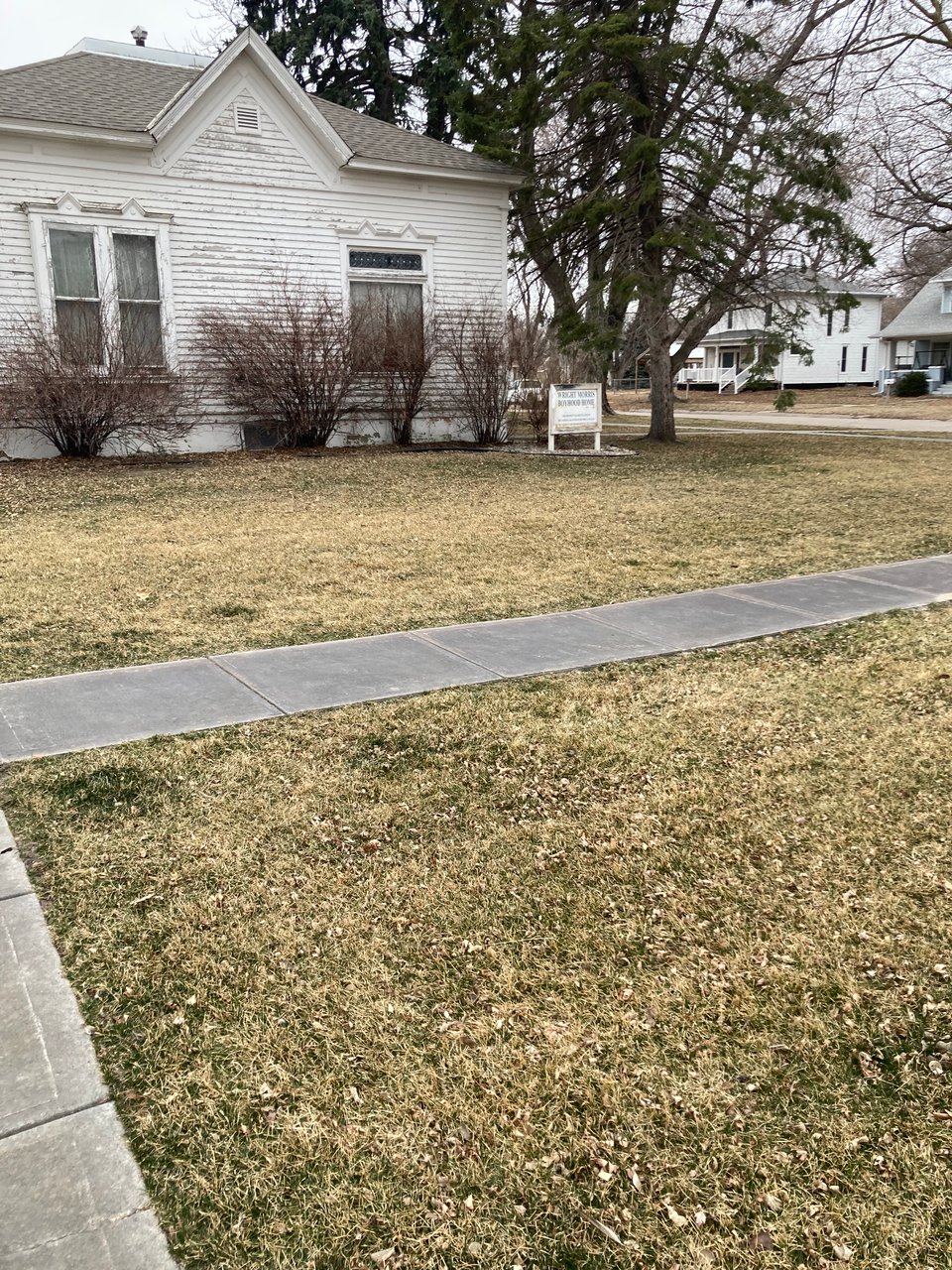
A local group called the Lone Tree Literary Society preserves Wright Morris's boyhood home close to downtown. It is a modest story-and-a-half white house befitting the family's financial struggles, the exterior paint beginning to peel when I visited, outdone in grandeur by many grand Victorians flanking block after block close to downtown. It is not regularly open for visitors, but a peek through the windows suggested the interior has been better preserved than the outside. It is a place of lights and shadows, not unlike the town itself as Morris depicts it.
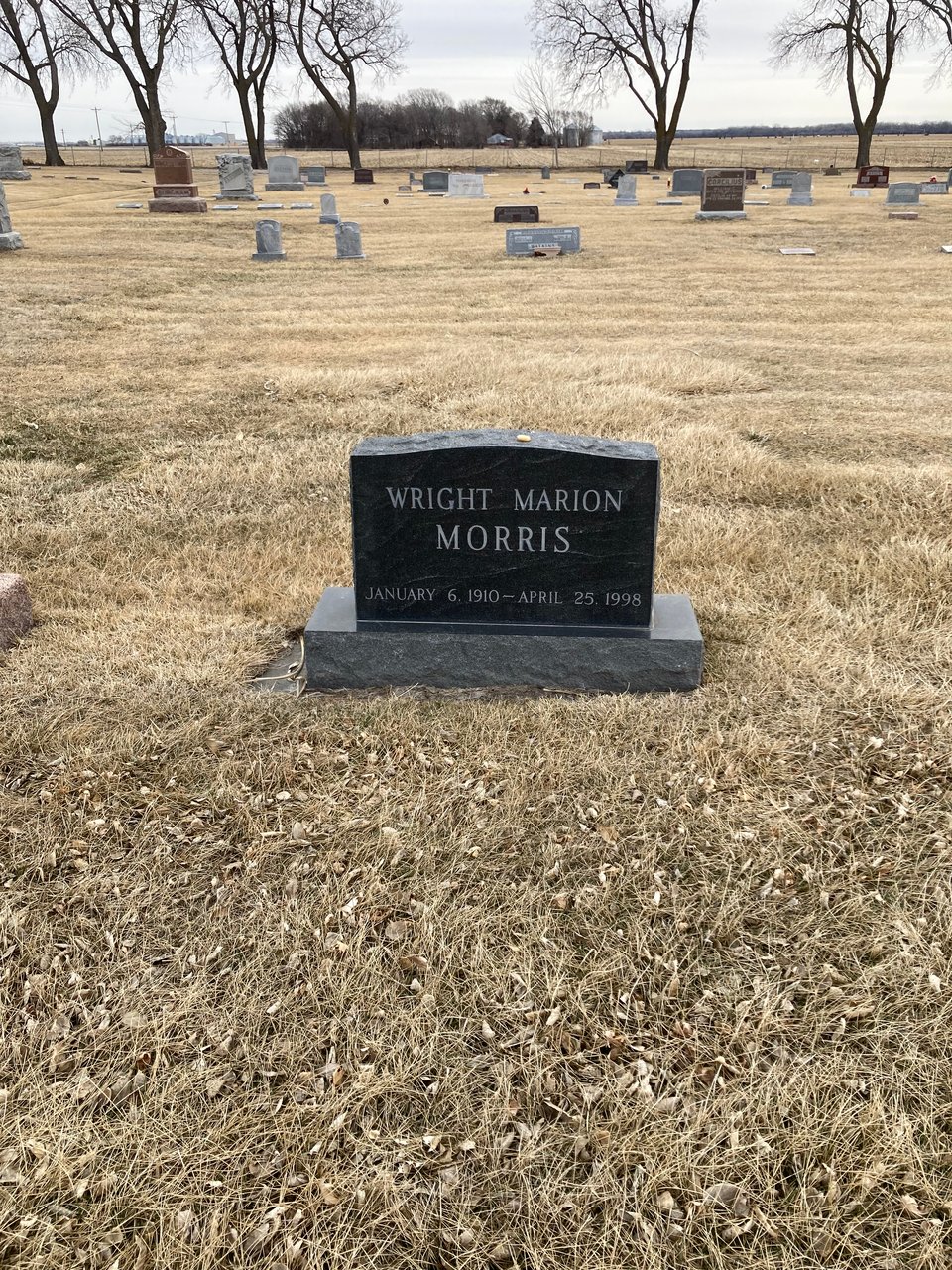
Far more important to me was witnessing Morris's grave, ten miles down the road in the tiny hamlet of Chapman, where Morris's parents met. His mother and an older brother who lived only a few days were both buried here. Both markers appear newer than their 1904 and 1910 death dates, but I do not know whether Morris himself or some later well-wisher placed the stones. I am moved to contemplate Morris himself returning here in death, though he lived his later life in California and died there in 1998. His headstone contains no mention of his accomplishments, just a simple black marker with his name and dates. At the end of his life, Morris was a returner to the Nebraska that marked him briefly but inescapably. But there remains a tinge of fracture here. Neither Morris's father nor his wife find their final resting places in Chapman.
If you want to read some Morris, I recommend getting a copy of The Home Place, which is short and contains a selection of Morris's evocative photographs.
Thanks for reading—
Matt