Some Matters of Opinion
Place-based education, ditching your smartphone isn't enough, and some new/old writing about Nebraska
I don’t usually write “here are some links” sorts of essays/posts, but I have some new writing at another publication to share as well as some small comments on a few outside essays I have read recently. Accordingly, here’s a little bit about some new/old writing, and some strong opinions about technology, education, and place.
New/Old Writing about Nebraska
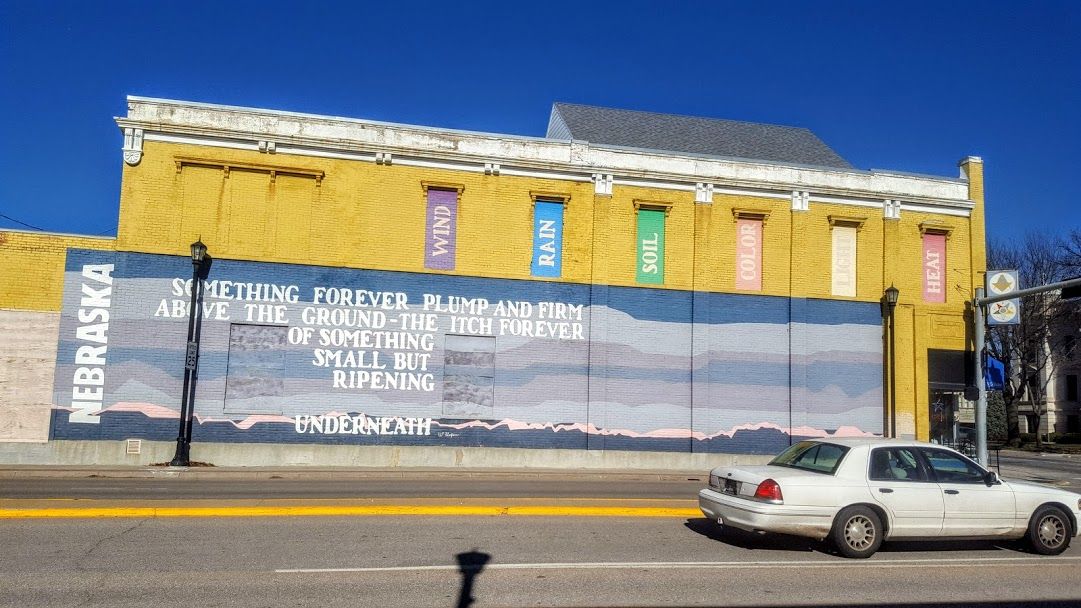
I started writing about my home state of Nebraska almost the first moment I began writing seriously at all, but it has taken a long time for that work to mature to the point that I could share it with others. I hold the subject so dear that it takes me a long time to make sure I have gotten it right, and my thoughts and feelings about it are so many that disentangling them to make a coherent essay has never been simple.
The first piece of real writing I ever published about Nebraska ran in a journal called Big Muddy, which subsequently closed. So I am pleased that the folks from a new, place-focused literary journal called Cereal City Review were interested in republishing it. It went live on their site a few days ago. Here’s a sample:
We would have been on the slow-moving river, at this point, for several hours. We would have climbed a 50-foot eroded dirt cliff to stand looking down on the river from amidst a cornfield, and poked around several nameless sandbars. We would have hunted unsuccessfully for crawfish, and found at least one landowner’s strange experiment in we-knew-not-what: a PVC pipe jutting out of a bank or a collection of milk jugs hanging in some trees. We would have finished our sandwiches, our Doritos, and most of our water. We would have come up on the cluster of mobile homes by the river, navigating the fishing lines many of the residents left continually stretching from the bank. We would have noted the heavier tree cover along the banks of the river, cottonwoods and swamp willows crowding against the sides of the Blue with a thirst as fierce as farmhands at the bar after mowing hay. We would have been sunburnt, restless, smelly, and tired of having dirty water on our faces. And then:
A bend in the river, and the trees receding to create a clear, open expanse. The river, wider here than before. The dam fifty yards ahead, dark concrete with eighty years of wear showing in the pebbles emerging erratically from its mass, the river pooling against its back. A wholly modern and functional cement bridge capping it, its freedom from graffiti showing it to be a place neglected even by teenagers. Logs, brush, and maybe an old tire resting against the dam in greater or lesser profusion depending on the time of year and the flood state. A crow or a few bullfrogs.
Let’s be honest: this is not a remarkable scene. It has little to commend it to our attention, little to distinguish it from countless other minor waterways in the lower Midwest. And yet it lies upon my memory with a glory and a wonder. I cannot explain this.
You can read the whole thing here.
This essay is part of a longer project I will be working on during my upcoming sabbatical in spring 2026. So expect to hear more about it soon.
The Luddite Revolution Can’t Stop with Ditching Your Smartphone
Alan Jacobs’ blog directed me to a post titled with the joyful cry “the Luddite renaissance is here” offered by tech founder Mark Hurst:
The tech media is largely failing to tell this story, so I’ll mark the moment: fall 2025 is when the new Luddite movement really began to accelerate.
For the first time in a long time, there is palpable energy – positive energy – in tech. It’s directed away from the Big Tech companies, and toward alternative platforms and mindsets. Many people are trying to opt out of Big Tech altogether.
I’m happy to see this report and hope it only continues. I would simply note that it’s crucial that tech resistance is not just about buying a different product but embracing a different set of values. I hope that the young people leading the Luddite renaissance don’t stop with buying a dumbphone (as good a step as that is), but invest themselves in building up the goods that our devices compromise: embodied community, embrace of our human limits, delight in the stuff of the world. This is not just a “development in tech” (and Hurst acknowledges this), but a resistance to degraded forms of life.
As my sabbatical approaches, I’m looking for ways to more fully embrace my already substantial Ludditism. I don’t know if I can manage to go offline altogether for very long, but the thought is tempting.
Place-based Higher Education Does Exist
Finally, I appreciated Nina Tarpley’s critique of the placelessness of higher education at FPR:
For those who value limits and place, people and communities, tradition and things divine, not only are there few viable options within the higher education landscape today, but the very educational institutions themselves actively work against the health of communities and defy the realities of limits and locality.
As a professor at an institution of higher education, I feel no sense of defensiveness in reading this critique. I agree with her entirely.
I will note, however, that in the southwest corner of Missouri, there is a college that is specifically chartered to serve its narrow geographic region; that focuses largely upon the values and interests of that region rather than global or even national concerns; that considers its regional identity a mark of pride rather than an impediment to its growth.
And working at that college, there’s an English professor who regularly says to his students: “It’s good to be here,” and invites them to consider how that claim might bear on their lives after college too. Many of those students have big, far-off ambitions, but many of them also return home, and they tell him about it, and he encourages them in their connection to their place. So there are at least some opportunities in higher education to work for the health of communities and the realities of limits and locality.
I’m just saying.