Seventeen Theses on Writing and Place
Reflections on the relationship between literature, place, and the modern world
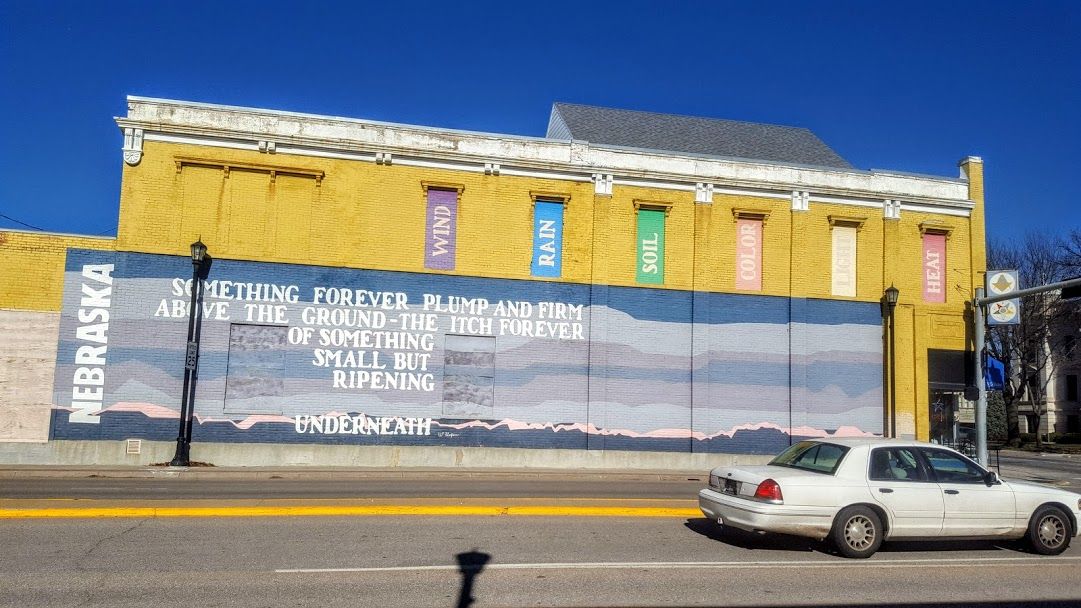
In the spring 2025 semester, I had the opportunity to teach a special topics class focused on place writing. Nine thoughtful students and I read four books together: Annie Dillard’s Pilgrim at Tinker Creek, James Rebanks’ The Shepherd’s Life, William Least Heat-Moon’s PrairyErth: A Deep Map, and Ernest Gaines’ A Gathering of Old Men. In addition to the reading, the class revolved around four writing processes that I contended are the necessary steps in responsibly writing about place: seeing, excavating, wayfaring, and belonging.
As my closing reflection on the class, I shared with the students seventeen “theses for disputation” on place, writing, and place writing. I am indebted especially for these thoughts to Robert Farrar Capon, Walker Percy, Wendell Berry, and Simone Weil, among others. I share these contentions here not because I think I have arrived at some new profundity, but because I hope that they may provide some new spur for thought.
Theses
The Kingdom of God is not an abstraction—not a non-place—but a placier place than any we have yet known.
God makes real things and calls them good. Our love for concepts over the stuff of the world is not a sign of our spiritual nature, but our fear and weakness.
Insofar as every place is part of God's creation, it deserves to be loved and paid attention to.
Places can fail people, but far more frequently the failure goes the other way around. When a place fails to meet our needs, it is often because someone first failed to concern themselves with the needs of the place.
Belonging to a place is not the sole consideration we must make in composing a good life, but too frequently it is not a consideration at all.
Belonging to a place matters in the same way that a depth of relationship matters. Those who maintain superficial relationships to places and people lose the opportunity to know and love deeply.
Long-distance communication and travel have changed our relationship to place. We too readily forget that much of Scripture and the literary tradition concern themselves with people whose whole world was smaller than the distance we can drive in a day.
Because belonging to place has been the historical norm, much literature does not consciously concern itself with that belonging. We think much about place today because we are much displaced.
All good writing is particular. Attention to place is a species of the close attention to everything (people, art, food, ideas, language, emotion) that makes for good writing generally.
Paying attention to something is an act of self-denial that leads to love.
Because all good writing depends upon that self-denying attention, all good writing is an expression of love.
Any serious act of attention requires us to get ourselves out of the way. We especially benefit from paying attention to those things that least cater to our own self-centeredness.
Unfamiliar, unexpected, outdoor, and wild places inherently de-center us. That is why they are so valuable to write about.
The process of seeing, excavating, wayfaring, and belonging is the process of looking at a thing with love in order to know it deeply. It is therefore a process proper to any form of writing.
The difference isn't between place writing and non-place writing, but between writing that knows it arises from a particular place and writing that doesn't.
Good writing does not ask of a place what it can offer the writer—it does not make the place a mere subject or setting for the writer's exploitation—but what the writer can offer the place.
The writer who concerns herself with loving attention to place will also be a person who concerns herself with a life of belonging. That is to say, she will be a person seeking the Kingdom of God in the real places where she lives.