29.4499° N, 104.1894° W
Welcome to the new iteration of my newsletter—Downstream.
It’s been nearly four years since my last newsletter. I moved to El Paso, started a new job, quit that one for another, wrote hundreds of articles and tens of thousands of words, traveled all over Texas and the Southwest.
In the meantime, TinyLetter folded. I chose Buttonhole (hat tip to Lizzie Wade!) as a new home for my personal writing. I drafted newsletters and never sent them.
Now here we are.
Why Downstream?
This will be a semi-regular newsletter about my work and where my reporting and interests lead me. You don’t have to pay for it.
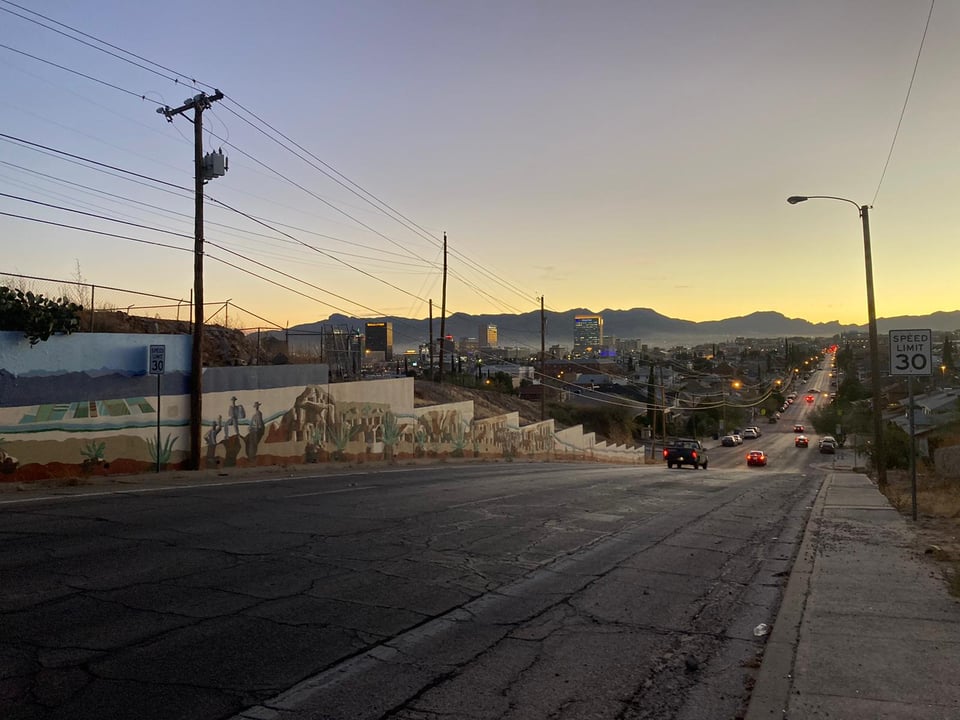
Water is the defining factor of life in El Paso. There isn’t much of it. On average we get nine inches of rain a year. But deep in a drought, I have yet to see an “average” year since I moved here in 2021. A river runs through town, the Rio Grande. It’s dry this time of year, the faucet of Elephant Butte turned off.
We’re downstream of Colorado and New Mexico on the Rio Grande. We’re upstream of the rest of Texas, Chihuahua, Nuevo León, Coahuila and Tamaulipas. We’re in the middle.
An environmental ethic requires thinking not just about yourself and your immediate community, but everyone and everything downstream. That too is your community. This interconnected-ness feels part of living in El Paso; we’re sandwiched between two countries and three states after all.
My day job is reporting on Texas. But I as an environmental reporter the more logical beat would be my bioregion (the Chihuahuan Desert) or my watershed (the Rio Grande/Río Bravo). I want to tell stories about what’s upstream of me and what’s downstream.

El Polvo
I am writing from downstream. I am passing through El Polvo, Texas. The dust. What a name. It’s a speck of a town on the banks of the Rio Grande, some 15 miles from Presidio.
I was going to run a trail race in Big Bend Ranch State Park. But a nagging pain in my ankle hasn’t gone away. For the first time I can remember I’m a “DNS” – Did Not Start.
I drove from El Paso still with the hope I could race. I detoured through the state park, much less visited than the national park next-door. I turned off the state highway onto a gravel road leading into the heart of the park. Cell service quickly dropped off.
I listened to a Mexican radio wafting over from Ojinaga. The hosts were reading the day’s news. They discussed the tunnel recently discovered between El Paso and Juárez. They mentioned the march in DC in anticipation of Trump’s inauguration. A PSA warned people not to cross the border illegally.
I’m a stone’s throw from Mexico. The radio frequencies are a reminder. Whenever I miss living in Mexico, I can turn on the radio in El Paso and listen to my favorite Juárez station, Órbita. I can close my eyes while listening to rock en español and pretend I’m back in La Doctores.
Here in Presidio County the Rio Grande is revived with flows from the Río Conchos. The water filling the river drops out of the Sierra Tarahumara all the way to the Gulf of Mexico (Gulf of America?).
This place has the longest history of agriculture in North America – la Junta de los Ríos. But today agriculture struggles. Dams capture the water that once flowed freely. With northern Mexico dripped by drought – and thirsty pecan orchards on both sides of the border – there isn’t enough water to go around. The stand of cottonwoods I hike to, Agua Adentro, looks desperately parched. There’s no agua.
I’ve been reading a lot about the history of the international border – the complicated business of turning a river that shifted each year with the springtime floods into a fixed boundary. Small communities like this were symbiotic with their neighbors on the south side of the river. But gradually those ties were cut. “Bancos” that formed in the river were determined to be US or Mexican territory. The wide floodplain narrowed. Informal crossings of the river, whether by ferry or fording, were forbidden.
There’s a moving documentary, La Bi-vencia, about a town in Chihuahua that was gradually abandoned as border enforcement post-9/11 cut off their connection to Texas. Far from any settlements in Mexico, families had depended on crossing into Texas for groceries and tourists crossing from Big Bend. They all eventually moved away and now only come back for an annual reunion.

The day of the race I drive down Highway 170 toward Terlingua. I pull over at every opportunity to take in the panoramic views of the Rio Grande carving through the canyons. At one stop, I walk up to the river. It’s less than 10 feet across and only a foot or two deep. Signs warn of steep fines for crossing into Mexico. Not that it’s tempting to cross here. To reach this point on foot you would first have to survive miles and miles of exposed desert on either side. I look up at the white cliffs in Mexico then head back to my car.
Later I bask in the afternoon sunlight, wearing a parka to ward off the cold. A motor hums in the background over the steady thrum of a conjunto on a distant radio. I’m reminded of trips to rural Mexico, when I spent days without cell service and settled into the rhythm of life in the pueblo. I could be in Tonahuixtla, Puebla or Ixtepeji, Oaxaca. But I’m in that in-between that defines the border.
I am writing the day before the inauguration. I am writing as this region will once again be thrust into the spotlight.
Night falls and all is quiet. The sky is dark. Tomorrow the sun will rise over the río, as it has for generations and generations. Two sides of one whole.

Now a message from our sponsors.
Just kidding. But if you want to read my reporting that touches on themes in this newsletter, here are some starting points:
Why the Rio Grande in West Texas is dry and what we can do about it
What’s going on with the Río Conchos
How New Mexico and Texas stopped fighting over the Rio Grande and are now fighting the feds
To read more about the history of the river I highly recommend Reining in the Rio Grande. Tigua environmental scientist Andrea Everett published a beautiful essay about last year in Borderlore. There is also a documentary about traveling the length of the river in Texas. And another about rafting the Lower Canyons.