No AI experience? Make some.
Last week, I screened my talk/movie, “Good Job: The Movie Version” as part of the Button afterparty (and I’m screening it again this Friday at 9am PT!)
One thing I love about Button attendees, they ask damn good questions. They’re so good, that I want to bring them to you, dear reader, and answer them the best I can. I’ll be bringing some more of their questions to this space in the next few weeks.
Let’s start with what Kate asked: Every job posting I see is asking for AI experience. If you were laid off before your team started using AI, it's a bad situation. Do you have any advice on how to pick up proven AI experience that's relevant to UX writing/content design?
Thank you, Kate, for your question. When I was breaking into advertising as a copywriter, I didn’t have a lot of ads in my book (we called our portfolios “books” back in the day.) Once in a while, the creatives at the agency where I was an admin would let me throw a headline into a pitch, and I’d grab that file. But other than that, my book was pretty thin. So I had to make up work. “Spec work,” we called it. I found a partner in an aspiring Art Director, and we made up some cool ads. Everlast Boxing Gear for Women was my favorite.
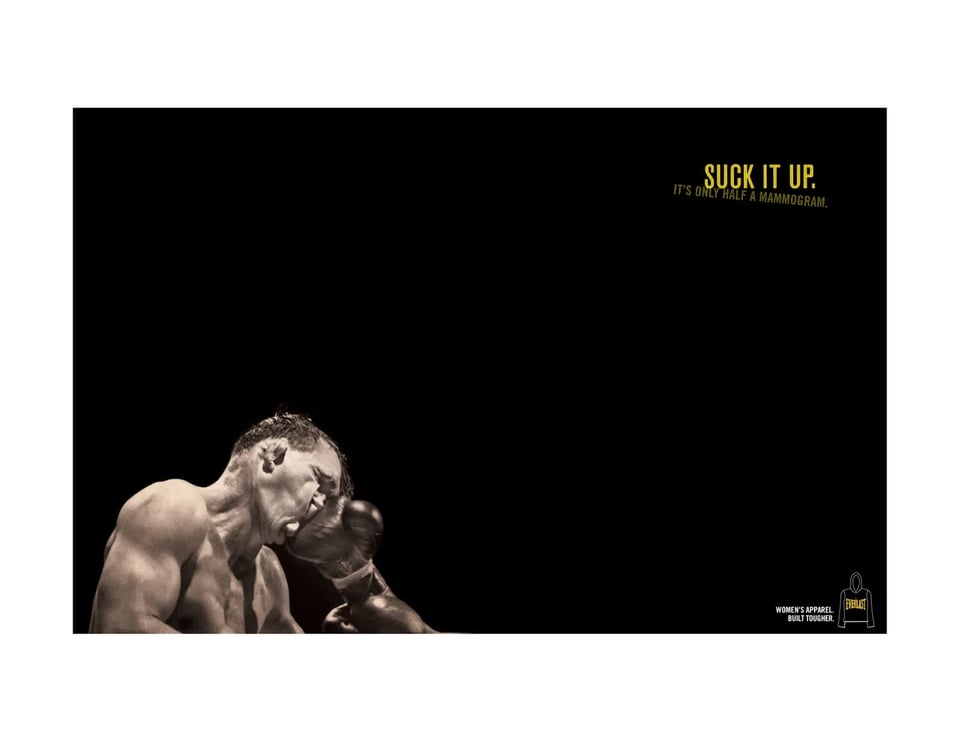
To people reviewing our books, it didn’t matter if the work was real. It showed off writing ability, design sense, concepting chops. The exact skills I needed to display as a copywriter.
Same goes for demonstrating AI experience. Do some spec work.
So, what kind of experience can you build on your own? Just about anything. Take something in your life, or in your hobbies, or even in your job search that you think AI might be useful for. Or think about the most irritating thing in your household that you’d like to outsource: shopping lists? Errands? Knowing when you’re going to run out of coffee? Finding out the newest thing at Costco? Travel planning? Weekend organizing? Whatever it is.
Poke around in Claude to see what it can do for you. Experiment with building skills or artifacts that help you solve some problem. It is more than OK to explore and build on your own, out of the context of building a product or working at work. It shows curiosity, it shows a willingness to explore, it shows initiative.
Try and put the outcome to use. Or not. See how it makes you feel: Frustrated? Annoyed? Reassured? Suspicious? Guilty? All that goes into the story. What changed, what did you overcome, what did you learn?
Now, you’ve got a story to tell. Because interviews? Interviews are storytelling.
You tell a story when someone says, “so tell me about yourself.” That one is the story about how your experience and the pivots in your life and career have led you to this job, the perfect fit for your skills, strengths and values.
You tell a story in each of your case studies. Those stories feature you, the hero, and how you wielded your amazing skills to overcome unexpected obstacles, achieve super cool outcomes, and maybe learn something along the way.
You tell a story anytime someone starts a question with “Tell me about a time when…” You have those stories ready to go, you prepare them in a story bank, you’ve structured them ahead of time. Those are stories you can tell.
AI? Well, that’s just another story you need to figure out how to tell.
And here’s the thing: everyone is still figuring out their AI story. Most of the ones I hear, in any context, go a little something like this:
I had an idea, and I wanted to give AI a shot to see how it would work
I gave it a shot, and wow, it initially seemed really promising
So then I dug a little deeper and there were flaws. Some tolerable, some not.
All in all, seems interesting, but not quite there yet. Here’s what I learned, and what I’ll do next.
Right?
See a problem, mess around with AI, find a story to tell. And just because it didn’t happen in the context of building a product or hell, being paid, doesn’t matter. Kate asked about proven work? You’re proving you can use AI and tell stories. Interviewing is storytelling. Develop some good stories.
Here are two non-work examples I’ve used AI for lately:
Fitness challenge maxxing (she wrote ironically)
We’re doing a fitness challenge at work. The rules and points system seem convoluted to me, and I want to not only understand it, but win. This is the kind of thing I can not be chill about. So I fed the rules to AI, told the robot my usual workout routines of the week, and came up with a plan for how to maximize my points. It came up with a weekly schedule, including points estimates, plus worked around my planned Alcatraz swim on 10.30. It wasn’t perfect: it made some assumptions about what would be a “buddy” exercise and gave me too much credit for some activities. So not perfect but pretty cool.
Case study robot
Case studies are exhausting to write. Yep, even for me. I usually have an idea of a story I want to tell, but gathering all the data and screens is a chore. So I made a skill. I grabbed the skills language from our job ladders, the chapter I wrote from Good Job about case studies/storytelling and told Claude to build a Q&A skill that would output either a slide deck or a google doc of a case study. The outputs aren’t perfect, but I like that they are a sketch to work off of. I still want to leave room for my own storytelling and critical thinking, and want others to do the same. In fact, some other designers at work are already using the tool, which is validating!
📣 Like what you read? Share this newsletter with your friends.
❓Got a question you’d like me to answer? Just reply to this email. I’ll see it.
🎥 Watch Party is happening on Friday, October 23rd, 9am Pacific. TICKETS
📚 Pre-orders for the next book, Good Work: Managing Management and Managing Yourself are up now. First 100 orders get free swag!