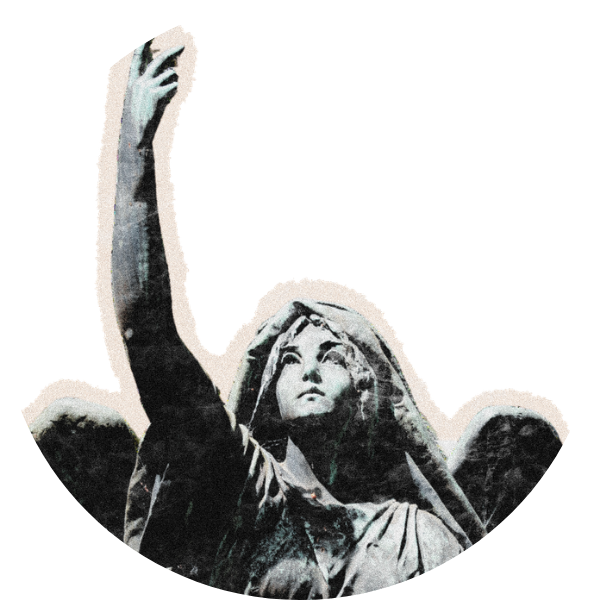
The Daughters of Frankenstein
What do we owe ourselves? What do we owe our art?

I ought to be thy Adam, but I am rather the fallen angel.
Mary Wollstonecraft Shelley, Frankenstein
As a writer, my thoughts have frequently returned to the question of responsibility. It's likely because my political ideology and intermittent spiritualism are so often preoccupied with this idea. What does it mean to be responsible to your community, your neighbors? To your country folk, to your comrades across oceans and borders?
We're each a part of this heaving, breathing mass of humanity. It extends, in touching fingers, forward and backward through time and space, from the deepest recesses of genetic memory into our seemingly eternal present. We are all here, together, on that precipice of a thousand canceled futures, attempting to carve out a space for those that we can still see in the darkness ahead. That collective is as much a part of me as we are each of the earth. We are in the soil beneath our feet, the oxygen in our lungs, the iron in our blood. Infinity in finite bodies.
So what do we owe one another? To whom are we responsible, and in what ways? How do we fail? How do we succeed? How do we learn to allow ourselves to be an animal who sees itself a subject of nature, not its master?
And down, deep, deep down, underneath all of those other, better questions, I wonder:
What do I owe myself, as the person most responsible for myself?
Is art the thing that I'm owed? Is art the thing that I should give to myself? What art do I owe to others?
And what, if anything, do I owe to my creations?
I've been really into Frankenstein lately. I'm Gothic-pilled, as they say. Modern Prometheus-maxxing. It seems kind of obvious, really. Maybe serendipitous is a better word for it. It's just kind of in the air, you know?
The writing, publishing, and academic spaces I tend to orbit around are very often, if not primarily, concerned with the Gothic. I listen to podcasts hosted by scholars and writers whose careers are centered around the Gothic and its expression in book, film, and television. Most of my online friends are pretty into Gothic literature. Of course, Guillermo del Toro's adaptation of Frankenstein by Mary Wollstonecraft Shelley came out in October of this year to kick off new rounds of public discourse surrounding the original text and its ideas.
As for me? I read Frankenstein for the first time in college during my undergrad studies. This would have been a decade or so ago, since I didn't head back to college with the wherewithal to actually graduate until my late twenties. The book was very interesting. I wrote a few papers on it. These were less interesting but still received high marks. I've seen a few film adaptations over the years, and enjoyed a handful of them pretty well, too.
I'm just not a Frankenstein…guy. You know? The ideas were quite powerful, the prose beautiful and bleak. Victor Frankenstein was a wonderfully wretched character to follow. I found myself quite moved by the existential plight of his creation, cursed with a horrifying existence I wouldn't wish upon anyone. But it didn't quite stick in my brain after I finished up my papers and headed toward graduation.
It wasn't until, of all things, I read the Junji Ito adaptation of Frankenstein that it clicked into place for me. Once again, you are forced to read an essay because Junji Ito gave me feelings. I'm sorry for the inconvenience this may cause, but I simply will not stop.
I picked up Ito's Frankenstein on a whim at the bookstore recently, on my girlfriend Melissa's birthday. She wanted to spend the afternoon browsing for books, and so I happened upon it while she was looking for some classic manga on another shelf. I heard the adaptation was good, and I really enjoyed his adaptation of Osamu Dazai's No Longer Human, so I plucked it up without a second thought.
Everything that I missed when reading Frankenstein in college suddenly slotted into place while reading Ito's manga. The decade in between helped as well, I think. I've changed a lot in the intervening years. In most ways, I'm just more willing to let a piece of art happen to me. Junji Ito's Frankenstein very much happened to me.
Shelley's language was striking ten years ago; though truncated, I am now moved to dread, disgust, and sadness. Ito's chiaroscuro captures the sense of doom creeping over Shelley's godless world, rendering it with all the breathless anxiety of a man running from the consequences of his actions. The nature of translating prose to manga streamlines some themes and events, often for the sake of pacing. That said, the core of the story is intact, thanks to imagery so crisp and meticulous in its representation of those themes that I didn't feel like anything was really missing from the story being told.
I closed the book and felt…haunted. By Victor's hubris, by the creature's deep loneliness. By the wound carved into the world because of their bitter war against one another. What a horrid little world beyond the light of any god's love, where men can rob graves and desecrate the dead to birth malformed children that never asked to be born, simply to prove that they could.
I couldn't stop thinking about it.
Then a week later, I remembered that the new Frankenstein movie was on Netflix. Hey, would you look at that: everyone's talking about it. So Melissa and I headed to her mother's to watch the film together. Honestly? I didn't like it. Like, at all.
The costumes were nice, though.
Of the many things I could call myself in good faith, a writer was getting harder to say all the time. Essayist, sure. Maybe even a critic. But a fiction writer? That didn't sit right with me anymore.
I don't like telling lies.
I haven't released a single piece of new fiction since early 2022. My last book came out in the winter of 2021. I wrote, rewrote, and rewrote several drafts of its sequel, but nothing good came of it. I wrote and rewrote several drafts of two other books, and they all ended up abandoned. In 2022, I started writing a new book.
Well, it's a novella, really. A novella in a series of novellas. The series is called A Coffin for Sparrows. It's set in an alternate history 1994 in a world without guns. The world is operated by a dozen oligarchs whose corporations have privatized every aspect of human life. Lautaro Shina comes from the Argentine family that has successfully privatized for-profit murder. Alyena Tatarinova works for the company who has assumed control of Russia's intelligence program.
They fell in love. They weren't supposed to. They had a family. They weren't supposed to do that, either. And, unfortunately, sometimes a family is a father, a mother, a daughter, and a secret.
Then I wrote its sequel.
Then I threw them both in the bin and started over.
I wrote a new version of that book in 2023, then started on its sequel right after.
And then I threw all of them in the bin, too.
What is a writer who doesn't write? What is a writer who doesn't tell stories?
A liar.
2025 was a big year for me as an essayist. If you've been following along with this newsletter, you might have noticed that yourself. I think this was the year that I truly accepted that I'm publishing essays, tangible pieces of art in and of themselves, and not simply a rinky-dink newsletter that nobody reads. I finally, in some way, took responsibility for what I was creating rather than diminishing it to avoid any uncomfortable emotional truths.
Putting out personal essays and honest responses to other people's art is a soul-baring exercise. By writing about art and what it made me feel, I am uncovering new knowledge about myself. I'm then sharing that knowledge with total strangers. Thousands of total strangers, if my analytics are anything to go by. That is a profoundly strange thing to take ownership, authorship, of.
It was also the year that I cleared a lot of big projects from the ever-growing to-write list I keep in the back of my planner. Like the pieces on Junji Ito's Tomie, the Galateas of Doki Doki Literature Club's Monika and Silent Hill 2's Maria, and Angela Orosco of Silent Hill 2. Some other pieces of art cropped up out of nowhere and became all-consuming obsessions for the three days that it took to write about them. Like Malice from Keitarou Motonaga's Malice@Doll and Suzie from David Lynch's Rabbits.
These are not only deeply personal essays, but they are essays that I'm the most proud of this year. I'm truly grateful that I was able to write about these works and their characters. Specifically, their stories as women navigating the horror, tragedy, and sublime beauty of their lives.
Getting to that point was harder than it should have been. We'll get to why that is a little later.
I've always been told that Frankenstein was a story about fathers and sons. It is that, of course. Frankenstein also has messy things to say about the British empire, slavery, and the plight of women, at once an empathetic portrayal of The Other and one steeped in colonial anxieties and prejudices. It didn't occur to me until now, at the end of my thirties, a fully adult child of flawed and complicated people, that it could be a story about mothers as well.
My understanding of Mary Wollstonecraft Shelley's life is admittedly thin. I read a bit about her in college, sure, but this was a decade ago, when my English professors were quick to admonish students for reading too closely into biography. Death of the Author and all of that. Whenever I encounter the story of Shelley's life, it's broadly been through the lens of popular culture. The way people tend to tell it, Shelley is the preeminent cool goth girl. Literature's goth gf, if you will.
Shelley was the daughter of proto-feminist writer Mary Wollstonecraft and radical political thinker and writer William Godwin. While never receiving a traditional education, she grew up around the day's radical thinkers and abolitionists, and had unlimited access to her parents’ and their peers’ writings. Shelley fell in love with scandalous Romantic poet Percy Bysshe Shelley when she was sixteen, confessing and consummating their relationship at her mother's grave. They soon eloped despite her father's wishes and Bysshe Shelley's marriage to his first wife.
Together, they toured the European continent and lived an unconventional life among British literature's most noted libertines. These circumstances reared her, the gifted child-mother who invented a new genre at the age of eighteen. While at an extended gathering of writers and friends in Geneva, Shelley was moved by a terrible dream to create a tale for the ghost story contest proposed by Lord Byron. Thus, the world's first science fiction novel was born.
I think it's rather strange for these celebratory retellings to omit the fact that Shelley lived a tumultuous and tragic life. Her mother, Wollstonecraft, died eleven days after her birth. She had a difficult relationship with her father's second wife, Mary Jane Clairmont, and was quite alienated from her family because of it. Taking up too much of her father's attention, a teenage Shelley was sent away to Scotland by her step-mother, spending two years living with one of Godwin's acquaintances.
By the time she started writing Frankenstein, being the goth baddy she apparently was, Shelley had eloped with an older man who had abandoned his own teenage bride Harriet for her. The young family had financial problems, and she suffered debilitating illness and pregnancy difficulties at just seventeen. Shelley's first pregnancy ended prematurely at seven months, giving birth to a baby girl named Clara. Clara died eight days later, found in her crib by Shelley after what appeared to be a seizure or convulsion. How cruel a sight, for a young woman whose birth killed her own mother to give birth to a baby who could not survive.
Grief consumed Shelley. Two weeks after her baby's death, she wrote in her journal:
Dream that my little baby came to life again – that it had only been cold and that we rubbed it by the fire and it lived – I awake and find no baby – I think about the little thing all day.
She was already a mother once again, having a boy named William, when work on Frankenstein began in earnest. Work on this book and others continued, even as Shelley was frequently pregnant. Her half-sister Fanny Imlay, daughter of Mary Wollstonecraft and Gilbert Imlay, died by suicide. Bysshe Shelley's first wife Harriet also died by suicide, which freed him to marry Shelley, who until this point had been raising his children out of wedlock. Another daughter, Clara Everina, was born a year later. And Shelley continued working.
At just one year's old, Clara Everina became sick with dysentery and died as the Shelleys moved house to Italy. William died nine months later in Rome from malaria. Loss after loss. At twenty-one, Shelley gave birth to the only child she was able to see to adulthood, a baby boy named Percy Florence. By twenty-five, after a miscarriage ended her fifth and final pregnancy, she was widowed. Bysshe Shelley drowned in a sailing accident, leaving her to raise their only living child alone.
All the while, beset by loss and tragedy, Shelley continued writing and publishing, and publishing the works of her late husband. Of course, I'm glossing over a lot of years, names, nuance, and details. It feels a bit cheap that way, a kneejerk reaction to the social media version of Mary Shelley as literary girl boss. I don't mean to reduce Shelley to her pain, because that's just as dehumanizing. In reading her journals and personal writing, I can see that she was a complicated, at times contradictory, person who deeply loved her children.
But it's precisely that pain, that unfathomable anguish as a mother, something that I will never be, that moves me so greatly.
In Victor, I no longer see a mad father, driven by hubris to chase Mother Nature to her hiding places and take what he wants from her. He is a mother faced with the reality of his own creation, struck with the terror and despair that we punish mothers for feeling. If birth is a celebration of life, then mothers should only experience love and joy at the sight of their children. So what then of the mothers who don't, or can't, feel that joy? That love? What of the mothers who can't give birth to viable babies? What of those who killed their own mothers in birth, women born of death itself who must become mothers themselves?
What happens to the mothers who are afraid of what they've given birth to?
Through the abstraction of Victor Frankenstein, I see a young mother with a room full of ghosts to retire to at night, living with the fears that mothers must never speak aloud.
If I have a story left in me to tell, it goes something like this:
Lautaro Shina is a man happily in love with his wife, Alyena Tatarinova. Exiled by his tyrant grandfather Renato Sandoval, he left life as an assassin to be with Alyena and their daughter. But Alyena hasn't been telling the truth about the nature of her exit from the company. Now their simple domestic peace is destroyed when Alyena's old boss from the company enters the picture. Betrayed, Lautaro must return home to the family that's rejected him and start over with his daughter.
No.
This is a lie.
Start the story over.
Lautaro Shina meets a woman for whom he's willing to destroy his life, Alyena Tatarinova. They have a daughter. Alyena leaves the company. Lautaro leaves his family to be with the new family he's created with his wife. But Alyena has a secret. Lautaro discovers the secret.
No. Throw it out. Start again
Lautaro Shina is in love with his wife, but she has a secret. That secret is enough to blow their life together apart. Alyena lies, but her lies catch up with her. She has to make a choice: tell the truth, or keep lying. Her boss from the company returns to make the choice for her.
Stop lying. Start again.
What is this story saying? It's too funny. No, it's too serious. The stakes aren't high enough. There isn't enough texture. It's too erotic. It's not erotic enough. It doesn't say anything. Why isn't it saying anything?
Start it again.
What's the story even trying to say? Does a story need to say anything? These characters should be more fucked up. They should comment on something real. Then it will say something. Then the story will finally say something, and I can finish it.
Again.
What if I don't write it? Does it say anything that needs to be said? I've already said so much in those other books and stories I wrote that I don't talk about or think about. The ones with sequels I threw away. Maybe I should just give up. No one would notice a book that doesn't exist.
Again.
What am I even good for? All I've ever managed to do was entertain people. There are a million books published every year. Every day, slop is pushed out for the masses. Fiction is meaningless, disposable trash. People don't even read books, they just skim them and make TikToks about it. Whatever I have to say is useless if it's just entertainment for people who don't care. There's no point in mourning the absence of art that should not even exist.
Again.
Just write essays. Essays matter. Essays say something. Essays are a part of me that can live on in words. Essays are truth. Fiction is a comforting lie. We live in an age of liars and comforting lies at an industrialized scale, and I simply want to live in truth.
I am empowered by that truth.
No.
Do it again.
Tell the truth.
I love these characters so much, I think about them every day. I customized a fashion doll to look like Alyena. I keep her next to my bed to remind me of why she's so important to me. I bought a cheap little bracelet with rainbow beads and the name Hazel spelled out in block letters, the name of Alyena and Lautaro's daughter, to remind me what I'm -- what Alyena -- is doing all of this for.
Again. Start over again.
I love these characters. I love this world.
Why am I so afraid of this?
What am I afraid of?
I've spent most of my life writing men. It's always been positioned as a kind of liberatory act. Something something, expressing oneself and one's desires through a masculine avatar. Something something, telling the stories that men always get to tell for myself, a person whose gender, sexuality, illnesses, and working class status tend to make me somewhat unpalatable. Maybe that's true for someone else. That doesn't feel very true for me.
Yes, I have ensemble casts like that of my superhero novel The Crashers which feature women. My short stories sometimes have women protagonists, as did my novella, In the Bedroom of Medusa. But most of my protagonists, the characters that I've felt the closest to, have always been men. This is true of the fictional characters that I've been drawn to in other people's works, as well. I really respond to and resonate with the stories and interior lives of men.
These days, though? I find myself attached to women's stories. Women's lives. Not simply in fiction but in history as well. It's…refreshing. A relief, really.
My embodied gender has always been a site of tension for me. I've never felt fully comfortable in a woman's body, with a woman's anatomical design, the burdens of gendered social conscription. The lives of women felt like forbidden knowledge. I conceived of them as voices on the other side of a wall, their goings-on held purposefully out of sight as they shared their secrets. Thrust into a traumatizing early puberty at the age of nine, I pressed my ear to the plaster to make sense of the murmurs, or glean some instruction from their hushed tones. Nothing ever came of it.
Whatever I was doing, it was wrong. A child who looked much older than I was, I was ogled and cat-called in one moment, then called stupid and a baby for still playing with dolls the next. As a teenager who felt uncomfortable in my body, I was told that I dressed it dumpy and ugly. If I gathered up the courage to show any skin or wear anything that clung to my curves, I was a fat try-hard. Femininity made me a joke. Masculinity made me an ugly dyke.
Unable to look or act or desire how I was supposed to, I felt different from women, another species. Something stitched together from spare parts, perhaps. Breasts I never asked for. An ill-behaved reproductive system that acts up for reasons doctors just shrug about. A womb for children I have nightmares about carrying, because my family name doesn't deserve another generation.
I've made peace with that scared version of myself, desperate to perform womanhood in a way that would please others. It takes the menace out of those voices in the next room, makes them less secretive, less threatening. I feel my interior experiences of the world can now co-exist with how I'm perceived socially. This doesn't make me Diet Woman or Woman Lite, but a separate, heretofore nameless thing that walked alongside women and girls to bear the same scars.
Fully shedding my alienation allowed me the space to engage openly with women's stories, both lived and in fiction. Without the shame of failed womanhood or monstrous birth, I could see the common truth within these stories rather than reminders of my otherness.
It was then, thinking about these tragic, beautiful women and girls in these stories I loved, thinking about Shelley's lonely creature, that I realized what I've been running from this entire time.
Alyena Yurievna Tatarinova was born in 1960 to a poor family in Novosibirsk. The only daughter of a factory worker and a laundress, she grew up largely unattended due to her parents’ long hours away at work. She managed herself, got herself to school everyday, and kept the cramped apartment clean enough to appease her parents. Her mother came home tired; her father came home drunk, if he came home at all.
While clever and studious enough to pass her classes, Alyena grew bored of splitting time between her empty home and drab school building. She didn't really make friends on her apartment block or in school. She didn't really feel like it. People rarely interested her like that. Instead, she developed a habit of daydreaming during school, and later, a lying compulsion. Lying at school to get out of her classes, lying at home to get out of being there. Lying about her life just for the fun of it.
A taste for petty crime came along with this compulsion. Alyena started shoplifting sweets just to see what would happen. Then magazines, soda pop, and cigarettes she could sell loose to other kids for more pocket money. Her small enterprise paid for double-features at the theater when she didn't feel like being at school. She liked watching people on the big screen, living lives that seemed so much grander than what she could ever aspire to. At home, in her little bedroom, she practiced pouts and dour scowls in the mirror. She struck poses and recited monologs committed to memory. Studying people was so much more exciting than studying books.
By the time she was fourteen, she was pickpocketing strangers on the street and telling lies to get herself in -- and out -- of trouble. Her parents didn't really notice that she was gone anymore. The school stopped sending truancy letters that she had to intercept before they reached her bleary-eyed father. She was probably expelled. Nobody would have come looking if something happened to her on the street.
This was what Aleksei Preobrazhensk told Alyena, anyway.
At thirty-five, Aleksei had thick, corded scars from his years in the military and a beautiful black car like a panther. That made Aleksei very interesting to her. He was in Novosibirsk for business when Alyena picked his pocket for his car keys. Instead of calling the police, he followed her to his car and offered to buy her lunch at the nearby canteen. Alyena told five more lies on the way there, so many that she could barely keep her stories straight anymore.
That she was a sex worker, that she was an orphan, that her name was Alya, that her older brother sold drugs and could beat him up. She didn't even remember what the last lie was. A rumbling stomach made it hard to think straight.
She happily ate warm mushroom soup and blini as he told her about his life. First as a soldier on the front lines, then a hero captain who got his face and gut torn up from grenade shrapnel. Later, a decorated veteran who worked for a private intelligence contractor. He was responsible for recruiting talent, he said, and Alyena was very talented.
Alyena was smart, cunning, in a way no one else could appreciate. Aleksei could teach her to lie so well she would never be caught again. Alyena could just disappear today, now, on her terms, rather than fade into nothing. What could she hope for if she stayed in Siberia? To work at a shop or as a laundress? To end up pregnant and married to some drunk just like her father?
If she disappeared, no one would notice. She had no friends. Her parents didn't really care about her. Her teachers wouldn't come around asking questions. She could be free.
This was how Alyena Yurievna Tatarinova chose life with her new father, her only friend, and the man who would torment her for the next decade of her life. She took two names that day: Alya, the pet name Aleksei liked better for her, and Shrike, a call sign that intelligence operatives came to fear.
It wasn't until, at twenty-six, she met another man. A boy, really, tall and strapping with raven-black hair and a beautiful face. The only boy who ever interested her like that, the way only girls ever did. A pretty boy to call her own. A clever, wonderful boy who thought the world of her. Through him, she began to understand that another life was possible, and that someone could love her as herself.
Not Alya.
Not Shrike.
Just Alyena.
It took many drafts of A Coffin for Sparrows to see that Alyena Tatarinova was the protagonist. Not a deuteragonist, not a co-star. She was the heart of the thing, the center from which the story grew.
Aleksei's greatest achievement, she was the spy who spoke only in perfect lies like the obedient little bird she was. She mimicked the women she replaced with atomic precision: their voices, their expressions, their gestures. The tics or quirks or falters in their gaits. Alyena had no past or future in this endless procession of borrowed lives, yet she defied the man who made her to create a present where his influence could no longer reach her.
Lautaro Shina seemed like the obvious choice for the protagonist. At least he did to me. He was the first character that leaped to mind when I began working on this, the fastest to come together in a complete person. The load-bearing elder son in a family of assassins, large and violent despite a thoroughly domestic preoccupation raising his baby brother Liandro. Dressed all in black, a lover of Japanese jazz music, Argentine literature, and contemporary art. He would rather be strolling through a gallery or reading poetry in a cafe than murdering people, but murdering people is easy and lucrative.
If Alyena is a liar, then Lautaro is a killer. They each do it naturally, instinctively, without thought or feeling. It's the juxtaposition between quiet, sensitive family man and unmotivated brute that makes him interesting to me. He isn't violent because he's quick to anger; he's violent because he's large and strong and it makes violence easy to do. Specifically, if he's being paid. Being with his wife and daughter to cook, clean, and tend the home brings him such fulfillment that his profession casts little more than a passing shadow. His life is better lived in service of the wife he's committed himself to as a partner and the willing pet at her feet.
But Lautaro is the lover. He is the object of Alyena's desire, the tiger she's caged. He finds as much pleasure in being kept as she does the keeping. Lautaro is interesting, but he doesn't have a life without her. Alyena is the motivated agent of her world. She is a spy crafted by a cruel man, whose freedom was stolen as a child to become something new and terrible. A woman who never saw that she could be separated from the work that consumed every moment of her life. A wife who adores the husband for whom she made her first knowing sacrifice. A mother who suffered a difficult pregnancy and traumatizing birth to have the daughter she never thought was possible.
That daughter is a perfect, strange little bird named Hazel, who looks like her father but takes after her mother. Alyena's Little Sparrow, a thing that was never supposed to exist but did, despite the meddlings of Alyena's father-god Aleksei and the terror he put her through. Hazel is the center of Alyena's world and the reason for every lie she continues to tell.
Alyena is the most interesting character I've ever put to paper. She means the most to me of any character I can remember writing. But her life as a woman, wife, and mother terrified me. I felt that I couldn't understand her in her strange multitudes, a deeply weird person who also fiercely loved the family she didn't know she could have. Trying to craft a more familiar narrative around her husband, I convinced myself that I couldn't tell such a complicated story about a woman like that.
Lautaro's feelings and anxieties were relatable. They bore enough superficial similarities to my own experiences that I felt connected to him. Alyena struggled to hold her husband and child close in ways that were alien to me. She experienced physical, emotional, psychological changes that I could never understand because I could never see myself within her. For that, I relegated her to a subplot.
But of course, I could see myself within her. Of course. Fathers like gods, families like religion, both of whom demand devotion. Fleeing from homes that never fit. Never feeling of her time, her place, her gendered expectations, with a body not made for giving life.
At once the inventor and his creation, I was a malformed creature and a negligent creator. I made something that terrified me, and so I refused it. I cast it aside. I wrote everything but the truth that was right in front of me.
Alyena, my creation, is the story. Hers may very well be the best story I have left to tell. And I owe it to myself to tell it.
-
thank you for this.
-
hell yeah
Add a comment: