The History of Some Bricks (Happy Valentine's Day)
Much has been written about the St. Valentine’s Day Massacre, the 1929 gangland killing has been examined in countless books, documentaries and dramatized on screen – most famously in Some Like It Hot. But have you ever thought about what happened to the wall itself?
And by this, I mean the wall that the victims, seven members of the North Side Gang were lined up against before being shot by unknown assailants (but most likely on the order of Al Capone). I bet few of you have – I mean why would you? But as that is just the type of weird tangent that I love here’s the history of some bricks …
The massacre itself took place inside a garage – the S.M.C Cartage garage at 2122 North Clark Street, Chicago.
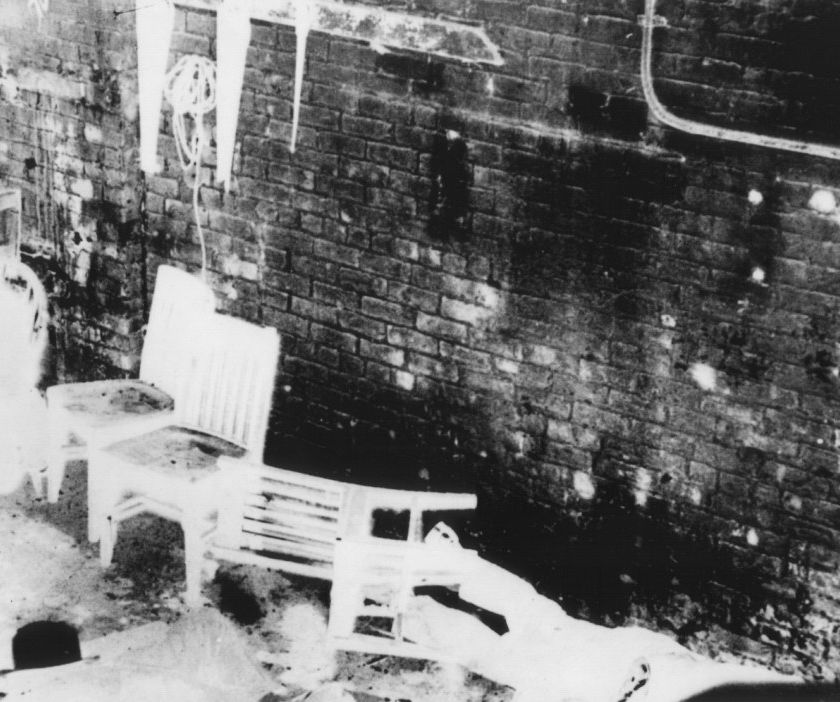
After the crime scene was cleared the building returned to ordinary use. Or at least tried to. Visitors began arriving to see the infamous bullet-scarred wall in such number, that it became such an attraction that it reportedly grew to be quite problematic. The businesses that used the space veered between celebrating its notoriety and trying to cover up what had been nicknamed the “Wall of Death” in the press.
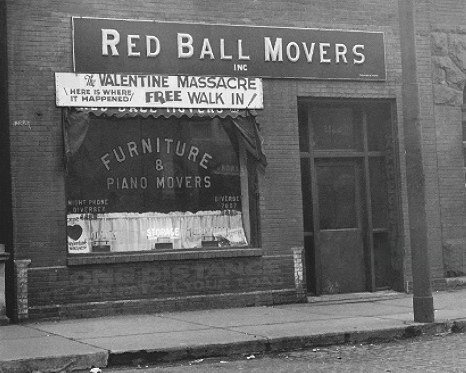
Whilst Red Ball Movers (circa 1930s) advertised a free tour of the wall “Here is Where it Happened” a later owner attempted to hide the wall by covering it and partitioning the space so it could no longer be viewed. But the building’s notoriety proved hard to suppress.
In 1967, the structure was demolished as part of urban renewal in Chicago. Before it came down, the section of wall that had been in the line of fire was carefully dismantled. The bricks were lettered and numbered, and those bearing actual bullet holes (only about 8 - most bullets had hit their targets) were marked with black circles to identify them.
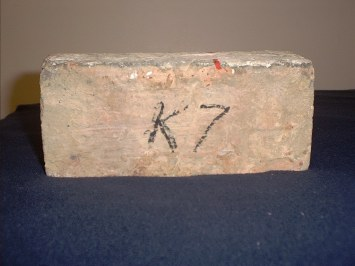
More than 400 of these bricks (we know that some had been removed prior to the demolition by eager collectors) were sold at auction to Vancouver businessman George Patey, he later claimed he purchased the bricks on a whim, initially intending to incorporate them as a feature wall in his penthouse. Instead, they embarked on an unusual afterlife.
The reconstructed wall became part of a travelling crime exhibit, displayed in galleries and shopping malls, complete with mannequins posed with tommy guns. In 1969, the bricks were featured in a short-lived crime museum.
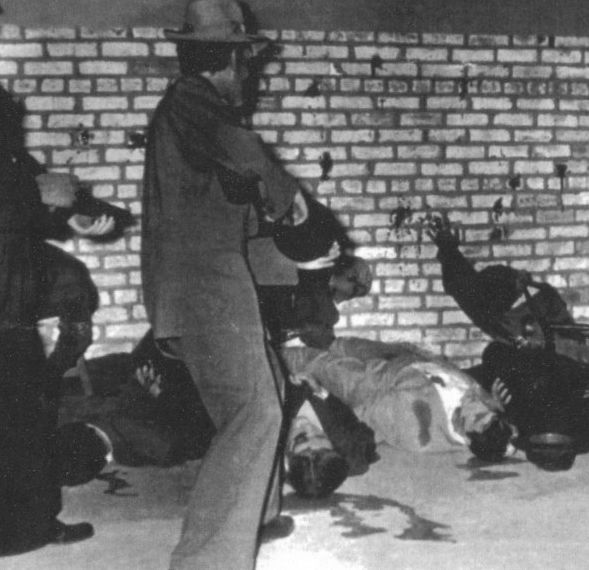
However, in an era marked by very real assassinations, including that of President John F. Kennedy, public appetite for stylized depictions of gun violence was limited, and the venture closed soon after opening.
In 1971, the wall found a new home at the Banjo Palace in downtown Vancouver, a Roaring Twenties–themed nightclub and restaurant. Installed in the men’s restroom and protected by plexiglass, the wall became a novelty attraction. Targets were placed over the bullet marks, and patrons were encouraged to take aim.
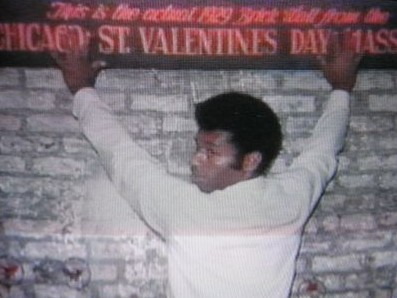
The entire establishment leaned into gangster imagery, complete with figures of gun-toting mobsters. When the nightclub closed in 1976, the bricks were removed once more. Although the plexiglass had protected them, the markings had been altered — the original black circles had been retouched and red paint added as fake blood stains at some point.
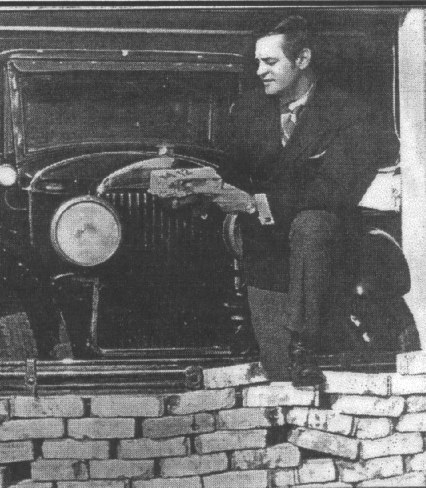
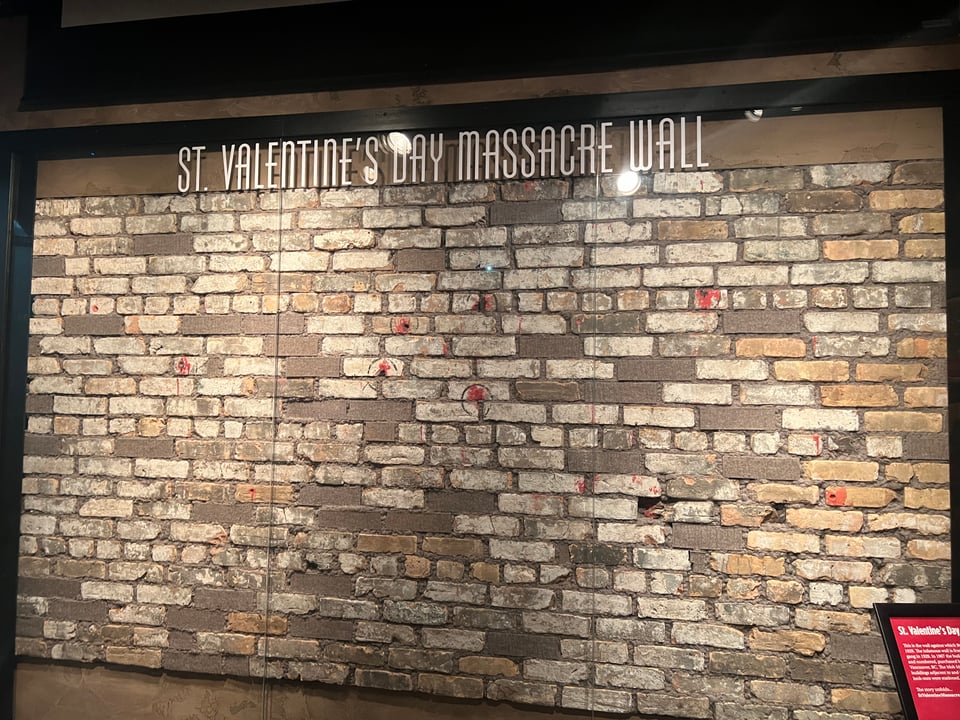
For years afterward, the bricks remained largely in storage, though there were periodic attempts by Patey to sell them. In the mid-1990s, many were sold individually, brick by brick. Estimates suggest between 70 and 100 were dispersed in this way, though precise numbers are unclear. After Patey’s death, his niece attempted to sell some of them on eBay. Eventually, around 300 of the remaining bricks were acquired by The Mob Museum in Las Vegas, where they are now displayed, with replacement bricks made from a darker colour to fill in those missing from this collection.
There is also a fascinating debate around whether some of the bricks on display in Vegas are back to front and whether the ‘bullet’ holes you see are in fact misidentified and are really just regular holes drilled into a wall that, aside from its place in history, was in use for decades. And for a more detailed dive into this I would highly recommend visiting www.myalcaponemuseum.com which has some fascinating extra information and was my main source for this post.
Have a great day and thanks for reading!
Lucy
PS I have a few talks coming up
Out with the Stars: Nightlife in the Golden Age of Hollywood (Re-Air)
20th February, online
The History of Plastic Surgery: Healing, Beauty and Reinvention
10th March, online
The Atomic Odyssey: Tracing the Evolution of Nuclear Power
11th March, online