
◎ money interview series #4: Lily Lalios
“Community is always becoming”
welcome to the fourth! installment of the love notes money interview series, where we talk with people about money, “community,” place, and how the three relate! if you’d like to participate, get in touch!
today we talk with Lily Lalios!
Lily is a writer based in Milwaukee, WI and has been published by #EnbyLife journal, Pity Milk Press, and VA Press. They also produced Apagimeni Literary Magazine, a compilation of poetry, essays, and visual art by and about the queer Greek-American experience. Lily’s work made the long list for the 2024 and 2025 SmokeLong Quarterly Award for Flash Fiction, and they were a finalist for the 2025 GenrePunk Haunting Award. Currently, Lily is the recipient of the Woodland Pattern Emerging Poet Project Fellowship, and will be facilitating a series of community poetry workshops around themes of grief, multicultural memory-keeping, Midwest ecology, and art.
Lily and i met over Zoom and talked about our shared ancestry in the Greek Communist resistance to fascism, Smallwaukee, shifting delineations of otherness, generosity through food, and more. read on!
i’m interested in how we decide what communities we belong to and who belongs in our communities, and then how we reinforce that sense of belonging with our spending decisions: how do we decide how much to keep to ourselves vs. reinvest in our community?
my core interest is related to race and ethnicity, not just within-community, like within the Greek-American communities that we’re both part of, but, how do we see people who are different races and ethnicities as part of our community?
It’s so funny that when we talk about redistribution of resources along ethnic lines, not just within the community but going outward, the thing that popped into my head is the way the lamb is distributed at the Greek festivals in the greater Milwaukee area [editor’s note: Greek churches across the country host these festivals as fundraisers].
The festival is on a Saturday and Sunday, and if you are xenoi [non-Greek; literally, foreigner], you have to go early on a Saturday to make sure you get some. While they’re cooking a lot of it, the Greeks are all gonna put stuff aside for their cousin or their friend. If you don’t have the connect, then by the time you get there, all the allotted “outsider meat” is going to be gone [laughter].
When you have the phenomenon of an exception like this scaling up, it becomes a huge impact. If there are 100 pounds of lamb to go around, and each person is like, “oh, I’m just going to put two pounds to the side,” that doesn’t seem like a lot…but if you have 75 people who all have that mentality because they are trying to be generous within their community, it ends up greatly reducing the amount that can go out to the broader community.
that’s a great example. my experience of our Greek festival is similar in terms of resource hoarding, if you will. i grew up in Richmond, Virginia, and we have quite a large festival. they’ll bring in a million dollars in revenue over the weekend. obviously a lot of that has to go to the church operations; that’s the point.
but they will give donations to outside nonprofits, maybe four of them, for a few thousand dollars each. they’ll present them with these big paper checks on the stage at the end of the festival. it feels very, “look how good we are!” and to me, it feels performative. it’s not very much money.
again, that’s not the point, but it could be more of the point.
Yes, especially as that intersects with philotimo—literally, love of honor, denoting a paternal hospitality, social piety, and personal dignity—and being perceived as being generous. Generosity without power is an unfulfilled promise, and power without generosity is despotism.
Thinking of who is in the community and who isn’t, it’s interesting how Greekness has migrated from being not-white to being white over the course of the 20th century, and how that corresponds with the Manifest Destiny of it all.
And it’s really interesting, especially in a post-9/11 world, how Greeks see Muslims. I see a native-to-Greece masculinity blending with an American-exceptionalism masculinity. My dad is the one I think about, because he’s my front-row seat to Greek masculinity.
There’s this lingering anger about the Ottoman occupation. My dad’s family is from the eastern side of Greece, and we have ancestors that were part of the Smyrna disaster, so they have genuine trauma from the Ottoman Empire. They were in the position of the colonized and the oppressed.
But then, when you come over here to America, my dad gets to be a white Christian man. When he critiques Islam or Muslim people, he is doing that from an American position. The relationship the American empire has with majority-Muslim countries is very different than he would have with those countries if he was still in Greece.
It makes me sad how Greek men and Greek Orthodoxy are getting folded into white Christian nationalism, especially with the coopting of the aesthetics of ancient Greece—philosophy, democracy, and the appeal to the ancient-ness of it—and the way that Greeks are now like, “we are the West.” I think that whole generation’s idea of, “oh, we lost Constantinople, and we have to get it back” is being reframed as, “we can’t let the West fall,” and it’s just kind of a mess.
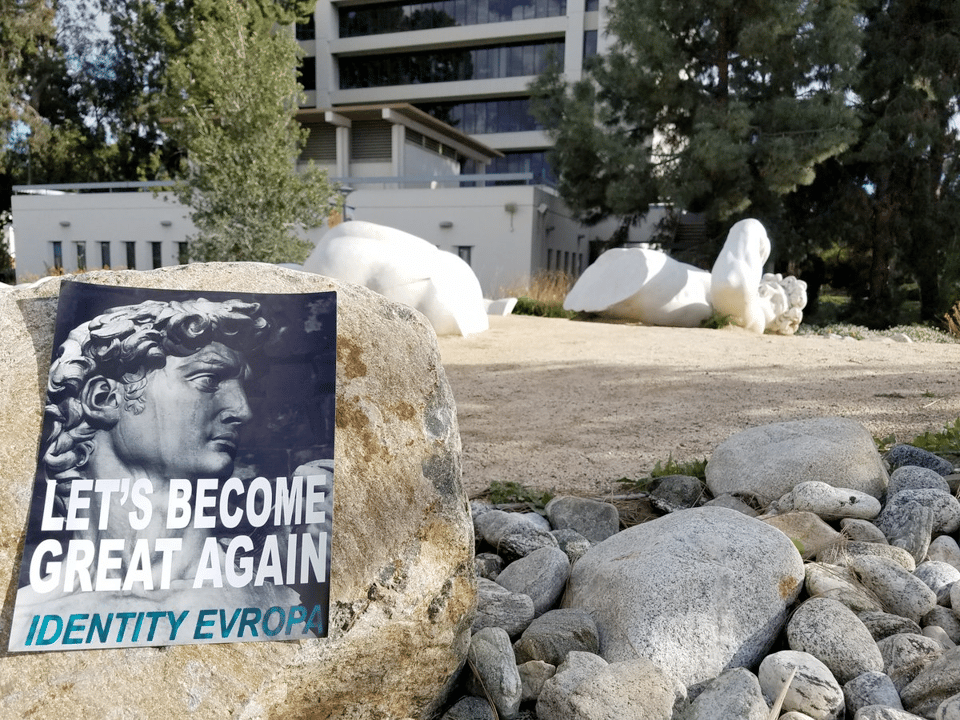
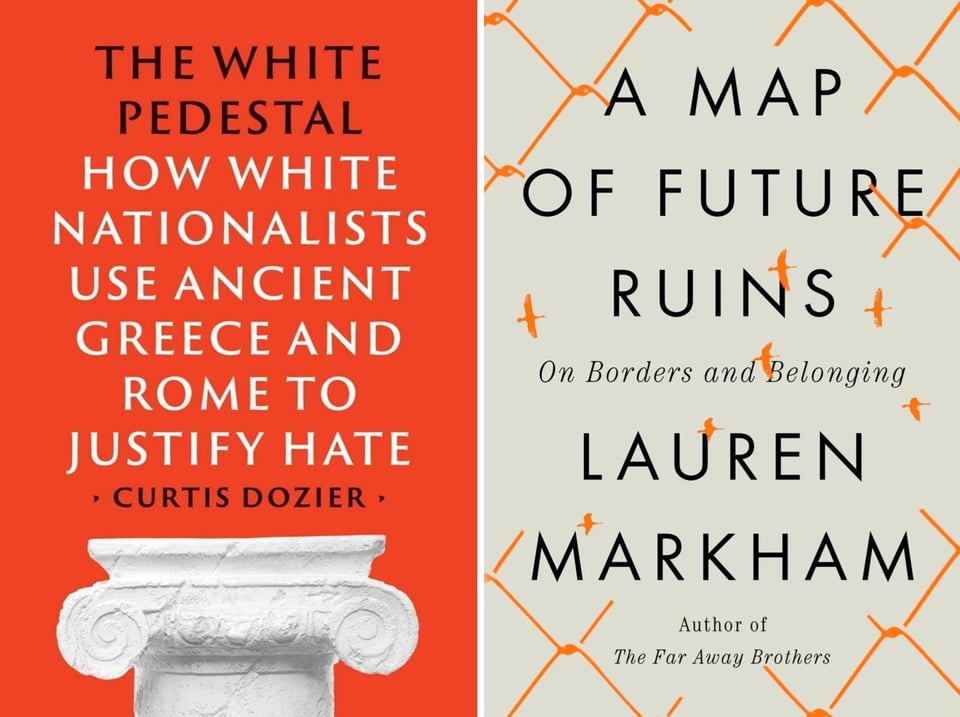
yes. you’ve mentioned a book about white nationalists appropriating ancient Greek imagery. Lauren Markham also wrote a fantastic book about Greece’s position between West and East, and the dire consequences of the stories it tells itself. it centers on the refugee crisis in Lesvos, where you and i have some shared ancestry.
you’ve also mentioned that you have family ties to the Communist resistance. i, too, have an uncle who got exiled to the island Macronissos for being a Communist. does that family history have any influence on your politics, or your family’s politics?
Yes. My papou’s [grandfather’s] mom and dad were active Communist party members in the everyday-worker kind of way. They weren’t involved in a higher-level, organizational way, but those were their values. That affected the way my papou’s mom raised her daughters. She had two daughters and two sons, and she really wanted to have gender equality among the siblings.
My dad was born in Athens in 1964 and my grandparents tried to immigrate to the U.S. in 1967. They were supposed to leave in March of that year, but they got denied because of their ties to the Communist party. My papou had to sign an official denouncement that he wasn’t a Communist so he could leave. Then they officially landed in Chicagoland in September, and just kind of became American after that.
On my yiayia’s [grandmother’s] side, her uncle, Eleftherios Korakas, was part of the Communist resistance during WWII. He was trusted with keeping all of the villagers’ money when the German occupation started. The Nazis captured him and tortured him, trying to get him to tell them where everything was, and he didn’t break. So in that sense, he is a big inspiration to me.
I wrote this big poem [editor’s note: see postscript!] trying to invoke the spirit of Eleftherios Korakas, because when Renee Good was murdered, I was like, “oh shit, whiteness doesn’t protect you. If you don’t comply with these systems of violence, they will be turned against you. So when that happens, what am I afraid of? I’m afraid of pain. And who do I know in my past that has encountered pain, lived, and had their integrity intact?” And I was like, “oh, that’s Eleftherios, so let me try to summon some of that bravery.”
we’ve talked about the Greek-American community. what other communities do you feel like you belong to?
I feel like I belong to the Milwaukee community.
I don’t feel as involved in the Milwaukee queer community as I would like to be, because for the first four years I lived here, I worked a job from Friday through Monday so I couldn’t do things on the weekends. I can’t keep up with the club kids, but the ones that hang out at the bowling alley at 9 p.m. on a Saturday—I can hang out with them.
But I’m definitely part of the Milwaukee writing community. I go to open mics, workshops people are hosting, and book talks, and then if I have the money, I will buy that book. I go to local arts shows, and I buy from local artists and makers and businesses instead of bigger chains whenever I can.
what makes you feel like you are a part of those communities, or that you belong to those communities?
Regularity is a really big thing. One of my best friends taught me how to have a community and how to show up for people. Their name is Lemon, and they have been hosting a monthly movie night for two years now. Anywhere from six to 20 people show up. For Christmas, I made them a huge binder of the event posters they design every month.
It’s about having a regular tradition that people can look forward to and know that they’re going to see people in person. It also celebrates analog media—we only watch a movie if we have a DVD of it. Everybody brings snacks, so it’s like a Stone Soup thing. We also do a bring-your-favorite-childhood-book night, and we all read together for a grown-up story time. It’s incredible for morale. I highly recommend it.
how are you currently thinking about money as it relates to your various communities? are you able or willing to reinvest in them, or are you not in a position to do so? how are you doing that math for yourself?
I grew up with a very strong sense of generosity and hospitality as the normal way a person behaves, and the only reason someone would deviate from that would be if they literally didn’t have anything.
When I was in third grade going to Catholic school, each classroom had a donation box and at the end of the week, the class with the highest donation would get a shout-out during announcements. My aunt had given me $20 for my birthday, so I took the $20 bill to school, bought a 50¢ ice cream at lunch, and put the rest in the donation box. Our class won that week (with exactly $19.50) and I went home to proudly tell my parents. They basically responded, “that’s very sweet, but please don’t do that again.”
Another huge influence on how I perceive money is weddings. I think about Greek weddings as the pinnacle of the Greek-American financial philosophy. They're huge because they’re a fortifying celebration for the community as much as they are a commitment ceremony between two individuals and their families. The standard has always been lavish banquets with 300 to 400 guests, 12-foot-long dessert buffets co-produced by the yiayiathes [grandmothers], an open bar, and piles of money raining down on the dance floor. It’s about creating an atmosphere of abundance and gratitude and not entirely worrying about how everything will get paid for, because somehow it will.
I recently attended a wedding that cost $80,000, but by the time the father of the bride counted the money in the cards alone, $60,000 was accounted for. It’s very much an extravagant trust exercise at a community level.
Now, when I have to spend money, like on groceries, I go to the local grocery store. Thankfully, there is a tiny, family-owned grocery store on the corner down the street, so I go there instead of Target or wherever.
I’ve been joining in boycotts, both local and national, as a way to feel more of a sense of community, and showing up to local events to be another body there to boost their metrics, even if I can’t spend money. I also check out a bunch of books from the library even if I know I’m not going to read them, because I want to boost those stats.
This year, I got a grant through a local poetry bookshop/nonprofit called Woodland Pattern to produce a community poetry workshop series from April to October. I try to use the grant as efficiently as possible so I don’t have to charge for the workshops, or I can offer a sliding scale, so people have access to the community-building events.
as you noted in our email exchange, “we’re all just trying to make it work here,” in a rough economy and job market. you’re supporting your community in non-monetary ways as well. how do you do that?
Generosity with food has been extremely important to me, as any of my friends can tell you. I have unconsciously picked up the habit of offering my friends tea bags, a bag of dry lentils, a bottle of The Good Oil, or extra homemade soup as they leave my house, in the same way my yiayia and papou would when I left theirs.
A friend of mine is a Black woman Lutheran pastor who is very into liberation theology and social justice. She’s rad as hell. A few weeks ago, she was talking about how a lot of the clergy in Minnesota were getting involved in the protests there, so she and some other Wisconsin clergy were going to help them and send some resources.
So I was like, “let me help you help them. I’m going to make you some meals.” I made them 12 meals of faki [lentils, Greek-style], because I’m like, “this is food I know how to make.” It’s a famine food, you know, it’s a hard time food. The Greek food I grew up with was very much affected by, and of the time of, the post-WWII famine. A lot of it was vegan by default because they couldn’t afford meat or eggs.
So I think going back to how I know how to survive—and being able to put love into that, and give it to other people, to feed other people—is, on both a practical and emotional level, the way I support my community.
is there anything about the place you live that facilitates your belonging in a community, or hinders it?
Yes and yes.
People call Milwaukee “Smallwaukee” because you can walk down the street and you’ll recognize people frequenting the same local cafes. Or we know we’re going to be at this bar or that community organizing space, and we’re going to be doing kickboxing aerobics at the Milwaukee Recreation Center together. We joke that we live in a sitcom. Showing up and repetition is what reaffirms community. Community is always becoming, and it’s a verb.
For my poetry workshop series, I was inspired by Forest Home Cemetery, which is this really beautiful cemetery in the southern part of Milwaukee. It opened in the 1850s as the first nonprofit and nondenominational cemetery in Wisconsin. Based on that, the themes of the workshop are death, grieving and dying; intercultural and interfaith storytelling and memory keeping; Midwest ecology and our relationship to the literal soil and land and Lake Michigan; and ekphrastic art, or art that is inspired by visuals.
Having pride in Lake Michigan as the biggest source of freshwater in the world is huge for me, huge for how much I love Milwaukee. I’ll never stop singing Milwaukee’s praises, and the rest of the Great Lakes region. I used to live in Chicago as well, which is also on Lake Michigan, but I think Milwaukee is kind of a smaller, friendlier Chicago.
I also really love the parks we have. Milwaukee has a really long history, especially in the 20th century, of socialist mayors. So for a very long stretch of the Milwaukee shoreline, there’s a law that limits private property to a certain distance of the water and then it all has to be green, public space. So you can walk up almost the whole thing.
But on the other hand, Milwaukee is infamously one of the most segregated cities in the country. One of my former professors, Dr. Derek Handley, did research on redlining and racial covenants in housing markets in Milwaukee. So I’m really proud of Milwaukee, and I want to see her shine, but I also know there exist these problems that have caused deep issues and pain and only further segregated us. While we may be this cool city in the north that a lot of people came to during the Great Migration, we have not been kind to Black and brown people in our city.
✽ ✽ ✽
Lily and i found each other on the internet—specifically, in a writing lesson put on by Nia Vardalos. i am so grateful that they agreed to meet up with a stranger and share their heart and genius mind with all of us.
if YOU, dear reader, would like to participate in this money interview series, email me! your interview can be pseudonymous or very you-forward, and it can go just to people’s inboxes or live on ~the archives~.
<3
*P.S. aforementioned poem by Lily:
I invoke you, Eleftherios Korakas,
come to me swiftly across oceans and islands,
Great, Great, Uncle,
help me now, 85 years after your occasion came.
No one told me what they did to you, only called it torture,
but spoke it in that proud way,
“he didn’t break, he didn’t tell them where the money was”
When did the village approach you?
When did they know you were not only trustworthy, but strong?
Did you know what you were going to have to endure?
How many drachmes, wedding rings, jewelry, how many defunct ottoman coins,
smuggled from a burning Smyrna, sewn into skirts, fell into the collection pile?
Did you keep everyone’s treasures separate or did they become communal?
Did you bury them in a cellar, did you scrape out the rocky soil on the hillsides
and stash away the gold, like bees plugging their combs with royal jelly?
Was this inheritance? Your honor and reputation, your bravery and cunning?
When the skies of the Aegean darkened with war planes, and the Xorio gathered
in the Platia, the kafenio, the ecclesia to prepare for German invasion, on the heels of Mussolini,
only one Generation from the Ottoman Empire, did your family and neighbors
rise in one accord, moved by the spirit who knows the outcome of all things and say
“Eleftherios will protect our gold”?
That is, all the gold that hadn’t yet been exchanged for olive oil,
in anticipation of foraging to offset famine. Did you falter, or did you say yes
without hesitation. How many days of peace did you have
before you were questioned?
What kept you strong in the Jackboots’ capture?
Could you smell the blooming jasmine through your broken nose
Could you hear the sea and the ravens outside your cell?
Tell me all the times you looked the fascists in the face and spit
your broken teeth at them. Tell me how no matter how they abused you,
it was never more grueling than betrayal
Tell me how no false prize they could ply you with was worth the price of dignity.
Tell how you conquered pain, and through your presence
in the nightmare, quelled the threatening power of fear.
Tell me how you neatly folded your soul, sewed it into the hem of your mother’s skirt,
and tucked it away until the worst of it had passed.
What threads are there of you in me, passed down
from your seamstress sister through my father’s mother?
Βοήθησέ με, θείε, σε παρακαλώ, άκουσέ με και δώσε μου δύναμη.
Ο πόλεμος είναι εδώ, αλλά θα ζήσουμε.
Έχει συμβεί και στο παρελθόν και θα το ξανακάνουμε.
Help me, uncle, please, listen to me and give me strength.
The war is here, but we will live.
It has happened before and we will do it again.
Add a comment: