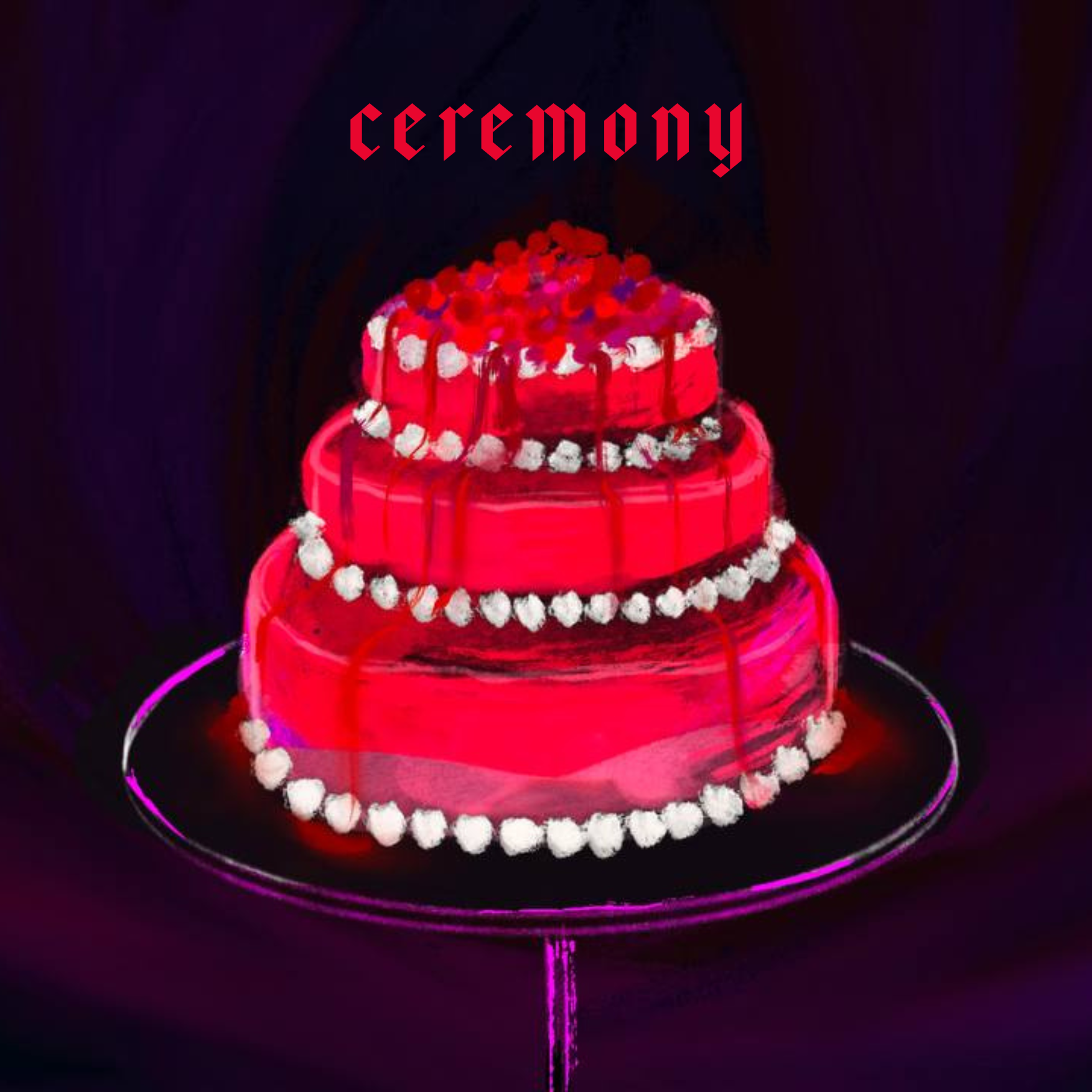
Drama Queens and Black Sheep
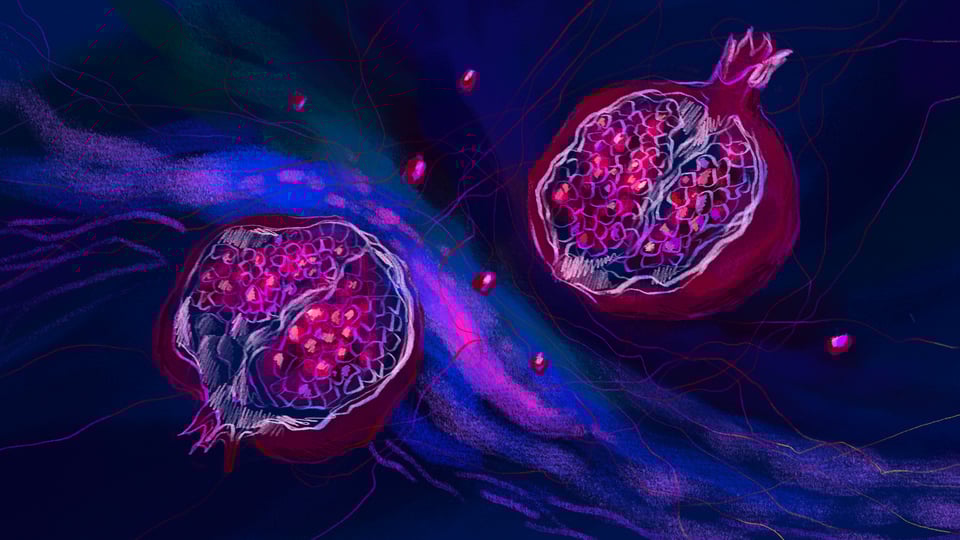
The word “garnet” comes from “pomegranate,” as does “grenade,” so named for the way a shrapnel scattering grenade imitates the seed-scattering explosion of a smashed pomegranate.
– Kate Lebo, ‘A Secret, Symbolic History of Pomegranates’
Hello friends,
I write to you at the end of Aquarius season and the beginning of the year of the fire horse.
I have been thinking of Pomegranate, a fruit that embodies dissent, transgression, and hunger.
Some scholars believe that the forbidden fruit in the garden of Eden was a pomegranate, not an apple.
It is the fruit of the underworld, of heartbreak, and of romance.
Kening Zhu writes that ‘it is a fruit that ‘leaves your hands - and clothes - stained with its blood. it is not a fruit that dies quietly.’
The pomegranate’s role in dissent and transgression make it the perfect symbol for Aquarius.
The visionaries I have been inspired by this Aquarius season are thieves, drama queens, hysterics, and black sheep – figures of subversion who act on their disgust with the status quo.
Aquarius season moves from the Black Sheep (exile) to the Seer (crossing) to Otherworlds (being resident in the otherworld itself).
There is no going back from the otherworld; the previous world has been lost.
From the place of being ‘excommunicated, unique, untethered’ the unlikely patron saints of Aquarius season are able to usher a new world into being.
Where Capricorn was able to build cathedrals from revelatory blueprints, Aquarius make complex, enduring systems that contain multitudes.
They are able to analyse, dissect, and overturn existing systems that feel set in stone – this is the sign of revolution, rebellion, and transformation.
🜁🜃🜂🜄
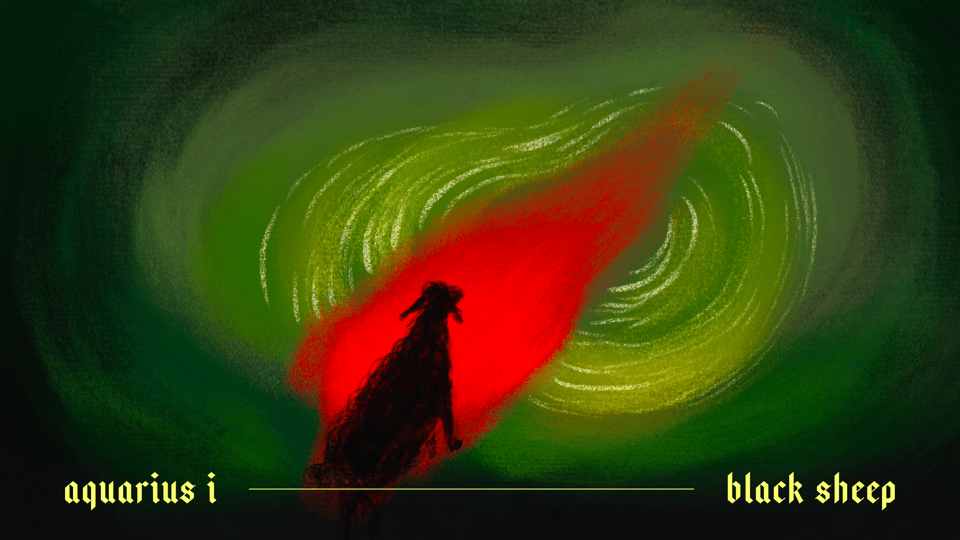
A black sheep is an outsider, an exile, a wanderer; someone whose perspective is radically different to their peers.
A sheep whose wool is black is less of a valuable commodity for farming and trading – its wool can’t be dyed different colours. It cannot be processed and used.
The black sheep remains uniquely itself.
It is a symbol of self-determination.
The Five of Swords, the card for this decan, could be about the black sheep. As Kira Ryberg says:
Stating our opinions, especially when they do not fit the mold, can often bring ire into our worlds and relationships. At the same time, they can also release us from toxic entanglements.
From family systems to cults, the black sheep is the one who tells the truth about a monoculture, and whose perspective, from the outside, can be the catalyst for transformation.
🜁🜃🜂🜄
Thieves
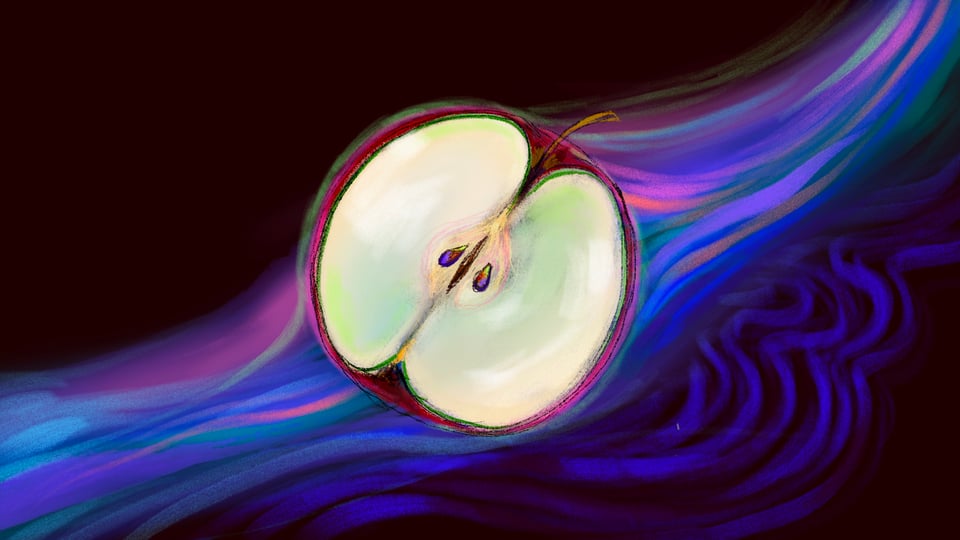
Aquarius II is the Seer. This decan is double Mercury-ruled and embodies those qualities of:
curiosity, fluidity, open-mindedness. The archetypes for this highly Aquarian version of Mercury are the scribe, the traveler, the thief, the scientist, and the diviner.
– Kira Ryberg, 36 Decans Guidebook
The thief cuts through social contracts to take what they want – whether that means windfall apples or divine knowledge.
T. Susan Chang calls this decan Celestial navigation and she says that she is ‘sympathetic to the idea that Mercury seems qualitatively well-suited to the peculiar electric genius of Aquarius.’
The Six of Swords is about the magician, the passer between realms, the holder of liminal spaces, the one who cuts through.
Like the black sheep, this figure can be misunderstood and exiled for knowing too much, even when people are magnetised by them.
They can act as a mirror for the forbidden impulses in all of us; a dangerous and holy place to exist.
🜁🜃🜂🜄
Hysterics and Drama Queens
Finally, in Aquarius III we reach the Otherworld.
Aquarius III is lit by the Moon and wrapped in Venusian silks.
This is the sixth consecutive decan of Saturn but it is softened by these intuitive, erotic, influences.
The combination of underworld themes and erotic fantasies are captured in the symbol of the pomegranate.
Not only does this fruit entice, but it also cuts, shreds, divides – the self from the other, the mother from the child, the spring from the winter, the world and the underworld. It is a symbol of the otherworld.
The tarot card for this atmosphere is the Seven of Swords.
This card is often interpreted as being about deceit. I think it has this aspect, but there is something else going on.
I don’t see this as just the card of deceit, but one of the hysteric and drama queen – visionaries who are rarely taken seriously and who can do some subversive damage as a result.
They can use theatrical gestures to draw attention to what is concealed.
This perhaps feels inauthentic but is no less real. The hysteric may appear deceitful but they are telling an uncomfortable truth.
There is more chance that others will pay attention to the dire situation of the existing world and feel compelled to help build a new one.
It is true that when histrionic people express feelings, there is often a dramatized, inauthentic, exaggerated quality to what they say. This does not mean that they do not really have the emotions to which they are giving voice.
Their superficiality and apparent playacting derive from their having extreme anxiety over what will happen if they have the temerity to express themselves to someone they see as powerful. Having been infantilized and devalued, they do not anticipate respectful attention to their feelings.– Nancy McWilliams, Psychoanalytic Diagnosis
As McWilliams writes, the hysteric, or the drama queen, can use dramatic effects to draw attention to real injustice, real harm, and the urgent need for change.
🜁🜃🜂🜄
🪞Infinity Mirrors for Aquarius
Two older Aquarian pieces:
I have been listening to this record by Yaz Lancaster a lot this season. It captures the otherworldly atmosphere of this time of year.
There’s a lot to hold in the seconds between sleeping and waking– the dream you just had already slipping through your fingers, the impending reality of the day about to break, the surreal moment you’re in right now. Yaz Lancaster’s AFTER finds a home in fuzzy places like these, where memories are just behind a window pane.
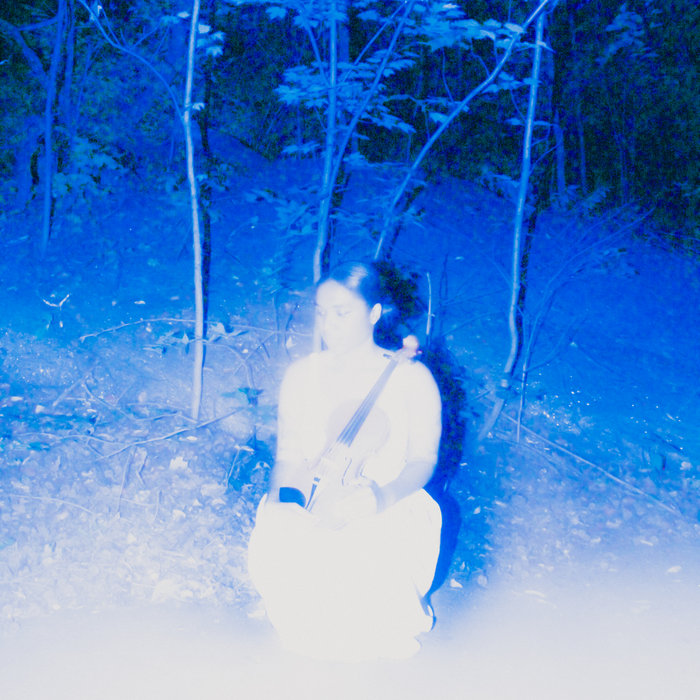
AFTER | yaz lancaster
14 track album
Zakia Sewell’s book Finding Albion is out this year and available to preorder.
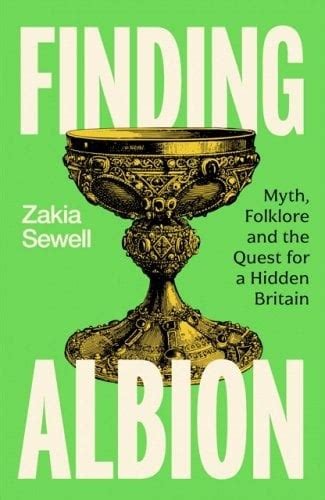
Her journey begins as the sun rises on the spring equinox over Glastonbury Tor, where she meets neopagans reclaiming traditions from our pre-Christian past. At summer's peak at Notting Hill Carnival she hears cultural echoes that passed along the slave trade routes from the Caribbean. On All Hallow's Eve she encounters the ghosts of Empire that are still haunting the nation, and in the depths of a Cornish winter she asks if today's new folk revival could unite our increasingly divided country?
Finally, I am excited to share the news that a book I worked on is coming out this year. Professor Margaret Woo is publishing her astonishing family memoir, The City of Jade Trees, with The New Press. I will leave you with her words.
Today’s immigration debate is amnesiac. Immigration exclusion is not new nor is the fear of immigration. I hope my family’s story will lend a human face and a reminder of the recurring harsh impacts of America’s immigration policies. How each generation resolved the search for home is ultimately how one can find power and identity in those in-between spaces that exist with the crossing of borders.
I wish you a week of dissent, unruliness, and pomegranates.